
Harold Jaffe
Author of American Experience: A Radical Reader
About the Author
Harold Jaffe is the author of seven fiction collections and three novels, including Sex for the Millennium (1999), Othello Blues (1996), Straight Razor (1995), Eros Anti-Eros (1990), Madonna and Other Spectacles (1988), Beasts (1986), Dos Indios (1983), and Mourning Crazy Horse (1982). Jaffe is show more editor-in-chief of Fiction International and Professor of Creative Writing and Literature at San Diego State University show less
Image credit: Provided by author
Series
Works by Harold Jaffe
Fiction International 19:2 (Aids Art, Photomontages from Germany and England) (1991) — Editor — 3 copies
Fiction International 18.2 — Editor — 1 copy
Fiction International 35: Fetish — Editor — 1 copy
Fiction International 18.1 — Editor — 1 copy
Fiction International 17.2: Futurismo — Editor — 1 copy
Fiction International 17.1 — Editor — 1 copy
Fiction International 16.2: Central American Writing — Editor — 1 copy
Associated Works
Storming the Reality Studio: A Casebook of Cyberpunk and Postmodern Science Fiction (1991) — Contributor — 262 copies
It's Only Rock and Roll: An Anthology of Rock and Roll Short Stories (1998) — Contributor — 24 copies
Tagged
Common Knowledge
- Birthdate
- 1944-07-08
- Gender
- male
- Education
- New York University (PhD - Literature)
Grinnell College (BA) - Occupations
- novelist
editor
essayist
professor emeritus (Fiction) - Organizations
- San Diego State University
- Nationality
- USA
- Associated Place (for map)
- USA
Members
Reviews
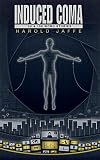
This book builds on the template of Anti-Twitter, expanding it to inlude both fifty word stories and one hundred word stories. This allows for more formal variation and gives the collection a little more breathing room, accentuating the weird and intricate social sketches and the underlying grizzled laughs of their arguments of a world gone mad with technology and self-absorption. These micro-fictions are some of Jaffe's best.
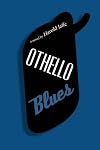
Jaffe's reframing of Othello as a story about impoverished and conniving bluesmen might be thought of by some as blasphemous, but tragedy and the blues go hand in hand, and they are both used here to explore how poverty and marginalization manifest continuously in the growing beast that is the American plutocracy. It's a surprisingly funny and multifaceted read that isn't afraid to play with conventions in order to upset our defenses and make us examine our place in society.
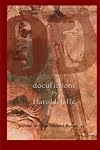
Jaffe’s OD examines the lives and tragic ends of a series notable cultural figures through “docufictions”, narratives that borrow from factual sources but remain keen on improvisation. His choice of this narrative method allows him a means of play with his subjects that brings into question our cultural mythologizing of celebrities. The opening piece is a perfect example of this play, where (apparently) not so dead Lon Cheney carries on the identity of recently deceased Bela Lugosi show more into old age to then transform into Mother Teresa. This is a stab at cultural obsession, in a country where at least a handful of people believe Elvis is still alive. Jaffe here shows how in the American psyche, celebrity transcends flesh into ephemeral being.
This sense of play is also present in the the section on Poe. He alters the reader’s expectations by confusing the subject, narrator, and object. A man smoking laudanum is following a mysteriously eccentric and somewhat bitter character named “P” and the reader might expect that “P” is Poe. This shifts when a bouncer of sorts recognizes the narrator himself as Poe, though the writer has been dead one hundred and fifty years. Such turns distort our perception and challenges our assumptions of identity in terms of celebrity.
Notions of the visual are also of great importance in this collection. The physical details of “P” are one example. Nearly omnipresent here is the necessity of reinvention. Jim Jones transforms from everyman of Indiana into a flashy priest and cult patriarch in rings and shades. The purposeful intent of Jim Morrison’s black clothes and trimmed physique after he read Rimbaud, his apparent radicalism a construct concealing racism and other prejudices. Also, what is unseen. Sonny Liston as a specter lurking in the hallways of every white man, his rumored mob connections. This Jaffe compares with Leadbelly’s bragging about his sexual prowess and skill in various disciplines. The visual bleeds into what is spoken or assumed about it, what is molded from it out of desperation for greater legends. show less
This sense of play is also present in the the section on Poe. He alters the reader’s expectations by confusing the subject, narrator, and object. A man smoking laudanum is following a mysteriously eccentric and somewhat bitter character named “P” and the reader might expect that “P” is Poe. This shifts when a bouncer of sorts recognizes the narrator himself as Poe, though the writer has been dead one hundred and fifty years. Such turns distort our perception and challenges our assumptions of identity in terms of celebrity.
Notions of the visual are also of great importance in this collection. The physical details of “P” are one example. Nearly omnipresent here is the necessity of reinvention. Jim Jones transforms from everyman of Indiana into a flashy priest and cult patriarch in rings and shades. The purposeful intent of Jim Morrison’s black clothes and trimmed physique after he read Rimbaud, his apparent radicalism a construct concealing racism and other prejudices. Also, what is unseen. Sonny Liston as a specter lurking in the hallways of every white man, his rumored mob connections. This Jaffe compares with Leadbelly’s bragging about his sexual prowess and skill in various disciplines. The visual bleeds into what is spoken or assumed about it, what is molded from it out of desperation for greater legends. show less
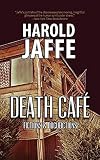
Jaffe's Death Cafe is a collection of his signature "docufictions," but unlike Anti-Twitter and Induced Coma they are not limited to 50 or 100 words, and unlike OD or 15 Serial Killers they are not tied together by one primary thematic concern. I'm sure that among Jaffe's docufiction collections there are others that are loose like this one and with which I am simply unfamiliar. I suppose one might say death is an overarching concern here - the death of individuals, the death of the earth, show more the death of consciousness, but Jaffe is wonderfully preoccupied with such themes in almost all of his work so that very likely lazy analysis on my part.
One benefit of the collection not being limited by form or strict theme is that ist has a little room to breathe and because of that I think some of my favorite material among all of Jaffe's writing is here. The title piece of the collection especially is razor sharp, damning, and bleakly hilarious. That said, some pieces (Perhaps "19") didn't seem to be as inspired as others, or maybe didn't fit within the flow of the collection in terms of tone or mood. Overall though, the collection is very strong and some of the pieces here are outright exceptional. Another set of indispensable meditations by an original and unflinching writer. show less
One benefit of the collection not being limited by form or strict theme is that ist has a little room to breathe and because of that I think some of my favorite material among all of Jaffe's writing is here. The title piece of the collection especially is razor sharp, damning, and bleakly hilarious. That said, some pieces (Perhaps "19") didn't seem to be as inspired as others, or maybe didn't fit within the flow of the collection in terms of tone or mood. Overall though, the collection is very strong and some of the pieces here are outright exceptional. Another set of indispensable meditations by an original and unflinching writer. show less
Lists
Walls (1)
You May Also Like


Associated Authors
Statistics
- Works
- 62
- Also by
- 4
- Members
- 253
- Popularity
- #90,474
- Rating
- 3.8
- Reviews
- 6
- ISBNs
- 63
- Languages
- 1
- Favorited
- 1