
Susan Piver
Author of The Hard Questions: 100 Essential Questions to Ask Before You Say "I Do"
About the Author
Susan Piver was a writer, producer, and marketing specialist for the entertainment industry for more than a decade before launching Padma Media. She lives in Boston
Works by Susan Piver
How Not to Be Afraid of Your Own Life: Opening Your Heart to Confidence, Intimacy, and Joy (2007) 93 copies, 1 review
The Hard Questions for an Authentic Life: 100 Essential Questions for Tapping into Your Inner Wisdom (2004) 60 copies
Start Here Now: An Open-Hearted Guide to the Path and Practice of Meditation (2015) 46 copies, 1 review
The Wisdom of a Broken Heart: How to Turn the Pain of a Breakup into Healing, Insight, and New Love (2010) 23 copies, 1 review
Associated Works
The Monkey Is the Messenger: Meditation and What Your Busy Mind Is Trying to Tell You (2018) — Foreword, some editions — 34 copies
Tagged
Common Knowledge
Members
Reviews
Part memoir, part meditation manual, part religious reflection, The Four Noble Truths of Love re-envisions the Buddhist Four Noble Truths as guidance for relationships.
Susan Piver's voice is clear and charismatic — there are parts where I laughed out loud (e.g. "For example, someone I know—let's call him Shmuncan...).
I picked this book up after attending a meditation workshop with the author, which was an interesting experience. Meditation practioners / teachers have a presence, an show more in-person feeling, which only partly comes across in the written word. I liked Ms. Piver in person more than I liked the book, or her videos. But the book is well-articulated. show less
Susan Piver's voice is clear and charismatic — there are parts where I laughed out loud (e.g. "For example, someone I know—let's call him Shmuncan...).
I picked this book up after attending a meditation workshop with the author, which was an interesting experience. Meditation practioners / teachers have a presence, an show more in-person feeling, which only partly comes across in the written word. I liked Ms. Piver in person more than I liked the book, or her videos. But the book is well-articulated. show less
I am coming to this little book as a beginner and I love it, all about meditation. Just reading it gave me a much needed boost toward mindfulness.
I had no idea there were more than a couple of types of meditation.
The book appears to be laid out in a progressive way, each meditation designed to build up to more compassion and more meaningful mindfulness, accessing our true experiences (good and bad) instead of being bombarded by thoughts of tomorrow, of rehashing yesterday, and reacting with show more stress and despair. The theme is to experience and to be in that experience, but to have mindfulness and clarity in those experiences. And compassion for yourself (and others) is a big message as well. Or, at least, that's how I read it.
Each meditation chapter is taught by a different expert teacher. The mediations are:
Mindfulness of Body, how to take a good posture
Shamatha, the practice of tranquility
Vipassana, the practice of clear seeing
Zazen, the practice of freedom
Metta, the practice of compassion
Tonglen, the practice of transformation
Healing Meditation, the practice of joy
Yoga, om yoga poses for meditation practice
The book comes with 2 CDS too, one of music for meditation and the other is an expert teacher discussing a single meditation type. I haven't listened to either CD, but I plan to, so I can listen when I'm ready to do the yoga for meditation warm-up.
I am incorporating daily meditation into my life, beginning with Shamatha which, like many of us have, I have done for a long time. The difference now is that I am doing it daily, not just an on-demand session when I feel a special need. This book drove home to me the idea that daily meditation practice is like working out; it builds your abilities and keeps you fit.
It's not stated overtly, but I don't think you have to incorporate all of these mediations! They are presented for sampling and to see what works for you. Probably doing the breathing mediation (Shamatha) daily is a minimum since the others all seem to incorporate that clearing and quieting your mind first. The other mediations might be something I grow into (Vipassana is appealing), or do as needed in order to incorporate some aspect I'd like to experience and to jump start some acceptance or growth (Metta and Healing).
I highly recommend Joyful Mind. show less
I had no idea there were more than a couple of types of meditation.
The book appears to be laid out in a progressive way, each meditation designed to build up to more compassion and more meaningful mindfulness, accessing our true experiences (good and bad) instead of being bombarded by thoughts of tomorrow, of rehashing yesterday, and reacting with show more stress and despair. The theme is to experience and to be in that experience, but to have mindfulness and clarity in those experiences. And compassion for yourself (and others) is a big message as well. Or, at least, that's how I read it.
Each meditation chapter is taught by a different expert teacher. The mediations are:
Mindfulness of Body, how to take a good posture
Shamatha, the practice of tranquility
Vipassana, the practice of clear seeing
Zazen, the practice of freedom
Metta, the practice of compassion
Tonglen, the practice of transformation
Healing Meditation, the practice of joy
Yoga, om yoga poses for meditation practice
The book comes with 2 CDS too, one of music for meditation and the other is an expert teacher discussing a single meditation type. I haven't listened to either CD, but I plan to, so I can listen when I'm ready to do the yoga for meditation warm-up.
I am incorporating daily meditation into my life, beginning with Shamatha which, like many of us have, I have done for a long time. The difference now is that I am doing it daily, not just an on-demand session when I feel a special need. This book drove home to me the idea that daily meditation practice is like working out; it builds your abilities and keeps you fit.
It's not stated overtly, but I don't think you have to incorporate all of these mediations! They are presented for sampling and to see what works for you. Probably doing the breathing mediation (Shamatha) daily is a minimum since the others all seem to incorporate that clearing and quieting your mind first. The other mediations might be something I grow into (Vipassana is appealing), or do as needed in order to incorporate some aspect I'd like to experience and to jump start some acceptance or growth (Metta and Healing).
I highly recommend Joyful Mind. show less
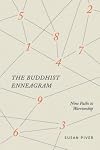
My introduction to the Enneagram was through one of those quizzes "Which Enneagram Number Are You" you can find floating around online. So I took it and found the results interesting. Then I took another quiz and got completely different results, which was confusing. So when I saw a giveaway for this book, I entered and am glad I won a copy. Thank you GoodReads giveaways!
Enneagram is a philosophy to help us understand ourselves better and to enable us to travel from confusion to wisdom. It show more is more deep and complex than I was initially thinking. Susan Piver's passion for the Enneagram is felt on every page. Her writing is engaging and I liked her style of pairing what she was saying with a story to help with understanding. While I can't say I fully understand Enneagram, I do feel I have a much better foundation than I did from just a couple online quizzes. Pairing Enneagram with Buddhism was a interesting as it also helped me better understand some Buddhist principles at the same time. I suspect this book will be even better on future rereads should I decide to continue to deepen my knowledge of Enneagram. show less
Enneagram is a philosophy to help us understand ourselves better and to enable us to travel from confusion to wisdom. It show more is more deep and complex than I was initially thinking. Susan Piver's passion for the Enneagram is felt on every page. Her writing is engaging and I liked her style of pairing what she was saying with a story to help with understanding. While I can't say I fully understand Enneagram, I do feel I have a much better foundation than I did from just a couple online quizzes. Pairing Enneagram with Buddhism was a interesting as it also helped me better understand some Buddhist principles at the same time. I suspect this book will be even better on future rereads should I decide to continue to deepen my knowledge of Enneagram. show less
What I learned from this book was that while I may never "get better" at meditating, if I continue to meditate it will nonetheless make *me* better. I am inspired.
Lists
You May Also Like


Associated Authors
Statistics
- Works
- 21
- Also by
- 1
- Members
- 725
- Popularity
- #35,031
- Rating
- 3.7
- Reviews
- 7
- ISBNs
- 43
- Languages
- 3