
Barry Denenberg
Author of When Will This Cruel War Be Over?: The Civil War Diary of Emma Simpson, Gordonsville, Virginia, 1864
About the Author
Series
Works by Barry Denenberg
When Will This Cruel War Be Over?: The Civil War Diary of Emma Simpson, Gordonsville, Virginia, 1864 (1996) 2,210 copies, 28 reviews
So Far from Home: The Diary of Mary Driscoll, an Irish Mill Girl, Lowell, Massachusetts, 1847 (1997) 2,187 copies, 10 reviews
Early Sunday Morning: The Pearl Harbor Diary of Amber Billows, Hawaii, 1941 (2001) 1,534 copies, 25 reviews
The Journal of William Thomas Emerson: A Revolutionary War Patriot, Boston, Massachusetts, 1774 (1998) 1,016 copies, 9 reviews
One Eye Laughing, the Other Weeping: The Diary of Julie Weiss, Vienna, Austria to New York, 1938 (2000) 802 copies, 6 reviews
The Journal of Ben Uchida: Citizen 13559, Mirror Lake Internment Camp, California, 1942 (1999) 801 copies, 14 reviews
Mirror, Mirror on the Wall: The Diary of Bess Brennan, Perkins School for the Blind, 1932 (2002) 729 copies, 11 reviews
A True Patriot: The Journal of William Thomas Emerson, a Revolutionary War Patriot (2012) 123 copies
So Far From Home: The Story of Mary Driscoll, An Irish Mill Girl [1999 TV Short Film] (1999) 2 copies
Associated Works
Tagged
Common Knowledge
- Canonical name
- Denenberg, Barry
- Other names
- Denenberg, Barry H.
- Birthdate
- 1946
- Gender
- male
- Nationality
- USA
- Places of residence
- Brooklyn, New York, USA (birth)
Long Island, New York, USA
Binghamton, New York, USA - Map Location
- New York, Etats-Unis
- Associated Place (for map)
- New York, USA
Members
Reviews
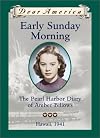
Without realizing it, Amber does an excellent job of capturing the tension that people in Hawaii felt regarding the possible war with Japan. While Amber doesn’t always understand the reactions of the adults, as an adult reader, I do. This is a testament to the author’s writing. He does an excellent job of capturing the chaos, the shock, the blood, panic, and surprise, how in one morning, paradise became hell. The characters are engaging and well-rounded. In particular, I like Amber’s show more mother, and understood her actions, as an adult, in ways Amber could not. While the author does not spare the details of the attack or the hospital scenes after, this is acceptable for older elementary age readers. It’s an excellent introduction to Pearl Harbor and what happened after. Worth reading. show less
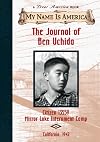
Told in simple, clear prose, this journal follows Ben from the morning of December 7, 1941 through his journey to Mirror Lake (Manzanar) internment camp. Ben is honest and forthright, greeting the injustice with humor and a stalwart resilience. He expresses anger through levity, and only a few moments does his fear and anger appear in his words. Ben uses Baseball to cope – losing himself in the game. Without realizing it, he makes keen observations of the people around him. He often show more remarks on event that he doesn’t know the significance of, but that the reader will.
Other reviewers have remarked on the lack of historical accuracy in the slang and language. This is partially correct. At the same time, we don’t tend to use slang in diaries (not that I’ve seen) and the event described are accurate. The prose is simple and clear, and suitable for elementary-age readers. It is an excellent starting place for discussions about civil liberty, the injustice of racism, and what it means to be a citizen. Worth reading. show less
Other reviewers have remarked on the lack of historical accuracy in the slang and language. This is partially correct. At the same time, we don’t tend to use slang in diaries (not that I’ve seen) and the event described are accurate. The prose is simple and clear, and suitable for elementary-age readers. It is an excellent starting place for discussions about civil liberty, the injustice of racism, and what it means to be a citizen. Worth reading. show less
Early Sunday Morning: The Pearl Harbor Diary of Amber Billows, Hawaii 1941 (Dear America Series) by Barry Denenberg
This was a good look at the events leading up to Pearl Harbor from the viewpoint of a twelve-year-old girl. Amber and her family were new arrivals to Hawaii, and I liked seeing her adjust to the vastly different environment. Her narration of the events of that day was vivid, and I could feel her horror and fear. The aftermath was also described well, especially Amber's volunteering at the hospital.
I liked Amber's curiosity and how she embraced the new experiences of living in Hawaii. Her show more friendship with the Japanese girl, Kame, was sweet, and I enjoyed seeing them get to know each other. show less
I liked Amber's curiosity and how she embraced the new experiences of living in Hawaii. Her show more friendship with the Japanese girl, Kame, was sweet, and I enjoyed seeing them get to know each other. show less
So Far From Home: The Diary of Mary Driscoll, An Irish Mill Girl, Lowell, Massachusetts, 1847 (Dear America Series) by Barry Denenberg
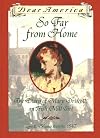
Other reviews have skillfully pointed out the writing problems this book has, and its departure from the usual Dear America format,. especially with the epilogue. I read this book when I was ten or so, and it may have been the first Dear America book I read. I read part of it on Amazon and found the metaphors super odd, the writing cheesy, and I reminded myself that Irish people may well have spoken like that back then and I needed to quiet myself. I liked the book because I saw it as an show more unflinching portrayal of this point in history, along with creepy lessons: if you don't tie your hair back because you like to show off, or even if you tie it poorly accidentally, you can die horribly. You can save up money to try and get your parents out of a place affected by famine, but they can die anyway. Both these parts of the fictional diary have always, always stuck with me. I think they always will. That, and when Mary goes to a rich person's house for the first time and wonders at class differences present. My heart ached when I read that the first time, and I always nod solemnly.
This is also a book that, when I revisited it a week ago, made me realize I may finally have outgrown the series. This saddens me, as I was delighted by it for so long. I'll look for other books that examine this period of history--there's a few memoirs that people have written based on their grandparents' experiences. show less
This is also a book that, when I revisited it a week ago, made me realize I may finally have outgrown the series. This saddens me, as I was delighted by it for so long. I'll look for other books that examine this period of history--there's a few memoirs that people have written based on their grandparents' experiences. show less
Lists
Awards


You May Also Like


Associated Authors
Statistics
- Works
- 29
- Also by
- 1
- Members
- 13,803
- Popularity
- #1,677
- Rating
- 3.7
- Reviews
- 145
- ISBNs
- 97
- Languages
- 2
- Favorited
- 4
