
Edith Layton (1938–2009)
Author of Regency Christmas Wishes [2003]
About the Author
Edith Layton received a degree in creative writing and theater from Hunter College. Before becoming a full-time author, she worked for various media including a radio station and a major motion picture company. She wrote over 30 novels during her lifetime including Alas, My Love and Bride show more Enchanted. She received a Lifetime Achievement Award from Romantic Times. She died from ovarian cancer on June 2, 2009. (Bowker Author Biography) show less
Image credit: photo credit: Lisa Whiteman; from author's website
Series
Works by Edith Layton
A Regency Christmas Carol [1997: Bond Street Carolers/ Melody/ Mistletoe Kiss/ Make a Joyful Noise/ Earl's Nightingale] (1997) — Contributor — 128 copies, 2 reviews
A Regency Christmas Feast [1996: Wassail Bowl/ Sophie's Syllabub/ Gingerbread Man/ Proof Is in the Pudding/ Christmas Goose] (1996) — Contributor — 117 copies, 3 reviews
A Regency Christmas III [1991: Mistletoe and Folly/ Christmas Cuckoo/ Best Christmas Ever/ Home for Christmas/ Dark Man] (1991) — Contributor — 105 copies, 1 review
A Regency Christmas I [1989: Star of Bethlehem/ Gift of Fortune/ Old Acquaintances/ Duke's Progress/ Kissing Bough] (1989) — Contributor — 103 copies
A Regency Christmas VII [1995: Surprise Party/ Mummers' Play/ Christmas Ghost/ Rake's Christmas/ Lady Bountiful] (1995) 103 copies, 2 reviews
A Regency Christmas [2002: Solid Silver Chess Set/ No Room at the Inn/ Amiable Miser/ Partridge in a Pear Tree/ Home for Hannah] (2002) — Contributor — 97 copies, 2 reviews
A Regency Christmas Present (1999: Christmas Canvas/ Object of Charity/ Heart's Desire/ Last Gift/ Christmas Wish List) (1999) — Contributor — 95 copies, 1 review
A Regency Christmas (1998: Three Good Deeds/ Christmas Ornament/ Felicity's Forfeit/ Second Chance/ Hounds of Heaven) (1998) — Contributor — 85 copies, 1 review
A Regency Christmas Eve (2000: Gift of the Spoons/ Reckless Miss Ripley/ Marriage Stakes/ Christmas Thief/ Little Miracles) (2000) — Contributor — 85 copies
A Magical Regency Christmas 1 copy
Kleine Lady in der Glaskugel 1 copy
The Earl's Nightingale 1 copy
Associated Works
Tagged
Common Knowledge
- Canonical name
- Layton, Edith
- Other names
- Felber, Edith
- Birthdate
- 1938-05-25
- Date of death
- 2009-06-02
- Gender
- female
- Education
- Hunter College (Creative Writing and Theater)
- Occupations
- freelance writer
author - Awards and honors
- Romantic Times Career Achievement Award (British Isle Historical Romance, 2003)
- Relationships
- Word Wenches (writers collective)
- Nationality
- USA
- Places of residence
- Long Island, New York, USA
- Map Location
- New York, USA
Members
Reviews
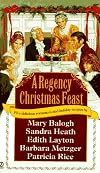
The first story, The Gingerbread Man’, was a decent mystery romance with the ability to make me crave for gingerbread.
I couldn’t get into the second one, so bypassed it.
Tale three, ‘The Christmas Goose’, was quite engaging. I like the relationship between the soldier and the widow. The widow’s daughters added colour. Children always enhance a Christmas story. This is my favourite of the five in this collection.
The fourth story, ‘The Proof’s in the Pudding’, was funny in show more places, but didn’t feel as festive as I would’ve liked. Much of it takes place at different times of the year, which in my view made it a questionable choice to include in this collection.
To my annoyance, it features many archaic words that slow the narrative down by forcing the reader – this one, anyway – to stop mid-sentence to guess the meaning. Sometimes the context makes the meaning clear, but not always.
I believe in using contemporary language for a contemporary audience, so don’t appreciate being faced with words like ‘bumblebroth’ or ‘pettifogger’. It’s not much difference to using a foreign language, which is my ultimate pet hate in English literature. In fact, we do get the French phrase ‘Tant pis’, the meaning of which I haven’t got a clue. It’s bad form for an author to lock a reader out of the narrative by using foreign words or phrases. Same applies to unfathomable archaic English terms.
The fifth story, ‘The Wassail Bowl’, wasn’t a bad tale but was spoiled by the poor writing style. It felt like a third or fourth draft, devoid of polish, and features an overuse of ‘she’:
‘She came. She hesitated for a moment when she was close but she came the rest of the way.’
Three consecutive sentences start with: ‘She knew that', which shows a lack of imagination. Why not substitute the odd ‘she’ with the character’s name? Or revise the sentences so that some don’t start with the same word over and over?
Sometimes the narrative is slowed down by being to wordy, making for a clunky read: ‘Perhaps, she thought, she would be able to learn to let go a little.’
And, two books in a row for me, I came across the most absurd of clichés, namely referring to tears as being silent: ‘blinking away her silent tears.’ Has anyone who’s ever lived known a tear to not be silent? You can cry at different volumes but tears never make a noise. This is not making every word count, which every author should endeavour to do.
So, the writing style in this last story often distracted me. Content-wise, I liked the male and female lead, and more so their two children. The little girl was adorable. Her father’s getting to know her was the most engaging part of the tale. With a little more ‘showing’ and a heck of a lot less ‘telling’, along with another ten thorough revisions, this could’ve been a great story. show less
I couldn’t get into the second one, so bypassed it.
Tale three, ‘The Christmas Goose’, was quite engaging. I like the relationship between the soldier and the widow. The widow’s daughters added colour. Children always enhance a Christmas story. This is my favourite of the five in this collection.
The fourth story, ‘The Proof’s in the Pudding’, was funny in show more places, but didn’t feel as festive as I would’ve liked. Much of it takes place at different times of the year, which in my view made it a questionable choice to include in this collection.
To my annoyance, it features many archaic words that slow the narrative down by forcing the reader – this one, anyway – to stop mid-sentence to guess the meaning. Sometimes the context makes the meaning clear, but not always.
I believe in using contemporary language for a contemporary audience, so don’t appreciate being faced with words like ‘bumblebroth’ or ‘pettifogger’. It’s not much difference to using a foreign language, which is my ultimate pet hate in English literature. In fact, we do get the French phrase ‘Tant pis’, the meaning of which I haven’t got a clue. It’s bad form for an author to lock a reader out of the narrative by using foreign words or phrases. Same applies to unfathomable archaic English terms.
The fifth story, ‘The Wassail Bowl’, wasn’t a bad tale but was spoiled by the poor writing style. It felt like a third or fourth draft, devoid of polish, and features an overuse of ‘she’:
‘She came. She hesitated for a moment when she was close but she came the rest of the way.’
Three consecutive sentences start with: ‘She knew that', which shows a lack of imagination. Why not substitute the odd ‘she’ with the character’s name? Or revise the sentences so that some don’t start with the same word over and over?
Sometimes the narrative is slowed down by being to wordy, making for a clunky read: ‘Perhaps, she thought, she would be able to learn to let go a little.’
And, two books in a row for me, I came across the most absurd of clichés, namely referring to tears as being silent: ‘blinking away her silent tears.’ Has anyone who’s ever lived known a tear to not be silent? You can cry at different volumes but tears never make a noise. This is not making every word count, which every author should endeavour to do.
So, the writing style in this last story often distracted me. Content-wise, I liked the male and female lead, and more so their two children. The little girl was adorable. Her father’s getting to know her was the most engaging part of the tale. With a little more ‘showing’ and a heck of a lot less ‘telling’, along with another ten thorough revisions, this could’ve been a great story. show less
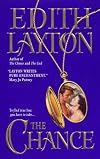
The honest soldier, Rafe, falls in love with the beautiful Annabelle, who is pining for a man whom she'd loved since childhood, but who had no romantic interest in her and married another. He doesn't realise that she's stringing him along. When Rafe inadvertantly compromises Brenna, the sister of a friend, he feels that, as a man of honour, he must marry her, despite his feelings for Annabelle. Will Rafe forget Annabelle and learn to love Brenna? Will Annabelle, who is a real piece of work, show more allow him to? There's a sub-plot about Rafe's awful family. (I don't think Edith Layton quite understood dominant/recessive inheritance.) show less
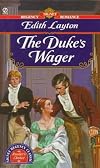
In her enthusiasm to see the sights while she's in London, country mouse Regina Berryman accidentally attends the opera on the night where mistresses and the demimonde are on display. Dressed smartly in the fancy clothes her uncle bought her, she unwittingly draws the attention of two of London's most notorious libertines - the Marquess of Bessacarr and the Duke of Torquay. When the duke approaches her to whisper a proposition in her ear, she flees the opera house in a hurry. Torquay, show more however, is undaunted, and becomes determined to have her as a mistress. Bessacarr, being none too fond of Torquay, becomes determined to have her as well, if only to thwart the duke. Thus begins a twisted love triangle battling to corrupt the innocent Regina.
The book is brilliant in that both men are absolutely despicable in the beginning. Early on, Regina is left completely penniless by her uncle's untimely death. Torquay and Bessacarr both exploit this to their own benefit. Torquay by getting her thrown out of her home and abducting her to try to force her to accept his offer, and Bessacarr by taking her into his home under false pretenses and abusing her trust by pretending to help her find work. One is openly trying to corrupt her, while the other is doing it stealthily. Neither is concerned one whit for what Regina wants.
Regina is a delightful character. She's penniless and powerless, but her well-developed sense of honor and self-worth prevents her from accepting Torquay's offer. She refuses to live as someone's object or pampered pet. She's determined to live an honest, honorable existence, even if she must find employment. She was educated as though she were a son by her schoolmaster father and so meets Torquay's sallies head-on, refusing to be taken as anything less than an equal. As it's all she has left, she clings tenaciously to her dignity.
Layton makes good use of dialog in the novel, using lots of it to draw out who the characters are and why they act the ways they do. Whenever the duke encounters Regina, a war of words breaks out. The two have lengthy, wonderfully written discussions where, though he becomes more and more determined to have her, Torquay also begins to wish she never compromises herself. Eventually he starts to wonder if he even wants to win this game of his. Would she still be so appealing if she consented to be his mistress? What sort of person would that make him, as well, if she did?
I just loved watching these characters grow and change. No one ends this book the way they began, not even the secondary characters. Through well-crafted, meaty dialog we watch the characters struggle with their own senses of honor and self-respect. They all make miscalculations along the way, and though all three try, only two come out better people at the end. It's a rare book that can write a character who manages to go from repulsive to endearing, but Layton pulls it off and makes it look easy.
5 stars. Easy. I couldn't find a flaw if I had a gun to my head. show less
The book is brilliant in that both men are absolutely despicable in the beginning. Early on, Regina is left completely penniless by her uncle's untimely death. Torquay and Bessacarr both exploit this to their own benefit. Torquay by getting her thrown out of her home and abducting her to try to force her to accept his offer, and Bessacarr by taking her into his home under false pretenses and abusing her trust by pretending to help her find work. One is openly trying to corrupt her, while the other is doing it stealthily. Neither is concerned one whit for what Regina wants.
Regina is a delightful character. She's penniless and powerless, but her well-developed sense of honor and self-worth prevents her from accepting Torquay's offer. She refuses to live as someone's object or pampered pet. She's determined to live an honest, honorable existence, even if she must find employment. She was educated as though she were a son by her schoolmaster father and so meets Torquay's sallies head-on, refusing to be taken as anything less than an equal. As it's all she has left, she clings tenaciously to her dignity.
Layton makes good use of dialog in the novel, using lots of it to draw out who the characters are and why they act the ways they do. Whenever the duke encounters Regina, a war of words breaks out. The two have lengthy, wonderfully written discussions where, though he becomes more and more determined to have her, Torquay also begins to wish she never compromises herself. Eventually he starts to wonder if he even wants to win this game of his. Would she still be so appealing if she consented to be his mistress? What sort of person would that make him, as well, if she did?
I just loved watching these characters grow and change. No one ends this book the way they began, not even the secondary characters. Through well-crafted, meaty dialog we watch the characters struggle with their own senses of honor and self-respect. They all make miscalculations along the way, and though all three try, only two come out better people at the end. It's a rare book that can write a character who manages to go from repulsive to endearing, but Layton pulls it off and makes it look easy.
5 stars. Easy. I couldn't find a flaw if I had a gun to my head. show less

I've been on a bit of a Regency kick recently, so when I stumbled across this anthology of Christmas-themed Regency short stories a few weeks ago, I thought it might be a fun holiday read. It didn't hurt that the cover was fairly attractive (what can I say? quite a few of the romances I've been reading recently have covers that are a little too aggressively pastel... this, even with the Thomas Kinkade echoes, is High Art by comparison), and that the five contributors were all previously show more unknown to me, providing an opportunity to try new authors in the genre.
Unfortunately, I found Regency Christmas Wishes a thoroughly unsatisfactory reading experience, and wouldn't recommend a single one of the stories it contains. None of the characters felt fully realized to me, which I might have laid at the door of the short-story form itself, with its necessary brevity, had I not already read and enjoyed Georgette Heyer's brilliant romantic shorts, in her Pistols for Two and Other Stories. I also thought many of the narrative developments were rather unbelievable, and while I realize that romance is not always the most realistic of genres, I should at least be able to suspend my disbelief, while reading.
The collection leads off with Barbara Metzger's The Lucky Coin, in which impoverished baronet Sir Adam Standish, in London to plead for more time to repay the mortgage taken out on his lands by his dissolute father, falls instantly in love with the beautiful Miss Jenna Relaford, when he sees her in a curiosity shop. Unfortunately, Miss Relaford is the niece of Sir Adam's banker, who has no very good opinion of down-on-their-luck aristocrats trying to recoup their losses by marrying heiresses from the mercantile class. Leaving aside the idea of the magical wishing coin, which I found inane, as well as the love-at-first-sight motif (never a favorite), I thought Metzger completely ignored the very real class issues here, and resolved everything a little too neatly. Individual rating: 2 stars.
Next up is Following Yonder Star, by Emma Jensen, in which Miss Alice Ashe - a spinster in her late twenties - confronts the man who broke her heart, by leaving their small Irish town years before, and never returning. Here you have some rather contrived conflicts - Gareth Blackwell fervently hopes his brother's widow will bear a son, so he will not have to be the next Earl of Kilcullen, while the widowed countess herself desires a daughter, in order not to be tied to the estate. I appreciated that Jensen had to make her hero appealing, and that painting him as a grasping tyrant would hardly have fit the bill, but I also found her idealized portrait of Gareth - getting along so well with his tenant farmers, determined to better their lot - rather difficult to take, given what I know of the behavior of the Irish aristocracy just a few decades later, during the Great Famine. Still, as a story this was probably the most enjoyable of the lot. Individual rating: 2.5 stars.
The third selection was Sandra Heath's The Merry Magpie, in which Sir Charles Neville, returning to England after an absence of six years, seeks out his estranged wife at Christmas, determined to make amends for the philandering that led to their separation. Of all the stories in Regency Christmas Wishes, I think I found this the least convincing. Given how common it was for aristocratic men of this period to keep mistresses - many other Regency novels comment on this - I found it difficult to believe that Sir Charles would have been vilified in quite the way that Heath depicts. Yes, his wife Juliet would have been terribly hurt, and it's possible there would have been a separation, but I doubt that society would have countenanced her tossing him out, regardless of his behavior. This story also had some unfortunately anachronistic language - Lady Marchwell actually says to Sir Charles, at one point: "Oh, poor you!" - and an unlikely sexual encounter in a rowboat (on a river). Individual rating: .5 stars.
Best Wishes, by Edith Layton, is the fourth selection, and follows the story of the newly wed Viscount and Viscountess of Rexford, who have their first real argument about where to spend the holidays: with his pre-marriage set (including a former lover), or with her extended family. Oh lord! This one has a bed-hopping house party! I was rolling my eyes... Individual rating: 2 stars.
The fifth and final story was Carla Kelly's Let Nothing You Dismay, in which Lord Trevor Chase - an outcast from society, because of his work as a barrister, representing children in the criminal courts - and Miss Cecilia Ambrose, a half-English half-Egyptian school-teacher, who accompanies Lord Trevor's niece home from school for the holidays. This was an interesting story, in that it made reference to much darker realities than I have usually seen in Regency fiction. I had difficulty believing, however, that even a reform-minded radical would have discussed "buggery," or being suspected as a "sodomite," with a respectable woman. I also wasn't thrilled with the idea, implied in the resolution of the story, that love can save an addict, or any other kind of psychologically wounded individual from themselves. Individual rating: 1 star.
Overall, not a very impressive group of tales. Averaging out the stars, you get 1.6 stars, but hey! It's the holidays, so I rounded up. show less
Unfortunately, I found Regency Christmas Wishes a thoroughly unsatisfactory reading experience, and wouldn't recommend a single one of the stories it contains. None of the characters felt fully realized to me, which I might have laid at the door of the short-story form itself, with its necessary brevity, had I not already read and enjoyed Georgette Heyer's brilliant romantic shorts, in her Pistols for Two and Other Stories. I also thought many of the narrative developments were rather unbelievable, and while I realize that romance is not always the most realistic of genres, I should at least be able to suspend my disbelief, while reading.
The collection leads off with Barbara Metzger's The Lucky Coin, in which impoverished baronet Sir Adam Standish, in London to plead for more time to repay the mortgage taken out on his lands by his dissolute father, falls instantly in love with the beautiful Miss Jenna Relaford, when he sees her in a curiosity shop. Unfortunately, Miss Relaford is the niece of Sir Adam's banker, who has no very good opinion of down-on-their-luck aristocrats trying to recoup their losses by marrying heiresses from the mercantile class. Leaving aside the idea of the magical wishing coin, which I found inane, as well as the love-at-first-sight motif (never a favorite), I thought Metzger completely ignored the very real class issues here, and resolved everything a little too neatly. Individual rating: 2 stars.
Next up is Following Yonder Star, by Emma Jensen, in which Miss Alice Ashe - a spinster in her late twenties - confronts the man who broke her heart, by leaving their small Irish town years before, and never returning. Here you have some rather contrived conflicts - Gareth Blackwell fervently hopes his brother's widow will bear a son, so he will not have to be the next Earl of Kilcullen, while the widowed countess herself desires a daughter, in order not to be tied to the estate. I appreciated that Jensen had to make her hero appealing, and that painting him as a grasping tyrant would hardly have fit the bill, but I also found her idealized portrait of Gareth - getting along so well with his tenant farmers, determined to better their lot - rather difficult to take, given what I know of the behavior of the Irish aristocracy just a few decades later, during the Great Famine. Still, as a story this was probably the most enjoyable of the lot. Individual rating: 2.5 stars.
The third selection was Sandra Heath's The Merry Magpie, in which Sir Charles Neville, returning to England after an absence of six years, seeks out his estranged wife at Christmas, determined to make amends for the philandering that led to their separation. Of all the stories in Regency Christmas Wishes, I think I found this the least convincing. Given how common it was for aristocratic men of this period to keep mistresses - many other Regency novels comment on this - I found it difficult to believe that Sir Charles would have been vilified in quite the way that Heath depicts. Yes, his wife Juliet would have been terribly hurt, and it's possible there would have been a separation, but I doubt that society would have countenanced her tossing him out, regardless of his behavior. This story also had some unfortunately anachronistic language - Lady Marchwell actually says to Sir Charles, at one point: "Oh, poor you!" - and an unlikely sexual encounter in a rowboat (on a river). Individual rating: .5 stars.
Best Wishes, by Edith Layton, is the fourth selection, and follows the story of the newly wed Viscount and Viscountess of Rexford, who have their first real argument about where to spend the holidays: with his pre-marriage set (including a former lover), or with her extended family. Oh lord! This one has a bed-hopping house party! I was rolling my eyes... Individual rating: 2 stars.
The fifth and final story was Carla Kelly's Let Nothing You Dismay, in which Lord Trevor Chase - an outcast from society, because of his work as a barrister, representing children in the criminal courts - and Miss Cecilia Ambrose, a half-English half-Egyptian school-teacher, who accompanies Lord Trevor's niece home from school for the holidays. This was an interesting story, in that it made reference to much darker realities than I have usually seen in Regency fiction. I had difficulty believing, however, that even a reform-minded radical would have discussed "buggery," or being suspected as a "sodomite," with a respectable woman. I also wasn't thrilled with the idea, implied in the resolution of the story, that love can save an addict, or any other kind of psychologically wounded individual from themselves. Individual rating: 1 star.
Overall, not a very impressive group of tales. Averaging out the stars, you get 1.6 stars, but hey! It's the holidays, so I rounded up. show less
Awards

You May Also Like


Associated Authors
Statistics
- Works
- 79
- Also by
- 4
- Members
- 3,901
- Popularity
- #6,489
- Rating
- 3.5
- Reviews
- 79
- ISBNs
- 149
- Languages
- 2
- Favorited
- 9