
Nancy Caldwell Sorel (1934–2015)
Author of Reporting World War II Part One : American Journalism, 1938-1944
About the Author
Nancy Caldwell Sorel has been a regular feature writer for the Atlantic Monthly and a contributor to Esquire, GQ, Forbes, and the New York Times Book Review. Her other books include Word People, Ever Since Eve, and First Encounters.
Works by Nancy Caldwell Sorel
Reporting World War II Part One : American Journalism, 1938-1944 (1995) — Editor — 477 copies, 3 reviews
Reporting World War II Part Two : American Journalism 1944-1946 (1995) — Editor — 430 copies, 3 reviews
Tagged
Common Knowledge
- Birthdate
- 1934
- Date of death
- 2015-02-05
- Gender
- female
- Occupations
- author
- Relationships
- Sorel, Edward (husband)
- Nationality
- USA
- Birthplace
- Kansas City, Missouri, USA
- Places of residence
- New York, New York, USA
- Associated Place (for map)
- USA
Members
Reviews
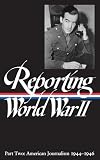
war through the eyes of the reporters and photographers ...multiple short, readable, primary-source selections...amalgam of hard news dispatches, letters, and articles from writers as far-ranging as Ernie Pyle, Bill Mauldin, John Hersey, Edward R. Murrow, and Martha Gellhorn to John Steinbeck, Ernest Hemingway, and Gertrude Stein. Journalism and history students can track both the war and American attitudes through these narratives.
This Library of America volume (along with its companion) show more evokes an extraordinary period in American history—and in American journalism. Martha Gellhorn, Ernie Pyle, John Hersey, A.J. Liebling, Edward R. Murrow, Janet Flanner: in a time when public perceptions were shaped mainly by the written word, correspondents like these were often as influential as politicians and as celebrated as movie stars.
This second volume traces the final eighteen months of the war: the campaign in Italy and the Southwest Pacific, the Normandy invasion, the island battles from Saipan to Iwo Jima, the liberation of Paris, the Battle of the Bulge, the fall of Berlin, the bombing of Hiroshima and Nagasaki. Here are Ernie Pyle bearing witness to war in the infantrymen’s foxholes; A.J. Liebling on D-Day; Robert Sherrod and Tom Lea landing with Marines and registering the horrors of Pacific Island warfare; Martha Gellhorn and Edward R. Murrow indelibly reporting on the liberation of Dachau and Buchenwald. Here too are two great book-length works, included in full: Bill Mauldin’s Up Front, the classic evocation of war from the GI’s point of view, complete with his famous cartoons, and Hiroshima, John Hersey’s compassionate account of the first atomic bombing and its aftermath.
Writers who covered the home front are included as well: S.J. Perelman on the absurdities of wartime advertising, James Agee on the impact of wartime newsreels, E.B. White on the United Nations conference in San Francisco. Here too are writers on aspects of the war still often neglected: Vincent Tubbs and Bill Davidson on the combat role of African-American soldiers; Susan B. Anthony II on working in the Navy Yard; I.F. Stone protesting U.S. government inaction in the face of Nazi genocide.
This volume contains a detailed chronology of the war, historical maps, biographical profiles of the journalists, explanatory notes, a glossary of military terms, and an index. Also included are thirty-two pages of photographs of the correspondents, many from private collections and never seen before. show less
This Library of America volume (along with its companion) show more evokes an extraordinary period in American history—and in American journalism. Martha Gellhorn, Ernie Pyle, John Hersey, A.J. Liebling, Edward R. Murrow, Janet Flanner: in a time when public perceptions were shaped mainly by the written word, correspondents like these were often as influential as politicians and as celebrated as movie stars.
This second volume traces the final eighteen months of the war: the campaign in Italy and the Southwest Pacific, the Normandy invasion, the island battles from Saipan to Iwo Jima, the liberation of Paris, the Battle of the Bulge, the fall of Berlin, the bombing of Hiroshima and Nagasaki. Here are Ernie Pyle bearing witness to war in the infantrymen’s foxholes; A.J. Liebling on D-Day; Robert Sherrod and Tom Lea landing with Marines and registering the horrors of Pacific Island warfare; Martha Gellhorn and Edward R. Murrow indelibly reporting on the liberation of Dachau and Buchenwald. Here too are two great book-length works, included in full: Bill Mauldin’s Up Front, the classic evocation of war from the GI’s point of view, complete with his famous cartoons, and Hiroshima, John Hersey’s compassionate account of the first atomic bombing and its aftermath.
Writers who covered the home front are included as well: S.J. Perelman on the absurdities of wartime advertising, James Agee on the impact of wartime newsreels, E.B. White on the United Nations conference in San Francisco. Here too are writers on aspects of the war still often neglected: Vincent Tubbs and Bill Davidson on the combat role of African-American soldiers; Susan B. Anthony II on working in the Navy Yard; I.F. Stone protesting U.S. government inaction in the face of Nazi genocide.
This volume contains a detailed chronology of the war, historical maps, biographical profiles of the journalists, explanatory notes, a glossary of military terms, and an index. Also included are thirty-two pages of photographs of the correspondents, many from private collections and never seen before. show less
The women who wrote the war : the compelling story of the path-breaking women war correspondents of World War II by Nancy Caldwell Sorel
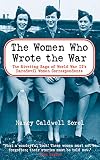
Fascinating account of the women who covered the second world war and the obstacles they encountered to pave the way for the future of woman journalism. I do not usually read this type of non-fiction but after reading two novels regarding this subject I felt compelled to research the source. I found the material at times a little unnerving, nothing that has not been documented before, but told with such compassion and from this particular point of view took on new meaning and new show more understanding.
I believe that the author approached her subject(s) with a journalists non-judgmental attitude. Just report the facts. Yet, these woman came alive for me and I was in awe of their courage and determination to get to 'where the action was happening" and to hell to whoever got in their way!
Brave and ambitious they made their mark on history and as I mentioned earlier, paved thy way for their daughters. show less
I believe that the author approached her subject(s) with a journalists non-judgmental attitude. Just report the facts. Yet, these woman came alive for me and I was in awe of their courage and determination to get to 'where the action was happening" and to hell to whoever got in their way!
Brave and ambitious they made their mark on history and as I mentioned earlier, paved thy way for their daughters. show less
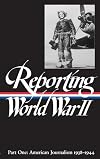
Mostly excellent. There were a few selections that were more reporter-centric then I would have preferred, but then it is a book about reporting WW II.
Liebling, Pyle, and the Tarawa account stand out.
Liebling, Pyle, and the Tarawa account stand out.
One of the best anthologies to come out of WWII. This second volume begins with Ernie Pyle reporting from Italy in 1944 on how it feels to wait for an attack and ends with John Hersey on the bombing of Hiroshima. In between we have Homer Bigart on the signing of the formal surrender on board the USS Missouri: Brendan Gill's incomparable interview with a young bombardier home on leave after 25 missions over occupied Europe; Ernest Hemingway on his return to Paris and Martha Gellhorn on board show more the first hospital ship taking wounded off the coast of Normandy. Superb eye-witness reporting. show less
Lists
Women in War (1)
You May Also Like


Associated Authors
Statistics
- Works
- 6
- Members
- 1,269
- Popularity
- #20,210
- Rating
- 4.2
- Reviews
- 9
- ISBNs
- 14
- Languages
- 1