
Warren St. John
Author of Outcasts United: The Story of a Refugee Soccer Team That Changed a Town
About the Author
Works by Warren St. John
Outcasts United: The Story of a Refugee Soccer Team That Changed a Town (2009) 1,286 copies, 101 reviews
Associated Works
Tagged
Common Knowledge
- Birthdate
- 1969-10-17
- Gender
- male
- Education
- Columbia University
- Nationality
- USA
- Birthplace
- Birmingham, Alabama, USA
- Places of residence
- New York, New York, USA
- Associated Place (for map)
- USA
Members
Reviews
The tricky thing about writing a bestseller (Rammer Jammer Yellow Hammer) is that readers expect the next book to be just as good. We don't want to be disappointed.
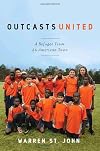
The new is good: Outcasts United is as just as good, in fact it is great. However, you really cannot compare the two, as they are such different stories. Rammer Jammer is a fun, happy book about the fans that tailgate to the Alabama Crimson Tide football games.
Outcasts United is an intricate weaving of stories about one show more dedicated coach Luma Mufleh, an American-educated Jordanian woman, and the boys on her soccer teams. The boys all live in apartments in Clarkston, Georgia - designated final destination for relocated families from war torn countries including Liberia, Sudan, Bosnia and Afghanistan and many more.
This book will stay with you long after you close the cover. The boys and the tragic histories behind their journey to Clarkston. The story of their coach and what drives her to care for these boys and their families. Finally, the town of Clarkston, and its puzzlement over the amazing population of cultures delivered within their borders.
St. John tells the story of each individual with clarity and without judgment. Individual thoughts on each spark within me. I want to know more, and feel the need to research each of the boy's countries, regions and conflicts. I want to know about the families, their stories - are they happy they are in America or are they merely resigned, depressed that America offers them dark apartments, hard jobs and little respect or help?
One of the mothers - Beatrice - goes from a long battle to escape her war torn country, after five years of attempts finally gets permission (and a loan) to relocate to America. She lands with an unimpressive thump in the dark, hot apartments in Clarkston, Georgia and goes to go to work cleaning 16 rooms a day at the elegant Ritz Carlton Atlanta. What thoughts must have flown through her head - such incredible extremes? While she works, Beatrice lives in fear that someone will take her two young boys, so she orders them not to leave the apartment. Her fear is real - not knowing if the children are safe, not able to look after them after protecting them for so many years.
The boys eventually do sneak out of the apartment, the story of what happens to their family, and the relationship they develop with Luma the coach is an important part of the book. There are many more stories, more lessons to learn.
A good writer takes you on an adventure, makes you want to race through the book. A great writer drives you to continue the story, find out more, take action, reach out, and become a better person. Any or all of these things. I expect this book will be picked up by schools, I also expect that this book will become a media darling because St. John has done his job well.
Because I had the Early Reviewers, copy there was no epilogue printed in the book. Here's what I learned:
The advance copy of Warren St. John's OUTCASTS UNITED did not come with the epilogue. This is because the publishers wanted to include the latest possible news about the team and the community in the book. As things in Clarkston were fast moving, the online version epilogue (which will of course be in the finished edition) gives the news as recently as a few weeks ago. Go to www. OutcastsUnitedEpilogue.com to see the epilogue. show less
The new is good: Outcasts United is as just as good, in fact it is great. However, you really cannot compare the two, as they are such different stories. Rammer Jammer is a fun, happy book about the fans that tailgate to the Alabama Crimson Tide football games.
Outcasts United is an intricate weaving of stories about one show more dedicated coach Luma Mufleh, an American-educated Jordanian woman, and the boys on her soccer teams. The boys all live in apartments in Clarkston, Georgia - designated final destination for relocated families from war torn countries including Liberia, Sudan, Bosnia and Afghanistan and many more.
This book will stay with you long after you close the cover. The boys and the tragic histories behind their journey to Clarkston. The story of their coach and what drives her to care for these boys and their families. Finally, the town of Clarkston, and its puzzlement over the amazing population of cultures delivered within their borders.
St. John tells the story of each individual with clarity and without judgment. Individual thoughts on each spark within me. I want to know more, and feel the need to research each of the boy's countries, regions and conflicts. I want to know about the families, their stories - are they happy they are in America or are they merely resigned, depressed that America offers them dark apartments, hard jobs and little respect or help?
One of the mothers - Beatrice - goes from a long battle to escape her war torn country, after five years of attempts finally gets permission (and a loan) to relocate to America. She lands with an unimpressive thump in the dark, hot apartments in Clarkston, Georgia and goes to go to work cleaning 16 rooms a day at the elegant Ritz Carlton Atlanta. What thoughts must have flown through her head - such incredible extremes? While she works, Beatrice lives in fear that someone will take her two young boys, so she orders them not to leave the apartment. Her fear is real - not knowing if the children are safe, not able to look after them after protecting them for so many years.
The boys eventually do sneak out of the apartment, the story of what happens to their family, and the relationship they develop with Luma the coach is an important part of the book. There are many more stories, more lessons to learn.
A good writer takes you on an adventure, makes you want to race through the book. A great writer drives you to continue the story, find out more, take action, reach out, and become a better person. Any or all of these things. I expect this book will be picked up by schools, I also expect that this book will become a media darling because St. John has done his job well.
Because I had the Early Reviewers, copy there was no epilogue printed in the book. Here's what I learned:
The advance copy of Warren St. John's OUTCASTS UNITED did not come with the epilogue. This is because the publishers wanted to include the latest possible news about the team and the community in the book. As things in Clarkston were fast moving, the online version epilogue (which will of course be in the finished edition) gives the news as recently as a few weeks ago. Go to www. OutcastsUnitedEpilogue.com to see the epilogue. show less
 This review was written for LibraryThing Early Reviewers.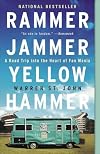
Anyone who enjoys college football should consider giving this in-depth case study in fandom a look, even though it's written by and focuses on fans of the Alabama Crimson Tide, a team that I, like so many others, am unable to contemplate without feeling a mixture of disgust and hatred. As a Texas Longhorns fan, I'll never forget the cosmic cruelties of the 2009 BCS Championship Game, and I'll always remember the peculiar sense I felt when the Tide played Big 12 turncoats/SEC newcomers Texas show more A&M in 2012, nearly unable to decide who to pull for in a can't-they-both-lose spectacle of competing acrimonies.
The author, a journalist for the New York Times, is a lifelong Tide fan who decided to do some research into the nature of fandom, hoping to shed a little light on why millions of otherwise psychologically healthy people devote time, energy, and money to sports. Though the urge to root for sports teams is nearly universal, people have been fascinated with its seeming irrationality for millennia. St. John has a good quote from the ancient Roman author Pliny the Younger about our propensity to cheer for laundry:
"It surprises me all the more that so many thousands of adult men should have such a childish passion for watching galloping horses and drivers standing in chariots, over and over again. If they were attracted by the speed of the horses or the driver's skill one could account for it, but in fact it is the racing-colours they really support and care about, and if the colours were to be exchanged in mid-course during a race, they would transfer their favor and enthusiasm and rapidly desert the famous drivers and horses whose names they shout as they recognize them from afar. Such is the popularity and importance of a worthless shirt."
He conducted field research in the form of following the Tide, in an RV if possible, for the entire 1999 season from the opener against Vanderbilt right up until the SEC championship game against Florida (oddly, he devotes only a single oblique paragraph in the epilogue to the Orange Bowl against Michigan, a heartbreaking loss also notable for being Tom Brady's final college game). The real draw are the characters he encounters along the way, such as:
- a couple who missed their daughter's wedding so they could attend the rivalry game against Tennessee (don't worry, they made the reception afterwards)
- a couple where the wife was having a gall bladder attack, and she desperately got hopped up on Demerol for a bowl game against Ohio State before dealing with her medical issue
- a man who crashed his plane into a tree before the Mississippi State game, yet still made it
These people are really funny to read about, and though as an outsider I read their stories in much the same check-out-this-trainwreck spirit that drives people to watch horrible reality TV shows, by the end I admired the author for doing what I thought impossible - humanizing Bama fans. I freely acknowledge the arbitrariness of sports fandom, yet I still can't resist compulsively refreshing ESPN to get my fix of modern tribalism during football season. If you've ever chuckled knowingly at those Bud Light "it's only weird if it doesn't work" commercials, you should check this out as soon as you've fortified your stomach against the prospect of nearly 300 pages about crimson and white. It's broader than that, and you may find yourself with a deeper appreciation for your (our) shared obsession. show less
The author, a journalist for the New York Times, is a lifelong Tide fan who decided to do some research into the nature of fandom, hoping to shed a little light on why millions of otherwise psychologically healthy people devote time, energy, and money to sports. Though the urge to root for sports teams is nearly universal, people have been fascinated with its seeming irrationality for millennia. St. John has a good quote from the ancient Roman author Pliny the Younger about our propensity to cheer for laundry:
"It surprises me all the more that so many thousands of adult men should have such a childish passion for watching galloping horses and drivers standing in chariots, over and over again. If they were attracted by the speed of the horses or the driver's skill one could account for it, but in fact it is the racing-colours they really support and care about, and if the colours were to be exchanged in mid-course during a race, they would transfer their favor and enthusiasm and rapidly desert the famous drivers and horses whose names they shout as they recognize them from afar. Such is the popularity and importance of a worthless shirt."
He conducted field research in the form of following the Tide, in an RV if possible, for the entire 1999 season from the opener against Vanderbilt right up until the SEC championship game against Florida (oddly, he devotes only a single oblique paragraph in the epilogue to the Orange Bowl against Michigan, a heartbreaking loss also notable for being Tom Brady's final college game). The real draw are the characters he encounters along the way, such as:
- a couple who missed their daughter's wedding so they could attend the rivalry game against Tennessee (don't worry, they made the reception afterwards)
- a couple where the wife was having a gall bladder attack, and she desperately got hopped up on Demerol for a bowl game against Ohio State before dealing with her medical issue
- a man who crashed his plane into a tree before the Mississippi State game, yet still made it
These people are really funny to read about, and though as an outsider I read their stories in much the same check-out-this-trainwreck spirit that drives people to watch horrible reality TV shows, by the end I admired the author for doing what I thought impossible - humanizing Bama fans. I freely acknowledge the arbitrariness of sports fandom, yet I still can't resist compulsively refreshing ESPN to get my fix of modern tribalism during football season. If you've ever chuckled knowingly at those Bud Light "it's only weird if it doesn't work" commercials, you should check this out as soon as you've fortified your stomach against the prospect of nearly 300 pages about crimson and white. It's broader than that, and you may find yourself with a deeper appreciation for your (our) shared obsession. show less

I can't help but feel like a party pooper, writing a critical review of a "story of hope, conflict, and transformation on the playing fields of an American town," but write it I will. Outcasts United is the story of the troubled players on three youth soccer teams in Clarkston, Georgia--a smalltown Everywhere, USA...at least until its designation as a refugee resettlement center upsets the longstanding social order. In the refugees who must adapt to their new lives in America and the show more Clarkston residents who must adapt to their new lives alongside the refugees, St. John had all the makings of a compelling narrative.
And yet, reading Outcasts United is like getting a bag of potato chips when you were expecting a full meal. St. John may excel in his work as a reporter for the New York Times, but in his inability to develop any of the personalities or situations that populate the narrative beyond the length of a feature article, he lacks the chops necessary to write a book-length work. He excels at descriptive passages (to the point of repeating many of them three or four times), but after 200 pages readers have no more insight into the personalities of the African, Balkan, and Middle Eastern refugee children on the Outcast teams or their headstrong Jordanian coach than they did after the first fifty.
Other reviewers have pointed out the overwhelming presence of typos on just about every page of Outcasts, which can be forgiven in an ARC. But the problem goes deeper than that: St. John appears to write without paying much heed to the words he's setting to paper. For instance, an individual who failed to make the cut for the first- and second-ranked teams at his high school is inexplicably described as having a "promising career in soccer." Worse still, St. John's narrative is disappointingly superficial for a topic that offers so much room to explore issues of nationality, class, belonging, and culture. Take for instance the episode where Outcast coach Luma Mufleh is inexplicably pulled over and arrested while accompanying her team to an important match. The arresting officer won't explain why there's a warrant out for Mufleh: is it because her taillight is out? Or because her middle name is Hassan? St. John alludes to previous instances of police harassment of refugees as Mufleh is handcuffed in front of her players and carted off to jail.
And then the issue is dropped. Not only does St. John not see fit to ask her thoughts on the arrest, or those of her players, he doesn't even see fit to explain why she was arrested at all. This is not the only instance where St. John inexplicably declines to explore the deeper repercussions of the issues he himself raises, and it's deeply unsatisfying whenever it occurs. And ultimately, it's what keeps Outcasts from reaching its potential as a full course meal. show less
And yet, reading Outcasts United is like getting a bag of potato chips when you were expecting a full meal. St. John may excel in his work as a reporter for the New York Times, but in his inability to develop any of the personalities or situations that populate the narrative beyond the length of a feature article, he lacks the chops necessary to write a book-length work. He excels at descriptive passages (to the point of repeating many of them three or four times), but after 200 pages readers have no more insight into the personalities of the African, Balkan, and Middle Eastern refugee children on the Outcast teams or their headstrong Jordanian coach than they did after the first fifty.
Other reviewers have pointed out the overwhelming presence of typos on just about every page of Outcasts, which can be forgiven in an ARC. But the problem goes deeper than that: St. John appears to write without paying much heed to the words he's setting to paper. For instance, an individual who failed to make the cut for the first- and second-ranked teams at his high school is inexplicably described as having a "promising career in soccer." Worse still, St. John's narrative is disappointingly superficial for a topic that offers so much room to explore issues of nationality, class, belonging, and culture. Take for instance the episode where Outcast coach Luma Mufleh is inexplicably pulled over and arrested while accompanying her team to an important match. The arresting officer won't explain why there's a warrant out for Mufleh: is it because her taillight is out? Or because her middle name is Hassan? St. John alludes to previous instances of police harassment of refugees as Mufleh is handcuffed in front of her players and carted off to jail.
And then the issue is dropped. Not only does St. John not see fit to ask her thoughts on the arrest, or those of her players, he doesn't even see fit to explain why she was arrested at all. This is not the only instance where St. John inexplicably declines to explore the deeper repercussions of the issues he himself raises, and it's deeply unsatisfying whenever it occurs. And ultimately, it's what keeps Outcasts from reaching its potential as a full course meal. show less
This review was written for LibraryThing Early Reviewers.A very well written book examining the effects that thousands of refugees from many, many different countries made on a very small town in Georgia, while also showing how some of the boys were nurtured by a Jordanian woman with a passion for soccer. Warren St. John gives us a window into the lives of some of the boys, their coach, Luma, how the City Council and Mayor react to the presence of the refugees in their midst, and some of the work of the relief agencies. This book gave me a show more microcosm of Clarkston, GA, in much richer detail than the information I expected. Recommended. show less
Awards


You May Also Like


Associated Authors
Statistics
- Works
- 2
- Also by
- 1
- Members
- 1,545
- Popularity
- #16,669
- Rating
- 3.9
- Reviews
- 112
- ISBNs
- 28
- Languages
- 1
- Favorited
- 1
