
Matthew Flaming
Author of The Kingdom of Ohio
Works by Matthew Flaming
Tagged
Common Knowledge
- Gender
- male
- Education
- Hampshire College
- Places of residence
- Los Angeles, California, USA
Portland, Oregon, USA - Associated Place (for map)
- USA
Members
Reviews
This sweet summer escape has the ineffable beauty of a Chopin nocturne or a Chanel perfume. Sure, the formula sounds fool-proof. Take a time machine; weave it into a love story; tie in a few titans of history - like Tesla and J.P.Morgan; package the lot as a mystery, or maybe a memoir; embellish the pages with a archival footnotes; oh - and I almost forgot - pick the ultimate nether/other world mis-en-scene, the NYC subway. But not every mixture of roots and desire turns out to be a frosted show more glass of Coca Cola on a scorching July day. This mystical concoction succeeds. Compellingly. And though there wasn't actually a Kingdom of Ohio in this universe, the author has me convinced that Holy Toledo is just a short worm-hole away. Readable? Irresistible! Consider this. Less than 24 hours ago, on a Tuesday evening, I stumbled upon this 322 page enchantment in the new book rack at the library. And now, as I finish this review, it's dinner time on Wednesday. That's time travel for you! show less
The Kingdom of Ohio is one the most thought-provoking books with a "possible worlds" setting that I have ever read. While most alternative history books are devices to explore particular questions of "what would the present be like if the past had differed in such-a-such way", this one instead uses it as a device to explore the nature of history itself.
The semi-negative reviews by upstairsgirl and suetu both demonstrate a failure to comprehend Flaming's intentions that speak much more to the show more readers' inattentiveness than to any failure on the part of the author.
For example, they both somehow conclude that Flaming intends to disguise the narrator's identity:
upstairsgirl: "Flaming's attempt to keep the reader from figuring out the narrator's true identity until the end of the story. (This attempt is less than successful.)"
suetu: "Flaming obscures the identity of this narrator, but it’s so obvious from the start who it is, that this, in itself, telegraphs the novel’s ending."
However, any careful reader will know that the reason the narrator's identity is obvious is that Flaming WANTS the reader to know who it is. He then wants you to think about why the narrator is being coy and oblique about his own identity. Even the narrator doesn't truly intend to hide his identity - if he did, he would not drop so many clues. What he wants is for his readers to accompany him in his journey from a state of denial and disconnection with his past, towards an attempt to recover and return to it. This journey is not possible unless we know who the narrator is - we must know what he is denying in order to perceive his denial. It is also not possible if we are initally told by him, because it would mean he had already progressed beyond denial before the journey began. Being led to guess the narrator's identity early, and be told it very late, is the only choice that would WORK, and yet these reviewers, with their blinders on, saw it as authorial ineptitude.
Similarly, both of them found the copious footnotes pointless, despite the many signals as to what they were there for. Flaming is not using the footnotes (as suetu conjectured) "to blur the line between reality and fiction". He is using them to demonstrate the vast gulf between the past as seen through a historical footnote, and the past as it was lived.
The primary theme of the book is what a feeble, thin, unreliable substitute both memory and historical research are for the richness of the past, and yet such poor substitutes are all we have. The narrator writes "I can’t help but think that all this stuff about facts (in the footnote sense) is overrated anyway", and yet he fills his book with footnotes. He writes that he has come to believe that the meaning of the past lies in the forgotten minutiae of ordinary lives, that fictional accounts that make the reader feel what life was like are more true than facts in a history book, yet he cannot give up his dependency upon historical research. He clings to footnotes and moldy documents despite finding them unsatisfying because he wants desperately to recover the past, and CAN'T. They are his lifeline, and we are intended to both share his frustration with how inadequate they are, and to perceive his inability to give them up. The footnotes are the bottle to which the narrator is addicted.
Googling them to discover which facts are shared with our reality, and which ones are unique to the alternative reality of the novel, may be an entertaining sideline for some readers, but it isn't what the footnotes are put there for. What they say is not as important as seeing that the narrator is compelled to include them.
These reviewers have completely missed the point, but it isn't because the point is obscure, it's because they are so intent upon fitting the story into a familiar mold that they are missing the blatant statements as to what the point is, statements that are repeated on page after page. They skim past the narrator's many ruminations about the frustrating unreliability of memory as being "bland and boring", when those ruminations contain the central theme of the book.
Someone who tries to fit The Kingdom of Ohio into the same category as Time and Again or The Time Traveler's Wife will find it a poor fit. (Of the time travel books I've read, the one it has the most thematic similarity to is Kurt Vonnegut's Slaughterhouse Five.)
The Time Traveler's Wife used the situation of uncontrollable absences and lives lived intertwined but out of sequence to make points about the nature of long-term relationships and what qualities they need to succeed. Love and relationships are something we all care about, so that book has broad appeal.
The Kingdom of Ohio, while it has a love story as the central plot strand that ties together all the disparate parts, is not primarily about that love story. Its central theme is not the nature of relationships, but the nature of memory, and the limits on what we can know about the past. A secondary and complementary theme is the limits on what we can know about the future, the way in which every decision is a leap into the unknown. (Which is why the ending must be unresolved in order to be true to that theme.) These are drier topics with less emotional resonance. For many readers, such abstractions will not be enough to pull them into the story and make them care what happens.
Someone who doesn't care about what a book IS about is bound to be disappointed with the fact that it isn't about the things they DO care about. But that doesn't mean the author has failed at anything, it just means that they picked up the wrong book for them. A book on baseball trivia will fail to entertain me because I care nothing about baseball, but I can't fault the authors of baseball books for writing about something they care about. If the quotes in the review by Karieh intrigue you, if they make you want to stop and ponder their ramifications, then this book is written for you. If they make you go "huh?", then find another book, because those quotes give a very good feel for what the book is like. show less
The semi-negative reviews by upstairsgirl and suetu both demonstrate a failure to comprehend Flaming's intentions that speak much more to the show more readers' inattentiveness than to any failure on the part of the author.
For example, they both somehow conclude that Flaming intends to disguise the narrator's identity:
upstairsgirl: "Flaming's attempt to keep the reader from figuring out the narrator's true identity until the end of the story. (This attempt is less than successful.)"
suetu: "Flaming obscures the identity of this narrator, but it’s so obvious from the start who it is, that this, in itself, telegraphs the novel’s ending."
However, any careful reader will know that the reason the narrator's identity is obvious is that Flaming WANTS the reader to know who it is. He then wants you to think about why the narrator is being coy and oblique about his own identity. Even the narrator doesn't truly intend to hide his identity - if he did, he would not drop so many clues. What he wants is for his readers to accompany him in his journey from a state of denial and disconnection with his past, towards an attempt to recover and return to it. This journey is not possible unless we know who the narrator is - we must know what he is denying in order to perceive his denial. It is also not possible if we are initally told by him, because it would mean he had already progressed beyond denial before the journey began. Being led to guess the narrator's identity early, and be told it very late, is the only choice that would WORK, and yet these reviewers, with their blinders on, saw it as authorial ineptitude.
Similarly, both of them found the copious footnotes pointless, despite the many signals as to what they were there for. Flaming is not using the footnotes (as suetu conjectured) "to blur the line between reality and fiction". He is using them to demonstrate the vast gulf between the past as seen through a historical footnote, and the past as it was lived.
The primary theme of the book is what a feeble, thin, unreliable substitute both memory and historical research are for the richness of the past, and yet such poor substitutes are all we have. The narrator writes "I can’t help but think that all this stuff about facts (in the footnote sense) is overrated anyway", and yet he fills his book with footnotes. He writes that he has come to believe that the meaning of the past lies in the forgotten minutiae of ordinary lives, that fictional accounts that make the reader feel what life was like are more true than facts in a history book, yet he cannot give up his dependency upon historical research. He clings to footnotes and moldy documents despite finding them unsatisfying because he wants desperately to recover the past, and CAN'T. They are his lifeline, and we are intended to both share his frustration with how inadequate they are, and to perceive his inability to give them up. The footnotes are the bottle to which the narrator is addicted.
Googling them to discover which facts are shared with our reality, and which ones are unique to the alternative reality of the novel, may be an entertaining sideline for some readers, but it isn't what the footnotes are put there for. What they say is not as important as seeing that the narrator is compelled to include them.
These reviewers have completely missed the point, but it isn't because the point is obscure, it's because they are so intent upon fitting the story into a familiar mold that they are missing the blatant statements as to what the point is, statements that are repeated on page after page. They skim past the narrator's many ruminations about the frustrating unreliability of memory as being "bland and boring", when those ruminations contain the central theme of the book.
Someone who tries to fit The Kingdom of Ohio into the same category as Time and Again or The Time Traveler's Wife will find it a poor fit. (Of the time travel books I've read, the one it has the most thematic similarity to is Kurt Vonnegut's Slaughterhouse Five.)
The Time Traveler's Wife used the situation of uncontrollable absences and lives lived intertwined but out of sequence to make points about the nature of long-term relationships and what qualities they need to succeed. Love and relationships are something we all care about, so that book has broad appeal.
The Kingdom of Ohio, while it has a love story as the central plot strand that ties together all the disparate parts, is not primarily about that love story. Its central theme is not the nature of relationships, but the nature of memory, and the limits on what we can know about the past. A secondary and complementary theme is the limits on what we can know about the future, the way in which every decision is a leap into the unknown. (Which is why the ending must be unresolved in order to be true to that theme.) These are drier topics with less emotional resonance. For many readers, such abstractions will not be enough to pull them into the story and make them care what happens.
Someone who doesn't care about what a book IS about is bound to be disappointed with the fact that it isn't about the things they DO care about. But that doesn't mean the author has failed at anything, it just means that they picked up the wrong book for them. A book on baseball trivia will fail to entertain me because I care nothing about baseball, but I can't fault the authors of baseball books for writing about something they care about. If the quotes in the review by Karieh intrigue you, if they make you want to stop and ponder their ramifications, then this book is written for you. If they make you go "huh?", then find another book, because those quotes give a very good feel for what the book is like. show less

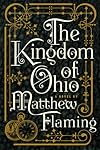
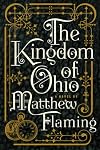
This is a frustrating book. The (attractive) cover implies either a vibrant historical novel or a steampunk fantasy, but it never quite manages either one. A lot of this, I think, has to do with the narrative conceit that we're being told the story by an independent researcher, which really keeps everything at a remove - there's very little urgency for most of the book. It becomes quickly apparent that we're dealing with an alternate history, but only slightly; there are advertising show more dirigibles over New York City but the social conflicts of Edison, Tesla, and J.P. Morgan are all accounted for just as they are in our own world. (All three men play brief supporting roles, which really don't amount to anything.) The narrator regularly throws footnotes and references at us that further complicate how much the book's world is identical to our own; it all feels a bit over-egged, especially when the story itself really isn't very complicated. There's also a twist which, frankly, most readers will guess within the first few chapters.
I don't know. By all rights, this should be an absolute slam-dunk for me: the setting, the slightly fantastical elements, the time period. But it's just not much very much fun to read, in the end; there's no real energy or pace, and I mostly finished the second half just to see if it improved. show less
I don't know. By all rights, this should be an absolute slam-dunk for me: the setting, the slightly fantastical elements, the time period. But it's just not much very much fun to read, in the end; there's no real energy or pace, and I mostly finished the second half just to see if it improved. show less
An intriguing premise plays well with fascinating characters, including some drawn straight from history, and an unorthodox narrative form to create a compelling read. Flaming's debut novel reveals an author confident enough in his skills--justly so--to craft a "factual" accounting of fantastical events that play with the fabric of space and time. As the plot twists through the vividly portrayed underground of 1900s New York into modern LA, a sweetly poignant love story unfolds. The end is show more heart-rending but consistent and satisfying. show less
You May Also Like


Statistics
- Works
- 1
- Members
- 411
- Popularity
- #59,240
- Rating
- 3.2
- Reviews
- 20
- ISBNs
- 11