
Roger Bruns
Author of Almost History: Close Calls, Plan B's, and Twists of Fate in America's Past
About the Author
Roger A. Bruns is Deputy Executive Director of the National Historical Publications and Records Commission.
Series
Works by Roger Bruns
Almost History: Close Calls, Plan B's, and Twists of Fate in America's Past (2000) 176 copies, 3 reviews
The Damndest Radical: The Life and World of Ben Reitman, Chicago's Celebrated Social Reformer, Hobo King, and Whorehouse Physician (1986) 24 copies
Am I Not a Man and a Brother: The Antislavery Crusade of Revolutionary America, 1688-1788 (1977) — Editor — 13 copies, 1 review
Icons of Latino America: Latino Contributions to American Culture, Volume 2 (Greenwood Icons) (2008) 2 copies
Jefferson 1 copy
César 1 copy
Washington 1 copy
Tagged
Common Knowledge
- Legal name
- Bruns, Roger A.
- Birthdate
- 1941
- Gender
- male
Members
Reviews
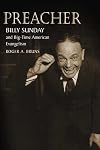
Bruns provides an entertaining and surprisingly sympathetic view of one of America's foremost evangelists. Sunday was the product of a difficult childhood, blessed with athletic prowess and little else. He harnessed that gift to become a major league baseball player of some notoriety. During his playing days, Billy experienced a crisis of faith at the Pacific Garden Mission which altered his life. Though never sinking to the depths of some of his teammates, Billy became devoted to God and show more His work. Over the course of the next decade, Sunday transitioned from ball to ministry. Early on, his ministry was as a subordinate. He was conscious of his own shortcomings and limitations. Eventually, with encouragement, he went out on his own and conducted his own meetings. These went well which encouraged Sunday to continue. As he did, the man started to become the legend. His showmanship rose, and his consciousness of his own ignorance and limitation faded. Eventually, he was conducting massive meetings in the largest cities. He was a once in a generation talent. Though largely bankrupt concerning theological thought, Sunday found his place by hammering social ills, chief among them were alcohol, evolution, and the Germans though he could also be found in conflict with organized labor and socialism. The peak of his career was the latter part of the 1910s. Success in New York City, Atlanta, and Washington DC were moments he would never duplicate. By the 1920s, he, his showmanship, and his message were fading. The last assaults on evolution were his final contributions. Eventually, the strain of his family took its toll. Sunday was an absent father, and several of his children lived profligate lives. In latter life, he became what would now be known as an "enabler." Billy Sunday preached to the very end.
The book is both enjoyable and insightful. Strangely enough, the author is almost too kind in certain places. He acknowledges the many faults of his subject while understanding that he was a product of his times. He does not develop sufficiently the impact that Sunday left upon American Christianity. His debasement of the pulpit may be second only to Charles Finney in its long term effects. Much of the entertainment culture that dominates the church can point back to Sunday. He was a deeply flawed though personally dedicated man who brought the Gospel to thousands while poisoning the church for generations. All the good that was done is a testament to the grace and power of God. show less
The book is both enjoyable and insightful. Strangely enough, the author is almost too kind in certain places. He acknowledges the many faults of his subject while understanding that he was a product of his times. He does not develop sufficiently the impact that Sunday left upon American Christianity. His debasement of the pulpit may be second only to Charles Finney in its long term effects. Much of the entertainment culture that dominates the church can point back to Sunday. He was a deeply flawed though personally dedicated man who brought the Gospel to thousands while poisoning the church for generations. All the good that was done is a testament to the grace and power of God. show less

Well-written, if slightly repetitive, look at the hobo life as it was coming to an end in the late 1970s. At first, I didn't find this book as interesting as the first-hand accounts I've read by hobos themselves, but at some point, Bruns' survey begins to become very informative, especially when he writes sketches of individual hobos or repeats a sketch from another author. This book doesn't leave the reader with an image of the romance of hobo life--the figures Bruns quotes of hobos and show more others killed on trains and in the nations railyards in the early part of the 20th century are staggering. Despite some of the repetition, he packs a lot into 200 pages, and this is a good source for learning about other similar writings. There are a few good pictures, also. show less

Counter-factual history, perhaps better described as "'what if?' history," is evidently enjoying a certain amount of popularity these days. Small but growing numbers of people read books based on interesting premises: What if the D-Day invasion had failed? What if Napoleon had been victorious at Waterloo? What if Abraham Lincoln had lost the 1860 presidential election? What if Truman had refused to authorize the use of the atomic bomb? Taking these alternative histories as fact, historians show more then judge the consequences that would stem from these "roads not taken."
Counter-factual history, like most things, can be well done or poorly done. Even when well done, though, it is still fiction, regardless of the amount of research and expertise that is revealed in the study. But there are historic documents that suggest alternative histories which are not fictional imaginings, but actual archival evidence. Roger Bruns has collected several such documents in book Almost History: Close Calls, Plan B's, and Twists of Fate in America's Past.
Some of these documents are fairly well-known. Bruns opens with the hand-written statement Gen. Dwight Eisenhower had prepared before the D-Day invasion to be released if the invasion failed. And he includes the speech that was prepared for President Nixon in case the Apollo 11 moon landing had failed and Neil Armstrong and Buzz Aldrin had died on the moon.
Bruns also includes some very intriguing material, including Richard Nixon's application to become an FBI agent, which he submitted just before he graduated from college. Bruns also includes an unsent reply from President Truman to Sen. Eugene McCarthy about alleged Communist infiltrations in the government. (Truman, it has been discovered, wrote several letters in anger that he never sent during the course of his presidency -- it is unknown whether he meant to send them and thought better or if it was simply an anger-management exercise.)
Bruns' definition of "almost history" is very slippery, and he includes all sorts of actual history too, suggesting it as ironic or contrary to contemporary wisdom. Some of these are interesting, but some also feel rather forced -- that Bruns needed to bulk up the book a little.
On the whole, however, this is a pleasant and unconventional consideration of American history. Bruns offers contextual introductions for each document, and then includes text of the document (if fairly short) or from the document (if longer). show less
Counter-factual history, like most things, can be well done or poorly done. Even when well done, though, it is still fiction, regardless of the amount of research and expertise that is revealed in the study. But there are historic documents that suggest alternative histories which are not fictional imaginings, but actual archival evidence. Roger Bruns has collected several such documents in book Almost History: Close Calls, Plan B's, and Twists of Fate in America's Past.
Some of these documents are fairly well-known. Bruns opens with the hand-written statement Gen. Dwight Eisenhower had prepared before the D-Day invasion to be released if the invasion failed. And he includes the speech that was prepared for President Nixon in case the Apollo 11 moon landing had failed and Neil Armstrong and Buzz Aldrin had died on the moon.
Bruns also includes some very intriguing material, including Richard Nixon's application to become an FBI agent, which he submitted just before he graduated from college. Bruns also includes an unsent reply from President Truman to Sen. Eugene McCarthy about alleged Communist infiltrations in the government. (Truman, it has been discovered, wrote several letters in anger that he never sent during the course of his presidency -- it is unknown whether he meant to send them and thought better or if it was simply an anger-management exercise.)
Bruns' definition of "almost history" is very slippery, and he includes all sorts of actual history too, suggesting it as ironic or contrary to contemporary wisdom. Some of these are interesting, but some also feel rather forced -- that Bruns needed to bulk up the book a little.
On the whole, however, this is a pleasant and unconventional consideration of American history. Bruns offers contextual introductions for each document, and then includes text of the document (if fairly short) or from the document (if longer). show less

5215. Almost History Close Calls, Plan B's, and Twists of Fate in American History, by Roger Bruns (read 6 Nov 2014) This 2000 book consists of 81 two or three page accounts of incidents, or possible incidents, in American history. Most are of things I knew but some were not. I had never before heard that Nixon had a speech prepared in case the moon landers were stranded on the moon. Nor had I heard of how the 19th Amendment was adopted because of a mother's advice to her son in the show more Tennessee Legislature who had been opposed to women voting. All in all, it is a fun book to read. show less
You May Also Like


Associated Authors
Statistics
- Works
- 36
- Members
- 507
- Popularity
- #48,897
- Rating
- 3.6
- Reviews
- 8
- ISBNs
- 69
- Languages
- 1