
Isabel George
Author of Animals at War (Usborne Young Reading)
Works by Isabel George
The Dog that Saved My Life: Incredible true stories of canine loyalty beyond all bounds (Heroes) (2010) 31 copies
Beyond the Call of Duty: Heart-warming stories of canine devotion and bravery (2010) 21 copies, 2 reviews
The 9/11 Dogs: The heroes who searched for survivors at Ground Zero (HarperTrue Friend – A Short Read) (2014) 3 copies
Tagged
Common Knowledge
- Gender
- female
- Occupations
- journalist
writer - Short biography
- Isabel George is a writer, journalist and PR, who has worked with animal charities, and particularly the PDSA, for many years. She has previously written for children and has also worked with the Imperial War Museum on various events and exhibitions connected with the Animals at War theme.
- Nationality
- UK
- Associated Place (for map)
- UK
Members
Reviews
Buster: The Military Dog Who Saved a Thousand Lives (Thorndike Press Large Print Popular and Narrative Nonfiction) by Will Barrow
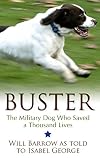
I appreciate all who serve and like it when people immortalize dogs who do great service for us, however this book lacked exciting details I would expect from a military related book. While the sub title says 'The Military Dog who Saved a Thousand Lives" there wasn't much evidence of that directly spelled out. From the details in the book Buster and his handler hardly even got shot at, which I am very glad for them, but made this book less exciting that others I have read.
The normal dog with show more human relationship is good. And Buster, a Springer Spaniel, sounds like a great dog. Also, since the dog handler Will Barrow is British, it is sprinkled with differences in language that us Yanks love, like calling the troops 'lads.' So even though stuff said about good dogs have been done before, I still like reading about them. For example:
'Those who aren’t dog lovers probably think that talking to our four-legged friends is a step too close to crazy, but sometimes there’s no better conversationalist than a dog: if you are afraid they sense it and calm you without uttering a word. If you are making a fool of yourself they draw you to one side and give you that look that says ‘you know, you can be a real prat sometimes’.
Buster at one point was contrasted with the other type of dogs used in the military:
'Buster, by all accounts, was a ‘character’ and in the job we are very aware of the interpretation of ‘character’. In my experience that can mean anything from a loveable creature that licks your face and brings you your slippers at the end of a hard day, to a hard-arse heap of solid muscle that would eat your face and your slippers all at the same time.'
I always love reading about a great dog. the lads always loved on the dog and had to keep being told not to give him food. Love hearing of his quirks like not wanting to sit on the floor but up in a seat whenever he could. How he slept on his feet while they shared a 'mozzipod' (bedding with mosquito netting around it). I especially liked this bit about Buster:
'One thing that made me laugh from the start was Buster’s ‘indication’ — how he told me and the rest of the team that he had located a ‘find’. Most dogs trained for this work will sit or stand to indicate, but Buster did something else entirely — he performed a little jig with his front paws and growled! I laughed the first time I saw it, in fact 1t made me chuckle every time. He looked so intense and so funny all at the same time. But the hugely serious side to Buster’s little ‘dance’ was that when he did it there was, without a shadow of a doubt, a weapon or explosives right under his nose. With Buster, there was no mistake.'
Will was only Busters handler for one period of time. So it could be Buster did most of his more interesting adventures and finds with other handlers. Will wasn't his dog when he left Iraq save and sound though, however:
'But it was my Buster who was to have the honour of being the last British Military Working Dog to leave Iraq in 2009.'
Nice there is no Kleenex needed in the end of the book. So nice to hear about Buster, but the book was not that exciting enough for me to want to highly recommend it. show less
The normal dog with show more human relationship is good. And Buster, a Springer Spaniel, sounds like a great dog. Also, since the dog handler Will Barrow is British, it is sprinkled with differences in language that us Yanks love, like calling the troops 'lads.' So even though stuff said about good dogs have been done before, I still like reading about them. For example:
'Those who aren’t dog lovers probably think that talking to our four-legged friends is a step too close to crazy, but sometimes there’s no better conversationalist than a dog: if you are afraid they sense it and calm you without uttering a word. If you are making a fool of yourself they draw you to one side and give you that look that says ‘you know, you can be a real prat sometimes’.
Buster at one point was contrasted with the other type of dogs used in the military:
'Buster, by all accounts, was a ‘character’ and in the job we are very aware of the interpretation of ‘character’. In my experience that can mean anything from a loveable creature that licks your face and brings you your slippers at the end of a hard day, to a hard-arse heap of solid muscle that would eat your face and your slippers all at the same time.'
I always love reading about a great dog. the lads always loved on the dog and had to keep being told not to give him food. Love hearing of his quirks like not wanting to sit on the floor but up in a seat whenever he could. How he slept on his feet while they shared a 'mozzipod' (bedding with mosquito netting around it). I especially liked this bit about Buster:
'One thing that made me laugh from the start was Buster’s ‘indication’ — how he told me and the rest of the team that he had located a ‘find’. Most dogs trained for this work will sit or stand to indicate, but Buster did something else entirely — he performed a little jig with his front paws and growled! I laughed the first time I saw it, in fact 1t made me chuckle every time. He looked so intense and so funny all at the same time. But the hugely serious side to Buster’s little ‘dance’ was that when he did it there was, without a shadow of a doubt, a weapon or explosives right under his nose. With Buster, there was no mistake.'
Will was only Busters handler for one period of time. So it could be Buster did most of his more interesting adventures and finds with other handlers. Will wasn't his dog when he left Iraq save and sound though, however:
'But it was my Buster who was to have the honour of being the last British Military Working Dog to leave Iraq in 2009.'
Nice there is no Kleenex needed in the end of the book. So nice to hear about Buster, but the book was not that exciting enough for me to want to highly recommend it. show less
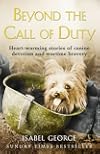
This book has 5 stories of dogs in wartime. I overall enjoyed the book and am glad it is in my current collection of 203 books on dogs. My criticism is based on comparison of books similar in topic that I liked more.
Some stories were only mildly good. Being true to life, the stories outside of the two I will talk about at more length below did not hit the notes as high as a Hollywood movie, but overall good details. I think the authors concise style carried things along quickly and covered show more the details, but maybe too fast so as to not grab your feelings so much.
One story, 'Antis, Loyal unto death' is a short version of what is told in the book, The Dog who could Fly, by Damien Lewis. Good short version on the dogs story, but what really sold me was additional details on what happened to the dog and owner after WWII was over in Czechoslovakia.
I had the same feeling on the story for Sergeant Stubby. I only recently got the full book, on this dog, which I have not read. I felt like this amazing story was ran through too quickly. If you just want to know what happened, the accounting in Beyond the Call of Duty is enough, but if you want to really feel the story, I am sure the full book will be more fulfilling.
There is a lot of great books on dogs in war, this one is only good. show less
Some stories were only mildly good. Being true to life, the stories outside of the two I will talk about at more length below did not hit the notes as high as a Hollywood movie, but overall good details. I think the authors concise style carried things along quickly and covered show more the details, but maybe too fast so as to not grab your feelings so much.
One story, 'Antis, Loyal unto death' is a short version of what is told in the book, The Dog who could Fly, by Damien Lewis. Good short version on the dogs story, but what really sold me was additional details on what happened to the dog and owner after WWII was over in Czechoslovakia.
I had the same feeling on the story for Sergeant Stubby. I only recently got the full book, on this dog, which I have not read. I felt like this amazing story was ran through too quickly. If you just want to know what happened, the accounting in Beyond the Call of Duty is enough, but if you want to really feel the story, I am sure the full book will be more fulfilling.
There is a lot of great books on dogs in war, this one is only good. show less
Buster: The Military Dog Who Saved a Thousand Lives (Thorndike Press Large Print Popular and Narrative Nonfiction) by Will Barrow
I appreciate all who serve and like it when people immortalize dogs who do great service for us, however this book lacked exciting details I would expect from a military related book. While the sub title says 'The Military Dog who Saved a Thousand Lives" there wasn't much evidence of that directly spelled out. From the details in the book Buster and his handler hardly even got shot at, which I am very glad for them, but made this book less exciting that others I have read.
The normal dog with show more human relationship is good. And Buster, a Springer Spaniel, sounds like a great dog. Also, since the dog handler Will Barrow is British, it is sprinkled with differences in language that us Yanks love, like calling the troops 'lads.' So even though stuff said about good dogs have been done before, I still like reading about them. For example:
'Those who aren’t dog lovers probably think that talking to our four-legged friends is a step too close to crazy, but sometimes there’s no better conversationalist than a dog: if you are afraid they sense it and calm you without uttering a word. If you are making a fool of yourself they draw you to one side and give you that look that says ‘you know, you can be a real prat sometimes’.
Buster at one point was contrasted with the other type of dogs used in the military:
'Buster, by all accounts, was a ‘character’ and in the job we are very aware of the interpretation of ‘character’. In my experience that can mean anything from a loveable creature that licks your face and brings you your slippers at the end of a hard day, to a hard-arse heap of solid muscle that would eat your face and your slippers all at the same time.'
I always love reading about a great dog. the lads always loved on the dog and had to keep being told not to give him food. Love hearing of his quirks like not wanting to sit on the floor but up in a seat whenever he could. How he slept on his feet while they shared a 'mozzipod' (bedding with mosquito netting around it). I especially liked this bit about Buster:
'One thing that made me laugh from the start was Buster’s ‘indication’ — how he told me and the rest of the team that he had located a ‘find’. Most dogs trained for this work will sit or stand to indicate, but Buster did something else entirely — he performed a little jig with his front paws and growled! I laughed the first time I saw it, in fact 1t made me chuckle every time. He looked so intense and so funny all at the same time. But the hugely serious side to Buster’s little ‘dance’ was that when he did it there was, without a shadow of a doubt, a weapon or explosives right under his nose. With Buster, there was no mistake.'
Will was only Busters handler for one period of time. So it could be Buster did most of his more interesting adventures and finds with other handlers. Will wasn't his dog when he left Iraq save and sound though, however:
'But it was my Buster who was to have the honour of being the last British Military Working Dog to leave Iraq in 2009.'
Nice there is no Kleenex needed in the end of the book. So nice to hear about Buster, but the book was not that exciting enough for me to want to highly recommend it. show less
The normal dog with show more human relationship is good. And Buster, a Springer Spaniel, sounds like a great dog. Also, since the dog handler Will Barrow is British, it is sprinkled with differences in language that us Yanks love, like calling the troops 'lads.' So even though stuff said about good dogs have been done before, I still like reading about them. For example:
'Those who aren’t dog lovers probably think that talking to our four-legged friends is a step too close to crazy, but sometimes there’s no better conversationalist than a dog: if you are afraid they sense it and calm you without uttering a word. If you are making a fool of yourself they draw you to one side and give you that look that says ‘you know, you can be a real prat sometimes’.
Buster at one point was contrasted with the other type of dogs used in the military:
'Buster, by all accounts, was a ‘character’ and in the job we are very aware of the interpretation of ‘character’. In my experience that can mean anything from a loveable creature that licks your face and brings you your slippers at the end of a hard day, to a hard-arse heap of solid muscle that would eat your face and your slippers all at the same time.'
I always love reading about a great dog. the lads always loved on the dog and had to keep being told not to give him food. Love hearing of his quirks like not wanting to sit on the floor but up in a seat whenever he could. How he slept on his feet while they shared a 'mozzipod' (bedding with mosquito netting around it). I especially liked this bit about Buster:
'One thing that made me laugh from the start was Buster’s ‘indication’ — how he told me and the rest of the team that he had located a ‘find’. Most dogs trained for this work will sit or stand to indicate, but Buster did something else entirely — he performed a little jig with his front paws and growled! I laughed the first time I saw it, in fact 1t made me chuckle every time. He looked so intense and so funny all at the same time. But the hugely serious side to Buster’s little ‘dance’ was that when he did it there was, without a shadow of a doubt, a weapon or explosives right under his nose. With Buster, there was no mistake.'
Will was only Busters handler for one period of time. So it could be Buster did most of his more interesting adventures and finds with other handlers. Will wasn't his dog when he left Iraq save and sound though, however:
'But it was my Buster who was to have the honour of being the last British Military Working Dog to leave Iraq in 2009.'
Nice there is no Kleenex needed in the end of the book. So nice to hear about Buster, but the book was not that exciting enough for me to want to highly recommend it. show less
This book has 5 stories of dogs in wartime. I overall enjoyed the book and am glad it is in my current collection of 203 books on dogs. My criticism is based on comparison of books similar in topic that I liked more.
Some stories were only mildly good. Being true to life, the stories outside of the two I will talk about at more length below did not hit the notes as high as a Hollywood movie, but overall good details. I think the authors concise style carried things along quickly and covered show more the details, but maybe too fast so as to not grab your feelings so much.
One story, 'Antis, Loyal unto death' is a short version of what is told in the book, The Dog who could Fly, by Damien Lewis. Good short version on the dogs story, but what really sold me was additional details on what happened to the dog and owner after WWII was over in Czechoslovakia.
I had the same feeling on the story for Sergeant Stubby. I only recently got the full book, on this dog, which I have not read. I felt like this amazing story was ran through too quickly. If you just want to know what happened, the accounting in Beyond the Call of Duty is enough, but if you want to really feel the story, I am sure the full book will be more fulfilling.
There is a lot of great books on dogs in war, this one is only good. show less
Some stories were only mildly good. Being true to life, the stories outside of the two I will talk about at more length below did not hit the notes as high as a Hollywood movie, but overall good details. I think the authors concise style carried things along quickly and covered show more the details, but maybe too fast so as to not grab your feelings so much.
One story, 'Antis, Loyal unto death' is a short version of what is told in the book, The Dog who could Fly, by Damien Lewis. Good short version on the dogs story, but what really sold me was additional details on what happened to the dog and owner after WWII was over in Czechoslovakia.
I had the same feeling on the story for Sergeant Stubby. I only recently got the full book, on this dog, which I have not read. I felt like this amazing story was ran through too quickly. If you just want to know what happened, the accounting in Beyond the Call of Duty is enough, but if you want to really feel the story, I am sure the full book will be more fulfilling.
There is a lot of great books on dogs in war, this one is only good. show less
Lists
You May Also Like


Associated Authors
Statistics
- Works
- 15
- Members
- 256
- Popularity
- #89,546
- Rating
- 4.3
- Reviews
- 5
- ISBNs
- 40
- Languages
- 1