
Amira Hass
Author of Drinking the Sea at Gaza: Days and Nights in a Land Under Siege
About the Author
Recipient of the UNESCO Guillermo Camo World Press Freedom Prize for 2003, Amira Hass is the only Jewish Israeli correspondent on Palestinian affairs to live among the people about whom she reports. The child of Holocaust survivors, Hass prefers the title "expert in Israeli occupation," and, as show more such, is relentless in her quest for both truth and justice. show less
Image credit: Author: Novecentino; Source:
http://www.flickr.com/photos/novecentino/1491796831
Works by Amira Hass
לשתות מהים של עזה 1 copy
Associated Works
Tagged
Common Knowledge
- Canonical name
- Hass, Amira
- Birthdate
- 1956-06-28
- Gender
- female
- Education
- Hebrew University of Jerusalem
- Occupations
- journalist
- Awards and honors
- Press Freedom Hero Award (2000)
Bruno Kreisky Human Rights Award (2002)
UNESCO/Guillermo Cano World Press Freedom Prize (2003) - Relationships
- Levy-Hass, Hanna (mother)
- Short biography
- Amira Hass was born in Jerusalem, Israel, the daughter of Hanna Lévy-Hass and her husband Abraham Hass, both Holocaust survivors. Her mother was the noted author of a diary she kept at the concentration camp of Bergen-Belsen, first published in 1982. Amira was educated at the Hebrew University of Jerusalem, where she studied the history of Nazism and the European Left's relation to the Holocaust, and became a journalist. She joined Haaretz in 1989, and has been correspondent for the Occupied Territories since 1993. She spent three years living in Gaza, which served as the basis for her widely-acclaimed book, Drinking the Sea at Gaza (1999). She has lived in the West Bank city of Ramallah since 1997.
- Nationality
- Israel
- Birthplace
- Jerusalem, Israel
- Places of residence
- Ramallah, West Bank, Palestine
- Associated Place (for map)
- Israel
Members
Reviews

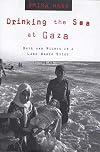
Written by an Israeli Jewish female journalist living in the Gaza strip, this book portraits the lives of ordinary gazans during the first intifada and the first couple of years of Palestinian autonomous rule. Dealing with the daily lifes of normal people and describing the consequences of the military occupation by Israel first, and the continuation of Israel complete, even if indirect, domination of all aspects of life in the strip after the beginning of self-rule, this book goes a long show more way to dispel the prejudice entrenched in the believe hold by many westerners that Gazans (and Palestinians in general) are but a bunch of terrorists bent on nothing more than throwing the Israelis into the sea. The humanity and compassion for the people of Gaza transmited in this book is accompanied by an uncompromizing lashing of the top level Israeli policies (either explicit or implicit) and of the pratical implementation of them by the rank and file men on the field (the direct military rulers first, the Liason Committee people - which just happen to be stafed by the same old guys...- after 1994.) But the arbitrary and undemocratic practices of the Palestinian Authority are not left untouched, and the part of the book dealing with the Palestinian State Security Court (supported by US and Israel) is a shilling reminder of how far the PA is from democratic principles and practices, and of how convenient it is for Israel that things stay just like that. At times the reading becomes almost unbearable. The poverty, the humiliation, the discrimination and repression that normal people are subject to, together with the sheer powerlessness that they feel, and the apparent hopelessness of their plight is all too transparent in this powerful and deeply disturbing book. At times it comes to mind South Africa's apartheid policies. In other occasions one can draw parallels with descriptions of anti-semitic policies in central and eastern Europe in the 19th and early 20th centuries. If any country in the world would treat the Jewish population under its sovereignty in the way the Israeli government behaves toward the Gazans (and the Palestinians in general) it would be classified as anti-semitic and the country would become a pariah state, and rightly so. Anti-semitism was outlawed in acceptable political discourse in Europe only after the Jews accross the continent suffered the most terrible catastrophe and were almost totally destroyed. Let's just hope that the Palestinians will not need to suffer a catastrophe of comparable proportions in order the outrageous policies they have been (and continue to be) submited be recognized as such by the international community. show less
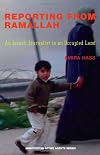
Originally in Hebrew; story of Israeli journalist in an occupied land
Awards

You May Also Like


Statistics
- Works
- 5
- Also by
- 1
- Members
- 241
- Popularity
- #94,247
- Rating
- 4.2
- Reviews
- 3
- ISBNs
- 14
- Languages
- 6
- Favorited
- 2