
Terry Goodkind (1948–2020)
Author of Wizard's First Rule
About the Author
Writer Terry Goodkind was born in Omaha, Nebraska in 1949. As a child, he had trouble reading and writing because he suffered from a form of dyslexia. It wasn't until high school that a composition teacher recognized his writing talent. Before becoming a writer, he worked as a carpenter, show more violin-maker, hypnotherapist, wildlife artist and restorer of rare artifacts. Goodkind's first novel, "Wizards First Rule" (1994), took a year for him to write and had a record-breaking debut. It became an international bestseller and won the praise of many writers in the fantasy genre. The sequels "Stone of Tears" (1995) and "Blood of the Fold" (1996) experienced equal success. His fourth book, "Temple of the Winds" was published in 1997. His other books include The Pillars of Creation, Naked Empire, Confessor, The Omen Machine, Severed Souls, and Shroud of Eternity. His series included Sword of Truth; Richard and Kahlan; Jack Raines; Nicci Chronicles; and Children of D'Hara. Terry Goodkind, author of over 35 books, novellas, and short stories, died on September 17, 2020. He was 72. (Bowker Author Biography) show less
Series
Works by Terry Goodkind
The Sword of Truth Box Set, Books 4-6: Temple of the Winds; Soul of the Fire; Faith of the Fallen (2002) 458 copies, 3 reviews
The Sword of Truth, Boxed Set III, Books 7-9: The Pillars of Creation, Naked Empire, Chainfire (2006) 343 copies, 1 review
A Sword of Truth Set: Richard and Kahlan: (The Omen Machine, The Third Kingdom, Severed Souls, Warheart) (2017) 5 copies
The Sword of Truth Series 5 copies
Terry Goodkind Sword of Truth Series: Books 13-14: The Omen Machine & The First Confessor (2017) 3 copies
Terry Goodkind Sword of Truth Series: Books 15-16: The Third Kingdom & Severed Souls (2017) 2 copies
The sword of truth 2 copies
Das Schwert der Wahrheit 25 1 copy
Das Schwert der Wahrheit 18 1 copy
Das Schwert der Wahrheit 19 1 copy
Das Schwert der Wahrheit 20 1 copy
Das Schwert der Wahrheit 21 1 copy
Das Schwert der Wahrheit 22 1 copy
Das Schwert der Wahrheit 23 1 copy
Das Schwert der Wahrheit 24 1 copy
Das Schwert der Wahrheit 27 1 copy
Das Schwert der Wahrheit 26 1 copy
Das Schwert der Wahrheit 16 1 copy
Das Schwert der Wahrheit 28 1 copy
La espada de la verdad, 1-2 1 copy
Das Schwert der Wahrheit 17 1 copy
Das Schwert der Wahrheit 15 1 copy
Queen City Jazz 1 copy
Missing 1 copy
[Title missing] 1 copy
Das Schwert der Wahrheit 14 1 copy
Das Schwert der Wahrheit 8 1 copy
Das Schwert der Wahrheit 11 1 copy
Das Schwert der Wahrheit 13 1 copy
Death 1 copy
Associated Works
Legends I: New Short Novels by the Masters of Modern Fantasy (1998) — Contributor — 2,071 copies, 19 reviews
Legends: Short Novels by the Masters of Modern Fantasy, Vol. 2 (of 3) (1998) — Contributor — 468 copies, 4 reviews
Legends: Short Novels by the Masters of Modern Fantasy, Vol. B (of 2) (2000) — Contributor — 148 copies, 5 reviews
Legends: Stories by the Masters of Fantasy, Vol. 3 (Audio) (1999) — Contributor — 11 copies, 1 review
Tagged
Common Knowledge
- Birthdate
- 1948-01-11
- Date of death
- 2020-09-17
- Gender
- male
- Occupations
- carpenter
violin maker
author - Cause of death
- not given
- Nationality
- USA
- Birthplace
- Omaha, Nebraska, USA
- Places of residence
- Omaha, Nebraska, USA (birth)
Mount Desert Island, Maine, USA - Place of death
- Boulder City, Nevada, USA
- Associated Place (for map)
- USA
Members
Discussions
Is the Sword of Truth series worth finishing? in FantasyFans (October 2013)
Reviews

Reviewers of Terry Goodkind's Sword of Truth series seem to fall into three camps. There are those who claim he's a rotten writer and right from the beginning. Why they're reading and reviewing this far into the series I'll never understand. There are pleasures in a trainwreck at times, I know. That's why I read the entire Twilight "Saga"- four miserably written books that are mercifully not all that long. But up to six books of doorstopper length? Did they really read all these? Then there show more are the ones that just lap these up to the end, convinced Goodkind is the greatest, most profound writer of the human condition EVUH. (Goodkind himself given his interviews seems to be one of that number.)
I'm in the third camp. The one that loved this series at one point, then thought it jumped the shark. Some cite the previous book, Soul of the Fire as where the series declined. Most of those readers who found themselves ultimately disappointed with the series cite this book. I'm actually not one of them. (No, for me Pillars of Creation, the next book, is where things became tedious.)
I do get why people are annoyed by this book though. Goodkind makes no bones about being an Ayn Rand devotee on his website. Unsurprising to me when I found that out, since I thought I could detect libertarian themes in the previous books. Something I found more attractive rather than repellant. But this is the book where it becomes overt--for many a reader it seems, far too overt. Yes, at times you can hear the anvils clanging in this parable about the EVILS of socialism.
Although if I were to point to the book's most annoying characteristic, it was the way in this book Richard becomes an overweening Marty-Stu. Yes, he's the hero. The hero of the series. I didn't blink an eye at him being a master tracker. Or a natural leader and general. Or even the greatest magician of his time. But when after all that he becomes a sculptor who makes Michelangelo seem a slacker? That's when I thought, head, meet desk.
So I can see what the detractors are sniping at in this high fantasy Atlas Shrugged. Truly. Yet I still found this book enormously entertaining. And I liked Nicci and her character arc. She's not up in awesomeness with Cara or Ann in my opinion, but she isn't a Jennsen either. For which, much thanks. show less
I'm in the third camp. The one that loved this series at one point, then thought it jumped the shark. Some cite the previous book, Soul of the Fire as where the series declined. Most of those readers who found themselves ultimately disappointed with the series cite this book. I'm actually not one of them. (No, for me Pillars of Creation, the next book, is where things became tedious.)
I do get why people are annoyed by this book though. Goodkind makes no bones about being an Ayn Rand devotee on his website. Unsurprising to me when I found that out, since I thought I could detect libertarian themes in the previous books. Something I found more attractive rather than repellant. But this is the book where it becomes overt--for many a reader it seems, far too overt. Yes, at times you can hear the anvils clanging in this parable about the EVILS of socialism.
Although if I were to point to the book's most annoying characteristic, it was the way in this book Richard becomes an overweening Marty-Stu. Yes, he's the hero. The hero of the series. I didn't blink an eye at him being a master tracker. Or a natural leader and general. Or even the greatest magician of his time. But when after all that he becomes a sculptor who makes Michelangelo seem a slacker? That's when I thought, head, meet desk.
So I can see what the detractors are sniping at in this high fantasy Atlas Shrugged. Truly. Yet I still found this book enormously entertaining. And I liked Nicci and her character arc. She's not up in awesomeness with Cara or Ann in my opinion, but she isn't a Jennsen either. For which, much thanks. show less

If you're looking for something along the lines of Mages vs. Sorcerers, some big battles and lots of action... look elsewhere.
I've heard a lot of things said about Terry Goodkind since I first began reading the Sword of Truth novels back in high school, both bad and good. Because of where my interests lay in fantasy, I kept on, because there was definitely something ELSE in Terry Goodkind's works that I couldn't find in other fantasy books that I'd read.
The world he developed is extensive show more and astounding, filled with rich detail. It gives your imagination plenty of room to play whether provided with stereotypical battle action, or more subtle, thought-out, philosophical action.
Phantom is chalk full of the latter. Richard is a thinker. If you've paid attention at all throughout the series, you would know this. Battle doesn't become him, and the actions he chooses in Phantom only enforce this. The last 3 books of the Sword of Truth are the epitome of Khalan's and Richard's personalities. Neither of them enjoy the fight - the do it only when they have to, when they feel there truly is no other option. It's a tactical measure to be used only when it has some real benefit.
It's been a long while since I read Chainfire, but I remember the general premise - which is what's important here. The Chainfire spell is the central motivating aspect behind everything that takes place in the last 3 books. Without it, this becomes little more than a typical, unimaginative high-action epic fantasy, to pull from the books themselves... "steel vs. steel, magic against magic."
Chainfire gives it something DIFFERENT.
I enjoy the almost philosophical twists and turns Goodkind uses to move the story forward. You may read through parts or introductions to people thinking, "Oh, another inconsequential brute" or "why does this even matter?" but Goodkind has thought ahead. He does not introduce events, people, or things without there being a Very. Good. Reason.
I'm going to reiterate here, because this is probably the most important part about whether or not you'll enjoy Phantom or not. If you're looking for a lot of in your face action, the last 3 books in the Sword of Truth are not for you. If you're into the subtleties, the actual MAGIC, and don't mind a plot being moved forward by getting an insight into characters minds, thoughts and deeds, then you'll thoroughly enjoy the Chainfire trilogy. show less
I've heard a lot of things said about Terry Goodkind since I first began reading the Sword of Truth novels back in high school, both bad and good. Because of where my interests lay in fantasy, I kept on, because there was definitely something ELSE in Terry Goodkind's works that I couldn't find in other fantasy books that I'd read.
The world he developed is extensive show more and astounding, filled with rich detail. It gives your imagination plenty of room to play whether provided with stereotypical battle action, or more subtle, thought-out, philosophical action.
Phantom is chalk full of the latter. Richard is a thinker. If you've paid attention at all throughout the series, you would know this. Battle doesn't become him, and the actions he chooses in Phantom only enforce this. The last 3 books of the Sword of Truth are the epitome of Khalan's and Richard's personalities. Neither of them enjoy the fight - the do it only when they have to, when they feel there truly is no other option. It's a tactical measure to be used only when it has some real benefit.
It's been a long while since I read Chainfire, but I remember the general premise - which is what's important here. The Chainfire spell is the central motivating aspect behind everything that takes place in the last 3 books. Without it, this becomes little more than a typical, unimaginative high-action epic fantasy, to pull from the books themselves... "steel vs. steel, magic against magic."
Chainfire gives it something DIFFERENT.
I enjoy the almost philosophical twists and turns Goodkind uses to move the story forward. You may read through parts or introductions to people thinking, "Oh, another inconsequential brute" or "why does this even matter?" but Goodkind has thought ahead. He does not introduce events, people, or things without there being a Very. Good. Reason.
I'm going to reiterate here, because this is probably the most important part about whether or not you'll enjoy Phantom or not. If you're looking for a lot of in your face action, the last 3 books in the Sword of Truth are not for you. If you're into the subtleties, the actual MAGIC, and don't mind a plot being moved forward by getting an insight into characters minds, thoughts and deeds, then you'll thoroughly enjoy the Chainfire trilogy. show less
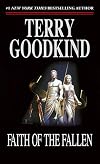
Having lost any faith in his people, Richard abandons his command of the army and retires into the mountains to slowly nurse Kahlan back to health. The Order is too large to destroy with a direct attack, Richard can see that it is useless to fight them.
But just as Kahlan is recovering from her injuries, Nicci, a notorious Sister of the Dark and Slave Queen of Emperor Jagang, arrives at their remote cottage. Before anyone can attack her, Nicci casts an obscure spell at Kahlan that links their show more lives. Richard must come away with Nicci or Kahlan will be killed. Nicci's motives are never fully explained, but she somehow hopes to learn the secret to Richard's inner motivation. Her plan for this involves taking Richard into the heart of the Old World.
This book is really REALLY repetitive. This is now the third time that a woman of astonishing power has arrived onto the scene to take Richard as a personal slave. It's getting pretty stale at this point. Also, nothing makes sense, especially not the character of Nicci.
Nicci is supposed to be this husk of a person, someone who has bought into the Order so far that she believes nothing that happens to her matters. She's raped and beaten constantly and doesn't care because she feels and fears nothing. Then ten minutes later she's whining because she's had to stand in the rain for a few hours. One minute she plans to enslave Richard so that she can learn some mystic truth and then murder him. The next minute she's baking him bread and weeping because he doesn't like her soup. The next minute she's in a frenzy of fear because he's being tortured by the government. The next minute she is glad he's being tortured and hopes he dies. It's all nonsense. She's a sister of the Dark but she's also... SOMEHOW devoted to the Creator? She thinks magic is evil and never really applied herself to learn any of it, but she's also brimming full of power and everyone is afraid of her. Geeez.... which is it? I sincerely don't care, but at least pick one at random for consistency.
The Old World also makes no sense as a kingdom. At home everyone is starving because the society is so mired in bureaucracy that crop yields rot before they can make it to market. And yet, this kingdom is supposedly supporting an army of MILLIONS as they invade whole other countries. What do the supply lines look like? The people are too lazy to work an easy job but when they join the army they somehow become super-naturally disciplined killing machines?? You literally cannot have it both ways. The Old World is some impossible combination of North Korea and the Roman Empire.
Also, Richard goes the whole book without doing any magic. Seriously? I'm not reading fantasy epics for their rapier political commentary, that's for sure. Throw us a bone here! I guess we're supposed to believe that his carving skills are magical. And geez they would have to be. He destroyed an entire ingrained, centuries-long philosophy with a statue. Yup.
Nevermind the glaringly obvious fact that this entire book is basically a ham-fisted re-telling of Atlas Shrugged set in a quasi-fantasy universe. This book just sticks out like a sore thumb in the series. I don't get how it fits or why he wrote it like this. Just. No. show less
But just as Kahlan is recovering from her injuries, Nicci, a notorious Sister of the Dark and Slave Queen of Emperor Jagang, arrives at their remote cottage. Before anyone can attack her, Nicci casts an obscure spell at Kahlan that links their show more lives. Richard must come away with Nicci or Kahlan will be killed. Nicci's motives are never fully explained, but she somehow hopes to learn the secret to Richard's inner motivation. Her plan for this involves taking Richard into the heart of the Old World.
This book is really REALLY repetitive. This is now the third time that a woman of astonishing power has arrived onto the scene to take Richard as a personal slave. It's getting pretty stale at this point. Also, nothing makes sense, especially not the character of Nicci.
Nicci is supposed to be this husk of a person, someone who has bought into the Order so far that she believes nothing that happens to her matters. She's raped and beaten constantly and doesn't care because she feels and fears nothing. Then ten minutes later she's whining because she's had to stand in the rain for a few hours. One minute she plans to enslave Richard so that she can learn some mystic truth and then murder him. The next minute she's baking him bread and weeping because he doesn't like her soup. The next minute she's in a frenzy of fear because he's being tortured by the government. The next minute she is glad he's being tortured and hopes he dies. It's all nonsense. She's a sister of the Dark but she's also... SOMEHOW devoted to the Creator? She thinks magic is evil and never really applied herself to learn any of it, but she's also brimming full of power and everyone is afraid of her. Geeez.... which is it? I sincerely don't care, but at least pick one at random for consistency.
The Old World also makes no sense as a kingdom. At home everyone is starving because the society is so mired in bureaucracy that crop yields rot before they can make it to market. And yet, this kingdom is supposedly supporting an army of MILLIONS as they invade whole other countries. What do the supply lines look like? The people are too lazy to work an easy job but when they join the army they somehow become super-naturally disciplined killing machines?? You literally cannot have it both ways. The Old World is some impossible combination of North Korea and the Roman Empire.
Also, Richard goes the whole book without doing any magic. Seriously? I'm not reading fantasy epics for their rapier political commentary, that's for sure. Throw us a bone here! I guess we're supposed to believe that his carving skills are magical. And geez they would have to be. He destroyed an entire ingrained, centuries-long philosophy with a statue. Yup.
Nevermind the glaringly obvious fact that this entire book is basically a ham-fisted re-telling of Atlas Shrugged set in a quasi-fantasy universe. This book just sticks out like a sore thumb in the series. I don't get how it fits or why he wrote it like this. Just. No. show less
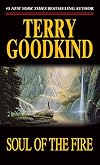
This review refers to the SOT series through book 9.
Terry Goodkind’s first book Wizard’s First Rule was great! Except for the actual First Rule ("People are Stupid"), which was...stupid. The story had so many unique and fascinating characters (especially the secondary ones). I was in love with Richard; I wanted to be a Mord-Sith. The next couple of books of The Sword of Truth were pretty good, too.
Then...I don’t know what happened...it just TOTALLY lost it. The writing style became show more incredibly annoying and Richard was getting WAY too preachy (constant Ayn Rand-ish humanistic ranting). But, I kept going because I was really invested by this time. And each time I bought one of his $25 hardback books, I found myself rolling my eyes at every passive sentence and starting to fall asleep during the sermons (when did Richard hire a speech writer??).
And the plot really got ssslllllloooowwww (just look at the book covers for Chainfire and Phantom — you can tell we're not going anywhere). But the weirdest thing is that I kept buying these 1 star books! I can’t explain my behavior, except to say that Terry Goodkind is (was) a master at plot and characterization (truly, his secondary characters are so well done). So I kept thinking that things would get better, but they did not. How did he pull off that excellent first booK?? I've learned from this experience that I can put down a book if it's not good. There's too much good literature to read.
According to Mr Goodkind, those of us who have bailed out are ignorant and uneducated. Wow. That is something I have never been called before. I should have realized right from the start ("Wizard's First Rule: People are stupid") what kind of fellow Terry Goodkind is. Here is a quote from a chat session conducted with Mr Goodkind (this used to be on his website, but has now been removed. It is well-documented on the internet, however.):
"Why would they continue to read books they claim are bad? Because they hate that my novels exists. Values arouse hatred in these people. Their goal is not to enjoy life, but to destroy that which is good — much like a school child who does not wish to study for a test and instead beats up a classmate who does well. These people hate what is good because it is good. Their lives are limited to loathing and indifference. It isn't that they want to read a good book, what they want is to make sure that you do not. Ignore them." —Terry Goodkind
I say Terry Goodkind is the one acting like a school child having a tantrum. I regret that he got so much of my money. I hope you won't give him any of yours. If you really want to try a Goodkind book, I would recommend that you go to the library and check out the first few, and then trust me that you don't need to read any further. I will not read the last book. I'm not even tempted. What an ass.
Read more Terry Goodkind book reviews at Fantasy Literature . show less
Terry Goodkind’s first book Wizard’s First Rule was great! Except for the actual First Rule ("People are Stupid"), which was...stupid. The story had so many unique and fascinating characters (especially the secondary ones). I was in love with Richard; I wanted to be a Mord-Sith. The next couple of books of The Sword of Truth were pretty good, too.
Then...I don’t know what happened...it just TOTALLY lost it. The writing style became show more incredibly annoying and Richard was getting WAY too preachy (constant Ayn Rand-ish humanistic ranting). But, I kept going because I was really invested by this time. And each time I bought one of his $25 hardback books, I found myself rolling my eyes at every passive sentence and starting to fall asleep during the sermons (when did Richard hire a speech writer??).
And the plot really got ssslllllloooowwww (just look at the book covers for Chainfire and Phantom — you can tell we're not going anywhere). But the weirdest thing is that I kept buying these 1 star books! I can’t explain my behavior, except to say that Terry Goodkind is (was) a master at plot and characterization (truly, his secondary characters are so well done). So I kept thinking that things would get better, but they did not. How did he pull off that excellent first booK?? I've learned from this experience that I can put down a book if it's not good. There's too much good literature to read.
According to Mr Goodkind, those of us who have bailed out are ignorant and uneducated. Wow. That is something I have never been called before. I should have realized right from the start ("Wizard's First Rule: People are stupid") what kind of fellow Terry Goodkind is. Here is a quote from a chat session conducted with Mr Goodkind (this used to be on his website, but has now been removed. It is well-documented on the internet, however.):
"Why would they continue to read books they claim are bad? Because they hate that my novels exists. Values arouse hatred in these people. Their goal is not to enjoy life, but to destroy that which is good — much like a school child who does not wish to study for a test and instead beats up a classmate who does well. These people hate what is good because it is good. Their lives are limited to loathing and indifference. It isn't that they want to read a good book, what they want is to make sure that you do not. Ignore them." —Terry Goodkind
I say Terry Goodkind is the one acting like a school child having a tantrum. I regret that he got so much of my money. I hope you won't give him any of yours. If you really want to try a Goodkind book, I would recommend that you go to the library and check out the first few, and then trust me that you don't need to read any further. I will not read the last book. I'm not even tempted. What an ass.
Read more Terry Goodkind book reviews at Fantasy Literature . show less
Lists
Awards


You May Also Like


Associated Authors
Statistics
- Works
- 123
- Also by
- 12
- Members
- 82,095
- Popularity
- #147
- Rating
- 3.7
- Reviews
- 938
- ISBNs
- 1,047
- Languages
- 14
- Favorited
- 223
