
John Fowles (1926–2005)
Author of The French Lieutenant's Woman
About the Author
John Fowles was born in Essex, England, in 1926. He attended the University of Edinburgh for a short time, left to serve in the Royal Marines, and then returned to school at Oxford University, where he received a B.A. in French in 1950. Fowles taught English in France and Greece, as well as at St. show more Godric's College in London. Although the main theme in all Fowles's fiction is freedom, there are few other similarities in his books. He has deliberately chosen to explore a different style or genre for each novel: The Collector, his first novel, is an intellectual thriller; The Magus is an adolescent learning novel, tracing the emotional development of the central character; Daniel Martin tries, in the modernist style, to depict psychological reality; Mantissa is a comedic allegory that takes place entirely inside the narrator's head; Maggot combines mystery, science fiction, and history; and The Ebony Tower is a collection of short stories. Fowles explored yet another genre, historical fiction, with his best-known novel, The French Lieutenant's Woman, which received the W. H. Smith Literary Award in 1970 and was made into a movie, starring Meryl Streep and Jeremy Irons, in 1981. An intriguing feature of this novel is that it has three different endings. Fowles's nonfiction includes Aristos: A Self Portrait in Ideas; Poems; and Wormholes: Essays and Other Occasional Writings. In addition, he has written the text for several books of photographs, including The Tree, for which Fowles received the Christopher Award in 1982. He died on November 5, 2005 at the age of 79. (Bowker Author Biography) show less
Image credit: John Fowles in Lyme Regis, 1998
Series
Works by John Fowles
The Ebony Tower. Eliduc. The Enigma 8 copies
John Fowles: The Collector, The Magus & The French Lieutenant’s Woman: Three BBC Radio 4 Full-Cast Dramatisations (2022) 2 copies
GRUAJA E TOGERIT FRËNG 1 copy
Маг. Том 1 1 copy
Маг. Том 2 1 copy
Korkunç Kolleksiyoncu 1 copy
The Man Who Made Wine 1 copy
Eliduc 1 copy
The Cloud 1 copy
Associated Works
The Pleasure of Reading: 43 Writers on the Discovery of Reading and the Books That Inspired Them (2015) — Contributor — 103 copies, 2 reviews
Who's Writing This? Notations on the Authorial I, with Self-Portraits {not Antæus} (1995) — Contributor — 76 copies
Hawker of Morwenstow: Portrait of an Eccentric Victorian (1975) — Foreword, some editions — 21 copies
William Golding: The Man and His Books - A Tribute on His 75th Birthday (1986) — Contributor — 18 copies
Die englische Literatur 10 in Text und Darstellung. 20. Jahrhundert 2. (2001) — Contributor — 6 copies
Monumenta Britannica, or, A miscellany of British antiquities (1980) — Editor, some editions — 6 copies
Antaeus No. 73/74, Spring 1994 - Who’s Writing This: Notations on the Authorial I {magazine} (1994) — Contributor — 5 copies
Tagged
Common Knowledge
- Canonical name
- Fowles, John
- Legal name
- Fowles, John Robert
- Birthdate
- 1926-03-31
- Date of death
- 2005-11-05
- Gender
- male
- Education
- Bedford School, Bedford, England
New College, Oxford - Occupations
- novelist
museum curator - Awards and honors
- Times 50 Top Writers Since 1945 (30)
- Short biography
- John Fowles, geboren in 1926, studeerde aan de universiteit van Oxford, waar hij later Frans doceerde. Op zesendertigjarige leeftijd werd hij plotseling beroemd door het succes van zijn eerste roman The Collector (1963). Zijn faam werd nog bevestigd door de verfilming van dit eerste boek en door de twee lijvige romans die volgden: The Magus (De magiër, 1966) en The French Lietenant’s Woman (Het liefje van de Franse luitenant, 1969). Vooral dit laatste boek bezorgde Fowles in de Verenigde Staten een ongekend grote populariteit. In 1974 verscheen Fowles’ tot nu toe laatste boek, de novellenbundel The Ebony Tower (De ebbehouten toren). Fowles woont tegenwoordig in de Zuid-engelse badplaats Lyme Regis, waar zich ook een groot gedeelte van Het liefje van de Franse luitenant afspeelt (flaptekst).
- Nationality
- UK
- Birthplace
- Leigh upon Sea, Essex, England, Uk
- Places of residence
- Lyme Regis, Dorset, England
Spetsai, Greece - Place of death
- Lyme Regis, Dorset, England
- Map Location
- England, UK
Members
Discussions
If you have read THE MAGUS by John Fowles, please reply in Crime, Thriller & Mystery (April 3)
June Group Read: The Magus (John Fowles) in 75 Books Challenge for 2016 (July 2016)
Group Read, November 2015: The Collector in 1001 Books to read before you die (November 2015)
1001 Group Read - June, 2013: The French Lieutenant's Woman in 1001 Books to read before you die (November 2013)
Fowles' The Magus in Someone explain it to me... (March 2010)
Reviews

I went into this novel with some trepidation. I was not intimidated by its doorstop size, nor by its reputation as sophisticated metafiction. But it had received a solidly negative review from my Other Reader, and the book's own author John Fowles lamented it as "haphazard ... a novel of adolescence written by a retarded adolescent" (6, 9). These worries were mitigated by two factors. First, the version I read was a "more than ... stylistic revision" (5) perpetrated over a decade after its show more initial publication. Second, I had encountered the two-page "fairy story" of "The Prince and the Magician" excerpted in the "Magic Shows" issue of Lapham's Quarterly (Summer 2012), and found it wonderful. I can now report that it loses none of its luster in its original context (550-552). There was a big twist at the end of part two (562), which I had seen coming for at least 200 pages, so that was underwhelming.
Like any "novel of adolescence," The Magus is a story of initiation, but more explicitly so than most. The fact that the ceremonial aspects of the rite are largely non-consensual, and that the candidate (i.e. the first-person narrator Nicholas) is so profoundly unlikable, were perhaps contributing factors to my Other Reader's thorough disgust with the book. There is an explicit Sadean element here, with or without sadism. It is in some respects a more naturalistic approach to the content of Bernard Noel's Castle of Communion.
In the course of the novel, an elite conspiracy perpetrating a system of "experimental" initiation has as its upshot an opposition between freedom and faith. "There is no god but man," and "Love is the law, love under will" (none of these quotes from the book). The closing epigram reminded me of the words of Liber CLXVI: "This Path is beyond Life and Death; it is also beyond Love; but that ye know not, for ye know not Love." Aleister Crowley gets one solitary name-check here, whena character in a combination of criminal trial and witches' sabbat appears in a Baphomet mask, and Nicholas (gagged) thinks sarcastically to himself, "Doctor Crowley, I presume" (502).
The magus of the title is the inscrutable psychopomp character Maurice Conchis, whom I found more reminiscent of Gurdjieff than of Crowley. The most esoteric influence mentioned by Fowles in a discussion of his sources is C.G. Jung, but it is possible that there was a Gurdjieffian element. The metaphysical concept of "hazard" emphasized by Conchis was key in the work of John G. Bennett, who was active in England promoting Gurdjieff's teachings during the extensive period of the composition of The Magus. (I synchronistically stumbled across a cheap used copy of Bennett's book on Hazard on the same day I finished reading The Magus.)
I did enjoy this book, although it does tend to have the weaker side of the comparisons in which I find myself most likely to include it, whether with Hesse's Steppenwolf, Pynchon's Vineland, or Irwin's Satan Wants Me. I'll still plead for the virtues of "The Prince and the Magician," though, a teaching story on a par with the Bektashi parable of "The Shrine." show less
Like any "novel of adolescence," The Magus is a story of initiation, but more explicitly so than most. The fact that the ceremonial aspects of the rite are largely non-consensual, and that the candidate (i.e. the first-person narrator Nicholas) is so profoundly unlikable, were perhaps contributing factors to my Other Reader's thorough disgust with the book. There is an explicit Sadean element here, with or without sadism. It is in some respects a more naturalistic approach to the content of Bernard Noel's Castle of Communion.
In the course of the novel, an elite conspiracy perpetrating a system of "experimental" initiation has as its upshot an opposition between freedom and faith. "There is no god but man," and "Love is the law, love under will" (none of these quotes from the book). The closing epigram reminded me of the words of Liber CLXVI: "This Path is beyond Life and Death; it is also beyond Love; but that ye know not, for ye know not Love." Aleister Crowley gets one solitary name-check here, when
The magus of the title is the inscrutable psychopomp character Maurice Conchis, whom I found more reminiscent of Gurdjieff than of Crowley. The most esoteric influence mentioned by Fowles in a discussion of his sources is C.G. Jung, but it is possible that there was a Gurdjieffian element. The metaphysical concept of "hazard" emphasized by Conchis was key in the work of John G. Bennett, who was active in England promoting Gurdjieff's teachings during the extensive period of the composition of The Magus. (I synchronistically stumbled across a cheap used copy of Bennett's book on Hazard on the same day I finished reading The Magus.)
I did enjoy this book, although it does tend to have the weaker side of the comparisons in which I find myself most likely to include it, whether with Hesse's Steppenwolf, Pynchon's Vineland, or Irwin's Satan Wants Me. I'll still plead for the virtues of "The Prince and the Magician," though, a teaching story on a par with the Bektashi parable of "The Shrine." show less
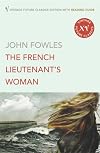
First published at Booking in Heels.
I read this based on how much I'd loved The Collector the year before. I'd adored John Fowles' formal yet chatty narrative, and the way his characters (although dislikeable) were brought to life. I knew at the time that I had to read more of his work. All of it, if possible.
And here we are. The French Lieutenant's Woman is a simpler plot than The Collector, at least prima facie. The book is set in Lyme Regis in the 1860s, and revolves around a young, show more recently engaged couple, Charles Smithson and Ernestina Freeman. In the same town, there's a young woman by the name of Sarah Woodruff who has been scorned for a scandal involving, you guessed it, a French lieutenant.
That's it, really. That's the story. The beauty with this novel, however, isn't the plot, it's the beauty and ingenuity of the prose. It's sort of meta, or it would be if that didn't seem an inappropriate word to use regarding a setting of 1867. Instead of the dark, stream of consciousness narration present in The Collector, the narrator spends a lot of time talking directly to the reader, with phrases such as 'you'll have to excuse Charles, he was merely a product of his time.'
It has a similar tone to The Crimson Petal and the White, come to think of it. It's very much as if the narrator is guiding you along, nudging you to keep up and follow the characters. The author actually pops up as a minor character at one point, just to sit there and muse about the nature of novel-writing. It's odd, but not jarring.
It's balanced very well though, and stops short of becoming abstract. There's a definite story here and it's not difficult to follow, despite the frequent musings of the pecularities of the Victorian Age. If anything, that was my favourite thing, and it seems to be what has earned The French Lieutenant's Woman its glory. The frequent and direct comparisons between the Victorian era and the current time (well, the 1960s) are so naturally inserted into the text, and are so imminently readable, that I just devoured them.
Honestly, without them the book wouldn't be half as interesting. The plot is simple and the main character is profoundly irritating. Charles Smithson is just awful. One minute he loves Ernestina for her little quirks, the next he can't stand the exact same little quirks... ugh. And his attitude towards Sarah Woodruff also doesn't make a whole lot of sense.
The ending is... odd. You're provided with an ending in the natural course of the novel, obviously, but then the author pops up and says 'but because I'm a writer, I can explore what also could have happened,' and then we're provided with two other endings. It doesn't state which is the 'real' one, but then that's sort of the point - Fowles states that because the whole thing is a work of fiction, each ending is as real or unreal as the next.
He's right, I suppose, but I do really prefer a fixed ending.
It's fine though, my enjoyment of The French Lieutenant's Woman wasn't spoilt by Charles Woodruff nor John Fowles. Read this just for the prose, which reminds me quite a lot of The Crimson Petal and the White, with a smidge of The Collector. It's so, so well-written in such a unique manner, that I really do recommend that everybody pick it up. show less
I read this based on how much I'd loved The Collector the year before. I'd adored John Fowles' formal yet chatty narrative, and the way his characters (although dislikeable) were brought to life. I knew at the time that I had to read more of his work. All of it, if possible.
And here we are. The French Lieutenant's Woman is a simpler plot than The Collector, at least prima facie. The book is set in Lyme Regis in the 1860s, and revolves around a young, show more recently engaged couple, Charles Smithson and Ernestina Freeman. In the same town, there's a young woman by the name of Sarah Woodruff who has been scorned for a scandal involving, you guessed it, a French lieutenant.
That's it, really. That's the story. The beauty with this novel, however, isn't the plot, it's the beauty and ingenuity of the prose. It's sort of meta, or it would be if that didn't seem an inappropriate word to use regarding a setting of 1867. Instead of the dark, stream of consciousness narration present in The Collector, the narrator spends a lot of time talking directly to the reader, with phrases such as 'you'll have to excuse Charles, he was merely a product of his time.'
It has a similar tone to The Crimson Petal and the White, come to think of it. It's very much as if the narrator is guiding you along, nudging you to keep up and follow the characters. The author actually pops up as a minor character at one point, just to sit there and muse about the nature of novel-writing. It's odd, but not jarring.
It's balanced very well though, and stops short of becoming abstract. There's a definite story here and it's not difficult to follow, despite the frequent musings of the pecularities of the Victorian Age. If anything, that was my favourite thing, and it seems to be what has earned The French Lieutenant's Woman its glory. The frequent and direct comparisons between the Victorian era and the current time (well, the 1960s) are so naturally inserted into the text, and are so imminently readable, that I just devoured them.
Honestly, without them the book wouldn't be half as interesting. The plot is simple and the main character is profoundly irritating. Charles Smithson is just awful. One minute he loves Ernestina for her little quirks, the next he can't stand the exact same little quirks... ugh. And his attitude towards Sarah Woodruff also doesn't make a whole lot of sense.
The ending is... odd. You're provided with an ending in the natural course of the novel, obviously, but then the author pops up and says 'but because I'm a writer, I can explore what also could have happened,' and then we're provided with two other endings. It doesn't state which is the 'real' one, but then that's sort of the point - Fowles states that because the whole thing is a work of fiction, each ending is as real or unreal as the next.
He's right, I suppose, but I do really prefer a fixed ending.
It's fine though, my enjoyment of The French Lieutenant's Woman wasn't spoilt by Charles Woodruff nor John Fowles. Read this just for the prose, which reminds me quite a lot of The Crimson Petal and the White, with a smidge of The Collector. It's so, so well-written in such a unique manner, that I really do recommend that everybody pick it up. show less
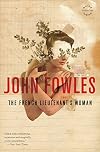
This is a fast and playful work, perfect for either fans of the Victorian novel or fans of the postmodern. Whether you find yourself loving Fowles for the style of this work or despising him for his skill at playing with expectations and style, you'll react to this book. For the longtime reader of classics, the allusions here are a constant enrichment to the text, but even the reader who's so far unfamiliar with the texts Fowles plays into his novel will find the book entertaining. It might show more end up being frustrating for the reader who expects a set traditional novel, but I believe it's well worth the ride, and it's far more readable than many other experimental texts. In general, I can't recommend it highly enough to anyone who wants a beautifully written and engaging escape into literature. show less

Ah, the difficulty of reviewing God. God the book, God the wicked old millionaire, God the author, God the reader. All the gods looking down on poor old Nicholas Urfe, holy fool and everyman, just intelligent enough to sense the game, not intelligent enough to know what to do about it. Like the rest of us. Because he wants in. He wants to know the purpose, the answer. He wants to be a player. Oh God, don't we all. And everybody, even Nicholas himself, knows that he is being played and, worse show more still, that there is no game and no God, though it seems crass, even vulgar to say so.
Nicholas Urfe goes to Greece to teach at a remote, secluded island. He leaves behind an unsatisfactory life and love affair, and brings with him all his faults and failings. On the island he encounters a rich old man, and over weekends at the old man's house hears his life story. Right from the start, games are being played. Visions appear, unseen guests move about, suggestions of ghosts and madness and theatrical tableaux, and all the time lie after lie after lie. Nicholas accepts the challenge, which at its heart and stripped of deception is to simply be a part of the old man's games, to be a fox that knows it's being hunted. Naturally, he does not know what he is in for, but at each stage, half deceived, half aware of the deception, he plunges deeper into the labyrinthine layers of the game, until there is no turning back and no guessing the harm and humiliation awaiting him.
No reader can possibly find the broad elements of this unfamiliar. It has utterly permeated our culture, the idea of the manipulative game played on an unsuspecting person who must succumb to the game's hidden but inevitable outcome, or who must overcome the traps and deceptions and defeat the minotaur at the heart of the maze. It pops up in books, films, television. The cheap attraction of the authorial stand-in able to make things happen in a certain order and a certain way with contrived complexity and conceptual craziness; the cathartic choice of the victim falling at the final trap or breaking the walls and gaming the gamers. And yet none of them are quite like The Magus.
The lessons of the game in The Magus are brutal and unpleasant. The arrogance with which they're dispensed are horrifying. Nicholas is chosen as likely to be at least semi-complicit in the proceedings, and as this is an elaborate con and the gifted con-man will exploit the victim's weaknesses to his profit, sympathy for con victims tends to be limited. If it weren't for their own greed and foolishness they wouldn't have been caught out, we say, sitting in judgment. The repulsive heart of any con is the co-man's apportioning of blame with the victim, and so it is also the repulsive heart of this superb novel.
This book made me depressed and angry as Nicholas inveigled himself into the lies and illusions, setting himself up not just for betrayal, but for the flaying of his own personality for the entertainment of all. And the lesson is good. The lesson is right. Illusions, freedom and the simple necessity of not hurting other people. Be skeptical about things, but not cynical. Be open to the signs and portents and experiences of life without being infantile. Know the measure of your freedom and use it. But even so.
Nicholas' heroism is that he resists as many lies as he falls for, and he sees through the game as it happens. His tragedy is that he's supposed to, and then he's supposed to be grateful for it. At the end he is poised with the girl from the affair previous to his trip to Greece, both dripping from mutual wounds, and one is, perhaps, meant to root for them to somehow bridge the canyon between them. Why, I wonder, are they meant to be together? They won't have a relationship, they'll have an ongoing trauma. The suspense of the ambiguous ending, to me at any rate, isn't whether they will get together, but whether they'll find the strength to walk away. Find Jojo, Nicholas, and get your shit together.
Like the rest of us. show less
Nicholas Urfe goes to Greece to teach at a remote, secluded island. He leaves behind an unsatisfactory life and love affair, and brings with him all his faults and failings. On the island he encounters a rich old man, and over weekends at the old man's house hears his life story. Right from the start, games are being played. Visions appear, unseen guests move about, suggestions of ghosts and madness and theatrical tableaux, and all the time lie after lie after lie. Nicholas accepts the challenge, which at its heart and stripped of deception is to simply be a part of the old man's games, to be a fox that knows it's being hunted. Naturally, he does not know what he is in for, but at each stage, half deceived, half aware of the deception, he plunges deeper into the labyrinthine layers of the game, until there is no turning back and no guessing the harm and humiliation awaiting him.
No reader can possibly find the broad elements of this unfamiliar. It has utterly permeated our culture, the idea of the manipulative game played on an unsuspecting person who must succumb to the game's hidden but inevitable outcome, or who must overcome the traps and deceptions and defeat the minotaur at the heart of the maze. It pops up in books, films, television. The cheap attraction of the authorial stand-in able to make things happen in a certain order and a certain way with contrived complexity and conceptual craziness; the cathartic choice of the victim falling at the final trap or breaking the walls and gaming the gamers. And yet none of them are quite like The Magus.
The lessons of the game in The Magus are brutal and unpleasant. The arrogance with which they're dispensed are horrifying. Nicholas is chosen as likely to be at least semi-complicit in the proceedings, and as this is an elaborate con and the gifted con-man will exploit the victim's weaknesses to his profit, sympathy for con victims tends to be limited. If it weren't for their own greed and foolishness they wouldn't have been caught out, we say, sitting in judgment. The repulsive heart of any con is the co-man's apportioning of blame with the victim, and so it is also the repulsive heart of this superb novel.
This book made me depressed and angry as Nicholas inveigled himself into the lies and illusions, setting himself up not just for betrayal, but for the flaying of his own personality for the entertainment of all. And the lesson is good. The lesson is right. Illusions, freedom and the simple necessity of not hurting other people. Be skeptical about things, but not cynical. Be open to the signs and portents and experiences of life without being infantile. Know the measure of your freedom and use it. But even so.
Nicholas' heroism is that he resists as many lies as he falls for, and he sees through the game as it happens. His tragedy is that he's supposed to, and then he's supposed to be grateful for it. At the end he is poised with the girl from the affair previous to his trip to Greece, both dripping from mutual wounds, and one is, perhaps, meant to root for them to somehow bridge the canyon between them. Why, I wonder, are they meant to be together? They won't have a relationship, they'll have an ongoing trauma. The suspense of the ambiguous ending, to me at any rate, isn't whether they will get together, but whether they'll find the strength to walk away. Find Jojo, Nicholas, and get your shit together.
Like the rest of us. show less
Lists
Existentialism (1)
Europe (1)
Read These Too (1)
Sense of place (1)
United Kingdom (1)
Victorian Period (1)
My TBR (2)
Favourite Books (2)
Five star books (2)
A Novel Cure (2)
Unread books (3)
Favourite Books (1)
Elegant Prose (1)
1970s (1)
1960s (1)
Metafiction (1)
Magic Realism (1)
BBC Big Read (1)
Page Turners (1)
Awards


You May Also Like


Associated Authors
Statistics
- Works
- 62
- Also by
- 24
- Members
- 26,084
- Popularity
- #799
- Rating
- 3.8
- Reviews
- 446
- ISBNs
- 564
- Languages
- 27
- Favorited
- 110
