
Jessica Gregson
Author of The Angel Makers
About the Author
Jessica Gregson is an author and academic. She is the daughter of actor Michael Craig. Gregson has a degree in Anthropology from Churchill College at the University of Cambridge and holds a Master's degree in Development Studies from the London School of Economics. She is currently working towards show more her PhD in International Development at Glasgow University. Gregson has lived in Australia, Azerbaijan, Sudan and South Sudan, working with refugees in the latter countries. Gregson's debut novel, The Angel Makers, was published in 2007 followed by The Ice Cream Army in July 2009. (Bowker Author Biography) show less
Works by Jessica Gregson
Tagged
Common Knowledge
Members
Reviews
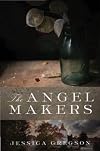
I really loved the first half of the book, describing Sari's early years, her engagement to Ferenc, and the village and POW camp during the war. Once the Hungarian men returned home, though, the author started rushing things. Suddenly everyone was poisoning everyone else, with little explanation, then this total deus ex machina ending out of left field. The first half of the book was five stars, the second half three (or even two, I'm sorry to say), so it averages out at four.
Jessica Gregson’s debut novel, The Angel Makers, is one of those novels that will make a reader question his feelings about crimes committed by otherwise admirable people. Is a murder committed with good intentions any less a crime than a murder committed in the midst of rage or lust? Would a good person allow other innocent lives to be taken simply because she does not want to be exposed as a murderess of bad people? Jessica Gregson will have you trying to decide.
The Angel Makers is based show more upon a series of murders that occurred in Nagyrev, Hungary, over a 15-year period that began during World War I. It is believed that at least 45 people were poisoned in the village during those years; some say the real number is closer to 300. What is not in dispute is that the ringleaders, and source of the arsenic used to kill all of the victims, were the village midwife and her young assistant. These two women, under fictional names, are the central characters of The Angel Makers.
One’s initial reaction might be to wonder how a crime of this proportion, one involving so many people, could have remained undiscovered for more than a decade. Gregson’s description of the utter remoteness of life in rural Hungary during this period, and of the type of self-contained, closed society that developed there, makes it seem very possible – if not probable – that such killers could get away with their crime for a very long time. Even a series of crimes like this one, crimes that claimed the lives of multiple husbands, elderly parents, lovers, and sons, could remain a dark, self-contained secret when so many women had so much to lose.
So, what triggered the murders? Simply put, when Italian prisoners of war were housed near the village, the women caught a glimpse of a life much different from the one they had been living with their husbands prior to the beginning of World War I. With their own husbands away fighting the war, a war from which they might never return, at that, it was too easy for the women to form relationships with the Italians for whom they were paid to cook, clean, and wash. Because security at the makeshift prison was almost nonexistent, soon enough most of the village women had taken Italian lovers whom they preferred over their husbands. When those husbands began to return from the front, the women had a choice to make. Many were quick to choose their Italian lovers and the new lifestyle they had come to enjoy.
Is the murder of a man justified if it saves his wife from years of physical abuse or saves the life of the unborn child carried by that woman? Perhaps, but you decide. The bigger moral question faced by the book’s two main characters involves what they did to hide their secret. They chose to make murder possible for other women who wanted to rid themselves of elderly parents, siblings in line for a family inheritance, or crippled husbands and sons. Was Sari (the fictional midwife assistant) a good woman or a bad woman? Did she deserve to hang – or not? Read The Angel Makers before you try to answer those questions.
Rated at: 4.0 show less
The Angel Makers is based show more upon a series of murders that occurred in Nagyrev, Hungary, over a 15-year period that began during World War I. It is believed that at least 45 people were poisoned in the village during those years; some say the real number is closer to 300. What is not in dispute is that the ringleaders, and source of the arsenic used to kill all of the victims, were the village midwife and her young assistant. These two women, under fictional names, are the central characters of The Angel Makers.
One’s initial reaction might be to wonder how a crime of this proportion, one involving so many people, could have remained undiscovered for more than a decade. Gregson’s description of the utter remoteness of life in rural Hungary during this period, and of the type of self-contained, closed society that developed there, makes it seem very possible – if not probable – that such killers could get away with their crime for a very long time. Even a series of crimes like this one, crimes that claimed the lives of multiple husbands, elderly parents, lovers, and sons, could remain a dark, self-contained secret when so many women had so much to lose.
So, what triggered the murders? Simply put, when Italian prisoners of war were housed near the village, the women caught a glimpse of a life much different from the one they had been living with their husbands prior to the beginning of World War I. With their own husbands away fighting the war, a war from which they might never return, at that, it was too easy for the women to form relationships with the Italians for whom they were paid to cook, clean, and wash. Because security at the makeshift prison was almost nonexistent, soon enough most of the village women had taken Italian lovers whom they preferred over their husbands. When those husbands began to return from the front, the women had a choice to make. Many were quick to choose their Italian lovers and the new lifestyle they had come to enjoy.
Is the murder of a man justified if it saves his wife from years of physical abuse or saves the life of the unborn child carried by that woman? Perhaps, but you decide. The bigger moral question faced by the book’s two main characters involves what they did to hide their secret. They chose to make murder possible for other women who wanted to rid themselves of elderly parents, siblings in line for a family inheritance, or crippled husbands and sons. Was Sari (the fictional midwife assistant) a good woman or a bad woman? Did she deserve to hang – or not? Read The Angel Makers before you try to answer those questions.
Rated at: 4.0 show less
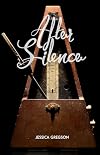
One of my favorite genres is historical fiction, and one of my favorite composers is Dmitri Shostakovich, with his 7th Symphony being one of my favored pieces. That all gets combined into the wonderful novel After Silence, which tells the story of Leningrad during the siege in WW2, and of the various fictional characters who will eventually play the symphony in Leningrad as a measure of celebration of the city, and as an act of defiance to the Germans.
The horror of the siege - starvation, show more death, aerial bombardments - is brought home extraordinarily by the author. Her descritions at times are so vivid that I felt as if I were living through the terror. Yet the characters are resilient in their own way. We meet them not only during the siege, but also learn their background stories. My favorite was Dima, the young blind violinist who is a genius with his instrument. The end of the book is the performance of the 7th, and the beauty of the narrative is a pleasure to read.
My only quibble is that the book is a little too long. I felt that some sections could have been tightened up, but this didn’t detract from my enjoyment of After Silence.
My thanks to Deixis Press and to Netgalley for providing an ARC of After Silence. show less
The horror of the siege - starvation, show more death, aerial bombardments - is brought home extraordinarily by the author. Her descritions at times are so vivid that I felt as if I were living through the terror. Yet the characters are resilient in their own way. We meet them not only during the siege, but also learn their background stories. My favorite was Dima, the young blind violinist who is a genius with his instrument. The end of the book is the performance of the 7th, and the beauty of the narrative is a pleasure to read.
My only quibble is that the book is a little too long. I felt that some sections could have been tightened up, but this didn’t detract from my enjoyment of After Silence.
My thanks to Deixis Press and to Netgalley for providing an ARC of After Silence. show less
http://nwhyte.livejournal.com/1297381.html
If I hadn't somehow come across its author here on livejournal, I might not have picked up The Angel Makers, and that would have been a shame: this is a gripping narrative of a Hungarian village during and after the first world war, whose women resort to murdering their husbands when they return from the army. Almost all the action takes place in the village, stifled and trapped by the monotony of the Pannonian Plain - I saw one review which found show more this setting unrealistic - clearly by someone who had never been there!
In particular, the central character, Sari Arany (which we can accept as a translatuion convention: in Hungarian she would have been Arany Sari) is a fascinating figure, developing from introspective teenager to being the village midwife, registrar and procurer of poison. The chain of events is triggered by the billeting of captive Italian soldiers in Sari's boyfriend's family home, with all the emotional and sexual opportunities they offer for the women of the village. Sari's unwilling entanglement is entirely credible, and somehow inevitable. She pleads towards the end of the book that she was simply trying to do something for herself, and it rings true.
I read a lot of historical / political literature about conflict, and it tends to centre around the men who dominate historical discourse; The Angel Makers made me think about the histories that are not told. Gregson gives Sari a satisfying end to the story, which (having checked up a little on the historical incident on which the story is based) is perhaps a little bit unrealistic, but even so it is done in a way which stuck in my mind. An excellent read. show less
If I hadn't somehow come across its author here on livejournal, I might not have picked up The Angel Makers, and that would have been a shame: this is a gripping narrative of a Hungarian village during and after the first world war, whose women resort to murdering their husbands when they return from the army. Almost all the action takes place in the village, stifled and trapped by the monotony of the Pannonian Plain - I saw one review which found show more this setting unrealistic - clearly by someone who had never been there!
In particular, the central character, Sari Arany (which we can accept as a translatuion convention: in Hungarian she would have been Arany Sari) is a fascinating figure, developing from introspective teenager to being the village midwife, registrar and procurer of poison. The chain of events is triggered by the billeting of captive Italian soldiers in Sari's boyfriend's family home, with all the emotional and sexual opportunities they offer for the women of the village. Sari's unwilling entanglement is entirely credible, and somehow inevitable. She pleads towards the end of the book that she was simply trying to do something for herself, and it rings true.
I read a lot of historical / political literature about conflict, and it tends to centre around the men who dominate historical discourse; The Angel Makers made me think about the histories that are not told. Gregson gives Sari a satisfying end to the story, which (having checked up a little on the historical incident on which the story is based) is perhaps a little bit unrealistic, but even so it is done in a way which stuck in my mind. An excellent read. show less
You May Also Like


Statistics
- Works
- 4
- Members
- 182
- Popularity
- #118,784
- Rating
- 3.7
- Reviews
- 11
- ISBNs
- 17
- Languages
- 6
- Favorited
- 1
