
Pola Oloixarac
Author of Mona: A Novel
About the Author
Image credit: Pola Oloixarac (2011)
Works by Pola Oloixarac
Associated Works
Granta 113: The Best of Young Spanish Language Novelists (2011) — Contributor — 165 copies, 3 reviews
Tagged
Common Knowledge
Members
Reviews

Writing a brief description of the plot of Savage Theories is to miss most of what goes on in this odd book that spends most of its time going off on tangents and assuming the reader is a lot more knowledgeable than this particular reader is. Basically, there are two stories; a young woman stalks her professor while justifying it in all sorts of philosophical ways, which hides the creepiness somewhat and; two teenage friends, who believe themselves to be physically repulsive, negotiate their show more social world with an angry sense of inferiority, even as they engage in orgies with beautiful people.
This is one weird book. It revels in a sort of intellectual ping pong, where the reader is assumed to be not only aware of a broad swath of philosophy, sociology and Argentinian history, but that they are also able to keep up with Pola Oloixarac's frenetic jumping around between topics and references. This is the aspect of the book I liked - after a lot of looking up of things, I eventually just relaxed into enjoying the ride. It's a wild and fun one, even as I missed most of the references and asides.
I did have a problem with the author's cavalier attitude toward sexual violence, which is often played for laughs, including a gang rape in a nightclub bathroom which is played for laughs and also no big deal. There's more to feel uneasy about here, and much that was interesting, but in the end this was a book I'm not happy to have read. show less
This is one weird book. It revels in a sort of intellectual ping pong, where the reader is assumed to be not only aware of a broad swath of philosophy, sociology and Argentinian history, but that they are also able to keep up with Pola Oloixarac's frenetic jumping around between topics and references. This is the aspect of the book I liked - after a lot of looking up of things, I eventually just relaxed into enjoying the ride. It's a wild and fun one, even as I missed most of the references and asides.
I did have a problem with the author's cavalier attitude toward sexual violence, which is often played for laughs, including a gang rape in a nightclub bathroom which is played for laughs and also no big deal. There's more to feel uneasy about here, and much that was interesting, but in the end this was a book I'm not happy to have read. show less
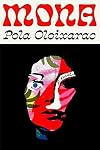
“But I do believe that contempt is the lingua franca of our era, and on that I’ll bet we can both agree.”
This slim novel opens with the titular Mona boarding a plane to Sweden, having woken up earlier that day at a Bay Area Caltrans station, bruised, bloodied, and confused. Hiding the bruises (how long do bruises last?), Mona attend the literati event, where they will award one of the handful "world-lit" authors a statue and 200,000 euros.
This isn’t really a story about a writing show more event—it’s a psychological exploration of the double consciousness of modern life. it’s a world where art has been fully infected by the milquetoast upper-middle class and whatever their current flavour of politics allows, where identity is a commodity above reproach regardless if it's merited; it’s academia, it’s torpid and soulless political correctness, it’s death-inducing stillness disguised as enlightenment.
But this is also a story of doldrums of womanhood, the perfidy of desire, and the potential of power within the female body: framed by CW: SAa horrific date rape by a fellow Stanford PhD student , Mona (Mona?) and the reader are blind to the memory, instead caught on the wave of easy sex and desire a woman can command at the hands of men. Oloixarac writes of sex in a disgusting and frankly unsexual way, leaving her metaphors of beauty to the vagina: "But pussies, no: they could drift, lunge, fill and empty themselves like voracious gluttons." The high point of the novel for me was the character of Lena, a whip-smart, obese children's author who is Mona's only mental rival—she eviscerates her (and the reader) of the performative nature of womanhood, with its false lashes and litheness:
"'Look at you. Yes, you. You’re a complete caricature of a woman. Have you looked at yourself? You’re completely ridiculous. Covering yourself with that towel, like anyone cares what you’re hiding underneath it. Tell me what kind of woman gets in the sauna wearing fake eyelashes. Or do you think that nobody can tell? With your makeup, your designer clothes, your hyper-feminine affect … you think that you’re letting everyone see that you’re a victim of machismo, of a chauvinist culture that—even with its little touches of sophistication, like the literary world!—punishes all things feminine. But that doesn’t annul the total absurdity of your appearance. Don’t kid yourself—you’re certainly not fooling me! Where I’m going with all this is: We can’t write except in drag. We convert ourselves into something absurd because the absurd is already living inside us.'”
Mona is raw, and has bitten me a new one. I somehow feel alive again. Make no mistake: this is book girl's book. It's for other maladaptive, former (can we ever really be former?) anorexia-ridden aesthetes, who will ape the role of women for the beautiful ease of sex and the self-inflicted tortures of forever being second-class within it. Do we even want to be better? Shove off.
I haven't even talked about the filthy, filthy (kidding, it's really boring, but it's kinda supposed to be) literary references, and the double-backing that make this novel so satirical and damn intelligent. I won't drone on any longer: This novel is brilliant. show less
This slim novel opens with the titular Mona boarding a plane to Sweden, having woken up earlier that day at a Bay Area Caltrans station, bruised, bloodied, and confused. Hiding the bruises (how long do bruises last?), Mona attend the literati event, where they will award one of the handful "world-lit" authors a statue and 200,000 euros.
This isn’t really a story about a writing show more event—it’s a psychological exploration of the double consciousness of modern life. it’s a world where art has been fully infected by the milquetoast upper-middle class and whatever their current flavour of politics allows, where identity is a commodity above reproach regardless if it's merited; it’s academia, it’s torpid and soulless political correctness, it’s death-inducing stillness disguised as enlightenment.
But this is also a story of doldrums of womanhood, the perfidy of desire, and the potential of power within the female body: framed by CW: SA
Mona is raw, and has bitten me a new one. I somehow feel alive again. Make no mistake: this is book girl's book. It's for other maladaptive, former (can we ever really be former?) anorexia-ridden aesthetes, who will ape the role of women for the beautiful ease of sex and the self-inflicted tortures of forever being second-class within it. Do we even want to be better? Shove off.
I haven't even talked about the filthy, filthy (kidding, it's really boring, but it's kinda supposed to be) literary references, and the double-backing that make this novel so satirical and damn intelligent. I won't drone on any longer: This novel is brilliant. show less
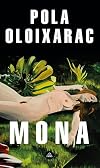
'Two hundred thousand euros, thirteen finalists, one winner. Hailing from all four corners of the earth, the finalists convened for the Great Meeting: Sweden's most prestigious literary festival.'
For anyone who loves books, book festivals and generally just getting a peak into the lives of our beloved authors, this is a joy. Shamelessly taking a swipe at political correctness and pretentious literary smugness, Pola Oloixarac's new novel arrives with a bang. And at its heart is Mona, a show more Peruvian writer now residing in California, who is one of the shortlisted writers. Mona generally doesn't give a f*** and has been told by her publisher that her second novel, which she is currently writing, isn't good enough. Mona is also usually high on something. Mona has relationship issues.
As the writers and the festival attendees gather in a remote northern part of Sweden things get darker and more surreal. The locals have a habit of killing animals and leaving them lying around. Mona's fellow authors are a motley collection of preening egotists or ironic observers. Clichés are set up and knocked down, and there are some definite laugh out loud casual observations that are a joy.
But there is a much darker edge to this novel; Mona is covered in bruises, and she keeps getting phone calls and messages from someone desperate to talk to her. As the truth is revealed, it suddenly shifts your whole impression of the sardonic Mona. And when the book ends in just the most bizarre manner (no spoilers) the book will leave you wondering what the heck you have just read.
For some, this might be a little too smug, a little too cliched. But for others, this is a wonderful and unique book from one of the literary world's rising stars. A big shout out to the translation by Adam Morris, who has managed to capture the essence of the narrative style superbly. Overall, a funny yet darkly disturbing read, brilliantly done. 4.5 stars, but I could easily have made it 5. show less
For anyone who loves books, book festivals and generally just getting a peak into the lives of our beloved authors, this is a joy. Shamelessly taking a swipe at political correctness and pretentious literary smugness, Pola Oloixarac's new novel arrives with a bang. And at its heart is Mona, a show more Peruvian writer now residing in California, who is one of the shortlisted writers. Mona generally doesn't give a f*** and has been told by her publisher that her second novel, which she is currently writing, isn't good enough. Mona is also usually high on something. Mona has relationship issues.
As the writers and the festival attendees gather in a remote northern part of Sweden things get darker and more surreal. The locals have a habit of killing animals and leaving them lying around. Mona's fellow authors are a motley collection of preening egotists or ironic observers. Clichés are set up and knocked down, and there are some definite laugh out loud casual observations that are a joy.
But there is a much darker edge to this novel; Mona is covered in bruises, and she keeps getting phone calls and messages from someone desperate to talk to her. As the truth is revealed, it suddenly shifts your whole impression of the sardonic Mona. And when the book ends in just the most bizarre manner (no spoilers) the book will leave you wondering what the heck you have just read.
For some, this might be a little too smug, a little too cliched. But for others, this is a wonderful and unique book from one of the literary world's rising stars. A big shout out to the translation by Adam Morris, who has managed to capture the essence of the narrative style superbly. Overall, a funny yet darkly disturbing read, brilliantly done. 4.5 stars, but I could easily have made it 5. show less
Mona, a Peruvian writer who has been living in California for some years, is invited to Sweden as she has been nominated for the notable Basske-Wortz prize, one of the most renowned literary awards of Europe. Together with other authors from diverse countries, she is to spend a couple of days in a remote resort where they have talks and give presentations. Rivalry starts immediately, some of them Mona has known for years and met at literary festivals before, others she admires for their show more work. However, the young woman is not too much concerned with the possibility of being awarded a famous prize, it is her life that matters most at the moment. Her body is covered with bruises and she cannot recollect where they stem from. Also her abuse of diverse substances follows her to the Swedish secludedness – travelling to the end of the world does not mean you can escape your demons.
The setting the Argentinian writer Pola Oloixarac has chosen for her third novel is perfect for a small community under a magnifying lens. None of them can escape and they have to face each other – as well as themselves. For the protagonist Mona, she herself comes to scrutinise her very own situation: where does she stand as a writer and why does her current novel refuse to advance; where do these bruises come from which hurt and yet do not give a clue of what might have happened; how to people perceive and classify her as a woman of colour who, as a doctoral candidate at one of the most prestigious universities, penetrated into an area which normally is closed to people with her background.
Even though I found the ending rather confusing, I totally enjoyed reading the novel which is remarkable due to its strong protagonist and quite a unique tone of narration with strong images and brilliant use of language. show less
The setting the Argentinian writer Pola Oloixarac has chosen for her third novel is perfect for a small community under a magnifying lens. None of them can escape and they have to face each other – as well as themselves. For the protagonist Mona, she herself comes to scrutinise her very own situation: where does she stand as a writer and why does her current novel refuse to advance; where do these bruises come from which hurt and yet do not give a clue of what might have happened; how to people perceive and classify her as a woman of colour who, as a doctoral candidate at one of the most prestigious universities, penetrated into an area which normally is closed to people with her background.
Even though I found the ending rather confusing, I totally enjoyed reading the novel which is remarkable due to its strong protagonist and quite a unique tone of narration with strong images and brilliant use of language. show less
Lists
Awards


You May Also Like


Associated Authors
Statistics
- Works
- 5
- Also by
- 1
- Members
- 538
- Popularity
- #46,305
- Rating
- 3.2
- Reviews
- 18
- ISBNs
- 44
- Languages
- 7
- Favorited
- 1