
Anthony Riches
Author of Wounds of Honour
About the Author
Series
Works by Anthony Riches
Die Ehre der Legion: Imperium-Saga 1 2 copies
O Ouro do Lobo - eBook 1 copy
A Espada do Leopardo - eBook 1 copy
Fortaleza de Lanças - eBook 1 copy
Flechas de Fúria - eBook 1 copy
Feridas de Guerra - eBook 1 copy
Tagged
Common Knowledge
- Gender
- male
- Education
- Manchester University (Military Studies)
- Occupations
- project manager
- Nationality
- UK
- Places of residence
- Hertfordshire, England, UK
- Associated Place (for map)
- England, UK
Members
Discussions
Anthony Riches in Historical Fiction (February 2021)
Reviews
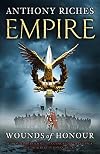
This is a real Roman hum-dinger. A magnificent slap in the face, reality check of a Historical Fiction novel. A fresh, no-nonsense, take no prisoners, exciting, testosterone-driven assault on the Historical Fiction senses. It’s one that should be listed at the top under the Wikipedia entry for ‘couldn’t put it down.’ Really good.
According to the dust jacket, Anthony Riches holds a degree in Military Studies and it shows. He knows his stuff, but doesn’t shove it in your face the show more whole time, like one Mr Sidebottom can tend to do. He’s gone for the angle that life and behaviour in the army, and on the parade ground, has largely been the same down the ages. And that Roman soldiers act mostly the same as their modern counterparts. Only the names of the god(s) they pray to and the weapons they use, have been changed. That and being able to look into the eyes of the person trying to kill you. I think what Anthony seems to be saying here is; what makes an army function well today is precisely what made an army function well back then. Training, routine, comradeship, loyalty to each other and the cause you’re fighting for and teamwork drilled in so much that it becomes unthinking second nature. The Roman Army was a professional fighting machine, just like ours are today. What I got from it was also the message that even though there’s close on two thousand years between us, we’re not that different now as people, to how they were then. It helps the reader relate to the characters and the situations. Obviously I can’t really relate to a Roman soldier facing death at the end of a blue-painted Pict’s spear, but by thinking he’s no different to me basically, I am in a better position to perhaps care a bit more about what he must have been going through. A bit more than endless chapters of political manoeuvring, debauchery and feeding people to the lions. You can’t get away with that sort of behaviour nowadays, not even here in Harlev, East Jutland. I feel closer, more of a kinship to these characters, I’m trying to say. I have really no idea of the truth of course, but reading a book like this, I’m more than prepared to say ‘ok, that’s how it was.’ It really is a down and dirty close look at life in the Roman Army and is absolutely enthralling for that alone.
The story is a tight one, honing in on life during wartime on Hadrian’s Wall, the northern part of Britannia, in the late second century AD. Our main character is one Marcus Valerius Aquila, who arrives at the wall as a way to disappear from the fatal attractions of the Emperor Commodus back in Rome. He goes ‘undercover' somewhat, to disguise his high-born background, assumes a new name and identity and joins the ordinary soldiers on the wall. Of course, some of his secrets do ‘escape' and treachery - or at least the threat of it - is never far away. Luckily, for me anyway, the intrigue and decadence and if he does this, what does Whatshisnameus Maximus think of all this over there in Whereveritwas, that usually has me sighing with ‘here we go again'-itis, is pretty much absent from 'Wounds of Honour.' Whilst there are hints of things going on 'backstage' the book concentrates on a relatively small field of operations, and a small number of characters, just behind and just in front of, Hadrian's Wall.
Of course, I don’t really care, being a man, but it’s is certainly a man’s, man’s, man’s world in the Roman Army and ‘Empire.' A macho man’s world at that. Not much time for women. Unless they’re being paid for ‘relaxation’, or held-captive, or tending to wounds. I think there’s only one woman character in the first 150-odd pages. And that was a wife of a senator, who had nothing to do with anything. Like I say, no problem for me, but I’d rather hope that in subsequent stores from the ‘Empire’ world, Anthony can find a way to introduce more women. I’m not necessarily wanting ‘love interest’, that isn’t what these sort of books are all about, but the nuances female characters would create wouldn’t go a miss. Not the least for increasing his readership market by about a half and hopefully helping with purging Goodreads and Amazon of their derivative, lazy, bodice-ripping, Mills & Boon crap that masquerades as Historical Fiction, but is really 'Love Actually' set three hundred years ago again and again and again.
For me, I’d consider it high praise indeed to be compared favourably to Douglas Jackson's first (well, the first Roman-period novel of his that I read, anyway). And thats what I’m doing. Favourably compared, but in no way overshadowed. I really was impressed all the way up to to stunned, and am having to hold myself back from rushing head-long into the rest of the series (I have taken the precaution of collecting the whole of Anthony’s Empire series (so far) before reading the first one, don’t ask me why). I’m really not sure why I should feel so impressed, if you understand what I mean, as I’d come across Anthony Riches and the exalted Romanesque on-line company he keeps, so it was easy to figure that 'Wounds of Honour' would be good. How good it was, I suppose I really wasn’t prepared for. show less
According to the dust jacket, Anthony Riches holds a degree in Military Studies and it shows. He knows his stuff, but doesn’t shove it in your face the show more whole time, like one Mr Sidebottom can tend to do. He’s gone for the angle that life and behaviour in the army, and on the parade ground, has largely been the same down the ages. And that Roman soldiers act mostly the same as their modern counterparts. Only the names of the god(s) they pray to and the weapons they use, have been changed. That and being able to look into the eyes of the person trying to kill you. I think what Anthony seems to be saying here is; what makes an army function well today is precisely what made an army function well back then. Training, routine, comradeship, loyalty to each other and the cause you’re fighting for and teamwork drilled in so much that it becomes unthinking second nature. The Roman Army was a professional fighting machine, just like ours are today. What I got from it was also the message that even though there’s close on two thousand years between us, we’re not that different now as people, to how they were then. It helps the reader relate to the characters and the situations. Obviously I can’t really relate to a Roman soldier facing death at the end of a blue-painted Pict’s spear, but by thinking he’s no different to me basically, I am in a better position to perhaps care a bit more about what he must have been going through. A bit more than endless chapters of political manoeuvring, debauchery and feeding people to the lions. You can’t get away with that sort of behaviour nowadays, not even here in Harlev, East Jutland. I feel closer, more of a kinship to these characters, I’m trying to say. I have really no idea of the truth of course, but reading a book like this, I’m more than prepared to say ‘ok, that’s how it was.’ It really is a down and dirty close look at life in the Roman Army and is absolutely enthralling for that alone.
The story is a tight one, honing in on life during wartime on Hadrian’s Wall, the northern part of Britannia, in the late second century AD. Our main character is one Marcus Valerius Aquila, who arrives at the wall as a way to disappear from the fatal attractions of the Emperor Commodus back in Rome. He goes ‘undercover' somewhat, to disguise his high-born background, assumes a new name and identity and joins the ordinary soldiers on the wall. Of course, some of his secrets do ‘escape' and treachery - or at least the threat of it - is never far away. Luckily, for me anyway, the intrigue and decadence and if he does this, what does Whatshisnameus Maximus think of all this over there in Whereveritwas, that usually has me sighing with ‘here we go again'-itis, is pretty much absent from 'Wounds of Honour.' Whilst there are hints of things going on 'backstage' the book concentrates on a relatively small field of operations, and a small number of characters, just behind and just in front of, Hadrian's Wall.
Of course, I don’t really care, being a man, but it’s is certainly a man’s, man’s, man’s world in the Roman Army and ‘Empire.' A macho man’s world at that. Not much time for women. Unless they’re being paid for ‘relaxation’, or held-captive, or tending to wounds. I think there’s only one woman character in the first 150-odd pages. And that was a wife of a senator, who had nothing to do with anything. Like I say, no problem for me, but I’d rather hope that in subsequent stores from the ‘Empire’ world, Anthony can find a way to introduce more women. I’m not necessarily wanting ‘love interest’, that isn’t what these sort of books are all about, but the nuances female characters would create wouldn’t go a miss. Not the least for increasing his readership market by about a half and hopefully helping with purging Goodreads and Amazon of their derivative, lazy, bodice-ripping, Mills & Boon crap that masquerades as Historical Fiction, but is really 'Love Actually' set three hundred years ago again and again and again.
For me, I’d consider it high praise indeed to be compared favourably to Douglas Jackson's first (well, the first Roman-period novel of his that I read, anyway). And thats what I’m doing. Favourably compared, but in no way overshadowed. I really was impressed all the way up to to stunned, and am having to hold myself back from rushing head-long into the rest of the series (I have taken the precaution of collecting the whole of Anthony’s Empire series (so far) before reading the first one, don’t ask me why). I’m really not sure why I should feel so impressed, if you understand what I mean, as I’d come across Anthony Riches and the exalted Romanesque on-line company he keeps, so it was easy to figure that 'Wounds of Honour' would be good. How good it was, I suppose I really wasn’t prepared for. show less
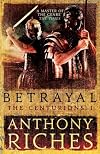
FAR superior to the author's Empire series which I gave up after two books!!
Very enthralling novel of the Batavian Revolt, the first volume of a trilogy. There are several subplots: Civilis [tribal name: Civilaz] and the Batavians, a Germanic tribe who come from what we would call the Netherlands. Others involve the different Roman legions stationed in Germania and the Year of the Four Emperors. The Batavian Guard of the emperor is unceremoniously dismissed after Nero's successor takes over show more and sent to Germania as an auxiliary unit to fight with the legions of Germania Inferior. The novel follows their fortune. In the course of the novel Civilaz is pardoned from treason twice; he and the Batavians save the day at the Battle of Cremona for the Vitellian forces and finally begin a revolt, for revenge and to maintain their independence. Deciding to support Vespasian's bid for the throne, Civilaz declares in this stirring closing: "Vespasianus wanted a revolt? I'll give him what he asked for. And more. And much much more."
Sentence structure is convoluted. The author could have broken up most of the compound or complex sentences into simple sentences. Sometimes a sentence was so long, I had to reread several times and parse before I got the sense. Sometimes I've even DIAGRAMMED sentences for subject and verb buried under much verbiage!
I made a chart for names/rank/legion [both regular Roman army legions and Batavians] and how each man fit into the story. I like the format: the novel's divided into what I'd call scenes [like in a play]. This makes it much easier to visualize and follow action. The book has well-marked stopping places. I personally couldn't read all in one chunk. Each of two scenes where centurions [one in V Legion, one in Batavi] harangue the recruits is so much better than an equivalent scene in Book I of the author's other series. Neither is what I'd call coarse or vulgar--the failing of the other earlier one. Any battle or skirmish scenes were well described. I am very glad the author didn't slip in any love interest; that would have been totally out of place here.
I don't like the author's using English terms such as "chosen man" for optio, "leading man" for decanus and "tent party" for contubernium. I also don't like his using English terms for the forts in Germania. I had to discover the proper Latin names for myself. The author must have his reasons, but any rationale escapes me. I liked best the put-upon Centurion Marius of the V and Egilhard, the Batavian recruit.
If someone is reading Roman military fiction for the first time, I would recommend reading some background first. Highly recommended. I hope to read the whole trilogy. I downgraded the book somewhat from what I would have rated it because of such complicated and annoying sentence structure and word order. show less
Very enthralling novel of the Batavian Revolt, the first volume of a trilogy. There are several subplots: Civilis [tribal name: Civilaz] and the Batavians, a Germanic tribe who come from what we would call the Netherlands. Others involve the different Roman legions stationed in Germania and the Year of the Four Emperors. The Batavian Guard of the emperor is unceremoniously dismissed after Nero's successor takes over show more and sent to Germania as an auxiliary unit to fight with the legions of Germania Inferior. The novel follows their fortune. In the course of the novel Civilaz is pardoned from treason twice; he and the Batavians save the day at the Battle of Cremona for the Vitellian forces and finally begin a revolt, for revenge and to maintain their independence. Deciding to support Vespasian's bid for the throne, Civilaz declares in this stirring closing: "Vespasianus wanted a revolt? I'll give him what he asked for. And more. And much much more."
Sentence structure is convoluted. The author could have broken up most of the compound or complex sentences into simple sentences. Sometimes a sentence was so long, I had to reread several times and parse before I got the sense. Sometimes I've even DIAGRAMMED sentences for subject and verb buried under much verbiage!
I made a chart for names/rank/legion [both regular Roman army legions and Batavians] and how each man fit into the story. I like the format: the novel's divided into what I'd call scenes [like in a play]. This makes it much easier to visualize and follow action. The book has well-marked stopping places. I personally couldn't read all in one chunk. Each of two scenes where centurions [one in V Legion, one in Batavi] harangue the recruits is so much better than an equivalent scene in Book I of the author's other series. Neither is what I'd call coarse or vulgar--the failing of the other earlier one. Any battle or skirmish scenes were well described. I am very glad the author didn't slip in any love interest; that would have been totally out of place here.
I don't like the author's using English terms such as "chosen man" for optio, "leading man" for decanus and "tent party" for contubernium. I also don't like his using English terms for the forts in Germania. I had to discover the proper Latin names for myself. The author must have his reasons, but any rationale escapes me. I liked best the put-upon Centurion Marius of the V and Egilhard, the Batavian recruit.
If someone is reading Roman military fiction for the first time, I would recommend reading some background first. Highly recommended. I hope to read the whole trilogy. I downgraded the book somewhat from what I would have rated it because of such complicated and annoying sentence structure and word order. show less
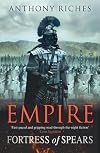
I am continuing with the series, for the one fault, that our protagonist is a super-hero, with comic book like powers continues to be predominant, the background history and the plot adds colour to a part of history I have not investigated fully and give the nod to Riches for it appears that he has done so. At least enough to craft a good man's adventure story against that backdrop.
Once again the cohort is called on to do duty, and they march forth gathering to them additional misfits that show more swell our hero's retinue. He soon will have more friends to guard his back then the emperor and the Pretorian Prefect who wishes him dead. Once again that subplot appears, and I fear it will appear continuously. Even when in makes little sense at all. Here, the enemies are so far removed, and already hunting this one man has been so costly, one would think that it has run its course. That the logic of it diminishes adds to the strikes against the story. Drama=Conflict, but there is already more than enough conflict fighting the war and the internal politics of the cohort that one does not need this external plot to drive the story. Riches is too attached to this mystery which it appears he wants to make his hero with an added depth to his character. Plenty of time to explore that when the character returns to Rome. However the Hungarian Auxiliary Cohort is becoming a little too invincible as well. Beginning to eclipse the legionnaires that they SUPPORT.
Other tales of Roman Soldiers show, and my knowledge of the period adds, that an auxiliary cohort is not trained to the same level of a legion, where the soldiers have been in training since they were children. There should be plenty of trouble for a unit of auxiliaries to get into, but now we seem to be creating illogical and unhistorical situations for our hero to go win and drags along a unit that would not be given the task over that of a cohort of legionnaires.
All that aside, and suspending my disbelief in this, I can find the tale interesting, though better survived if the three main problems, the Heroes Comic Book like superiority, his evil enemies in Rome who want him dead, and his leadership in a group of auxiliaries instead of legionnaires, had been dealt with. show less
Once again the cohort is called on to do duty, and they march forth gathering to them additional misfits that show more swell our hero's retinue. He soon will have more friends to guard his back then the emperor and the Pretorian Prefect who wishes him dead. Once again that subplot appears, and I fear it will appear continuously. Even when in makes little sense at all. Here, the enemies are so far removed, and already hunting this one man has been so costly, one would think that it has run its course. That the logic of it diminishes adds to the strikes against the story. Drama=Conflict, but there is already more than enough conflict fighting the war and the internal politics of the cohort that one does not need this external plot to drive the story. Riches is too attached to this mystery which it appears he wants to make his hero with an added depth to his character. Plenty of time to explore that when the character returns to Rome. However the Hungarian Auxiliary Cohort is becoming a little too invincible as well. Beginning to eclipse the legionnaires that they SUPPORT.
Other tales of Roman Soldiers show, and my knowledge of the period adds, that an auxiliary cohort is not trained to the same level of a legion, where the soldiers have been in training since they were children. There should be plenty of trouble for a unit of auxiliaries to get into, but now we seem to be creating illogical and unhistorical situations for our hero to go win and drags along a unit that would not be given the task over that of a cohort of legionnaires.
All that aside, and suspending my disbelief in this, I can find the tale interesting, though better survived if the three main problems, the Heroes Comic Book like superiority, his evil enemies in Rome who want him dead, and his leadership in a group of auxiliaries instead of legionnaires, had been dealt with. show less
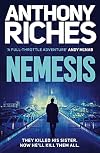
Nemesis by Anthony Riches
Sergeant Michael James Bale – “Mickey” – works as an Elite Close Protection Official for the Metropolitan Police force in Britain. He is happily married, enjoys his work, has good friends he meets with at the pub on Friday evenings, and stays fit boxing. He has one issue that bothers him and it is the niggling desire to get revenge for the “murder” of his sister so when that becomes an option, he seeks to mete out justice – vigilante justice. There is show more an unknown assistant he only knows as “Nemesis” that feeds him information that assists him in his endeavors. Will he be able to come through successful and unscathed or…not?
What I liked:
* Mickey: a good man with his own moral compass, sort of. He is professional, skilled, lethal, smart, and intriguing.
* Martin: Mickey’s friend from childhood, has a side business that comes in handy from time to time, and is a good friend to Mickey.
* The Friday night friends: a bit older than Mickey – seem to be true friends
* That there are two main storylines…with a third that might show up in future books. 1) the revenge against Jo and his gang 2) the protection job and threats encountered there 3) possible traitor in the govt with terrorist leanings
* The way the various threads of the story are brought together in the end
* That not all the good guys were totally good and the bad guys were totally bad
* Getting to read a new-to-me author
* Cavendish, Shaw, and Shaw’s team
* Being able to read the first book in a new series that has potential
What I didn’t like:
* Joe and his ruthless gang – they were evil and easy to detest
* Corrupt cops (there were a couple) and newspaper people
* Knowing that the evil in this book happens more often than we might think
* Roz didn’t seem the best fit as a spouse for Mickey but I am not sure why.
Did I enjoy this book? For the most part though I did skim parts of it to get to what I needed to know
Would I read more in this series? I think so
Thank you to NetGalley and Head of Zeus-Aries for the ARC – This is my honest review.
3-4 Stars show less
Sergeant Michael James Bale – “Mickey” – works as an Elite Close Protection Official for the Metropolitan Police force in Britain. He is happily married, enjoys his work, has good friends he meets with at the pub on Friday evenings, and stays fit boxing. He has one issue that bothers him and it is the niggling desire to get revenge for the “murder” of his sister so when that becomes an option, he seeks to mete out justice – vigilante justice. There is show more an unknown assistant he only knows as “Nemesis” that feeds him information that assists him in his endeavors. Will he be able to come through successful and unscathed or…not?
What I liked:
* Mickey: a good man with his own moral compass, sort of. He is professional, skilled, lethal, smart, and intriguing.
* Martin: Mickey’s friend from childhood, has a side business that comes in handy from time to time, and is a good friend to Mickey.
* The Friday night friends: a bit older than Mickey – seem to be true friends
* That there are two main storylines…with a third that might show up in future books. 1) the revenge against Jo and his gang 2) the protection job and threats encountered there 3) possible traitor in the govt with terrorist leanings
* The way the various threads of the story are brought together in the end
* That not all the good guys were totally good and the bad guys were totally bad
* Getting to read a new-to-me author
* Cavendish, Shaw, and Shaw’s team
* Being able to read the first book in a new series that has potential
What I didn’t like:
* Joe and his ruthless gang – they were evil and easy to detest
* Corrupt cops (there were a couple) and newspaper people
* Knowing that the evil in this book happens more often than we might think
* Roz didn’t seem the best fit as a spouse for Mickey but I am not sure why.
Did I enjoy this book? For the most part though I did skim parts of it to get to what I needed to know
Would I read more in this series? I think so
Thank you to NetGalley and Head of Zeus-Aries for the ARC – This is my honest review.
3-4 Stars show less
Lists
You May Also Like


Associated Authors
Statistics
- Works
- 45
- Members
- 1,018
- Popularity
- #25,308
- Rating
- 3.9
- Reviews
- 18
- ISBNs
- 119
- Languages
- 7
- Favorited
- 1