
Miriam Pawel
Author of The Crusades of Cesar Chavez: A Biography
About the Author
Miriam Pawel is a writer, independent scholar, and the author of The Crusades of Cesar Chavez, a National Book Crities Circle Award finalist, and The Union of Their Dreams. She has received several fellowships, including from the National Endowment for the Humanities. She was a Pulitzer show more Prize-winning editor at Newsday and the Los Angeles Times and is a contributing opinion writer for the New York Times. She lives in Pasadena, California. show less
Image credit: Miriam Pawel
Works by Miriam Pawel
The Browns of California: The Family Dynasty that Transformed a State and Shaped a Nation (2018) 89 copies, 1 review
The Union of Their Dreams: Power, Hope, and Struggle in Cesar Chavez's Farm Worker Movement (2009) 71 copies, 19 reviews
Tagged
Common Knowledge
- Canonical name
- Pawel, Miriam
- Birthdate
- 1958
- Gender
- female
- Nationality
- USA
- Associated Place (for map)
- USA
Members
Reviews
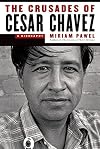
Cesar Chavez, an Arizonan by birth, died in 1993. A national monument, parks, roads, schools, libraries, and university buildings have been named in his honor because of his life’s work on behalf of farmworkers. His name no longer is just his to claim, having escaped the man and become a symbol and a legacy. Miriam Pawel’s The Crusades of Cesar Chavez: A Biography complicates how one views that legacy because the reader learns that to Chavez “undocumented workers” were “illegal show more immigrants.” An addition, it might seem, to history’s ironic poses.
And yet, to fixate on Cesar’s attitude toward non-U.S. citizens risks missing what is essential. Chavez had been a hired farmworker himself, as were his parents after losing the family farm to tax difficulties settled by auction during the Great Depression. His understanding of workers’ lives helped him orchestrate campaigns leading to the initial successes of the United Farm Workers union. Pawel gets us into the fields and into the union meetings where men and women discovered their voice in Chavez along with a promise (“Sí se puede”) that a better life lay within grasp if they acted as a collective. Much in their lives needed bettering. An example: A friend doing pathology work in the intensively agricultural Imperial Valley told me she saw cancers there she didn’t see in San Diego, the nearest U.S. urban area. Other worries included poisoning and the possibility that pesticide exposures could maim babies in utero. I found it striking, then, while browsing the first issue of El Malcriado,* the UFW’s newspaper, to see that its first ad ever was for a funeral home. A few pages later a photo shows a father receiving his (life) insurance benefit after death of “su hijita” (his little girl). It recalls Steinbeck’s verdict in The Grapes of Wrath: “There is a crime here that goes beyond denunciation.”
For Chavez, the problem with “illegals” (his word) was how their presence aided growers’ efforts to bury his union and subvert the better future he envisioned for people who placed in him their trust. His hostility was such, Pawel reports, that his cousin and ally, Manuel Chavez, put together a “wet line” of men patrolling the border against entry by “wetbacks.”
After a run of contract victories the UFW suffered setbacks. Some of those failures can be attributed to the efforts of agribusiness, but it’s also true Chavez compromised the UFW’s effectiveness by running it more as a grand social movement than as an equivalent of the United Autoworkers, and true too that the UFW was losing the allegiance of some of its members and staff. Pawel presents fascinating and disconcerting information on where commitment to his movement led Chavez and his organization. It becomes a narrative with painful “uh oh” moments and reveals aspects of Chavez’s character that cannot be admired.
Still, Pawel has given us a stirring encounter with a man gripped by a vision and by passion. He achieved, for a time, something his opponents thought couldn’t be done. A sympathizer may wish to dwell not on the wasted successes (though lessons are there to heed), but on an aspiration: How might it be possible to achieve again, and to better effect, such things as Cesar did?
* El Malcriado is available at https://libraries.ucsd.edu/farmworkermovement/archives/. Filed under “1965,” the first issue is titled “Don Sotaco.” show less
And yet, to fixate on Cesar’s attitude toward non-U.S. citizens risks missing what is essential. Chavez had been a hired farmworker himself, as were his parents after losing the family farm to tax difficulties settled by auction during the Great Depression. His understanding of workers’ lives helped him orchestrate campaigns leading to the initial successes of the United Farm Workers union. Pawel gets us into the fields and into the union meetings where men and women discovered their voice in Chavez along with a promise (“Sí se puede”) that a better life lay within grasp if they acted as a collective. Much in their lives needed bettering. An example: A friend doing pathology work in the intensively agricultural Imperial Valley told me she saw cancers there she didn’t see in San Diego, the nearest U.S. urban area. Other worries included poisoning and the possibility that pesticide exposures could maim babies in utero. I found it striking, then, while browsing the first issue of El Malcriado,* the UFW’s newspaper, to see that its first ad ever was for a funeral home. A few pages later a photo shows a father receiving his (life) insurance benefit after death of “su hijita” (his little girl). It recalls Steinbeck’s verdict in The Grapes of Wrath: “There is a crime here that goes beyond denunciation.”
For Chavez, the problem with “illegals” (his word) was how their presence aided growers’ efforts to bury his union and subvert the better future he envisioned for people who placed in him their trust. His hostility was such, Pawel reports, that his cousin and ally, Manuel Chavez, put together a “wet line” of men patrolling the border against entry by “wetbacks.”
After a run of contract victories the UFW suffered setbacks. Some of those failures can be attributed to the efforts of agribusiness, but it’s also true Chavez compromised the UFW’s effectiveness by running it more as a grand social movement than as an equivalent of the United Autoworkers, and true too that the UFW was losing the allegiance of some of its members and staff. Pawel presents fascinating and disconcerting information on where commitment to his movement led Chavez and his organization. It becomes a narrative with painful “uh oh” moments and reveals aspects of Chavez’s character that cannot be admired.
Still, Pawel has given us a stirring encounter with a man gripped by a vision and by passion. He achieved, for a time, something his opponents thought couldn’t be done. A sympathizer may wish to dwell not on the wasted successes (though lessons are there to heed), but on an aspiration: How might it be possible to achieve again, and to better effect, such things as Cesar did?
* El Malcriado is available at https://libraries.ucsd.edu/farmworkermovement/archives/. Filed under “1965,” the first issue is titled “Don Sotaco.” show less
The Browns of California: The Family Dynasty that Transformed a State and Shaped a Nation by Miriam Pawel
We may be hurting for competent, thoughtful leaders in the public sector in 2018 (ok, we definitely are). But digging beyond the Trumps and Mays of the world, we do have the Browns, and Pawel wrote a painstakingly detailed account that follows three. Those are imminently retiring California governor (and one time state attorney general, mayor of Oakland, and candidate for president) Jerry Brown, his sister Kathleen, former state treasurer and one-time gubernatorial candidate, and, one show more generation back, their father Pat, also an attorney general and governor. The number of interviews she conducted is an insanely impressive feat, to get a fuller picture of where this family came from and what inspired them to govern as they did. Given the many offices held by the three Browns over multiple decades, this could have been an insurmountable topic, but Pawel whipped it into a smart narrative that put the details where they did the most good. Jerry Brown is the primary subject, but many other family members and friends are included. Recommended if you want to feel more optimistic about public service and how wealthy people can contribute positively. show less
The Union of Their Dreams: Power, Hope, and Struggle in Cesar Chavez's Farm Worker Movement by Miriam Pawel
I've never known much about Cesar Chávez and the United Farm Worker's union so I was pleased to receive a free copy of this book from the Library Thing Early Reviewers program. The book is not about Chávez directly although his presence hovers over the events covered in this book for both good and ill. Instead Pawel focuses on the stories of nine individuals who dedicated their lives to the farm worker movement - field hands, organizers, lawyers and a ministers. Their overlapping stories show more offer a glimpse into the movement's rise and fall from the 1960s to the 1980s.
At first it's an inspiring story of boycotts, strikes and union elections where the union prevails against the growers (and their Teamster thugs) as well as scoring legislative victories. Chávez becomes a national hero for his inspiration, non-violent leadership. Unfortunately like many organizations the UFW is torn apart by internal conflicts and Chávez only exacerbates the problems. Pawel details how these close friend and colleagues of Chávez see him becoming increasingly paranoid, micromanaging and megalomaniac, purging the union of people on specious grounds and making life miserable for those who remain.
This book is ultimately heartbreaking but there are glimpses of hope nevertheless. It's inspiring that despite all the difficulties these nine people dedicated themselves to an ideal and a cause. While shattering the myth of Chávez the hero, this book still illustrates the good that can be done by ordinary people working for social justice. show less
At first it's an inspiring story of boycotts, strikes and union elections where the union prevails against the growers (and their Teamster thugs) as well as scoring legislative victories. Chávez becomes a national hero for his inspiration, non-violent leadership. Unfortunately like many organizations the UFW is torn apart by internal conflicts and Chávez only exacerbates the problems. Pawel details how these close friend and colleagues of Chávez see him becoming increasingly paranoid, micromanaging and megalomaniac, purging the union of people on specious grounds and making life miserable for those who remain.
This book is ultimately heartbreaking but there are glimpses of hope nevertheless. It's inspiring that despite all the difficulties these nine people dedicated themselves to an ideal and a cause. While shattering the myth of Chávez the hero, this book still illustrates the good that can be done by ordinary people working for social justice. show less
 This review was written for LibraryThing Early Reviewers.
The Union of Their Dreams: Power, Hope, and Struggle in Cesar Chavez's Farm Worker Movement by Miriam Pawel

This book reads like a case-study in leadership gone wrong. It was really fascinating to read about the union/movement as it started from a very small organization, to a large union that just imploded on itself. A lot of the themes in this book are classic - a micro-managing leader who increasingly becomes paranoid as his hold over the union wanes, an organization that becomes big at a pace faster than their leadership can keep with, purges of once-loyal members, etc. At times the book got a show more bit mired in minutiae, but overall it was interesting, and I found myself rooting for certain people as the drama unfolded.
Unfortunately, this book isn't fiction, and the reality is that a union, which could have done so much good for so many farmworkers, wound up as a shell of itself, and ultimately didn't help the farmworkers of California, much less of the entire US. show less
Unfortunately, this book isn't fiction, and the reality is that a union, which could have done so much good for so many farmworkers, wound up as a shell of itself, and ultimately didn't help the farmworkers of California, much less of the entire US. show less
Lists
Awards


You May Also Like


Statistics
- Works
- 3
- Members
- 251
- Popularity
- #91,085
- Rating
- 4.0
- Reviews
- 23
- ISBNs
- 11
