
M.D. David Perlmutter
Author of Grain Brain: The Surprising Truth about Wheat, Carbs, and Sugar--Your Brain's Silent Killers
About the Author
Works by M.D. David Perlmutter
Grain Brain: The Surprising Truth about Wheat, Carbs, and Sugar--Your Brain's Silent Killers (2013) 1,114 copies, 35 reviews
Brain Maker: The Power of Gut Microbes to Heal and Protect Your Brain for Life (2015) 554 copies, 14 reviews
The Better Brain Book: The Best Tool for Improving Memory and Sharpness and Preventing Aging of the Brain (2004) 149 copies
Brain Wash: Detox Your Mind for Clearer Thinking, Deeper Relationships, and Lasting Happiness (2020) 126 copies
The Grain Brain Whole Life Plan: Boost Brain Performance, Lose Weight, and Achieve Optimal Health (2016) 121 copies
Drop Acid: The Surprising New Science of Uric Acid―The Key to Losing Weight, Controlling Blood Sugar, and Achieving Extraordinary Health (2022) 95 copies, 1 review
The Grain Brain Cookbook: More Than 150 Life-Changing Gluten-Free Recipes to Transform Your Health (2014) 91 copies
Raise a Smarter Child by Kindergarten: Build a Better Brain and Increase IQ up to 30 Points (2006) 44 copies
Drop Acid: The Surprising New Science of Uric Acid - The Key to Losing Weight, Controlling Blood Sugar, and Achieving Extraordinary Health (2022) 2 copies
Amigos da mente: Nutrientes e bactérias que vão curar e proteger seu cérebro (Portuguese Edition) (2015) 2 copies
Brain Wash: Detox Your Mind for Clearer Thinking, Deeper Relationships, and Lasting Happiness 2 copies
Brain Maker Extended Edition 1 copy
Dumm wie Brot - Das Kochbuch: So verhindern Sie, dass Weizen Ihr Gehirn zerstört - Über 150 glutenfreie Rezepte (2017) 1 copy
Brain Maker 1 copy
Cérebro de Fibra 1 copy
Limpeza Cerebral 1 copy
Tagged
Common Knowledge
Members
Reviews
Grain Brain: The Surprising Truth About Wheat, Carbs, and Sugar—Your Brain's Silent Killers by David Perlmutter

I've been doing the keto diet for several months (now doing a "cyclical keto," I guess). I've lost 25+ pounds, eat less, crave less, and feel more energetic and better. This book provided some of the scientific underpinnings to explain why the keto diet has worked for me.
In a nutshell: carbs, sugar, and gluten are bad. They encourage fat growth, mess with insulin and blood sugar levels, and are poor fuel for the brain.
The book, of course, goes into greater detail. There are references to show more Dr. Perlmutter's own patients and protocols, there are references to scientific/medical studies, and there are numerous sources. Now, I know that many doctors and dieticians poo poo this type of low carb and high fat diet. But, I can say it has worked for me. I will remind everybody that eggs were once considered the worst, but now they are seen as nutritious. I will, as a historian, note that we eat far more carbs, gluten, and sugar in the 20th and 21st centuries than we ever did in previous centuries and we've gotten fatter. I don't think one could or should do this type of diet at all times, or forever, or with no breaks. But, I think that this type of diet is the wave of the future (and of the past). show less
In a nutshell: carbs, sugar, and gluten are bad. They encourage fat growth, mess with insulin and blood sugar levels, and are poor fuel for the brain.
The book, of course, goes into greater detail. There are references to show more Dr. Perlmutter's own patients and protocols, there are references to scientific/medical studies, and there are numerous sources. Now, I know that many doctors and dieticians poo poo this type of low carb and high fat diet. But, I can say it has worked for me. I will remind everybody that eggs were once considered the worst, but now they are seen as nutritious. I will, as a historian, note that we eat far more carbs, gluten, and sugar in the 20th and 21st centuries than we ever did in previous centuries and we've gotten fatter. I don't think one could or should do this type of diet at all times, or forever, or with no breaks. But, I think that this type of diet is the wave of the future (and of the past). show less
Drop Acid: The Surprising New Science of Uric Acid―The Key to Losing Weight, Controlling Blood Sugar, and Achieving Extraordinary Health by M.D. David Perlmutter
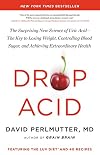
I should have known better. Spent far too long reading the "science" (i.e. a bunch of rat studies, selectively interpreted) only to finally arrive at the diet: an extremely restrictive variation on paleo, but with even more foods cut out. No gluten, no grains, no GMOs, no sugar, no processed foods obvs!, limit "underground" veg, limit dairy, limit most seafood and many meats. You can have green veg, low-sugar fruit, olive oil, eggs, and some meat. What all of this has to do with uric acid is show more left as an exercise for the reader. Oh, and you can also buy a uric acid home testing kit ($70), a continuous glucose monitor ($400+), and hundreds of dollars a month in supplements. Don't get sucked in! Save your sanity and read a novel instead. show less
Grain Brain: The Surprising Truth about Wheat, Carbs, and Sugar--Your Brain's Silent Killers by David Perlmutter
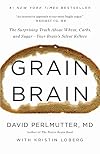
It worked for me before I even heard of this book!
I went on a ketogenic diet (low-carb, high-fat) last year to lose weight and next thing I know, my chronic life-long depression and anxiety disappeared, I had more focus, more energy, more positivity in general. I had NO IDEA that a ketogenic diet would do this, but it did. I started to enjoy exercise for a change, which helped even more. My life was changed forever. (Note that I have tried so many "diets" to lose weight before keto and show more nothing worked for me. I ended up gaining weight every time I failed.)
Then, I discovered Dr. Perlmutter and realized that what I was experiencing was exactly what he has been trying to teach people. Reading this book was an amazing experience for me and helped solidify the "program" I need to follow for brain health (HAPPINESS). Alzheimer's runs in my family too, so if I can do anything to delay or avoid that worse-than-death sentence, I will. And it's not like it's hard to do!
I only needed to modify my supplementation some and focus on the tasks he recommends that I already knew benefit me (exercise, meditation, sunshine!, mental exercise, caloric limitation, ketogenic diet). I plan on incorporating fasting back into my life too. Beyond keto, the only somewhat positive "diet" attempt I had experienced was intermittent fasting, so I was happy to see that he recommends fasting. My mind works great while fasting, the trick is to break your carb addiction first!
It works, it's simple. Naysayers haven't tried it, so don't listen to them. Perlmutter explains the science, cites the science, but seeing (doing) is believing.
I was a skeptic when I heard about ketogenic diets, but my body and mind proved me wrong. And I'm so glad they did!
(For those who find the diet extreme, I thought I could "never give up carbs" too, but I did, and I had a very very bad carb addiction and wasn't a big "meat eater." Pinterest is a great place to find "keto" recipes that will blow your socks off with the variety and sheer yum-factor. Also search for "paleo" recipes, especially if you are dairy intolerant like I am.) show less
I went on a ketogenic diet (low-carb, high-fat) last year to lose weight and next thing I know, my chronic life-long depression and anxiety disappeared, I had more focus, more energy, more positivity in general. I had NO IDEA that a ketogenic diet would do this, but it did. I started to enjoy exercise for a change, which helped even more. My life was changed forever. (Note that I have tried so many "diets" to lose weight before keto and show more nothing worked for me. I ended up gaining weight every time I failed.)
Then, I discovered Dr. Perlmutter and realized that what I was experiencing was exactly what he has been trying to teach people. Reading this book was an amazing experience for me and helped solidify the "program" I need to follow for brain health (HAPPINESS). Alzheimer's runs in my family too, so if I can do anything to delay or avoid that worse-than-death sentence, I will. And it's not like it's hard to do!
I only needed to modify my supplementation some and focus on the tasks he recommends that I already knew benefit me (exercise, meditation, sunshine!, mental exercise, caloric limitation, ketogenic diet). I plan on incorporating fasting back into my life too. Beyond keto, the only somewhat positive "diet" attempt I had experienced was intermittent fasting, so I was happy to see that he recommends fasting. My mind works great while fasting, the trick is to break your carb addiction first!
It works, it's simple. Naysayers haven't tried it, so don't listen to them. Perlmutter explains the science, cites the science, but seeing (doing) is believing.
I was a skeptic when I heard about ketogenic diets, but my body and mind proved me wrong. And I'm so glad they did!
(For those who find the diet extreme, I thought I could "never give up carbs" too, but I did, and I had a very very bad carb addiction and wasn't a big "meat eater." Pinterest is a great place to find "keto" recipes that will blow your socks off with the variety and sheer yum-factor. Also search for "paleo" recipes, especially if you are dairy intolerant like I am.) show less
Grain brain : the surprising truth about wheat, carbs, and sugar--your brain's silent killers by David Perlmutter
I probably have a higher-than-average understanding of scientific research. I have a couple of graduate degrees, and while that certainly doesn’t guarantee anything, they both required statics, conducting my own research studies, and spending a whole lot of time seriously analyzing the conclusions of other research studies. And yet when it comes to health-related items, I’m kind of baffled.
Okay, not totally baffled. I know that movement is good. There doesn’t seem to be any credible show more research suggesting it’s better to NOT exercise at all. Cool. Got that. And, as of late, I’m finally coming to terms with the fact that sugar is probably super bad for me. Also not surprising. A bummer, but not surprising.
After that, though, I’m kind of out. Should I be a vegetarian (both for animal rights purposes, and also for my health)? Vegan? But (somehow, magically) low carbohydrate? Should I eat all the eggs but no dairy? What about carbohydrates? Only in veggie form? Whole grain? Or not at all? I thought my brain needed a minimum of 130 g carbohydrates to function – and this guy wants me to limit it to 30?
After reading this book, I really don’t know what to do. I felt kind of gross reading it, as though I were experiencing the print version of one of those olde tyme snake oil salesmen. There were so many ‘guarantees,’ and a lot of anecdotes about his patients. Plus, Dr. Perlmutter has his own website where he offers up his ‘preferred’ supplements, which reads a little skeevy to me. And while he cites a lot of research, I don’t have the time to read all of the studies, so that junk I posted at the beginning of this review isn’t really applicable. Plus, when I googled “Debunking Grain Brain” I got a whole lot of hits.
But on the other hand – the man is a neurologist and a nutritionist. That gives gives him some credibility, right? And I read Good Calories, Bad Calories last year, and Sugar Nation just a few weeks ago, which made some of the same arguments. And we know that nutritionists have gotten it so wrong in the past ** cough ** margarine ** cough **. Is it possible they are still getting it wrong? And of course, when I googled “Debunking [group that debunked this book]", I also got hits.
This book was not really helpful. But I still might try some of the suggestions, mostly because if I clean everything out of my diet, I can figure out what my body likes. I’m sure there’s some dairy I can’t process, but I eat so much of it I haven’t figured out which it is. And there are probably some other foods that I have more energy after consuming, and some that make me not feel great. Perhaps that can be a good take-away from books like this (and It Starts with Food, which is up next): nutrition is complicated, and we just have to figure out what works best for us. show less
Okay, not totally baffled. I know that movement is good. There doesn’t seem to be any credible show more research suggesting it’s better to NOT exercise at all. Cool. Got that. And, as of late, I’m finally coming to terms with the fact that sugar is probably super bad for me. Also not surprising. A bummer, but not surprising.
After that, though, I’m kind of out. Should I be a vegetarian (both for animal rights purposes, and also for my health)? Vegan? But (somehow, magically) low carbohydrate? Should I eat all the eggs but no dairy? What about carbohydrates? Only in veggie form? Whole grain? Or not at all? I thought my brain needed a minimum of 130 g carbohydrates to function – and this guy wants me to limit it to 30?
After reading this book, I really don’t know what to do. I felt kind of gross reading it, as though I were experiencing the print version of one of those olde tyme snake oil salesmen. There were so many ‘guarantees,’ and a lot of anecdotes about his patients. Plus, Dr. Perlmutter has his own website where he offers up his ‘preferred’ supplements, which reads a little skeevy to me. And while he cites a lot of research, I don’t have the time to read all of the studies, so that junk I posted at the beginning of this review isn’t really applicable. Plus, when I googled “Debunking Grain Brain” I got a whole lot of hits.
But on the other hand – the man is a neurologist and a nutritionist. That gives gives him some credibility, right? And I read Good Calories, Bad Calories last year, and Sugar Nation just a few weeks ago, which made some of the same arguments. And we know that nutritionists have gotten it so wrong in the past ** cough ** margarine ** cough **. Is it possible they are still getting it wrong? And of course, when I googled “Debunking [group that debunked this book]", I also got hits.
This book was not really helpful. But I still might try some of the suggestions, mostly because if I clean everything out of my diet, I can figure out what my body likes. I’m sure there’s some dairy I can’t process, but I eat so much of it I haven’t figured out which it is. And there are probably some other foods that I have more energy after consuming, and some that make me not feel great. Perhaps that can be a good take-away from books like this (and It Starts with Food, which is up next): nutrition is complicated, and we just have to figure out what works best for us. show less
Lists
You May Also Like
Associated Authors
Statistics
- Works
- 29
- Members
- 2,424
- Popularity
- #10,582
- Rating
- 3.5
- Reviews
- 51
- ISBNs
- 167
- Languages
- 11