
Michael Gregorio
Author of Critique of Criminal Reason
About the Author
Disambiguation Notice:
Michael Gregorio is the pen name of Michael G. Jacob and Daniela De Gregorio.
Series
Works by Michael Gregorio
Associated Works
Tagged
Common Knowledge
- Legal name
- Jacob, Michael G.
De Gregorio, Daniela - Gender
- n/a
- Nationality
- UK
- Places of residence
- Spoleto, Italy
- Disambiguation notice
- Michael Gregorio is the pen name of Michael G. Jacob and Daniela De Gregorio.
- Associated Place (for map)
- Spoleto, Italy
Members
Reviews
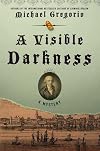
If you have a strong stomach, a tendency to get lost in extremely immersive novels and you don't mind a protagonist sleuth who never solves anything, then this book is for you. A Visible Darkness stands apart from other detective fiction in that it exemplifies how a novel can have an idiot for a main character and a plot anyone can see coming (and most reviewers do) while at the same time keeping you on the edge of your reading chair because you do not want the completely realistic world to show more end. As the third book in the series around Magistrate Hanno Stiffeniis, who is a blend between prosecutor, police detective and civil servant, this novel does not bring anything new. Perhaps that is exactly what we want and what the authors had in mind.
In the rural village of Lotingen in Prussia magistrate Stiffeniis has yet again been summoned by the French invaders to solve the gruesome killing of one of the women who collects raw amber from the Baltic sea. Stiffeniis complies after the French promise to clean up the filth that has been left by the French army as they marched through the magistrate's home town. Hanno Stiffeniis soon realizes the French want this mystery cleared up as soon as possible because the crime interferes with their amber mining operation on the Baltic coast. The magistrate rumbles through the story from one colorful character to another who each in term tell him exactly where to go next for valuable information. Part of the charm of the novel is the vivid description of the lifelike people the magistrate encounters. We learn about the practice of medicine during the Napoleonic era, we come across plenty of descriptions of living conditions but mostly we find out what biological mysteries kept the people busy. Europe around 1810 was in social, theological and mostly scientific turmoil. After the many new discoveries of the previous hundred years had been absorbed and made available at the major universities, scholars began to slowly separate alchemy from biology. Around the time this novel takes place that separation was still in full swing and the core of the book revolves around those who can not tell the difference between the two.
It is difficult to rate a novel such as this on only one scale. The writing quality and historical detail is far better than anything out there, but the protagonist has to be one of the dumbest sleuths ever encountered in literary history. Most readers will have found out what's really going on in the book more than a hundred pages before the main character does and from that point on reading the text becomes extremely tedious. Unlike the other novels in the series, this one doesn't satisfactorily explain the motives of the killer and we're left wondering about an abundance of details that apparently have no point. With all the shortcomings the novel still works but it does so in a surprising fashion. We're used to stories that have cliffhangers.
Traditionally cliffhangers are stories where a clue is withheld right at the end and we need to get the next installment or read the next chapter to find out what happens next. In a lot of modern novels the cliffhanger is replaced by the Worldhanger. What I mean by that is that we're put in a situation in a story where we want the fictional world to continue and for that to happen we need to get the next installment or read the next chapter. The books by Michael Gregorio are an excellent examples of Worldhangers but there are others. Thinking in terms of a Worldhanger or a story designed to keep you in an imaginary world are becoming more and more prevalent. It also explains the mysterious attraction of such books as The Historian or Jonathan Strange and Mister Norrell, in which nothing really happens and nothing is actually resolved. This phenomenon of a Worldhanger explains why readers finish a book such as Visible Darkness even though a tremendous amount of content is truly disgusting and difficult to get through even with a strong stomach. show less
In the rural village of Lotingen in Prussia magistrate Stiffeniis has yet again been summoned by the French invaders to solve the gruesome killing of one of the women who collects raw amber from the Baltic sea. Stiffeniis complies after the French promise to clean up the filth that has been left by the French army as they marched through the magistrate's home town. Hanno Stiffeniis soon realizes the French want this mystery cleared up as soon as possible because the crime interferes with their amber mining operation on the Baltic coast. The magistrate rumbles through the story from one colorful character to another who each in term tell him exactly where to go next for valuable information. Part of the charm of the novel is the vivid description of the lifelike people the magistrate encounters. We learn about the practice of medicine during the Napoleonic era, we come across plenty of descriptions of living conditions but mostly we find out what biological mysteries kept the people busy. Europe around 1810 was in social, theological and mostly scientific turmoil. After the many new discoveries of the previous hundred years had been absorbed and made available at the major universities, scholars began to slowly separate alchemy from biology. Around the time this novel takes place that separation was still in full swing and the core of the book revolves around those who can not tell the difference between the two.
It is difficult to rate a novel such as this on only one scale. The writing quality and historical detail is far better than anything out there, but the protagonist has to be one of the dumbest sleuths ever encountered in literary history. Most readers will have found out what's really going on in the book more than a hundred pages before the main character does and from that point on reading the text becomes extremely tedious. Unlike the other novels in the series, this one doesn't satisfactorily explain the motives of the killer and we're left wondering about an abundance of details that apparently have no point. With all the shortcomings the novel still works but it does so in a surprising fashion. We're used to stories that have cliffhangers.
Traditionally cliffhangers are stories where a clue is withheld right at the end and we need to get the next installment or read the next chapter to find out what happens next. In a lot of modern novels the cliffhanger is replaced by the Worldhanger. What I mean by that is that we're put in a situation in a story where we want the fictional world to continue and for that to happen we need to get the next installment or read the next chapter. The books by Michael Gregorio are an excellent examples of Worldhangers but there are others. Thinking in terms of a Worldhanger or a story designed to keep you in an imaginary world are becoming more and more prevalent. It also explains the mysterious attraction of such books as The Historian or Jonathan Strange and Mister Norrell, in which nothing really happens and nothing is actually resolved. This phenomenon of a Worldhanger explains why readers finish a book such as Visible Darkness even though a tremendous amount of content is truly disgusting and difficult to get through even with a strong stomach. show less
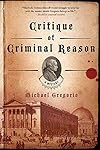
In the first book in this intelligent and fascinating series, the reader is quickly plunged into the midst 1803 investigation of a string of murders in Konigsberg, Prussia. Hanno Stiffeniis, a rural procurator, finds himself mysteriously and peremptorily ordered by King William III to report "with all haste" to the ancient city held in a "grip of terror".
Stiffeniis has been recommended to the King by an "imminent person", which turns out to be aged Immanuel Kant, whom he knows from a brief show more but intense meeting seven years earlier. Something about that meeting caused such concern that Kant's lawyer had written to Stiffeniis and demanding that he never communicate with the old philosopher again. Dark hints are dropped as well that Stiffeniis had a hand in his brother's untimely death.
Mystery swirls around the murders. Are they part of a Jacobin plot to destabilize the Prussian state? Or are the killings the work of a madman? Stiffeniis does meet, of course, with Kant who has also engaged the aid of a doctor engaged in paranormal "science" and primitive pathology. Does Kant really put stock in the doctor's hocus pocus wherein he appears to speak with the spirit of the most recently deceased victim? Has Kant's great mind finally broken under the strain of decades of heroic sustained effort? Has he suddenly changed his philosophical views on death's door?
Stiffeniis also has to struggle with the brutal methods of the Prussian military in handling his prisoners, but his own missteps lead to tragic results that pile one on top of another.
The identity and motive of the killer are well-hidden. Any number of characters seem like plausible candidates at one time or another: Stiffeniis's assistant, Kant's former assistant Martin Lampe, a luridly sensuous albino prostitute, and even Kant himself (!). Even once the murders are solved, the mystery concerning Stiffeniis's brother remains. His own parents turned bitterly and irredeemably against him, but why?
The book contains a number of historical characters in addition to Kant, including his lawyer Jachmann, and his former live-in aide Lampe, who really was fired about two years before Kant's death. The telling of the tale magnificently recreates the lost world of inflexible bureaucratic militaristic Prussia, the debauched denizens of an early 18th century port city's waterfront, the vast chasm of separating the well-to-do burghers from the multitudes living in Third World class poverty. The story also oozes appropriate amounts of creepiness.
Critique of Criminal Reason is an extremely well-written and intelligent murder mystery - but don't worry, you don't need to know Kant's philosophy to appreciate the story. Highest recommendation. show less
Stiffeniis has been recommended to the King by an "imminent person", which turns out to be aged Immanuel Kant, whom he knows from a brief show more but intense meeting seven years earlier. Something about that meeting caused such concern that Kant's lawyer had written to Stiffeniis and demanding that he never communicate with the old philosopher again. Dark hints are dropped as well that Stiffeniis had a hand in his brother's untimely death.
Mystery swirls around the murders. Are they part of a Jacobin plot to destabilize the Prussian state? Or are the killings the work of a madman? Stiffeniis does meet, of course, with Kant who has also engaged the aid of a doctor engaged in paranormal "science" and primitive pathology. Does Kant really put stock in the doctor's hocus pocus wherein he appears to speak with the spirit of the most recently deceased victim? Has Kant's great mind finally broken under the strain of decades of heroic sustained effort? Has he suddenly changed his philosophical views on death's door?
Stiffeniis also has to struggle with the brutal methods of the Prussian military in handling his prisoners, but his own missteps lead to tragic results that pile one on top of another.
The identity and motive of the killer are well-hidden. Any number of characters seem like plausible candidates at one time or another: Stiffeniis's assistant, Kant's former assistant Martin Lampe, a luridly sensuous albino prostitute, and even Kant himself (!). Even once the murders are solved, the mystery concerning Stiffeniis's brother remains. His own parents turned bitterly and irredeemably against him, but why?
The book contains a number of historical characters in addition to Kant, including his lawyer Jachmann, and his former live-in aide Lampe, who really was fired about two years before Kant's death. The telling of the tale magnificently recreates the lost world of inflexible bureaucratic militaristic Prussia, the debauched denizens of an early 18th century port city's waterfront, the vast chasm of separating the well-to-do burghers from the multitudes living in Third World class poverty. The story also oozes appropriate amounts of creepiness.
Critique of Criminal Reason is an extremely well-written and intelligent murder mystery - but don't worry, you don't need to know Kant's philosophy to appreciate the story. Highest recommendation. show less
Michael Gregorio’s third mystery with Procurator Hanno Stiffeniis once again brings the magistrate more than his share of troubles. Living as a Prussian in territory occupied by French troops after the disastrous Battle of Jena, the reader learns, has its share of humiliations both large and small. And yet when a string of murders occur amongst the amber gathering girls working on the shores of the Baltic Sea, the French turn to Stiffeniis and his proven track record to solve the crime. show more After all, there's a need to keep the trade in priceless amber flowing and thus keep the French war machine running in Spain.
Stiffeniis is certainly caught between a rock and a hard place. Being known to cooperate with an invading force and help assure their continued stripping away of his country’s wealth and resources is a risky endeavor. But on the other hand, Prussian women are being murdered, and someone needs to stop the killer. And perhaps with success the French might be obliged and owe a few favors to his town of Lotingen? So, bidding his wife Helena farewell, he heads to Nordkopp to try and stop a monster.
That moral dilemma seems to characterize the shades of grey that pervade the book: few characters and situations are fully what they seem on the surface. Stiffeniis himself lives in fear of the blacker regions of his own soul, a thing he has admitted to few people—the foremost being his mentor, Immanuel Kant, who encouraged his turn to criminal investigation. Each crime he investigates seems to evoke both a passion for justice and a need to better understand that inner darkness.
The first decade of the nineteenth century is keenly drawn, and modern readers will probably find themselves being thankful for the benefits of modern medicine and hygiene more than once. Gregorio’s use of Prussia, a rare fictional setting, and Prussian culture and identity at a period of upheaval and change in German history, gives the series a real shine. The crimes are gruesomely vivid, providing urgency to the narrative. Amber, as a valued commodity, a work of art, and a Prussian cultural resource and pride, plays its own vital role in the tale.
The details are sharp and the mood is gloomy and heavy, well representative of horrid acts committed in a subjugated nation. “A Visible Darkness” doesn’t make for easy reading, but it’s an intense, compelling book that’s well worth the time. show less
Stiffeniis is certainly caught between a rock and a hard place. Being known to cooperate with an invading force and help assure their continued stripping away of his country’s wealth and resources is a risky endeavor. But on the other hand, Prussian women are being murdered, and someone needs to stop the killer. And perhaps with success the French might be obliged and owe a few favors to his town of Lotingen? So, bidding his wife Helena farewell, he heads to Nordkopp to try and stop a monster.
That moral dilemma seems to characterize the shades of grey that pervade the book: few characters and situations are fully what they seem on the surface. Stiffeniis himself lives in fear of the blacker regions of his own soul, a thing he has admitted to few people—the foremost being his mentor, Immanuel Kant, who encouraged his turn to criminal investigation. Each crime he investigates seems to evoke both a passion for justice and a need to better understand that inner darkness.
The first decade of the nineteenth century is keenly drawn, and modern readers will probably find themselves being thankful for the benefits of modern medicine and hygiene more than once. Gregorio’s use of Prussia, a rare fictional setting, and Prussian culture and identity at a period of upheaval and change in German history, gives the series a real shine. The crimes are gruesomely vivid, providing urgency to the narrative. Amber, as a valued commodity, a work of art, and a Prussian cultural resource and pride, plays its own vital role in the tale.
The details are sharp and the mood is gloomy and heavy, well representative of horrid acts committed in a subjugated nation. “A Visible Darkness” doesn’t make for easy reading, but it’s an intense, compelling book that’s well worth the time. show less
Hanno Stiffeniis, a man in his early thirties, was serving as a magistrate in a small town in Prussia in 1804 when he receives a summons from King Frederick Wilhelm III ordering him to leave for Konigsberg. There have been a few unsolved murders and the circumstances of the murders have panicked the townspeople.
He hadn’t been in Konigsberg for seven years and had been told to never return there because of an incident between himself and Immanuel Kant, the philosopher and teacher but show more believes he cannot refuse his King’s command.
Other, more experienced men have been trying to solve the murders but have been unsuccessful. He doesn’t know how he would be able to succeed where they have failed. Soon after he arrives, he does meet with Dr. Kant and what happens next changes everything.
The usual way to solve crimes was through threats and torture. The murder victims are found in a kneeling position. The police reports lack a lot of basic information such as the cause of death and important names of people involved in the investigation. He begins his job by trying to determine a motive and, after finding one and determining the murderer; discovers he was wrong. This happens several other times. Dr. Kant, who is quite old at this point and in poor health, leads Stiffeniis to use logic and evidence in looking for the information he needs. It is the beginning of modern crime technique.
One quote of Kant, “...Reason operates on the surface alone. What happens beneath the surface shapes events,” helps Stiffeniis solve the murders as well as several others which occur after his arrival.
He eventually learns the reason he was recommended for the job as well as resolves some deep personal problems within his own family.
Michael Gregorio’s descriptions of people, places, and just about everything else are very detailed. The reader can picture what Stiffeniis sees. The book goes into very gory detail about the corpses. I eventually skipped over them and don’t think I missed anything important.
There are a lot of criminals who are being shipped to Russia and he sees them at a tavern while waiting for their ship. They are seated in a circle around a fire. “So many people, so close together, yet barely a word was said” made me think of our modern culture where people gather together and, rather than interact with the people around them, are involved with their smart phones. These prisoners didn’t have that option.
The book does a fairly good job weaving logic and philosophy into solving crimes at a level that most readers will be able to understand. show less
He hadn’t been in Konigsberg for seven years and had been told to never return there because of an incident between himself and Immanuel Kant, the philosopher and teacher but show more believes he cannot refuse his King’s command.
Other, more experienced men have been trying to solve the murders but have been unsuccessful. He doesn’t know how he would be able to succeed where they have failed. Soon after he arrives, he does meet with Dr. Kant and what happens next changes everything.
The usual way to solve crimes was through threats and torture. The murder victims are found in a kneeling position. The police reports lack a lot of basic information such as the cause of death and important names of people involved in the investigation. He begins his job by trying to determine a motive and, after finding one and determining the murderer; discovers he was wrong. This happens several other times. Dr. Kant, who is quite old at this point and in poor health, leads Stiffeniis to use logic and evidence in looking for the information he needs. It is the beginning of modern crime technique.
One quote of Kant, “...Reason operates on the surface alone. What happens beneath the surface shapes events,” helps Stiffeniis solve the murders as well as several others which occur after his arrival.
He eventually learns the reason he was recommended for the job as well as resolves some deep personal problems within his own family.
Michael Gregorio’s descriptions of people, places, and just about everything else are very detailed. The reader can picture what Stiffeniis sees. The book goes into very gory detail about the corpses. I eventually skipped over them and don’t think I missed anything important.
There are a lot of criminals who are being shipped to Russia and he sees them at a tavern while waiting for their ship. They are seated in a circle around a fire. “So many people, so close together, yet barely a word was said” made me think of our modern culture where people gather together and, rather than interact with the people around them, are involved with their smart phones. These prisoners didn’t have that option.
The book does a fairly good job weaving logic and philosophy into solving crimes at a level that most readers will be able to understand. show less
Lists
Awards

You May Also Like


Associated Authors
Statistics
- Works
- 12
- Also by
- 2
- Members
- 768
- Popularity
- #33,142
- Rating
- 3.2
- Reviews
- 21
- ISBNs
- 64
- Languages
- 8