
Don Stap
Author of Birdsong: A Natural History
About the Author
Don Stap is professor of English at the University of Central Florida.
Image credit: Photo by Terry Thaxton
Works by Don Stap
Tagged
Common Knowledge
- Gender
- male
- Organizations
- University of Central Florida
Members
Reviews
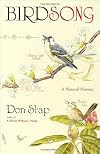
Birdsong by Don Stap is perfect for the bright days of spring when the full chorus of birds explodes each morning. Divided into three parts, it provides a broad overview of the current state of bioaccoustics. The author begins by tagging along with noted researcher Don Kroodsma on an expedition to capture the different vocalizations of chickadees on Martha's Vineyard. The complexity of this familiar song provides a deft segue into an overview of bird vocalization and the role songs play in show more bird life.
The second part of the book recounts the author's experiences at the highly regarded bioaccoustic workshop run by San Francisco State University in the Sierra Nevada. Stap introduces an interesting cast of instructors and students and uses both groups' goals to help the reader understand the importance of and potential for contributing to the current knowledge of bird song. This section also underscores the challenges in getting high quality bird song recordings—something I imagine to be even more difficult than getting a decent bird photograph.
The final section, most interesting of all to me, deals with the conundrum of bird song learning in species that are not true songbirds. Stap paints an intriguing picture of how researchers come to focus on a particular questions, recounting the moment Don Kroodsma first heard the song of the three-wattled bellbird on a CD and then later fatefully encountered it on a trip to Costa Rica. This sets the stage for an in-depth examination of the interplay between different populations, bird ages (known through banding studies) and their songs and a challenge to traditional scientific thinking. Traditional thinking says that true songbirds (including thrushes, warblers and sparrows among others) learn their songs while suboscines (an evolutionary branch of the avian tree that includes flycatchers and bellbirds) are genetically programmed and sing the same song regardless of whether they hear it as a nestling or not. Kroodsma's research includes repeated forays to record bellbirds in the tropics and Chris Sharpe (a LT member) gets a nod for his recordings of bellbirds in the late 1990s. The end result, although unsatisfying for the reader, tells volumes about the scientific research process. Highly recommended show less
The second part of the book recounts the author's experiences at the highly regarded bioaccoustic workshop run by San Francisco State University in the Sierra Nevada. Stap introduces an interesting cast of instructors and students and uses both groups' goals to help the reader understand the importance of and potential for contributing to the current knowledge of bird song. This section also underscores the challenges in getting high quality bird song recordings—something I imagine to be even more difficult than getting a decent bird photograph.
The final section, most interesting of all to me, deals with the conundrum of bird song learning in species that are not true songbirds. Stap paints an intriguing picture of how researchers come to focus on a particular questions, recounting the moment Don Kroodsma first heard the song of the three-wattled bellbird on a CD and then later fatefully encountered it on a trip to Costa Rica. This sets the stage for an in-depth examination of the interplay between different populations, bird ages (known through banding studies) and their songs and a challenge to traditional scientific thinking. Traditional thinking says that true songbirds (including thrushes, warblers and sparrows among others) learn their songs while suboscines (an evolutionary branch of the avian tree that includes flycatchers and bellbirds) are genetically programmed and sing the same song regardless of whether they hear it as a nestling or not. Kroodsma's research includes repeated forays to record bellbirds in the tropics and Chris Sharpe (a LT member) gets a nod for his recordings of bellbirds in the late 1990s. The end result, although unsatisfying for the reader, tells volumes about the scientific research process. Highly recommended show less
part biography, part journalistic foray, part science narrative, this book describes some of the history of the study of bird song and how we found out much of it is learned from a first-person perspective.
Stap focuses on Kroodsma’s meticulous and reverent dedication to documenting bird songs from different regions and different species. this researcher even pioneered raising chicks of various species in the lab to help prove whether or not their songs are culturally learned or hardwired show more in their neurosystems. Stap delves into the science of bioacoustics just enough to explain what’s going on but keeps the story moving with biographical and historical moments.
he ends the book with almost a diary of field work that sought to find evidence for suboscine song learning in the bellbirds of Costa Rica. the passerine or perching song birds are subdivided into the oscines and the suboscines. the oscines are know to learn their songs and change them. they do not sing from a hardwired archive but the suboscines do. however, according to Stap, Kroodsma has intriguing evidence to the contrary but hadn’t published it at the time of this book’s release.
on an aesthetic note, i liked this book but, then, i find this topic fascinating and so am probably a bit biased. the writing was clear but the storytelling was a bit muddy and the last few chapters of the book felt a little bit like filler as Spat unwound the tale of the the bellbird search with perhaps a little too much detail. definitely a good read if you find this kind of thing interesting but don’t want to wade through a scientific manual, handbook, or published research articles. show less
Stap focuses on Kroodsma’s meticulous and reverent dedication to documenting bird songs from different regions and different species. this researcher even pioneered raising chicks of various species in the lab to help prove whether or not their songs are culturally learned or hardwired show more in their neurosystems. Stap delves into the science of bioacoustics just enough to explain what’s going on but keeps the story moving with biographical and historical moments.
he ends the book with almost a diary of field work that sought to find evidence for suboscine song learning in the bellbirds of Costa Rica. the passerine or perching song birds are subdivided into the oscines and the suboscines. the oscines are know to learn their songs and change them. they do not sing from a hardwired archive but the suboscines do. however, according to Stap, Kroodsma has intriguing evidence to the contrary but hadn’t published it at the time of this book’s release.
on an aesthetic note, i liked this book but, then, i find this topic fascinating and so am probably a bit biased. the writing was clear but the storytelling was a bit muddy and the last few chapters of the book felt a little bit like filler as Spat unwound the tale of the the bellbird search with perhaps a little too much detail. definitely a good read if you find this kind of thing interesting but don’t want to wade through a scientific manual, handbook, or published research articles. show less
Why do birds sing? In this interesting account of avian bioacoustics, the author follows master birders into the field to study the how and why of birdsong.
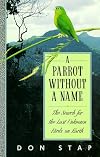
A marvelous tale of exploration and discovery.
You May Also Like


Statistics
- Works
- 2
- Members
- 184
- Popularity
- #117,735
- Rating
- 3.5
- Reviews
- 5
- ISBNs
- 8
- Languages
- 1