
Tim Ladwig
Author of Psalm Twenty-Three
Works by Tim Ladwig
Stories Jesus Told: The Story of the Two Builders (Our Daily Bread for Kids Presents) (2021) 7 copies, 1 review
The Lord's Prayer 1 copy
Associated Works
Tagged
Common Knowledge
There is no Common Knowledge data for this author yet. You can help.
Members
Reviews
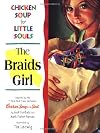
I love this book so much! It is definitely one of my favorite children’s books of all time; it completely melted my heart and drowned me in my own tears. Through this book, Lisa McCourt showed me how important it is to have a positive adult figure in your life, how rewarding breaking out of your comfort zone can be, and how a simple act of kindness can bear good fruit.
Yesterday, I read a funny quote: “Friends are God’s way of apologizing for your relatives.” I remembered this quote show more because it’s not true for the main character, Izzy. Izzy’s grandfather did volunteer work every Sunday and treated all the homeless and restless customers of the Family Togetherness Home with love and respect. He also played a crucial role in guiding Izzy to discover how to be a great friend. If anything, Izzy’s family members, at least her Grandpa Mike and mother, encourage and guide her to be the best person she can be.
Secondly, Izzy was nervous and awkward in her attempts to show kindness to Susan, who sat in the corner of a room with torn clothes and messy braids. However, Izzy sums up the courage to hand the Braids Girl a bowl of soup, assuming she was hungry and food was what she needed. Good-hearted Izzy continues to ponder over what she can do to provide for the Braids Girl’s needs and eventually realizes that all Susan wanted was for Izzy to see that she was a regular kid and become her friend. By cracking open her own heart, Susan learns how to become a better friend to someone she probably did not see herself befriending otherwise.
Finally, Izzy did not perform grand works to gain Susan’s friendship; all she did was hand Susan her soup, donate her old belongings, and ask for her name. By gifting Susan with a fragment of her heart, she was able to earn one of the best blessings available to man, which I think is friendship. show less
Yesterday, I read a funny quote: “Friends are God’s way of apologizing for your relatives.” I remembered this quote show more because it’s not true for the main character, Izzy. Izzy’s grandfather did volunteer work every Sunday and treated all the homeless and restless customers of the Family Togetherness Home with love and respect. He also played a crucial role in guiding Izzy to discover how to be a great friend. If anything, Izzy’s family members, at least her Grandpa Mike and mother, encourage and guide her to be the best person she can be.
Secondly, Izzy was nervous and awkward in her attempts to show kindness to Susan, who sat in the corner of a room with torn clothes and messy braids. However, Izzy sums up the courage to hand the Braids Girl a bowl of soup, assuming she was hungry and food was what she needed. Good-hearted Izzy continues to ponder over what she can do to provide for the Braids Girl’s needs and eventually realizes that all Susan wanted was for Izzy to see that she was a regular kid and become her friend. By cracking open her own heart, Susan learns how to become a better friend to someone she probably did not see herself befriending otherwise.
Finally, Izzy did not perform grand works to gain Susan’s friendship; all she did was hand Susan her soup, donate her old belongings, and ask for her name. By gifting Susan with a fragment of her heart, she was able to earn one of the best blessings available to man, which I think is friendship. show less
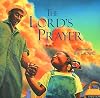
This is a picture book that goes through the famous Lord's Prayer. It has vivid images and follows a young African American girl and her father as they help a neighborhood. This book would be targeted to K-2 graders because there are few words and it would be easy for young readers to listen to or read. I would not be able to use this in a public-school classroom, but I would love to use it as a read-aloud if I teach at a Christian school.
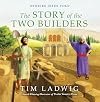
Well done illustrations allow this known parable to gain clarity in a way young listeners can grasp and enjoy.
This book is part of a series, but I haven't had a chance to peek at the other ones, yet. The parable is a well-known one, the house build on sand versus the house built on stone, and, in this book, taken from the view of the New International Version of Scripture, which, honestly, doesn't change of affect the basics of the tale as opposed to other translations. While there is some show more text to make certain aspects clear and keep the main parts of the parable as the main theme, it's the illustrations which carry this book and allow the setting of the parable to become clear. I truly appreciated this, since a more realistic way of building from the time period is presented and allows the story to keep its historic foundation and, at the same time, make it accessible to children (and adults). At the end, there is a section with questions and such, which can be used to open up discussions and lead into a family devotional setting.
As said, I do highly appreciate the way the author/illustrator has brought the time-true setting of the parable to life, enabling readers to 'see' the parable in the culture and frame it was told. It becomes clear that the house on stone isn't only sturdier than one on sand, but illustrates the work and effort that this type of building process took. I was a bit disappointed when the 'house built on sand' flew over so quickly as it wasn't quite as clear what was going on. Also, if it weren't for the discussion questions at the back for guardians, parents, and/or teachers, a listener would be left hanging without a true understanding of what the parable meant. The beginning also threw me a bit as it starts quite sudden. A little more and clearer introduction would have been nice.
I'm not sure if this one really works well for a family devotional really as well as it works as a way to introduce children....with guidance and explanation afterwards...to the parable. Still, I do enjoy how it was done and find the illustrations very interesting and lovely. So, I'm recommending it as a resource to the topic rather than something which can be used well as a read all on its own.
I received a complimentary copy through Netgalley and enjoyed exploring these pages. show less
This book is part of a series, but I haven't had a chance to peek at the other ones, yet. The parable is a well-known one, the house build on sand versus the house built on stone, and, in this book, taken from the view of the New International Version of Scripture, which, honestly, doesn't change of affect the basics of the tale as opposed to other translations. While there is some show more text to make certain aspects clear and keep the main parts of the parable as the main theme, it's the illustrations which carry this book and allow the setting of the parable to become clear. I truly appreciated this, since a more realistic way of building from the time period is presented and allows the story to keep its historic foundation and, at the same time, make it accessible to children (and adults). At the end, there is a section with questions and such, which can be used to open up discussions and lead into a family devotional setting.
As said, I do highly appreciate the way the author/illustrator has brought the time-true setting of the parable to life, enabling readers to 'see' the parable in the culture and frame it was told. It becomes clear that the house on stone isn't only sturdier than one on sand, but illustrates the work and effort that this type of building process took. I was a bit disappointed when the 'house built on sand' flew over so quickly as it wasn't quite as clear what was going on. Also, if it weren't for the discussion questions at the back for guardians, parents, and/or teachers, a listener would be left hanging without a true understanding of what the parable meant. The beginning also threw me a bit as it starts quite sudden. A little more and clearer introduction would have been nice.
I'm not sure if this one really works well for a family devotional really as well as it works as a way to introduce children....with guidance and explanation afterwards...to the parable. Still, I do enjoy how it was done and find the illustrations very interesting and lovely. So, I'm recommending it as a resource to the topic rather than something which can be used well as a read all on its own.
I received a complimentary copy through Netgalley and enjoyed exploring these pages. show less
I liked this book for three reasons. First I liked that the book pushed readers to think about the topic of how to treat or interact with homeless people. It’s important because homeless people are just like everyone else; they have feelings, hopes, dreams, ambition, they just got dealt a bad hand, and people need to understand that. Secondly, I liked how the plot was organized. It flowed very well, from Izzy first starting to help out at the shelter, to her giving away her things and show more being disappointed when Susan looked sad, to realizing she just needed a friend. It was paced well and was an all-around well written story. Lastly, I liked the character development of Izzy. She was very relatable in the sense that sometimes when people go to shelters, they focus on people’s situation and not the actual people like Izzy. But over time Izzy grew to realize that Susan, the homeless girl her age, just wanted a friend. I also like Susan’s character. She was also relatable. She didn’t want Izzy to pity her, she h=just wanted a friend to play with and that’s why she was sad every time Izzy gave her something but didn’t stay to talk or play. I think the message of the book is that the best thing you can give anybody is not something physical, its friendship. show less
Lists
You May Also Like


Associated Authors
Statistics
- Works
- 9
- Also by
- 6
- Members
- 742
- Popularity
- #34,227
- Rating
- 4.2
- Reviews
- 14
- ISBNs
- 18