
Plotinus (204–270)
Author of The Six Enneads
About the Author
Plotinus studied under Ammonius Sakkas and later moved to Rome, where he continued to develop his views and created a circle of faithful disciples, among them Porphyry the Phoenician (232--304), who edited Plotinus's Enneads and wrote works of his own, including The Life of Plotinus. Plotinus has show more been recognized as the last representative of Greek rationalism and one of the great thinkers of all times, having built a system that includes theories of reality, knowledge, ethics, esthetics, and theology. The main stock of Plotinus's ideas comes from the classical age of Greek philosophy, recast to counter problems that the winds of new doctrines ushered in along with the rising power of religious worship and the spreading expectation for salvation. Plotinus appeals to intellectual purity, an aspect often misunderstood as a concession to mysticism that lacks redeeming logical features. His philosophical system provides two ways to meet the demands of a fulfilled life. The first deals with finding one's place in a universe that is the result of the creative procession from the One, the source of all reality; the second is designed to effect the soul's "return" in a union with the One. Whereas the first way is metaphysical, the latter is ethical. The first brings understanding, the second grants blessedness. Plotinus's insights proved influential, and many of his disciples, chiefly Porphyry, sought to preserve and transmit them to subsequent generations of thinkers in other parts of the Roman world, Syria and Greece in particular. Iamblichus (died c.a.d.330), Syrianus (fl. c.431), and Proclus (410--485) worked out their own versions of Neoplatonism. The schools' activities ended when they were ordered closed in a.d. 529. Still, the ideas had taken on a life of their own and moved in new directions. Many of them already had been taken over by Christian intellectuals who were learning how to respond to the need to strengthen the rational side of their religion. (Bowker Author Biography) show less
Series
Works by Plotinus
Britannica Great Books: Lucretius, Epictetus, Marcus Aurelius, Plotinus (1952) — Author; Contributor — 29 copies
The Essence of Plotinus: Extracts from the Six Enneads and Porphyry's Life of Plotinus (1948) 19 copies
Seele, Geist, Eines: Enneade IV 8, V 4, V 1, V 6 und V 3 : griechisch-deutsch (Philosophische Bibliothek) (German Edition) (1990) 11 copies
Ennead I: Porphyry on the Life of Plotinus. Ennead I (Loeb Classical Library No. 440) (1966) 10 copies
Geist, Ideen, Freiheit: Enneade V 9 und VI 8 : griechisch-deutsch (Philosophische Bibliothek) (German Edition) (1990) 9 copies
Plotinus On The Beautiful. Ennead I. 6. Translated by the Editors of the Shrine of Wisdom and On Intelligible Beauty. Ennead v. 8. Translated by Thomas Taylor (1985) — Author — 5 copies
Plotinus: On the one and good 4 copies
Antologia plotiniana 4 copies
Traités : Tome 6, 38-41 : 38, Comment la multiplicité des idées s'est établie et sur le Bien ; 39, Sur le volontaire et sur la volonté de… (0270) 4 copies
Enneaden 4 copies
Eneada Primera 3 copies
Plotinos : mystikern och reformatorn 3 copies
Plotin 3 copies
Ennead VI 2 copies
Ennéades / 06, 2e partie 2 copies
Plotinus: On the nature of the soul 2 copies
Ennead I 2 copies
La bellezza 2 copies
LES SIX ENNÉADES DE PLOTIN ÉDITION COMPLÈTE EN UN VOLUME Édition quadrilingue: Grec - Anglais - Français - Allemand (2021) 1 copy
Sur le beau 1 copy
Seele – Geist – Eines: Enneade IV 8, V 4, V 1, V 6 und V 3. Zweisprachige Ausgabe (Philosophische Bibliothek 428) (1990) 1 copy
Enéadas Vol. 3 1 copy
Enéadas I: libros I-II 1 copy
Enéadas Vol. 2 1 copy
Enneadi volumi I-II-III 1 copy
Eneada Tercera 1 copy
Eneada Sexta 1 copy
Plotino. Sull'anima 1 copy
Enéadas: Primeira Enéada 1 copy
Enéadas II: libros III-IV 1 copy
Eneada tercera 1 copy
Plotinos (v. 1): complete works, in chronological order, grouped in four periods (1918) 1 copy, 1 review
Enéadas Vol 0 1 copy
Plotino vol.1 1 copy
Enéadas Vol. 1 1 copy
O vecnosti in casu 1 copy
Opere vol. 3 1 copy
Enneas ekti / Εννεάς έκτη 1 copy
PLOTINUS Ennead V.1: On the Three Primary Levels of Reality: Translation, with an Introduction, and Commentary (2016) 1 copy
Textos fundamentales 1 copy
Les deux matieres: Enneade II, 4 (12) (Histoire des doctrines de l'Antiquite classique) (1993) 1 copy
De Rebus Philosophicis 1 copy
Plotinus on the Beautiful and on Intelligible Beauty — Author — 1 copy
Enneads Of Plotinus V2: On The Nature Of The Soul, Divine Mind And On The One And Good (2008) 1 copy
Plotini Opera III: Enneas VI 1 copy
Ennéades. I 1 copy
Dal bello al divino 1 copy
Opera 1 copy
Opere vol. 1 1 copy
The Enneads Volume 1 (1-3) 1 copy
The Enneads Volume 2 (4-6) 1 copy
Schriften. Griech.-Dt.: Die Schriften Nr. 1 - 21 der chronologischen Reihenfolge. A, Texte, b, Anmerkungen. (Bd. I) (1956) 1 copy
Ennéades IV 1 copy
Ennéades III 1 copy
Enneade I-II 1 copy
Enneade VI 1 copy
Enneade III - V 1 copy
Troisième Ennéade - Edition bilingue - traduction par Emile Bréhier - Introduction de Jérôme Laurent 1 copy
Opere vol. 2 1 copy
Plotin - Opere III 1 copy
Enéada quinta 1 copy
Plotini opera omnia ; 1 copy
Le Enneadi 1 copy
Enéada cuarta 1 copy
Enéada primera 1 copy
Enéada segunda 1 copy
Enéada sexta 1 copy
Enéada tercera 1 copy
Associated Works
Philosophies of Art and Beauty: Selected Readings in Aesthetics from Plato to Heidegger (1976) — Contributor — 398 copies, 2 reviews
The Sheed and Ward Anthology of Catholic Philosophy (A Sheed & Ward Classic) (2005) — Contributor — 34 copies
Every Man an Artist: Readings in the Traditional Philosophy of Art (Library of Perennial Philosophy) (2005) — Contributor, some editions — 15 copies
Tagged
Common Knowledge
- Canonical name
- Plotinus
- Legal name
- Πλωτῖνος
- Birthdate
- 204
- Date of death
- 270
- Gender
- male
- Occupations
- philosopher
- Nationality
- Italy
- Places of residence
- Rome
Lycopolis, Egypt
Alexandria, Egypt
Members
Reviews
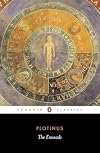
the soul is a meteor / a blossom of light / burned by harsh skies. so influential it is the skeleton key to Christian thought and Renaissance Painting, a primary text alike the Timaeus, the Vedas, the Nikayas (which all happen to rhyme), and an indispensable guide to the mystic on how to become One with the Void. scaling up the Ennead of Parmenides 8 1 affirmative/negative to eventually reach the Top, an ineffable meta-principle. the circle of emanation and return is the ultimate story of show more the stuttering of the One, recoils of shots in the War in Heaven that sparked between the logos and the void that took place before the Fiat Lux, the war was not fought with missiles and spears but axioms of being, propositions and proofs in the vacuum. and God won through reflexion: in the Nothing only the tautology of identity is self-supporting. the One is the ultimate meta-tautology, Atum masturbating ouroborically, a self-study in henosis. the main concepts are the arborescent hierarchy of the One-Being-Intellect triad. this fractalizes and is responsible for spirit's descent into matter which one must eventually escape by tracing back up the emanationist ladder one has tragically fell down from. oneness is goodness because individuation commits an object to being an intelligible unity. there can be no distinction between inside and outside within the One, being and center as a dimensionless point, God's being is his centrality and yet also this flickering as its own emanationist contraction and expansion in all its quasi-gnostic contours with theses like the badness of Nature but doesn't quite reach finality. finality as gnosis cannot be voiced or even thematized, yet even a deeper truth is the apophatic non-conceptualization of a negative/unknowable God is yet another capture mechanism, the inclusion of its own negation within the meta-logic in the Game with Being as an internal production of the One, that black hole brain structure you see from time to time: the Demiurge is a donut. the annular repetition of the torus coinciding and retroactively refuting yet clarifying Campbell's monomyth: the Hero's Journey is really an immanentized Spirit's journey. somewhere Plotinus says that the Odyssey is the eternal story of the Journey of the Spirit. spirit always has a story to tell precisely because it's there to tell it, because its being and its telling are one and the same. the One's overflow is the jouissance that fissions into Two. there is no room for a positive Evil in Plotinus only privations just as the monists before him, the Nous for him is Good. the Gnostic co-opts it as the origin of Evil, determination: the Demiurge. the je ne sais quoi, things best left unsaid, the black square as an art piece, or better, a black Sphere. man as a creator is himself co-operating in demiurgy, his art and ornament distractions or reminders to re-member your true Self, like how re-membering the limbs of Osiris is akin to restructuring the estranged Self. Plotinus thought the world-soul was something like a star that radiates Light (internality) everywhere and "adheres" only in that substance given to adhere to it and this mutual relation between ground and issue became the principle of non-contradiction. the One neither is one, nor is. the hierarchy of Spirit is the only hierarchy climbed by its recognition: it is hierarchy as such, of which all others participate in only formally. the chain of being as it should be. symbols speak in rhizomatic bursts of signification. there will come a time you'll read in color. the One overflows because it overflows, yet this statement seems more like an evasion than anything else and perhaps even neoplatonism is yet another root in this meta-intellectual fingertrap of the Demiurge, which is the God creating this material world easily demonized to a being of affect, terror, sense and horror. one question resounds and echoes after all the mysticalization: why did the One plunge himself into nescience?
he who is self-luminous is his own shadow show less
he who is self-luminous is his own shadow show less
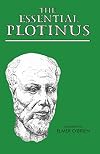
Building on the teachings of Plato and with his profound impact on the Christian contemplative tradition, Plotinus is one of the most influential philosophers in the Western tradition. If you would like to begin studying Plotinus, this little book of selections translated by Elmer O’Brien is a great place to start – clear, crisp, accessible language with helpful introductory remarks and guiding editorial notes.
Rather than making general remarks about Plotinus’s ideas on such topics as show more the One or the Good, for the purposes of this review and to provide a small taste of the great philosopher’s mysticism, I will focus on the first chapter of O’Brien’s translation: Beauty. And within this critical topic and its application to our lives, I will share some personal observations based on my own practice of meditation and contemplation.
The treatise begins with the following words: “Chiefly beauty is visual. Yet in word patterns and in music (for cadences and rhythms are beautiful) it addresses itself to the hearing as well. Dedicated living, achievements, character, intellectual pursuits are beautiful to those who rise above the realm of the senses; to such ones the virtues, to, are beautiful.” So, right from the start, beauty for Plotinus is centrally the beauty we can see using our eyes and also the beauty of words and music and sounds we can hear using our ears.
Further on in this chapter, Plotinus urges spiritual seekers to transform themselves into works of beauty and pure light: “Withdraw into yourself and look. If you do not as yet see beauty within you, do as does the sculptor of a statue that is to be beautified: he cuts away here, he smooths it there, he makes this line lighter, this other one purer, until he disengages beautiful lineaments in the marble. Do you this, too. Never cease “working at the statue” until there shines out upon you from it the divine sheen of virtue, until you see perfect “goodness firmly established in stainless shrine.” Have you become like this? Do you see yourself, abiding within yourself, in pure solitude? Does nothing remain to shatter that interior unity, nor anything external cling to your authentic self? Are you entirely that sole true light, which is not contained by space, not confined to any circumscribed form, not diffused as something without term, but ever unmeasurable as something greater than all measure and something more than all quantity?” ---------- If you find this passage inspiring, congratulations! You are most definitely a candidate for the mystical, spiritual path elucidated by Plotinus.
Keeping in mind how beauty, for Plotinus, as noted above, is principally visual and secondarily audial, here is a quote from Tarthang Tulku, a contemporary Buddhist teacher from Tibet, on our working with our feelings, our senses and our body as a way to experience beauty: “The more we explore the intensifying of the senses, the more we find a great depth within our feelings. Sensations become richer, textured with subtle nuances, more deeply joyful. We can explore the creamy texture of our deeper feelings, and contact an ever subtler level of beauty within our bodies and our senses. Within the open space of meditation we can find infinite joy and perfect bliss. Once we discover that spirit of vitality, which is the essence of awareness, we find that our bodies, actually become a channel through which we are capable of contacting a higher level of awareness within ourselves.”
I cite the above quote as a point of contrast to the Western contemplative tradition. You can read and study Plotinus and hundreds of works in Western philosophy and religion going back to Plato and Aristotle and on to such thinkers as Augustine and Aquinas, but you will not find anything in any of those ancient and medieval texts like this quote from Tarthang Tulku.
And why am I including this in a review of Plotinus? Because, from my own experience, anyone on the spiritual path who attempts to minimize or discount the body does so at their own peril. With his emphasis on the intellect and the experience of beauty via seeing and hearing as a way of spiritual growth, Plotinus is nothing short of illuminating. However, one would be wise to also include a daily practice of working directly with the body through such disciplines as yoga, meditation, pranayama, tai-chi or qugong.
Returning to Plotinus, one last quote, a source of inspiration for us all: “We must close our eyes and invoke a new manner of seeing, a wakefulness that is the birthright of us all, though few put it to use.” show less
Building on the teachings of Plato and with his profound impact on the Christian contemplative tradition, Plotinus is one of the most influential philosophers in the Western tradition. If you would like to begin studying Plotinus, this little book of selections translated by Elmer O’Brien is a great place to start – clear, crisp, accessible language with helpful introductory remarks and guiding editorial notes.
Rather than making general remarks about Plotinus’s ideas on such topics as show more the One or the Good, for the purposes of this review and to provide a small taste of the great philosopher’s mysticism, I will focus on the first chapter of O’Brien’s translation: ‘Beauty’. And within the subject of ‘Beauty’ I will share some personal observations based on my own practice of study, meditation and contemplation.
The treatise on Beauty begins with the following words: “Chiefly beauty is visual. Yet in word patterns and in music (for cadences and rhythms are beautiful) it addresses itself to the hearing as well. Dedicated living, achievements, character, intellectual pursuits are beautiful to those who rise above the realm of the senses; to such ones the virtues, to, are beautiful.” So, right from the start, beauty for Plotinus is centrally the beauty we can see using our eyes and also the beauty of words and music and sounds we can hear using our ears.
Further on in this chapter, Plotinus urges spiritual seekers to transform themselves into works of beauty and pure light in the following passage: “Withdraw into yourself and look. If you do not as yet see beauty within you, do as does the sculptor of a statue that is to be beautified: he cuts away here, he smooths it there, he makes this line lighter, this other one purer, until he disengages beautiful lineaments in the marble. Do you this, too. . . . Never cease “working at the statue” until there shines out upon you from it the divine sheen of virtue, until you see perfect “goodness firmly established in stainless shrine.” Have you become like this? Do you see yourself, abiding within yourself, in pure solitude? Does nothing remain to shatter that interior unity, nor anything external cling to your authentic self? Are you entirely that sole true light, which is not contained by space, not confined to any circumscribed form, not diffused as something without term, but ever unmeasurable as something greater than all measure and something more than all quantity?” ---- If you find this passage inspiring, then you are, on some level, a candidate for the mystical, spiritual path elucidated by Plotinus.
Keeping in mind how beauty, for Plotinus, as noted above, is principally visual and secondarily audial, here is a quote from Tarthang Tulku, a contemporary Buddhist teacher from Tibet, on our working with our feelings, our senses and our body as a way to experience beauty: “The more we explore the intensifying of the senses, the more we find a great depth within our feelings. Sensations become richer, textured with subtle nuances, more deeply joyful. . . . We can explore the creamy texture of our deeper feelings, and contact an ever subtler level of beauty within our bodies and our senses. Within the open space of meditation we can find infinite joy and perfect bliss. . . . Once we discover that spirit of vitality, which is the essence of awareness, we find that our bodies, actually become a channel through which we are capable of contacting a higher level of awareness within ourselves.”
I cite the above quote as a point of contrast to the Western contemplative tradition. You can read and study Plotinus and hundreds of works in Western philosophy and religion going back to Plato and Aristotle and on to such thinkers as Augustine and Aquinas, but you will not find anything in any of those ancient and medieval texts like this quote from Tarthang Tulku. And why am I including this in a review of Plotinus? Because, from my own experience, anyone on the spiritual path who attempts to minimize or discount the body does so at their own peril. With his emphasis on the intellect and the experience of beauty via seeing and hearing as a way of spiritual growth, Plotinus is nothing short of illuminating. However, one would be wise to also include a daily practice of working directly with the body through such disciplines as yoga, meditation, pranayama, tai-chi or qugong.
Returning to Plotinus, here is one last quote that could serve as a source of inspiration: “We must close our eyes and invoke a new manner of seeing, a wakefulness that is the birthright of us all, though few put it to use.” show less
Rather than making general remarks about Plotinus’s ideas on such topics as show more the One or the Good, for the purposes of this review and to provide a small taste of the great philosopher’s mysticism, I will focus on the first chapter of O’Brien’s translation: ‘Beauty’. And within the subject of ‘Beauty’ I will share some personal observations based on my own practice of study, meditation and contemplation.
The treatise on Beauty begins with the following words: “Chiefly beauty is visual. Yet in word patterns and in music (for cadences and rhythms are beautiful) it addresses itself to the hearing as well. Dedicated living, achievements, character, intellectual pursuits are beautiful to those who rise above the realm of the senses; to such ones the virtues, to, are beautiful.” So, right from the start, beauty for Plotinus is centrally the beauty we can see using our eyes and also the beauty of words and music and sounds we can hear using our ears.
Further on in this chapter, Plotinus urges spiritual seekers to transform themselves into works of beauty and pure light in the following passage: “Withdraw into yourself and look. If you do not as yet see beauty within you, do as does the sculptor of a statue that is to be beautified: he cuts away here, he smooths it there, he makes this line lighter, this other one purer, until he disengages beautiful lineaments in the marble. Do you this, too. . . . Never cease “working at the statue” until there shines out upon you from it the divine sheen of virtue, until you see perfect “goodness firmly established in stainless shrine.” Have you become like this? Do you see yourself, abiding within yourself, in pure solitude? Does nothing remain to shatter that interior unity, nor anything external cling to your authentic self? Are you entirely that sole true light, which is not contained by space, not confined to any circumscribed form, not diffused as something without term, but ever unmeasurable as something greater than all measure and something more than all quantity?” ---- If you find this passage inspiring, then you are, on some level, a candidate for the mystical, spiritual path elucidated by Plotinus.
Keeping in mind how beauty, for Plotinus, as noted above, is principally visual and secondarily audial, here is a quote from Tarthang Tulku, a contemporary Buddhist teacher from Tibet, on our working with our feelings, our senses and our body as a way to experience beauty: “The more we explore the intensifying of the senses, the more we find a great depth within our feelings. Sensations become richer, textured with subtle nuances, more deeply joyful. . . . We can explore the creamy texture of our deeper feelings, and contact an ever subtler level of beauty within our bodies and our senses. Within the open space of meditation we can find infinite joy and perfect bliss. . . . Once we discover that spirit of vitality, which is the essence of awareness, we find that our bodies, actually become a channel through which we are capable of contacting a higher level of awareness within ourselves.”
I cite the above quote as a point of contrast to the Western contemplative tradition. You can read and study Plotinus and hundreds of works in Western philosophy and religion going back to Plato and Aristotle and on to such thinkers as Augustine and Aquinas, but you will not find anything in any of those ancient and medieval texts like this quote from Tarthang Tulku. And why am I including this in a review of Plotinus? Because, from my own experience, anyone on the spiritual path who attempts to minimize or discount the body does so at their own peril. With his emphasis on the intellect and the experience of beauty via seeing and hearing as a way of spiritual growth, Plotinus is nothing short of illuminating. However, one would be wise to also include a daily practice of working directly with the body through such disciplines as yoga, meditation, pranayama, tai-chi or qugong.
Returning to Plotinus, here is one last quote that could serve as a source of inspiration: “We must close our eyes and invoke a new manner of seeing, a wakefulness that is the birthright of us all, though few put it to use.” show less
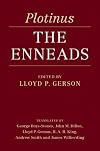
My primary interest in reading the Enneads was finding the foundation for neo-platonic theurgy, therefore a practical interest in post—Plotinian thought in ceremonial Theion Ergon seduced me to read the foundational philosophy. For how, after all should I understand a system without grasping its roots? Although the system stemming from the Chaldean Oracles is somewhat different from neo-platonic philosophy, it has its motherly embrace there. Here, in the Enneads there is a major-work of a show more religion (religere - to delimit, after Macrobius) that has simple tenets at its structural approach and an in-depth elucidation for many cases that may trouble the neoplatonic follower. The hypothesis are well-weighted and they are balanced in a clear way, attempting to arrive at faith by reason, not by blind faith. There is not one area of life that may not be read through the lenses of the Enneads, yet the system remains open and compatible with scientific undertakings. Farah Godredj enumerated “three hermeneutic moments” when encountering literature: “Understanding, representation and relational relevance”, in relation to Plotinus, the first is understanding or incorporation that is existential hermeneutics, internalizing the text, giving it a broad setting in the topos, the second is attempting not to “totalitarize” the text keeping relativity in mind, and a multi-faceted approach to the narrative, the last one in short is an approach in building a philosophical ontology of the whole metaphysics, a certain angle of reading. I may add my own: “Explicit act”, that is practiced aretology, practicing beauty and awe, practicing the deification - which is the golden way to theurgy. Exchanging perspective, I put full thrust into the belief-mechanisms of the text and without stripping if of deep metaphysics I fully arrived at understanding a separate, whole, and intricate system of self-referential open ground for interpreting the Divine into it, often-wise I engage the text that produced interesting comparative grounds with my discoveries in theurgy, astrology, other religious systems, sometimes I ignored the more technical parts of it (I read them, but they didn’t appeal to me). Now, I haven’t fully grasped it with a major masterly mind that could recite the dynamics of the system in a flash, that requires years of practice and studies, and I never will, as I would have to be Plotinus and move “with his mind”, but by conversing with his mind via the text I may fully agree that the theology and interpretation that he created via clustered “generalizations” into the particular is beautiful, “arete-ical”, and provides ground for training beautiful men and women, in the ensouled, teological (goal oriented) manner. What gives good fruit in effects is a worthy enterprise. show less
Lists
Western Canon (1)
Awards


You May Also Like


Associated Authors
Statistics
- Works
- 257
- Also by
- 7
- Members
- 3,713
- Popularity
- #6,826
- Rating
- 3.9
- Reviews
- 36
- ISBNs
- 231
- Languages
- 13
- Favorited
- 18