
Michael Symmons Roberts
Author of Edgelands: journeys into England's true wilderness
About the Author
Works by Michael Symmons Roberts
Dog Star 1 copy
The Half-healed 1 copy
Associated Works
Tagged
Common Knowledge
- Legal name
- Roberts, Michael Symmons
- Birthdate
- 1963
- Gender
- male
- Education
- Regent's Park College, Oxford
- Occupations
- poet
broadcaster
Professor of Poetry - Organizations
- Manchester Metropolitan University
BBC - Nationality
- UK
- Birthplace
- Preston, Lancashire, England, UK
- Places of residence
- Newbury, Berkshire, England, UK
Manchester, England, UK - Associated Place (for map)
- England, UK
Members
Reviews
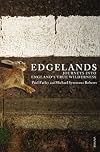
A fine set of meditations on those lacunae and interstices of wildness, or at least less emphatically domesticated space, found on the urban periphery and sometimes near its core. Witty and entertaining with lots of fun observations. If you’re in the mood to visit, political, philosophical and environmental themes are there, like edgelands of the text. Despite the jolts the world has experienced since the book’s publication, edgelands, being outside the milieu, haven’t changed much. show more Long may that continue. show less
A book extolling the virtues of the edgelands. I’m trying to cultivate an appreciation of edgelands as the planet hurtles towards self destruction, and the inevitable (hopefully) death of capitalism, as I suspect edgelands will soon be all that is left besides gated compounds of rich people. Love the pieces about train journeys through them. Since I re-started reading a lot more I regret not staring out of the window on train journeys. If it was new year I’d make a resolution to read show more less on trains and stare out of the window instead. show less
Most of the non-fiction I read has an element of nature writing about it, but this book is rather more than that. Farley and Roberts aim is to reclaim and celebrate the edgelands that surround our cities, and the book is a fascinating account of the way landscapes are developed either by human intervention or by nature reclaiming what is left behind after human activity.
Both writers are poets, so the book is inevitably reflective and personal, despite the joint authorial voice which makes show more it impossible to deduce who wrote which parts of it. Many other poets and artists are cited.
Each chapter has a one word title encapsulating its theme - most of them specific human activities ranging from den-building and mining to hotels and airports, and the whole makes a fascinating portrait of the England that many of us take for granted. show less
Both writers are poets, so the book is inevitably reflective and personal, despite the joint authorial voice which makes show more it impossible to deduce who wrote which parts of it. Many other poets and artists are cited.
Each chapter has a one word title encapsulating its theme - most of them specific human activities ranging from den-building and mining to hotels and airports, and the whole makes a fascinating portrait of the England that many of us take for granted. show less

The two authors, both poets, describe the overlooked places on the edges of towns and cities and in-between. The titles of the chapters will give you an idea -- cars, paths, dens, containers, landfill, water, sewage, etc. Whilst this might not sound like an interesting subject matter for a book, it is the very fact that we as adults consciously ignore these spaces that makes it so refreshing to hear it written about.
Like the authors, I found a sense of nostalgia in some of the subjects show more which as a child I might have had the leisure and curiosity to explore. Increasingly our lives are being spent in these edge lands, and it is clear that more could be done to understand them, appreciate them, and make them spaces we could feel comfortable in.
The writing is excellent, as you might expect from vignettes written by poets. The short chapters make it a good book for dipping in and out of, but a flip- and down-side of this is that the book as a whole may lack a little coherence -- there is no overall point the authors are trying to make. But then that is of course reflective of its subject matter... show less
Like the authors, I found a sense of nostalgia in some of the subjects show more which as a child I might have had the leisure and curiosity to explore. Increasingly our lives are being spent in these edge lands, and it is clear that more could be done to understand them, appreciate them, and make them spaces we could feel comfortable in.
The writing is excellent, as you might expect from vignettes written by poets. The short chapters make it a good book for dipping in and out of, but a flip- and down-side of this is that the book as a whole may lack a little coherence -- there is no overall point the authors are trying to make. But then that is of course reflective of its subject matter... show less
Awards


You May Also Like


Associated Authors
Statistics
- Works
- 20
- Also by
- 2
- Members
- 455
- Popularity
- #53,950
- Rating
- 3.8
- Reviews
- 12
- ISBNs
- 34
- Languages
- 2