
Scott Oden
Author of A Gathering of Ravens: A Novel
Series
Works by Scott Oden
Old Gods and Other Tales 5 copies
Scott Oden Presents The Lost Empire of Sol: A Shared World Anthology of Sword & Planet Tales (2021) 4 copies, 1 review
The White Lion 4 copies
All For One: The Life of D'Artagnan 3 copies
Associated Works
Tagged
Common Knowledge
- Birthdate
- 1967-06-24
- Gender
- male
- Occupations
- writer
- Agent
- Bob Mecoy
- Nationality
- USA
- Places of residence
- Huntsville, Alabama, USA
- Associated Place (for map)
- Alabama, USA
Members
Reviews
Scott Oden Presents The Lost Empire of Sol: A Shared World Anthology of Sword & Planet Tales by Scott Oden

Sword & Planet is Back!
Jason M. Waltz, champion of Rogue Blades Entertainment and the Rogue Blades Foundation, is well known for rounding up contemporary authors in themed anthologies (perhaps most well known for the 2008 Sword & Sorcery classic Return of the Sword .... and most currently known for Robert E. Howard Changed My Life releasing ~now, appropriately on June 11th, REH's anniversary of passing).
Fletcher Vredenburgh, well known in the adventure fiction community for outstanding show more reviews provides the "Foreword": he explains how discussions on Facebook with Scott Oden (adored author of historical fiction, Conan pastiche, and the Grimnir series) escalated into this collection. Also, to dimension the genre and set the stage for a revival is the esteemed John O’Neill (Black Gate Magazine editor) with “Sword & Planet is the Genre We Need.”
The Book Blurb Explains the Theme and Context:
Bold fonts, added by me, emphasize two key sentences. More on that below.
An exciting repository of the tales of an empire that pre-dates the solar system's recorded history. A spectacular homage of ten 'romantic tales of high adventure' written in the American pulp imagination style of breathless bravado. A return to an era when the exploration of time and the mystery of space travel held the attention of the reading world with heroes/heroines that faced dangerous unknowns with hopes and fists raised high!
20,000 years ago, the first Emperor of Sol ascended the Iridium Throne of Earth. A sorcerer who learned to extend his life through elixirs and potent demonic bargains, he ruled a thousand years, until deposed by a conspiracy among his wives. His youngest wife, the most cunning, became the first Empress of Sol and began the Imperial practice of tracing lineage through the female.
This anthology's "present" is 10,000 years after the Ruin of the Empire of Sol, an event immortalized by a cabal of poets who wove history with myth. Civil war erupted inside the Empire when warlords of another planet sought to seize the Iridium Throne of Earth. War rent the system, until finally a doomsday weapon was deployed. This weapon caused the Ruin; it shattered worlds and threw the citizens of the Empire into such a state of savagery that it has taken 10,000 years to make it to a current Dark Age. The worlds of the solar system have slowly emerged to reclaim only the most slender portion of the ancient splendor of the Empire. Through the combined efforts of sorcery and science, mankind and alienkind have returned to the stars in Aether ships, though even these are considered crude by the ancient Imperial standards.
Above them all looms a mysterious THREAT on the horizon. Augurs see bad omens, demon familiars speak of a coming cataclysm; a few ships have gone missing along the fringes of the system, only to be spotted and boarded later . . . ghost ships with missing crews. One had a cryptic note scrawled in blood: "They're coming!"
Missing Cool Context:
Strangely, the Ruin mentioned within the blurb is not referred to explicitly in the stories (they occur after that event). Also, the two introductions and blurb ignore the awesome premise of chapter/book design: There is one story per planet in the solar system, doled out in order from the center to the outer rim of pluto, with an additional "planet" called Tharsia replacing real life's asteroid belt. So you get to tour the ruins of the solar system (the Empire of Sol) planet by planet, as you drift away from the sun. The Interior Ancient Solar Map by M.D. Jackson (who also crafted the superb cover) actually lays out your journey as a reader, with some variant names offered for several planets.
Scott Oden cryptically, and beautifully, frames the book with two pieces. He introduces us to the Emissary and the living-ship Leviathan in the prologue which focuses on a female's imprisonment; her mind is tapped to reveal the subsequent stories you'll read. The epilogue hints that a nameless god is threatening the solar system's future; this cosmic horror vibe seeds a possible sequel anthology.
Stories Share Common Elements:
1) Portals and gateways enable travel to other planets, but many are lost or broken and some stream one-way. This lost infrastructure of the Empire is explored multiple times.
2) The red "dot" on Jupiter is given some spiritual and religious context that presents in two stories
3) Most stories have female leads, which the authors claimed on social media (Goodreads and Facebook) was not an intentional design strategy (not that it matters). I speculate that the context of the book blurb regarding the Empress of Sol (emboldened above) combined with Scott Oden's Prologue that focuses on a singular female representing "ape-kind" may be symptomatic of the creative discussions. Anyway, there are some male protagonists, and many male teammates, so there is gender diversity.
4) Soul & psionics: Sorcery here manifests in psionics and mental powers (i.e., influencers of the mind), and there are several stories involving the separation of mind and body
4) Typical threats include space pirates and humanoid aliens (reptilian, insectan, or ape-like)
5) Spaceship mayhem: crash landings and appropriation of space ships are plentiful
The Lost Empire of Sol Contents
[Sol/Sun] “Prologue” by Scott Oden
[Mercury] “To Save Hermesia” Joe Bonadonna and David C. Smith
[Venus] “The Lost Princess of Themos” Tom Doolan
[Earth] “What Really Happened at the Center of the Earth” by Christopher M. Blanchard
[Mars] “A Sand-Ship of Mars” by Charles Allen Gramlich
[asteroid belt, Tharsia] “Whispers of the Serpent” by Howard Andrew Jones
[Jupiter] “Outcasts of Jov” by Mark Finn
[Saturn, Cronesh] “Written in Lightning” by Keith J. Taylor
[Uranus] “Survivors of Ulthula” by E.E. Knight
[Neptune] “Hunters of Ice and Sky” by David A. Hardy
[Pluto] “A Gate in Darkness” by Paul R. McNamee
[Sol/Sun] “Epilogue” by Scott Oden
As expected in a collection, the styles vary by author. Gramlich is the only one I know who routinely writes Sword & Planet (his Talera series); however, Bonadonna has dabbled in space-adventure as much as he has Sword & Sorcery. Otherwise, the contributor list reads like a contemporary who's-who of S&S authors and Robert E. Howard content editors. That said, all stories felt like S&P adventure to me, with the possible exception of the Earth piece which was appropriately a "lost world" tale (reminiscent of Burrough's Pellucidar adventures in the Earth's Core; that makes sense...if you are tasked with creating an S&P adventure on planet earth, one might as well emulate the creator of John Carter and go deep). Most were a blast to read. A few stories were too melodramatic for my taste, and one felt like a chapter from a novel (it did not stand alone as a short story).
In summary, this is a fine collection that certainly achieved its mission of inserting a jolt into Sword & Planet offerings. The Lost Empire of Sol is destined to become a historic Sword & Planet anthology, a classic akin to how Return of the Sword is perceived for the Sword & Sorcery genre. If a sequel emerges, I would purchase and read it in a heartbeat. show less
Jason M. Waltz, champion of Rogue Blades Entertainment and the Rogue Blades Foundation, is well known for rounding up contemporary authors in themed anthologies (perhaps most well known for the 2008 Sword & Sorcery classic Return of the Sword .... and most currently known for Robert E. Howard Changed My Life releasing ~now, appropriately on June 11th, REH's anniversary of passing).
Fletcher Vredenburgh, well known in the adventure fiction community for outstanding show more reviews provides the "Foreword": he explains how discussions on Facebook with Scott Oden (adored author of historical fiction, Conan pastiche, and the Grimnir series) escalated into this collection. Also, to dimension the genre and set the stage for a revival is the esteemed John O’Neill (Black Gate Magazine editor) with “Sword & Planet is the Genre We Need.”
The Book Blurb Explains the Theme and Context:
Bold fonts, added by me, emphasize two key sentences. More on that below.
An exciting repository of the tales of an empire that pre-dates the solar system's recorded history. A spectacular homage of ten 'romantic tales of high adventure' written in the American pulp imagination style of breathless bravado. A return to an era when the exploration of time and the mystery of space travel held the attention of the reading world with heroes/heroines that faced dangerous unknowns with hopes and fists raised high!
20,000 years ago, the first Emperor of Sol ascended the Iridium Throne of Earth. A sorcerer who learned to extend his life through elixirs and potent demonic bargains, he ruled a thousand years, until deposed by a conspiracy among his wives. His youngest wife, the most cunning, became the first Empress of Sol and began the Imperial practice of tracing lineage through the female.
This anthology's "present" is 10,000 years after the Ruin of the Empire of Sol, an event immortalized by a cabal of poets who wove history with myth. Civil war erupted inside the Empire when warlords of another planet sought to seize the Iridium Throne of Earth. War rent the system, until finally a doomsday weapon was deployed. This weapon caused the Ruin; it shattered worlds and threw the citizens of the Empire into such a state of savagery that it has taken 10,000 years to make it to a current Dark Age. The worlds of the solar system have slowly emerged to reclaim only the most slender portion of the ancient splendor of the Empire. Through the combined efforts of sorcery and science, mankind and alienkind have returned to the stars in Aether ships, though even these are considered crude by the ancient Imperial standards.
Above them all looms a mysterious THREAT on the horizon. Augurs see bad omens, demon familiars speak of a coming cataclysm; a few ships have gone missing along the fringes of the system, only to be spotted and boarded later . . . ghost ships with missing crews. One had a cryptic note scrawled in blood: "They're coming!"
Missing Cool Context:
Strangely, the Ruin mentioned within the blurb is not referred to explicitly in the stories (they occur after that event). Also, the two introductions and blurb ignore the awesome premise of chapter/book design: There is one story per planet in the solar system, doled out in order from the center to the outer rim of pluto, with an additional "planet" called Tharsia replacing real life's asteroid belt. So you get to tour the ruins of the solar system (the Empire of Sol) planet by planet, as you drift away from the sun. The Interior Ancient Solar Map by M.D. Jackson (who also crafted the superb cover) actually lays out your journey as a reader, with some variant names offered for several planets.
Scott Oden cryptically, and beautifully, frames the book with two pieces. He introduces us to the Emissary and the living-ship Leviathan in the prologue which focuses on a female's imprisonment; her mind is tapped to reveal the subsequent stories you'll read. The epilogue hints that a nameless god is threatening the solar system's future; this cosmic horror vibe seeds a possible sequel anthology.
Stories Share Common Elements:
1) Portals and gateways enable travel to other planets, but many are lost or broken and some stream one-way. This lost infrastructure of the Empire is explored multiple times.
2) The red "dot" on Jupiter is given some spiritual and religious context that presents in two stories
3) Most stories have female leads, which the authors claimed on social media (Goodreads and Facebook) was not an intentional design strategy (not that it matters). I speculate that the context of the book blurb regarding the Empress of Sol (emboldened above) combined with Scott Oden's Prologue that focuses on a singular female representing "ape-kind" may be symptomatic of the creative discussions. Anyway, there are some male protagonists, and many male teammates, so there is gender diversity.
4) Soul & psionics: Sorcery here manifests in psionics and mental powers (i.e., influencers of the mind), and there are several stories involving the separation of mind and body
4) Typical threats include space pirates and humanoid aliens (reptilian, insectan, or ape-like)
5) Spaceship mayhem: crash landings and appropriation of space ships are plentiful
The Lost Empire of Sol Contents
[Sol/Sun] “Prologue” by Scott Oden
[Mercury] “To Save Hermesia” Joe Bonadonna and David C. Smith
[Venus] “The Lost Princess of Themos” Tom Doolan
[Earth] “What Really Happened at the Center of the Earth” by Christopher M. Blanchard
[Mars] “A Sand-Ship of Mars” by Charles Allen Gramlich
[asteroid belt, Tharsia] “Whispers of the Serpent” by Howard Andrew Jones
[Jupiter] “Outcasts of Jov” by Mark Finn
[Saturn, Cronesh] “Written in Lightning” by Keith J. Taylor
[Uranus] “Survivors of Ulthula” by E.E. Knight
[Neptune] “Hunters of Ice and Sky” by David A. Hardy
[Pluto] “A Gate in Darkness” by Paul R. McNamee
[Sol/Sun] “Epilogue” by Scott Oden
As expected in a collection, the styles vary by author. Gramlich is the only one I know who routinely writes Sword & Planet (his Talera series); however, Bonadonna has dabbled in space-adventure as much as he has Sword & Sorcery. Otherwise, the contributor list reads like a contemporary who's-who of S&S authors and Robert E. Howard content editors. That said, all stories felt like S&P adventure to me, with the possible exception of the Earth piece which was appropriately a "lost world" tale (reminiscent of Burrough's Pellucidar adventures in the Earth's Core; that makes sense...if you are tasked with creating an S&P adventure on planet earth, one might as well emulate the creator of John Carter and go deep). Most were a blast to read. A few stories were too melodramatic for my taste, and one felt like a chapter from a novel (it did not stand alone as a short story).
In summary, this is a fine collection that certainly achieved its mission of inserting a jolt into Sword & Planet offerings. The Lost Empire of Sol is destined to become a historic Sword & Planet anthology, a classic akin to how Return of the Sword is perceived for the Sword & Sorcery genre. If a sequel emerges, I would purchase and read it in a heartbeat. show less
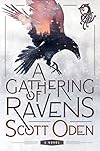
A Gathering of Ravens delivers an Orc with serious depth, and he carries a bloody seax too.
“Since young adulthood, I’ve wanted to write a book about Orcs—those foot soldiers of evil first revealed to us in The Hobbit and The Lord of the Rings by J. R. R. Tolkien. I wanted to write it from the Orcs’ point of view. And I wanted to redeem them.” – Scott Oden, Author’s Note from A Gathering of Ravens
Scott Oden did not want to “write about a redeeming orc,” or the “redemption show more of an orc.” Rather, the author set out to present an orc that was not shallow, zombie-like drone (ala Tolkien, and most of high fantasy novels stereotype).
The milieu in A Gathering of Ravens is reminiscent of Poul Anderson’s Viking Age The Broken Sword, being full of Dane’s and Celtic faeries and Norse myths. The style is more readable than that classic, but is still saturated with just the right amount of call-outs to geographies and history to blur the lines between fantasy and history. This is no historical fantasy, but the foundation of history is so well played the fantasy feels “real.”
Equally balanced are the sorceries of Celtic witches, Norse deities, and Christian beliefs. All supernatural “sides” of faiths conflict here. All are presented as real, though some are being superseded.
So who is the orc protagonist employed by Scott Oden to redeem the orc culture? He is Grendel’s brother, as named by some. The lady Étaín, a servant of the Christian God, the Nailed One, and unlikely companion of him describes him:
“He is called Grimnir… the last of his kind, one of the kaunar—known to your people as fomóraig, to mine as orcnéas, and to the Northmen as skrælingar. In the time I’ve known him, he has been ever a fomenter of trouble, a murderer, and as cruel a bastard… I can vouch neither for his honesty nor his morals, as he is bereft of both. And while he did kidnap me, threaten me with death, mock my faith, and expose me to the hates of a forgotten world, he also saved my life …”
Grimnir is a brutal bastard. His name suits him, since he might as well be caring a flagstaff with the contemporary “Grimdark subgenre” splayed upon it. Yet his predicament and motivations are compelling as any vigilante hero. Way to deliver on your muse, Scott Oden! show less
“Since young adulthood, I’ve wanted to write a book about Orcs—those foot soldiers of evil first revealed to us in The Hobbit and The Lord of the Rings by J. R. R. Tolkien. I wanted to write it from the Orcs’ point of view. And I wanted to redeem them.” – Scott Oden, Author’s Note from A Gathering of Ravens
Scott Oden did not want to “write about a redeeming orc,” or the “redemption show more of an orc.” Rather, the author set out to present an orc that was not shallow, zombie-like drone (ala Tolkien, and most of high fantasy novels stereotype).
The milieu in A Gathering of Ravens is reminiscent of Poul Anderson’s Viking Age The Broken Sword, being full of Dane’s and Celtic faeries and Norse myths. The style is more readable than that classic, but is still saturated with just the right amount of call-outs to geographies and history to blur the lines between fantasy and history. This is no historical fantasy, but the foundation of history is so well played the fantasy feels “real.”
Equally balanced are the sorceries of Celtic witches, Norse deities, and Christian beliefs. All supernatural “sides” of faiths conflict here. All are presented as real, though some are being superseded.
So who is the orc protagonist employed by Scott Oden to redeem the orc culture? He is Grendel’s brother, as named by some. The lady Étaín, a servant of the Christian God, the Nailed One, and unlikely companion of him describes him:
“He is called Grimnir… the last of his kind, one of the kaunar—known to your people as fomóraig, to mine as orcnéas, and to the Northmen as skrælingar. In the time I’ve known him, he has been ever a fomenter of trouble, a murderer, and as cruel a bastard… I can vouch neither for his honesty nor his morals, as he is bereft of both. And while he did kidnap me, threaten me with death, mock my faith, and expose me to the hates of a forgotten world, he also saved my life …”
Grimnir is a brutal bastard. His name suits him, since he might as well be caring a flagstaff with the contemporary “Grimdark subgenre” splayed upon it. Yet his predicament and motivations are compelling as any vigilante hero. Way to deliver on your muse, Scott Oden! show less
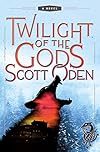
With Grimnir #2 Twilight of the Gods (TotG), Scott Oden presents a novel take on Ragnarök, the apocalypse in Norse mythology. He masterfully integrates his historical fiction expertise (i.e., from Memnon, Men of Bronze) with gritty battles reminiscent of Robert E. Howard (i.e., the creator of Conan the Barbarian; Oden recently published a serialized, pastiche novella across the Savage Sword of Conan Marvel Comic series). Few can merge the intensity of low-fantasy Sword & Sorcery with show more high-fantasy Epics, but Oden does here. TotG is second in the Griminr series (#1 being A Gathering of Ravens (AGoR)). This reviews the story, the style, and the lore. Read on to learn about the series’ namesake, the apocalypse in this second volume, and get teasers for the third book, The Doom of Odin.
Odin Fades and the Cross Emerges:
TotG blurs the line between fantasy and history.” With Odin losing power, the hymn-singers are stepping up to rule the world. The Christian commandment “Thou shalt not have strange gods before me” gave rise to much strife in real history, which even had converted Danes and Norsemen crusade for the Cross. The book opens with this conflict fueling Ragnarök. Oden’s style mixes Grimdark scenery, with RE-Howardian battle scenes, and… poetic horror. Read excerpts via the Kindle sampler or the author’s blog.
Who/What is Grimnir?:
In the Beowulf saga, the titular hero hints down the monstrous Grendel, then Grendel’s mother, then a dragon; the hero even becomes King of the Geats (the Geats of Scandinavia hailing from modern-day Sweden). TotG presents Grimnir as a demi-god hybrid of Beowulf & Grendel: half monster, half savior-to-be-worshipped) and king over the Raven-Geats no less! He has one working eye, but so do many suspicious characters ranging from Odin, a great wyrm, Nila, Grimnir, and the Grey Wanderer. So, you should not trust any one-eye, let alone Grimnr: he is a brutal bastard who is more out for self-preservation than for defending his human worshippers. He cares less about the threats of cross-bearing crusaders than he begrudges an ancient dragon—but more on wyrms below. TotG’s cursed crusader introduces us to Grimnir, emphasizing the various perspectives and clashes of cultures:
“Grimnir son of Bálegyr,” Konraðr said. “What a rough beast you are. You go by many names, I am told. Corpse-maker and Life-quencher, the Bringer of Night. Some claim you are the Son of the Wolf and Brother of the Serpent. The Irish called your kind fomoraig, did they not? They cursed your sire, Bálegyr, and the wolf ships that brought him to their fair isle. What did the English name you? Orcnéas? But to the Danes and the Norse your kind were always skrælingar. Accursed sons of Cain, you are …
Oden followers will note the “Orcneas” reference. The author has said: “Since young adulthood, I’ve wanted to write a book about Orcs—those foot soldiers of evil first revealed to us in The Hobbit and The Lord of the Rings by J. R. R. Tolkien. I wanted to write it from the Orcs’ point of view. And I wanted to redeem them.” Inspect the Russian cover to A Gathering of Ravens (inset) depicting Grimnir, albeit with a gratuitous beard. Oden concurs of his appearance on his blog while explicitly developing the lore: “I’ve seen that gets his hair right. Really, give him a sharper nose and there you have the last of the fabled kaunar, that blighted race of monsters who would enter popular culture centuries later as Tolkien’s Orcs.”
Grimnir’s Partner, Dísa Dagrúnsdottir:
Étaín was the young female protagonist in A Gathering of Ravens. This round, Grimnir’s partner is young Dísa (a.k.a. “Little Bird”, a Raven-Geat). Whereas Étaín was a Christian, Dísa is a barbaric, maiden of war—or she dreams to become one, anyway. Motherless, her clan selects her to confer with their godly protector the “Hooded One” (Grimnir). This book is really about her coming of age while the world ends; her priestess role puts her smack-dab on the intersection of the corporeal and the supernatural. Disa is a likable, spirited character that you will be rooting for from the instant she is presented in chapter two. A contemporary similar character would be Sensua from the acclaimed Ninja Theory video game series Hellblade (Sensua’s Sacrifice (2017) followed by Sensu’s Saga due out 2020). In short, if you like Sensua or Heilung, then you must experience Disa’s saga. The trailer for the game could easily be repurposed as a trailer for Dísa in TotG.
Serpents & Dragons:
In Norse mythology, Ragnarök is triggered by the world (Midgard)-wrapping serpent Jörmungandr releasing the tail from its mouth, and uncoiling. So, readers should expect some form of dragon and we are gifted the spawn of the legendary Jormungandr’s (Midgard Serpent): Malice-Striker. The combination of lore and prose reinforcing Malice-Striker’s presence evokes classic dragons, such as Beowulf’s foe or J.R.R.’s Glaurung (the Worm of Morgoth/Angband from the Children of Hurin). Malice-Striker’s character and past are revealed, and [minor spoiler] he is set up for a key role in the next installment.
The Doom of Odin (Grimnir series #3):
Twilight of the Gods delivered an apocalyptic nail-biter. It can be read completely stand-alone, but certainly builds on A Gathering of Ravens. Still the battle rages on for Grimnir. Oden plans to finish the third installment, The Doom of Odin, by the end of summer 2020 (publication at St. Martin’s discretion). From the author’s website, we find the likely book blurb:
“As the Black Death rampages across Europe, two creatures of the Elder World clash over the rotting corpse of Christendom …
Sicily, 1347 AD. A ghost ship from the east washes ashore at Messina. A ship of dead men, and hidden in its belly is a doom like no other: the dragon Niðhöggr, the Malice-Striker, an ancient vessel of destruction from the Elder Days. And while it is no longer the mighty wyrm of Ragnarök, the beast’s breath still bears upon it a pestilence, a plague that will echo through the ages as the Black Death.
But the world of Men has a strange champion – another creature of the Elder World: a snarling, spitting knot of hatred, profane and blasphemous, whose ancestors were the goblins of myth and legend; he is a monster in truth, though nevertheless he stands as the last bastion between humanity and the cold silence of oblivion. He is Grimnir, and he has hunted the Malice-Striker for more than a century, from the cold wastes of the Baltic to the dank cisterns beneath Constantinople.
Now, as the plague stalks through Western Europe – and as the dread wyrm slithers through Italy, bound for Rome on its mission to devour the head of Christendom – Grimnir must contend not only with the beast’s insidious cunning, but with the iron fist of the Papal Inquisition, and the army of a vengeful Italian condottiere. Grimnir, however, is not without allies of his own. Accompanied by a Jewish witch and mystic, and aided by the fey King of the Mongrel Court, a troupe of half-blooded creatures bound for Finisterre and the World’s End, Grimnir sets the stage for a final showdown.
For at Avignon, the papal enclave on the River Rhone, the Doom of Odin will fall, and the Elder World will finally meet its bloody end. The only question that remains is: will Miðgarðr and the world of Men survive this deadly clash of titans?” show less
Odin Fades and the Cross Emerges:
TotG blurs the line between fantasy and history.” With Odin losing power, the hymn-singers are stepping up to rule the world. The Christian commandment “Thou shalt not have strange gods before me” gave rise to much strife in real history, which even had converted Danes and Norsemen crusade for the Cross. The book opens with this conflict fueling Ragnarök. Oden’s style mixes Grimdark scenery, with RE-Howardian battle scenes, and… poetic horror. Read excerpts via the Kindle sampler or the author’s blog.
Who/What is Grimnir?:
In the Beowulf saga, the titular hero hints down the monstrous Grendel, then Grendel’s mother, then a dragon; the hero even becomes King of the Geats (the Geats of Scandinavia hailing from modern-day Sweden). TotG presents Grimnir as a demi-god hybrid of Beowulf & Grendel: half monster, half savior-to-be-worshipped) and king over the Raven-Geats no less! He has one working eye, but so do many suspicious characters ranging from Odin, a great wyrm, Nila, Grimnir, and the Grey Wanderer. So, you should not trust any one-eye, let alone Grimnr: he is a brutal bastard who is more out for self-preservation than for defending his human worshippers. He cares less about the threats of cross-bearing crusaders than he begrudges an ancient dragon—but more on wyrms below. TotG’s cursed crusader introduces us to Grimnir, emphasizing the various perspectives and clashes of cultures:
“Grimnir son of Bálegyr,” Konraðr said. “What a rough beast you are. You go by many names, I am told. Corpse-maker and Life-quencher, the Bringer of Night. Some claim you are the Son of the Wolf and Brother of the Serpent. The Irish called your kind fomoraig, did they not? They cursed your sire, Bálegyr, and the wolf ships that brought him to their fair isle. What did the English name you? Orcnéas? But to the Danes and the Norse your kind were always skrælingar. Accursed sons of Cain, you are …
Oden followers will note the “Orcneas” reference. The author has said: “Since young adulthood, I’ve wanted to write a book about Orcs—those foot soldiers of evil first revealed to us in The Hobbit and The Lord of the Rings by J. R. R. Tolkien. I wanted to write it from the Orcs’ point of view. And I wanted to redeem them.” Inspect the Russian cover to A Gathering of Ravens (inset) depicting Grimnir, albeit with a gratuitous beard. Oden concurs of his appearance on his blog while explicitly developing the lore: “I’ve seen that gets his hair right. Really, give him a sharper nose and there you have the last of the fabled kaunar, that blighted race of monsters who would enter popular culture centuries later as Tolkien’s Orcs.”
Grimnir’s Partner, Dísa Dagrúnsdottir:
Étaín was the young female protagonist in A Gathering of Ravens. This round, Grimnir’s partner is young Dísa (a.k.a. “Little Bird”, a Raven-Geat). Whereas Étaín was a Christian, Dísa is a barbaric, maiden of war—or she dreams to become one, anyway. Motherless, her clan selects her to confer with their godly protector the “Hooded One” (Grimnir). This book is really about her coming of age while the world ends; her priestess role puts her smack-dab on the intersection of the corporeal and the supernatural. Disa is a likable, spirited character that you will be rooting for from the instant she is presented in chapter two. A contemporary similar character would be Sensua from the acclaimed Ninja Theory video game series Hellblade (Sensua’s Sacrifice (2017) followed by Sensu’s Saga due out 2020). In short, if you like Sensua or Heilung, then you must experience Disa’s saga. The trailer for the game could easily be repurposed as a trailer for Dísa in TotG.
Serpents & Dragons:
In Norse mythology, Ragnarök is triggered by the world (Midgard)-wrapping serpent Jörmungandr releasing the tail from its mouth, and uncoiling. So, readers should expect some form of dragon and we are gifted the spawn of the legendary Jormungandr’s (Midgard Serpent): Malice-Striker. The combination of lore and prose reinforcing Malice-Striker’s presence evokes classic dragons, such as Beowulf’s foe or J.R.R.’s Glaurung (the Worm of Morgoth/Angband from the Children of Hurin). Malice-Striker’s character and past are revealed, and [minor spoiler] he is set up for a key role in the next installment.
The Doom of Odin (Grimnir series #3):
Twilight of the Gods delivered an apocalyptic nail-biter. It can be read completely stand-alone, but certainly builds on A Gathering of Ravens. Still the battle rages on for Grimnir. Oden plans to finish the third installment, The Doom of Odin, by the end of summer 2020 (publication at St. Martin’s discretion). From the author’s website, we find the likely book blurb:
“As the Black Death rampages across Europe, two creatures of the Elder World clash over the rotting corpse of Christendom …
Sicily, 1347 AD. A ghost ship from the east washes ashore at Messina. A ship of dead men, and hidden in its belly is a doom like no other: the dragon Niðhöggr, the Malice-Striker, an ancient vessel of destruction from the Elder Days. And while it is no longer the mighty wyrm of Ragnarök, the beast’s breath still bears upon it a pestilence, a plague that will echo through the ages as the Black Death.
But the world of Men has a strange champion – another creature of the Elder World: a snarling, spitting knot of hatred, profane and blasphemous, whose ancestors were the goblins of myth and legend; he is a monster in truth, though nevertheless he stands as the last bastion between humanity and the cold silence of oblivion. He is Grimnir, and he has hunted the Malice-Striker for more than a century, from the cold wastes of the Baltic to the dank cisterns beneath Constantinople.
Now, as the plague stalks through Western Europe – and as the dread wyrm slithers through Italy, bound for Rome on its mission to devour the head of Christendom – Grimnir must contend not only with the beast’s insidious cunning, but with the iron fist of the Papal Inquisition, and the army of a vengeful Italian condottiere. Grimnir, however, is not without allies of his own. Accompanied by a Jewish witch and mystic, and aided by the fey King of the Mongrel Court, a troupe of half-blooded creatures bound for Finisterre and the World’s End, Grimnir sets the stage for a final showdown.
For at Avignon, the papal enclave on the River Rhone, the Doom of Odin will fall, and the Elder World will finally meet its bloody end. The only question that remains is: will Miðgarðr and the world of Men survive this deadly clash of titans?” show less
Memnon by Scott Oden
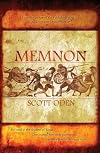
I was really impressed with Scott Oden's "Memnon." First, his combat scenes are incredible. I felt like I was there. I have never said this about another author before, and it feels weird writing it, but it's true: Scott Oden writes mass battle scenes better than Robert E. Howard. He engages all the senses in his writing in a magnificent and realistic manner. I didn't so much as read this novel as experience it. I really felt like I was there, side-by-side with Memnon.
It was written with an show more epic scope, spanning much of Memnon's life, with left the reader with large gaps in his history, but that only added to the realism - as though Memnon and I had seperated for a while to do other things, then got back together later. I have only had a couple of writers able to create that kind of experience for me, so Scott Oden is rare company as far as I am concerned.
That the author was able to do so much with so little historical information is a testament to his skill at both history and fiction. show less
It was written with an show more epic scope, spanning much of Memnon's life, with left the reader with large gaps in his history, but that only added to the realism - as though Memnon and I had seperated for a while to do other things, then got back together later. I have only had a couple of writers able to create that kind of experience for me, so Scott Oden is rare company as far as I am concerned.
That the author was able to do so much with so little historical information is a testament to his skill at both history and fiction. show less
Lists
Awards


You May Also Like


Associated Authors
Statistics
- Works
- 18
- Also by
- 1
- Members
- 588
- Popularity
- #42,663
- Rating
- 3.8
- Reviews
- 23
- ISBNs
- 37
- Languages
- 3
- Favorited
- 1