
Haley Tanner
Author of Vaclav & Lena
Works by Haley Tanner
Associated Works
Tagged
Common Knowledge
- Birthdate
- 1982
- Gender
- female
- Education
- The New School (MFA)
Clark University - Awards and honors
- National Book Foundation, 5 Under 35 Honoree (2012)
- Agent
- Lucy Carson (Friedrich Agency)
- Relationships
- Ritter, Josh (partner)
- Nationality
- USA
- Birthplace
- New York, New York, USA
- Places of residence
- Brooklyn, New York, USA
- Associated Place (for map)
- New York, USA
Members
Reviews
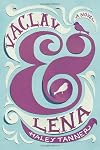
Do you believe in soul mates? Not the kind glorified in romances but a deep down to the bone connection that goes beyond love to your very existence and without which you might as well forget how to breathe? Haley Tanner's touching and melancholy debut novel, Vaclav and Lena, captures this kind of intense and focused connection, one forged in childhood, enduring separation, and able to pick up again as if nothing (and everything) had changed.
Both Vaclav and Lena are just children when the show more novel opens, living in the heart of the Russian community in Brighton Beach. They are the closest of friends, two Russian-American children who attend the same ESL class at school and who are as inseparable as only two otherwise lonely children can be. Vaclav dreams of being a famous magician and having Lena be his lovely assistant and the two of them meet in Vaclav's apartment to practice their act and to be cared for by Vaclav's indomitable, doting, and overprotective Russian immigrant mother, Rasia. But underneath this sweet childhood friendship, there are much darker tones. Vaclav is an only child and much treasured but Lena is an orphan, unwanted and uncared for by her aunt who is a strip club dancer and prostitute. Little Lena is neglected and ignored and has learned to lie and steal and keep secrets, even, or perhaps especially, from those who would care for and protect her. When Rasia witnesses something she cannot ignore, Lena disappears overnight from Vaclav's life, leaving him bereft and yearning for her. Always in his thoughts, he superstitiously still wishes her a good night every night, for the entire seven years she is gone from his life, from the age of ten to seventeen.
The years of being apart change both Vaclav and Lena as they grow and mature separately. And the narrative follows them through this time of absence, fleshing out not only what goes on in their respective lives in the intervening years but also filling in Lena's babyhood and the early experiences that shaped her into the little girl who was for the child Vaclav as necessary as breathing. And then the narrative moves on again and focuses on the teenaged Vaclav and Lena, their rediscovery of each other, and the endurance of their connection as they come together once again. And it at this point that Vaclav, ever mindful of his love's fragility, spins some real and tender magic in Lena's new and much changed life.
The novel is a triptych with its three distinct phases in the relationship of our eponymous characters. And impressively, the narrative voice changes in each of the three sections. In the first, much of the dialogue is written just as Russian immigrants to this country would construct sentences given Russian grammar. In the second, there is a coming of age, a maturing voice as both Vaclav and Lena assimilate into American culture in ways that Vaclav's parents have been unable to do fully. And in the third, they are both typical teenagers and yet so very different because of their awareness of who they are and how they fit together. Some of the portrayals of Russian immigrants and culture is cliched but the poignancy of immigrants trying to achieve the American dream through their children (in this case specifically through Vaclav) balances these moments out. And while this tale of soul mates and an abiding love might sound lighthearted, the novel tackles some incredibly dark and terrible topics: abuse, neglect, and abandonment among them. Vaclav and Lena are generally well drawn and while they are precocious beyond their years in the beginning, they end by coming across as much more age appropriate. The ending itself was unexpected but completely in character given how thoughtful and protective Vaclav was from the age of five onward. Tanner has crafted an ultimately engaging novel here. show less
Both Vaclav and Lena are just children when the show more novel opens, living in the heart of the Russian community in Brighton Beach. They are the closest of friends, two Russian-American children who attend the same ESL class at school and who are as inseparable as only two otherwise lonely children can be. Vaclav dreams of being a famous magician and having Lena be his lovely assistant and the two of them meet in Vaclav's apartment to practice their act and to be cared for by Vaclav's indomitable, doting, and overprotective Russian immigrant mother, Rasia. But underneath this sweet childhood friendship, there are much darker tones. Vaclav is an only child and much treasured but Lena is an orphan, unwanted and uncared for by her aunt who is a strip club dancer and prostitute. Little Lena is neglected and ignored and has learned to lie and steal and keep secrets, even, or perhaps especially, from those who would care for and protect her. When Rasia witnesses something she cannot ignore, Lena disappears overnight from Vaclav's life, leaving him bereft and yearning for her. Always in his thoughts, he superstitiously still wishes her a good night every night, for the entire seven years she is gone from his life, from the age of ten to seventeen.
The years of being apart change both Vaclav and Lena as they grow and mature separately. And the narrative follows them through this time of absence, fleshing out not only what goes on in their respective lives in the intervening years but also filling in Lena's babyhood and the early experiences that shaped her into the little girl who was for the child Vaclav as necessary as breathing. And then the narrative moves on again and focuses on the teenaged Vaclav and Lena, their rediscovery of each other, and the endurance of their connection as they come together once again. And it at this point that Vaclav, ever mindful of his love's fragility, spins some real and tender magic in Lena's new and much changed life.
The novel is a triptych with its three distinct phases in the relationship of our eponymous characters. And impressively, the narrative voice changes in each of the three sections. In the first, much of the dialogue is written just as Russian immigrants to this country would construct sentences given Russian grammar. In the second, there is a coming of age, a maturing voice as both Vaclav and Lena assimilate into American culture in ways that Vaclav's parents have been unable to do fully. And in the third, they are both typical teenagers and yet so very different because of their awareness of who they are and how they fit together. Some of the portrayals of Russian immigrants and culture is cliched but the poignancy of immigrants trying to achieve the American dream through their children (in this case specifically through Vaclav) balances these moments out. And while this tale of soul mates and an abiding love might sound lighthearted, the novel tackles some incredibly dark and terrible topics: abuse, neglect, and abandonment among them. Vaclav and Lena are generally well drawn and while they are precocious beyond their years in the beginning, they end by coming across as much more age appropriate. The ending itself was unexpected but completely in character given how thoughtful and protective Vaclav was from the age of five onward. Tanner has crafted an ultimately engaging novel here. show less
Great book! This is the kind of debut that is bound to ratchet up the “next-big-thing” rhetoric. It maintains a perfect tension between charm, character, and a handful of crucial conflicts: idealism vs. realism; growing up too fast vs. never growing up; love vs. LOVE; and fable vs. fact.
The title characters are both Russian emigrants who are grade school friends when we meet them. They have come together by virtue of their common predicament but differ in deep-seated ways: Vaclav has a show more loving family, and is comfortable both in his own skin and with his adopted language. Lena struggles with English, has dark family secrets, and is frustrated by her inability to fit in.
They are unexpectedly separated but meet again while attending different high schools. Though their friendship is rekindled with a romantic spin it is immediately threatened by the gaps (both old and new) in their shared history.
The reader is invited to feel real affection and protectiveness for Vaclav and Lena. They are complicated, engaging, funny, intelligent, and worthy of our love and attention. The characters that surround them are no-less impressive, especially Vaclav’s mother who is the glue that holds the narrative together.
She presents difficult themes and situations with the sure hand of veteran award-winners (and more charm than many of them have mustered of late). This is a special novel. I’m excited to see what comes next. show less
The title characters are both Russian emigrants who are grade school friends when we meet them. They have come together by virtue of their common predicament but differ in deep-seated ways: Vaclav has a show more loving family, and is comfortable both in his own skin and with his adopted language. Lena struggles with English, has dark family secrets, and is frustrated by her inability to fit in.
They are unexpectedly separated but meet again while attending different high schools. Though their friendship is rekindled with a romantic spin it is immediately threatened by the gaps (both old and new) in their shared history.
The reader is invited to feel real affection and protectiveness for Vaclav and Lena. They are complicated, engaging, funny, intelligent, and worthy of our love and attention. The characters that surround them are no-less impressive, especially Vaclav’s mother who is the glue that holds the narrative together.
She presents difficult themes and situations with the sure hand of veteran award-winners (and more charm than many of them have mustered of late). This is a special novel. I’m excited to see what comes next. show less
There are satisfying things about this book, and deeply unsatisfying things.
Vaclav, Lena, and Rasia are lovely characters. The nature of their care for each other is very sweet. There are some insightful descriptions of feelings as well.
However.
It wore a little thin, the way the text was written to emulate the speaking allegedly of ESL folk. This is a thing that was twee and not always suitable, especially as it lingered a little bit when the kids grew up.
Setting was a bit flat. I had a show more hard time pegging the exact time period until Rasia reflected on how her family came to America. I'm still not sure I know exactly -- just about everything could have been easily transplanted to a number of decades. The hardest technological lines I noticed were phones (but landline or cellular??) and the subway; fashion -- ripped blue jeans on a girl. But this could be the aughts, the 90s, 80s, 70s, 60s... Of course, the majority of the book takes place in Vaclav's home, it seems...
Characters-as-Russian-immigrants seemed a little stereotypical, but I don't have the personal experiences to really judge on this criteria. Would have liked to know more (anything) about Emily, with her apparently perfect single parenting and fancy house.
The end kind of fizzles out. Also, I'm entirely disgruntled about The Aunt,who is retconned from stereotypical neglectful stripper-caretaker to stereotypical martyred stripper-with-a-heart-of-gold struggling caretaker, which I have a hard time accepting. You can protect Lena from your own sexual slavery while feeding her and loving her. Except junkies aren't great parents, and she was definitely a junkie... But again, spare me this syrupy sweet "I'm reformed/reforming so I can be good for her, at which time I will make contact."
Vaclav himself seemed way too sheltered and naive, too. Okay, Rasia definitely sheltered him a little, out of love. And if you never think to challenge an old assumption, you can easily carry a child's errant belief into (near-)adulthood. But really, with all his treasured memories of Lena, this highly intelligent NYC-raised kid never looked back and thought, "oh god, I think she was abused and neglected!"? He still seems to think his stupid mom wasn't justified in calling the cops on Lena's living situation. It's hard to know, sometimes, whether I'm supposed to be buying in to all the characters, or out-thinking their unreliable narration.
Which gets back to the syrupy-sweetness that over-softens the hard edges this book hints at and confirms, and then the book is just over. I would've liked to see another time jump to actual-adults Vaclav and Lena, continuing their story.Lena has a terrible first time at sex or almost-sex with the boy she loves, the only boy, the cosmic soulmate boy, due to and capped off by her sudden memory of being raped as a child. This seems like it would matter in their relationship! Which makes me wonder, who is this book for -- adult or teen audience? The first half is immature-child POV, then 17 yo teens (and again, followed by nothing). Adult-Lena and Adult-Vaclav would have potentially had more nuance and so forth, but then again...
Lastly, didn't care for the way Vaclav devises a syrupy-sweet fairy tale lie about Lena's parents' stories. I don't care that everyone knew it was a lie -- that actually makes it worse! In stories, you see moments like that where hopeless characters offer obvious lies for even an illusion of comfort and it's bittersweet and poignant, and obvious the only comfort is actually derived from the presence of a person willing to try scrapping together some sort of appealing lie to get them past that moment. This is not that kind of moment. I'm not sure if it was trying to be, but it really didn't work for me.
And then it was over, just like that. show less
Vaclav, Lena, and Rasia are lovely characters. The nature of their care for each other is very sweet. There are some insightful descriptions of feelings as well.
However.
It wore a little thin, the way the text was written to emulate the speaking allegedly of ESL folk. This is a thing that was twee and not always suitable, especially as it lingered a little bit when the kids grew up.
Setting was a bit flat. I had a show more hard time pegging the exact time period until Rasia reflected on how her family came to America. I'm still not sure I know exactly -- just about everything could have been easily transplanted to a number of decades. The hardest technological lines I noticed were phones (but landline or cellular??) and the subway; fashion -- ripped blue jeans on a girl. But this could be the aughts, the 90s, 80s, 70s, 60s... Of course, the majority of the book takes place in Vaclav's home, it seems...
Characters-as-Russian-immigrants seemed a little stereotypical, but I don't have the personal experiences to really judge on this criteria. Would have liked to know more (anything) about Emily, with her apparently perfect single parenting and fancy house.
The end kind of fizzles out. Also, I'm entirely disgruntled about The Aunt,
Vaclav himself seemed way too sheltered and naive, too. Okay, Rasia definitely sheltered him a little, out of love. And if you never think to challenge an old assumption, you can easily carry a child's errant belief into (near-)adulthood. But really, with all his treasured memories of Lena, this highly intelligent NYC-raised kid never looked back and thought, "oh god, I think she was abused and neglected!"? He still seems to think his stupid mom wasn't justified in calling the cops on Lena's living situation. It's hard to know, sometimes, whether I'm supposed to be buying in to all the characters, or out-thinking their unreliable narration.
Which gets back to the syrupy-sweetness that over-softens the hard edges this book hints at and confirms, and then the book is just over. I would've liked to see another time jump to actual-adults Vaclav and Lena, continuing their story.
Lastly, didn't care for the way Vaclav devises a syrupy-sweet fairy tale lie about Lena's parents' stories. I don't care that everyone knew it was a lie -- that actually makes it worse! In stories, you see moments like that where hopeless characters offer obvious lies for even an illusion of comfort and it's bittersweet and poignant, and obvious the only comfort is actually derived from the presence of a person willing to try scrapping together some sort of appealing lie to get them past that moment. This is not that kind of moment. I'm not sure if it was trying to be, but it really didn't work for me.
And then it was over, just like that. show less
I know I have read a great book when I lean back in my chair with a satisfied sigh after turning the last page. Vaclav and Lena is one of those books. Haley Tanner created beautiful visions for me of this Russian community in NYC and I could hear the accented English in all of the characters' voices. I especially loved Rasia and her expressions. In her voice, I heard the love and concern of all mothers.
Vaclav is an endearing boy, full of magic, hope, excitement and simple joy. Lena is his show more contrast - small, silent and secretive. Lean survives in her young and difficult life by minimizing her presence in the world and that is so heartbreaking. This love story encompasses all of the characters, not only Vaclav and Lena but also those who surround them.
Put this book on your summer reading list. You will not be disappointed. show less
Vaclav is an endearing boy, full of magic, hope, excitement and simple joy. Lena is his show more contrast - small, silent and secretive. Lean survives in her young and difficult life by minimizing her presence in the world and that is so heartbreaking. This love story encompasses all of the characters, not only Vaclav and Lena but also those who surround them.
Put this book on your summer reading list. You will not be disappointed. show less
 This review was written for LibraryThing Early Reviewers.
Awards


You May Also Like


Associated Authors
Statistics
- Works
- 3
- Also by
- 1
- Members
- 545
- Popularity
- #45,747
- Rating
- 3.8
- Reviews
- 69
- ISBNs
- 28
- Languages
- 7

