
Kate Pullinger
Author of The Mistress of Nothing
About the Author
Image credit: Courtesy of Serpent's Tail Press
Series
Works by Kate Pullinger
Border Lines 2 copies
Mistress of nothing, The 1 copy
Associated Works
Tagged
Common Knowledge
- Canonical name
- Pullinger, Kate
- Birthdate
- 1961
- Gender
- female
- Education
- McGill University, Montreal, Canada
- Occupations
- novelist
- Organizations
- De Montfort University
- Agent
- Sayle Literary Agency
- Nationality
- Canada
UK - Birthplace
- Cranbrook, British Columbia, Canada
- Places of residence
- Cranbrook, British Columbia, Canada (birth)
Vancouver, British Columbia, Canada
London, England, UK (1982-) - Associated Place (for map)
- British Columbia, Canada
Members
Reviews
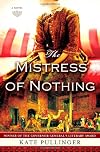
I listened to [[Kate Pullinger]]'s novel [8164090::The Mistress of Nothing]. I don't buy audio books but choose them, somewhat randomly, at the local library, a selection that is quirky and limited by what has been donated -- I preface my remarks with this information because I'm not particularly drawn to 'historical' novels and I know I would not have pulled [8164090::Mistress of Nothing] off the bookshelf. However, I liked the reader and found it engaging - the story of a young woman, show more Sally Naldrett, ladies maid to Lady Lucie Duff-Gordon (there is a later Lucile Duff-Gordon who was a Titanic survivor) who, having TB, has retreated to Luxor in Lower Egypt, where, it is hoped, the dry heat will help her recover. The two women must engage another person to help them. A dragoman, Omar, is engaged and he and Sally, both young and vital and bright people, thrown into constant intimacy, inevitably, fall in love. What happens then is both predictable and unpredictable. I don't know how much of Sally's story is 'true,' to find out I will have to read Lady Duff-Gordon's letters to her husband Alex about her time in Egypt. Her banishment, which as Sally puts it, was a kind of afterlife: had she stayed in England she would have surely died quickly, but in Eqypt she gained seven more years but was alone and bitter. For my part, in response to a couple of things said in the reviews below, I didn't find Lady Duff-Gordon's response so mysterious, albeit savage and unfair; I don't know how to say it politely, but upper-class employers of that time did feel that not only they had 'rights' over their servants but that they were obliged to 'guide' them as inferiors. I interpreted Lady D-G's rage as an expression of her sense of Sally having betrayed her training and duties, of having acted independently when she had no such right. And that a yet deeper level of her rage was caused by her own loneliness, helplessness and dependency on Sally and Omar; a sense of something that had felt..... almost like a family...... having been violated. She would see Sally, as the British woman, from the 'superior' culture, as being the one who should have known better. The writing is solid, not poetic, but very much in the character of an intelligent woman of limited education and wide curiosity. The story doesn't have the usual plotted feeling, and I preferred that, to the contrivances of some historical novels.
In any event, I will certainly read Lady Duff-Gordon's letters now, I'm very ingrigued, and I can't think of a greater compliment than that to give [[Kate Pullinger]]. **** show less
In any event, I will certainly read Lady Duff-Gordon's letters now, I'm very ingrigued, and I can't think of a greater compliment than that to give [[Kate Pullinger]]. **** show less
Generally speaking, I take a pretty dim view of historical novels that play fast and loose with the real history that inspired them. Kate Pullinger freely admits to having done so in "The Mistress of Nothing", and has been publicly called out for it (not least by one of the real-life descendants of the book's chief villain, Lady Lucie Duff-Gordon). Certainly, this story of a nineteenth-century English maid's illicit love affair and her struggle to survive as a single mother owes a great deal show more to 21st century mores. But I enjoyed the book, all the same. I'm a sucker for good travelogues, especially ones penned by Victorian lady travellers (I really need to read Duff-Gordon's "Letters from Egypt" now). Also, the descriptions of Egypt were wonderfully langorous, and brought back memories of my own trip there over a decade ago. show less
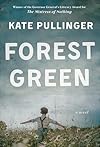
I first encountered Kate Pullinger about a decade ago when her Mistress of Nothing won the 2009 Governor General’s Award for Fiction. I would not be surprised if Forest Green wins some literary awards.
The book begins in 1995 with a homeless man on the streets of Vancouver. Via flashbacks, we are told the story of how he came to be in this situation. The first flashback is to 1934 when Arthur Lunn is seven years old and living with his family in the Okanagan Valley. His family is largely show more unaffected by the Great Depression, but there is an encampment of unemployed men nearby. Art and his sister Peg encounter a man at the camp and that meeting leads to a tragic event which leaves Art with feelings of guilt for the rest of his life.
The novel examines how childhood trauma can shape a person’s life. Because Art feels responsible for a tragedy, that “what had happened was his fault,” he feels others are always judging him so he makes a major decision about his life “to stop people thinking of him as the boy whose idiocy led to that terrible night.” When another tragedy occurs, Art feels even more guilt and even less able to escape “the pressure of the past” which he feels most strongly when with his family. He begins a nomadic existence in logging camps because “Being with his family made Art restless . . . always wanting to leave as soon as he’d arrived.” He is rescued by love but when yet another tragedy occurs, he is unable to recover.
Art spends much of his life as a logger so the book does provide glimpses into the logging industry in British Columbia and how attitudes to forestry have changed. Art thinks of trees “as a resource to be taken from the land, always there, infinite” even when the province looks like “a patchwork, as though it’s been scalped by a no-good barber who kept cutting off more hair in the hope of fixing his mistakes.” But then he encounters the forest green, the rainforest in the Queen Charlotte Islands (now Haida Gwaii), and he finds peace; he wants “to stay there, rooted, breathing the rainforest air.” And he realizes that “When you felled one of those trees, you were bringing hundreds of years of living to an end. . . . And it turned out that those trees, well, those trees were not infinite. That got to Art a little at the end.”
In the end, the forest serves as a metaphor for human life: “trees in a forest are all connected via their roots, that the forest floor is a kind of communication network made of moss and insects and fungi and all manner of life, and the forest itself a single organism, like a living soul regenerating through an endless cycle of rot and regrowth.” Art feels like a solitary tree until he re-connects to the forest. And the message is that we are all part of a single living soul.
Art emerges as a complex character. His life is not easy. Though readers will not agree with some of Art’s choices, they will understand and empathize. Though Art’s is only one story, it reminds us that there are many such stories among the homeless and addicted. A book that can inspire people to have compassion for the downtrodden is a good book.
The book is not especially lengthy, and the plot seems simple and straightforward, but it is thought-provoking and emotionally compelling.
Note: I received a digital galley from the publisher via NetGalley.
Please check out my reader's blog (https://schatjesshelves.blogspot.com/) and follow me on Twitter (@DCYakabuski). show less
The book begins in 1995 with a homeless man on the streets of Vancouver. Via flashbacks, we are told the story of how he came to be in this situation. The first flashback is to 1934 when Arthur Lunn is seven years old and living with his family in the Okanagan Valley. His family is largely show more unaffected by the Great Depression, but there is an encampment of unemployed men nearby. Art and his sister Peg encounter a man at the camp and that meeting leads to a tragic event which leaves Art with feelings of guilt for the rest of his life.
The novel examines how childhood trauma can shape a person’s life. Because Art feels responsible for a tragedy, that “what had happened was his fault,” he feels others are always judging him so he makes a major decision about his life “to stop people thinking of him as the boy whose idiocy led to that terrible night.” When another tragedy occurs, Art feels even more guilt and even less able to escape “the pressure of the past” which he feels most strongly when with his family. He begins a nomadic existence in logging camps because “Being with his family made Art restless . . . always wanting to leave as soon as he’d arrived.” He is rescued by love but when yet another tragedy occurs, he is unable to recover.
Art spends much of his life as a logger so the book does provide glimpses into the logging industry in British Columbia and how attitudes to forestry have changed. Art thinks of trees “as a resource to be taken from the land, always there, infinite” even when the province looks like “a patchwork, as though it’s been scalped by a no-good barber who kept cutting off more hair in the hope of fixing his mistakes.” But then he encounters the forest green, the rainforest in the Queen Charlotte Islands (now Haida Gwaii), and he finds peace; he wants “to stay there, rooted, breathing the rainforest air.” And he realizes that “When you felled one of those trees, you were bringing hundreds of years of living to an end. . . . And it turned out that those trees, well, those trees were not infinite. That got to Art a little at the end.”
In the end, the forest serves as a metaphor for human life: “trees in a forest are all connected via their roots, that the forest floor is a kind of communication network made of moss and insects and fungi and all manner of life, and the forest itself a single organism, like a living soul regenerating through an endless cycle of rot and regrowth.” Art feels like a solitary tree until he re-connects to the forest. And the message is that we are all part of a single living soul.
Art emerges as a complex character. His life is not easy. Though readers will not agree with some of Art’s choices, they will understand and empathize. Though Art’s is only one story, it reminds us that there are many such stories among the homeless and addicted. A book that can inspire people to have compassion for the downtrodden is a good book.
The book is not especially lengthy, and the plot seems simple and straightforward, but it is thought-provoking and emotionally compelling.
Note: I received a digital galley from the publisher via NetGalley.
Please check out my reader's blog (https://schatjesshelves.blogspot.com/) and follow me on Twitter (@DCYakabuski). show less
This novel is written in the first person perspective. The voice of the narrator was strong and beautiful. I enjoyed every sentence because of that narrative voice. I loved Sally and could not wait to hear her story. She rivals many of the best-loved narrators in literature. Her voice has a comforting familiarity as she discusses the exotic locations in Egypt. This was the strongest part of the novel.
However, because the voice was so strong, the dialogue and main actions of the plot were show more muted. I like being pulled away from the narrator at times to focus on actions taking place. The dialogue did not live up to the standards of the narrator. I cared less about what happened than how Sally told me about it.
This last paragraph make it sound as if I didn't enjoyt the novel, and I did very much. However is did fall short of excellent.
(Spoiler below)
I did have one quibble with the plot as well. When Sally decides to sleep with Omar, she knows that he is married. This fact does not give her a moment's pause. I realize that he can have more wives than one, but it still seems to constitute an affair to me. It surprised me that Sally, who has been so protective of her virtue up to this point, would throw it away on a married man without a thought. I am still trying to figure that one out. show less
However, because the voice was so strong, the dialogue and main actions of the plot were show more muted. I like being pulled away from the narrator at times to focus on actions taking place. The dialogue did not live up to the standards of the narrator. I cared less about what happened than how Sally told me about it.
This last paragraph make it sound as if I didn't enjoyt the novel, and I did very much. However is did fall short of excellent.
(Spoiler below)
I did have one quibble with the plot as well. When Sally decides to sleep with Omar, she knows that he is married. This fact does not give her a moment's pause. I realize that he can have more wives than one, but it still seems to constitute an affair to me. It surprised me that Sally, who has been so protective of her virtue up to this point, would throw it away on a married man without a thought. I am still trying to figure that one out. show less
Lists
Awards


You May Also Like


Associated Authors
Statistics
- Works
- 29
- Also by
- 2
- Members
- 1,443
- Popularity
- #17,817
- Rating
- 3.5
- Reviews
- 68
- ISBNs
- 125
- Languages
- 12