
Michael Fitzgerald (3)
Author of Succeeding in College With Asperger Syndrome
For other authors named Michael Fitzgerald, see the disambiguation page.
About the Author
Michael Fitzgerald is Henry Marsh Professor of Child and Adolescent Psychiatry at Trinity College, Dublin.
Image credit: Michael Fitzgerald
Works by Michael Fitzgerald
Autism and Creativity: Is There a Link between Autism in Men and Exceptional Ability? (2004) 17 copies
Attention Deficit Hyperactivity Disorder: Creativity, Novelty Seeking, and Risk (2008) 2 copies, 1 review
Young, Violent, and Dangerous to Know (Psychiatry-Theory, Applications, and Treatment) (2013) 2 copies
Tagged
Common Knowledge
- Other names
- FITZGERALD, Michael
- Gender
- male
Members
Reviews
Attention Deficit Hyperactivity Disorder: Creativity, Novelty Seeking, and Risk by Michael Fitzgerald

We all know those people; those ‘driven’ sorts who never stop doing something. Those polymaths who always have a different project on the go, and who seem to make time for everything. Those renaissance creatures who are always attaining a goal and who are seemingly carried along on a wave of blissful achievement. Us mortals watch them enviably and toast them good luck while finding fulfilment by watching TV reality shows and planning next year’s holiday on a budget.
By contrast, we are show more ‘outraged’ by the epidemic levels of bad behaviour in schools. Is it in the ‘E’ numbers? Is it in the fluoride? Is it the teachers or the parents? Is it the collapse of society, as we know it? Or is it that ADHD thing we keep hearing about? Give them a good dose of Ritalin and we can all live quiet lives.
Michael Fitzgerald, in his book, Attention Deficit Hyperactivity Disorder (ADHD): Creativity, Novelty Seeking and Risk, argues persuasively that these über-achievers and so-called delinquents are not so far removed from each other in terms of their insatiable quest for the new; going so far to as suggest that the very roots of our civilisation are grounded in the capricious restlessness of our forebears’ thirst for new stimulation and novelty-seeking - which, of course, means taking risks.
For more details about the book, visit site http://www.professormichaelfitzgerald.com/ show less
By contrast, we are show more ‘outraged’ by the epidemic levels of bad behaviour in schools. Is it in the ‘E’ numbers? Is it in the fluoride? Is it the teachers or the parents? Is it the collapse of society, as we know it? Or is it that ADHD thing we keep hearing about? Give them a good dose of Ritalin and we can all live quiet lives.
Michael Fitzgerald, in his book, Attention Deficit Hyperactivity Disorder (ADHD): Creativity, Novelty Seeking and Risk, argues persuasively that these über-achievers and so-called delinquents are not so far removed from each other in terms of their insatiable quest for the new; going so far to as suggest that the very roots of our civilisation are grounded in the capricious restlessness of our forebears’ thirst for new stimulation and novelty-seeking - which, of course, means taking risks.
For more details about the book, visit site http://www.professormichaelfitzgerald.com/ show less
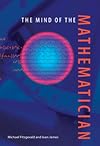
Two psychologists writing about the mental makeup of mathpeople. One aspect: "It is interesting that many of the mathematicians in this book had Asperger syndrome. We know that genes have multiple effects, and we hypothesize that the genes that produce the social deficits of Asperger syndrome are also involved in producing great mathematical ability. Examples in this book are Lagrange, Poincaré, Cauchy, Galois, Riemann, Cantor, Hilbert, Ramanujan, Fisher, Wiener, Dirac, and Gödel." (p 9)
You May Also Like
Associated Authors
Statistics
- Works
- 10
- Members
- 138
- Popularity
- #148,170
- Rating
- 2.6
- Reviews
- 2
- ISBNs
- 121
- Languages
- 7
- Favorited
- 1