
Paul Adam (1) (1958–)
Author of The Rainaldi Quartet
For other authors named Paul Adam, see the disambiguation page.
About the Author
Paul Adam was born in Coventry in 1958. He studied law at Nottingham University, then began a career in journalism. Paul Adam's books have sold widely around the world and have been translated into several foreign languages. Adam is the author of a number on critically-acclaimed thrillers for show more adults including: Unholy Trinity, Shadow Chasers, Flash Point, Sleeper, and Paganini's Ghost. He is also the author of the Max Cassidy series for younger readers. The first book in the series, Escape from Shadow Island won the Salford Children's Book Award 2010 and was shortlisted for 4 other awards. (Bowker Author Biography) show less
Series
Works by Paul Adam
Tagged
Common Knowledge
- Birthdate
- 1958
- Gender
- male
- Education
- University of Nottingham (law)
- Occupations
- journalist
- Nationality
- UK
- Birthplace
- Sheffield, South Yorkshire, England, UK
- Places of residence
- Nottingham, Nottinghamshire, England, UK
- Map Location
- England
Members
Reviews
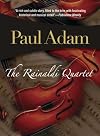
Second reading, 10 years (10/22) after the first. My favorite part of the book is not the mystery but the backstory. An antique violin is stolen and the person who had it in his posession. a lutherier is killed. A friend, also a lutherier begins an investigation. In the process history of violin making in the 15th and 16th century is worked in, and that's what I enjoyed the most.
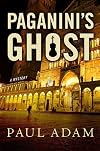
I really enjoyed this book. It is in that lovely sub-category of mysteries that includes a bit of well-researched historical trivia as part of the plot, in this case a bit of biographical trivia about Paganini and his violin, il Cannone, along with stuff about violin-making and about Paganini's music. The characters are nicely crafted and the murder mystery blends well with the historical elements. I looked up some Paganini videos on youtube to listen to while reading, and it was especially show more fun to watch concerts where real violinists were playing il Cannone, while I was reading about this famous violin (though I prefer a richer, less whiney tone than that of Paganini's violin, it turns out).
I was a bit annoyed at how old-fashioned and sexist the protagonist is, despite his attempts at egalitarian chore-sharing with his girlfriend, but it does fit with the fact that he is supposed to be an older Italian man. show less
I was a bit annoyed at how old-fashioned and sexist the protagonist is, despite his attempts at egalitarian chore-sharing with his girlfriend, but it does fit with the fact that he is supposed to be an older Italian man. show less
This mystery involves a valuable violin and multiple murders in contemporary Italy.
Shortly after playing a short composition by Beethoven with his friends Tomaso Rainaldi, a retired professional musician and sometime violin teacher, and Antonio Guastafeste, a local detective; Gianni Castiglione, an elderly luthier (that is, a craftsman of stringed instruments), receives a suspicious call at his Lombardy countryside home from Rainaldi’s wife Clara. His friend hasn’t come home and he is show more soon found stabbed near his abandoned car. Guastafeste, a generation younger than narrator Castiglione or Rainaldi, returns when he’s assigned to the case. Because Castiglione’s technical knowledge makes him useful as a valuable resource, he accompanies Guastafeste on his investigation, which begins with Venetian violin collector Dottor Forlani. The curious collector lives in squalor but spends a small fortune on instruments. They learn that Rainaldi had contacted Forlani about acquiring a valuable violin known as the “Messiah’s Sister.” Not long after their visit, Forlani is also murdered by a nefarious and mysterious persona as ruthless as he is determined. The mystery’s trail, which includes old letters and older tombs, leads Gianni through a network of auction houses and black-market dealings across Italy and western Europe, reaching its denouement at Casale Monferrato, the cement capital of Italy.
Well-paced storytelling perfectly suits the subtle pleasures of this tale. The author offers plenty of European history and an immersion in a subculture of the classical music world as well as a pleasant mystery. show less
Shortly after playing a short composition by Beethoven with his friends Tomaso Rainaldi, a retired professional musician and sometime violin teacher, and Antonio Guastafeste, a local detective; Gianni Castiglione, an elderly luthier (that is, a craftsman of stringed instruments), receives a suspicious call at his Lombardy countryside home from Rainaldi’s wife Clara. His friend hasn’t come home and he is show more soon found stabbed near his abandoned car. Guastafeste, a generation younger than narrator Castiglione or Rainaldi, returns when he’s assigned to the case. Because Castiglione’s technical knowledge makes him useful as a valuable resource, he accompanies Guastafeste on his investigation, which begins with Venetian violin collector Dottor Forlani. The curious collector lives in squalor but spends a small fortune on instruments. They learn that Rainaldi had contacted Forlani about acquiring a valuable violin known as the “Messiah’s Sister.” Not long after their visit, Forlani is also murdered by a nefarious and mysterious persona as ruthless as he is determined. The mystery’s trail, which includes old letters and older tombs, leads Gianni through a network of auction houses and black-market dealings across Italy and western Europe, reaching its denouement at Casale Monferrato, the cement capital of Italy.
Well-paced storytelling perfectly suits the subtle pleasures of this tale. The author offers plenty of European history and an immersion in a subculture of the classical music world as well as a pleasant mystery. show less
I really enjoyed this book. It is in that lovely sub-category of mysteries that includes a bit of well-researched historical trivia as part of the plot, in this case a bit of biographical trivia about Paganini and his violin, il Cannone, along with stuff about violin-making and about Paganini's music. The characters are nicely crafted and the murder mystery blends well with the historical elements. I looked up some Paganini videos on youtube to listen to while reading, and it was especially show more fun to watch concerts where real violinists were playing il Cannone, while I was reading about this famous violin (though I prefer a richer, less whiney tone than that of Paganini's violin, it turns out).
I was a bit annoyed at how old-fashioned and sexist the protagonist is, despite his attempts at egalitarian chore-sharing with his girlfriend, but it does fit with the fact that he is supposed to be an older Italian man. show less
I was a bit annoyed at how old-fashioned and sexist the protagonist is, despite his attempts at egalitarian chore-sharing with his girlfriend, but it does fit with the fact that he is supposed to be an older Italian man. show less
Awards


You May Also Like


Statistics
- Works
- 16
- Members
- 620
- Popularity
- #40,586
- Rating
- 3.7
- Reviews
- 30
- ISBNs
- 98
- Languages
- 5
- Favorited
- 2