
James Martin (1) (1960–)
Author of Learning to Pray: A Guide for Everyone
For other authors named James Martin, see the disambiguation page.
James Martin (1) has been aliased into James Martin SJ.
About the Author
Image credit: Photo of Fr. James Martin SJ
Photo Credit: Tatyana Borodina
Works by James Martin
Works have been aliased into James Martin SJ.
Associated Works
Works have been aliased into James Martin SJ.
St. Peter's B-list: Contemporary Poems Inspired by the Saints (2014) — Afterword — 32 copies, 1 review
The Jesuit Post: #Faith #God #Frontiers #Culture #Mystery #Love (2014) — Foreword; Contributor — 17 copies
Tagged
Common Knowledge
- Other names
- Martin, James J.
- Birthdate
- 1960-12-29
- Gender
- male
- Education
- University of Pennsylvania (BS ∙ Economics ∙ 1982)
- Occupations
- priest
writer
editor - Organizations
- Society of Jesus
General Electric
America: the National Catholic Review - Nationality
- USA
- Places of residence
- Plymouth Meeting, Pennsylvania, USA
- Associated Place (for map)
- Pennsylvania, USA
Members
Reviews
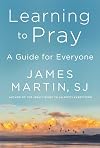
I grew up within the Protestant tradition where [I thought that] I had a strong personal prayer life; I was hoping for a little help with the public, extemporaneous prayer expected from a community leader, and where I seem to struggle a bit (I usually crib them on a piece of paper in advance) ... this book doesn't do that. So after my initial disappointment, I settled in for what I believed would be a quick review. As expected, the author starts off with why we should pray and defining what show more prayer is ... including nine (9) types of prayer many people do without actually realizing they are doing it. There is a good mix of personal story and cited sources here that continues through the rest of the book and makes it all exceptionally relatable. After a brief treatment of rote or formal prayers in chapter 8, the book moves into more of the Ignatian traditions that I actually don't have much experience with (but seem to be gaining significant attention from those working toward a deeper and richer prayer life). Fr. Martin hits the Daily Examen first ... with a quick segue into what happens when you pray and how to discern God's voice ... I must have highlighted half of each chapter here in my kindle as a quick reference. This is not something that I have thought much about, nor was it really discussed much in any detail growing up.
After the Examen, we get Ignatian Contemplation, which leans heavily on imagination ... which can be difficult for those of us who tend toward more analytical/concrete thinking. Fr Martin breaks it all down into easy steps and deals with each individually before bringing all together to great effect. After that, we get a chapter on Lectio Divina ... which seems to be all the rage today (at least in my diocese). Again I found a good definition of what it is, what steps are involved and how to do them. Straight up and simple, which is probably why this chapter was relatively short. I was surprised to find Centering Payer next, since it can be controversial with some Catholics (precisely because of the perception of non-christian influence from the East). Fr. Martin deals with this quite well by reminding us to be sure that we keep the presence of God front of 'center' when we use this technique). Nature prayer (or the "Gaze of Jesus" is next and it calls to mind my own encounters with God's creation and how I felt at the time; reminding me that it is important to continue to seek out these encounters. Chapter 16 talks about some of the tools we can use in our prayer life: spiritual direction (new for me), retreats (with a list of several types), faith sharing (which I like to think of as my strong suit) and journaling (which is my weakest).
So ... after all of that ... why are some folks not satisfied with their payer life? Chapter 17 on expectations and the "ups and and downs of the spiritual life" may help. This is something that I don't often see ... an acknowledgement that sometimes you just don't feel like anything worked and that makes it more likely that you may get discouraged. Fr Martin has some practical advice on how to tweak a few things ... but the best advice is to simple remember is that God is in charge here ... and sometimes unanswered prayers are for the best.
Overall I find the book to be an excellent reference to which I will constantly return to as I work on improving my own life of prayer.
I was given this free advance reader copy (ARC) ebook at my request and have voluntarily left this review.
#LearningtoPray #NetGalley show less
After the Examen, we get Ignatian Contemplation, which leans heavily on imagination ... which can be difficult for those of us who tend toward more analytical/concrete thinking. Fr Martin breaks it all down into easy steps and deals with each individually before bringing all together to great effect. After that, we get a chapter on Lectio Divina ... which seems to be all the rage today (at least in my diocese). Again I found a good definition of what it is, what steps are involved and how to do them. Straight up and simple, which is probably why this chapter was relatively short. I was surprised to find Centering Payer next, since it can be controversial with some Catholics (precisely because of the perception of non-christian influence from the East). Fr. Martin deals with this quite well by reminding us to be sure that we keep the presence of God front of 'center' when we use this technique). Nature prayer (or the "Gaze of Jesus" is next and it calls to mind my own encounters with God's creation and how I felt at the time; reminding me that it is important to continue to seek out these encounters. Chapter 16 talks about some of the tools we can use in our prayer life: spiritual direction (new for me), retreats (with a list of several types), faith sharing (which I like to think of as my strong suit) and journaling (which is my weakest).
So ... after all of that ... why are some folks not satisfied with their payer life? Chapter 17 on expectations and the "ups and and downs of the spiritual life" may help. This is something that I don't often see ... an acknowledgement that sometimes you just don't feel like anything worked and that makes it more likely that you may get discouraged. Fr Martin has some practical advice on how to tweak a few things ... but the best advice is to simple remember is that God is in charge here ... and sometimes unanswered prayers are for the best.
Overall I find the book to be an excellent reference to which I will constantly return to as I work on improving my own life of prayer.
I was given this free advance reader copy (ARC) ebook at my request and have voluntarily left this review.
#LearningtoPray #NetGalley show less
Building a Bridge: How the Catholic Church and the LGBT Community Can Enter into a Relationship of Respect, Compassion, and Sensitivity by James Martin
I was shocked to discover how very sweet this book is. It’s accessible, yes, for book groups and a variety of readers, but the great gift here is the mantra (from the Catechism) is that GLBT persons are to be treated with respect, compassion and sensitivity. Now, what would that actually look like? And since a bridge goes both ways, what would it look like to treat the Church with compassion, respect and sensitivity?
One way would be to ask questions - and Fr, Martin lists possible show more questions. I stopped reading, got up out of my chair and called a Lesbian member of our church, a dear woman in her 70s, and asked her if we could have coffee tomorrow and I ask her what her experience of church has been, her experience of God, and how might we do better?
It also seems clear that this process of asking questions might be a very good idea in any number of situations. show less
One way would be to ask questions - and Fr, Martin lists possible show more questions. I stopped reading, got up out of my chair and called a Lesbian member of our church, a dear woman in her 70s, and asked her if we could have coffee tomorrow and I ask her what her experience of church has been, her experience of God, and how might we do better?
It also seems clear that this process of asking questions might be a very good idea in any number of situations. show less

"Learning to Pray: A Guide for Everyone" could easily have been titled "How to Have a Conversation with God," as the author, James Martin, SJ, makes it clear that prayer really is about having a conversation WITH God, not just praying TO God. And as the subtitle suggests, the book is for anyone wanting to have a conversation with God; it's not just for Christians.
Martin's perspective on prayer is that it can take place at just about any time, at just about any place, and in many, many forms. show more This resonated with me, as I've always felt closest to God when I was outdoors, enjoying nature, even less than when kneeling in church.
The chapters cover a variety of prayer-related topics. Some, such as "Why Pray?" and "What is Prayer?" are not the least surprising in such a book. Others, such as "The Gift of Imagination" help to broaden one's perspective on prayer. The chapters are well-written and easy to read, with many examples. The examples are largely Christian-based, a point that should come as no surprise since Martin is a Jesuit, but the ideas are universal.
I highly recommend the book, especially for those interested in prayer, and I think those who meditate without any conscious connection to God, or who have any similar practice, might find value in the book as well. show less
Martin's perspective on prayer is that it can take place at just about any time, at just about any place, and in many, many forms. show more This resonated with me, as I've always felt closest to God when I was outdoors, enjoying nature, even less than when kneeling in church.
The chapters cover a variety of prayer-related topics. Some, such as "Why Pray?" and "What is Prayer?" are not the least surprising in such a book. Others, such as "The Gift of Imagination" help to broaden one's perspective on prayer. The chapters are well-written and easy to read, with many examples. The examples are largely Christian-based, a point that should come as no surprise since Martin is a Jesuit, but the ideas are universal.
I highly recommend the book, especially for those interested in prayer, and I think those who meditate without any conscious connection to God, or who have any similar practice, might find value in the book as well. show less
Building a Bridge: How the Catholic Church and the LGBT Community Can Enter into a Relationship of Respect, Compassion, and Sensitivity by James Martin
What James Martin has to say to the institutional church, and all of us in the pews, about the LGBT community is hardly revolutionary, but his critique of the silence of church leaders in the face of hate crimes toward LGBT people strikes me as gutsy, if long overdue. This short book is a plea to both the church leadership and the LGBT community to come together with respect, compassion and dignity. Not controversial? I'll bet it is, unfortunately. For me, a straight cis male, the most show more useful part of the book is the set of biblical passages with reflection/dialogue questions after Fr. Martin's essay. show less
Lists
Great Audiobooks (1)
Awards

You May Also Like
Associated Authors
Statistics
- Works
- 7
- Also by
- 3
- Members
- 639
- Popularity
- #39,444
- Rating
- 3.9
- Reviews
- 11
- ISBNs
- 407
- Languages
- 12
- Favorited
- 7