
Patrick Wright (1) (1951–)
Author of Tank: The Progress of a Monstrous War Machine
For other authors named Patrick Wright, see the disambiguation page.
About the Author
Patrick Wright is Professor of Modern Cultural Studies at Nottingham Trent University, U.K.
Works by Patrick Wright
Associated Works
Tagged
Common Knowledge
- Canonical name
- Wright, Patrick
- Birthdate
- 1951
- Gender
- male
- Education
- University of Kent
Simon Fraser University - Occupations
- historian
professor
journalist - Organizations
- King's College London
Nottingham Trent University
British Broadcasting Corporation - Awards and honors
- Fellow, British Academy (2016)
- Nationality
- UK
- Associated Place (for map)
- UK
Members
Reviews
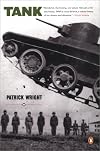
This is is what I call the "History of Beekeeping in Nova Scotia" school of history. Wildly entertaining and insightful. Lenin makes an appearance, for example -iconography, anyone?
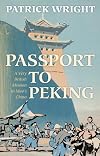
And a very British history of the mission it is too - and to be honest its not immediately clear why Patrick Wright would go into such detail about the 3 British missions to China in the mid 50s encouraged by the "come and see" invitation of Chou-En Lai . To be honest I thought it would be funnier and whilst its extremely well researched, some of the characters are interesting (Stanley Spencer and his insistence on wearing pyjamas below his suit) and some of the behaviour eccentric show more (predictable over indulgence in alcohol at Chinese banquets in particular) what the teams mainly do is spend a very long time getting to China via Russia and most of central Asia, and then go on lots of tours of tractor factories and the ilk before getting drunk at official banquet. All a bit dull, predictable, very British but not eccentric enough, show less
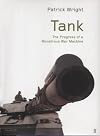
ank is a rather bizarre book, a cultural history of the armored fighting vehicle in the 20th century, rather than a military or political history. It is often interesting and charming, and always scattered. Wright begins with the iconic image of "tank man" at Tiananmen Square: a single anonymous civilian facing down an armored column representing the full mass and might of an oppressive state.
He then leaps back to the origins of the tank in the First World War as a solution to the attrition show more of trench warfare. The Heavy Section of the Machine Gun Corps carried out the first tank attacks in 1916 at the Battle of the Somme, and the first successful attacks at Cambrai. The tank attracted immediate fascinating, being described as a great yet ludicrous beast by war correspondents, and then being used as the focal point of a nationwide war bonds campaign.
The first intellectual of armored warfare was the British officer J. F. C. Fuller, who envisioned a new kind of sweeping maneuver against the "horse-minded" stodges of the cavalry. Fuller was a fascinating figure, an early discipline of Alistair Crowley who in the 1930s became a leading British fascist. Strategic brilliance is not always coupled to good sense.
World War 2, the Bltizkrieg, and the Battle of Kursk is treated in a cursory and obligatory way, as if Wright is bored with the moment when the tank came of age. As many words are spent on the ambiguous status of the tank in post-Communist Poland as on the Second World War. A chapter spent with General Israel Tal, Israeli armored leader and designer of the Merkava, is more interesting. Yet for a cultural historian, Wright repeats entirely uncritically the mythos of the Israeli tanker in the Six Day War and Yom Kippur War. The book closes out with a visit to Fort Knox, and the optimistic futurism of the US military in the "end of history" years between the fall of the Berlin Wall and the World Trade Center.
It's hard to say exactly what Wright's thesis is, beyond "hey, look at all the diverse meanings that have been attached to tanks". There are lots of interesting pieces here, but the overall effect is less than the sum of its components. show less
He then leaps back to the origins of the tank in the First World War as a solution to the attrition show more of trench warfare. The Heavy Section of the Machine Gun Corps carried out the first tank attacks in 1916 at the Battle of the Somme, and the first successful attacks at Cambrai. The tank attracted immediate fascinating, being described as a great yet ludicrous beast by war correspondents, and then being used as the focal point of a nationwide war bonds campaign.
The first intellectual of armored warfare was the British officer J. F. C. Fuller, who envisioned a new kind of sweeping maneuver against the "horse-minded" stodges of the cavalry. Fuller was a fascinating figure, an early discipline of Alistair Crowley who in the 1930s became a leading British fascist. Strategic brilliance is not always coupled to good sense.
World War 2, the Bltizkrieg, and the Battle of Kursk is treated in a cursory and obligatory way, as if Wright is bored with the moment when the tank came of age. As many words are spent on the ambiguous status of the tank in post-Communist Poland as on the Second World War. A chapter spent with General Israel Tal, Israeli armored leader and designer of the Merkava, is more interesting. Yet for a cultural historian, Wright repeats entirely uncritically the mythos of the Israeli tanker in the Six Day War and Yom Kippur War. The book closes out with a visit to Fort Knox, and the optimistic futurism of the US military in the "end of history" years between the fall of the Berlin Wall and the World Trade Center.
It's hard to say exactly what Wright's thesis is, beyond "hey, look at all the diverse meanings that have been attached to tanks". There are lots of interesting pieces here, but the overall effect is less than the sum of its components. show less
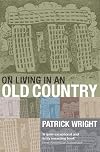
First published in 1985 and republished in 2009 with a preface and afterword. Not an easy read and, even with the additions, is definitely of its time. But worth it. Patrick Wright uses contemporary events to ask questions of the role of history and how we view heritage. A book to make you think about the towns, buildings and landscapes around you. How you view them and what impact they have on you. A book that prompts you to reconsider an establishment view of the past and how it effects show more our lives today. show less
Lists
Awards

You May Also Like


Associated Authors
Statistics
- Works
- 8
- Also by
- 1
- Members
- 416
- Popularity
- #58,579
- Rating
- 3.4
- Reviews
- 9
- ISBNs
- 48
- Languages
- 1