
John Fletcher (1) (1579–1625)
Author of Henry VIII
For other authors named John Fletcher, see the disambiguation page.
About the Author
The team of Francis Beaumont (1584-1616) and John Fletcher (1579-1625) wrote some of the most popular dramas of Elizabethan England. Beaumont and Fletcher began to work together in about 1606 and continued their partnership until Beaumont's retirement in 1613. Beaumont apparently was the primary show more plotter of their plays, while Fletcher had a strong flair for language. Their comedies and tragedies include The Woman Hater, The Coxcomb, A Maid's Tragedy, The Knight of the Burning Pestle, Wit Without Money, and Philaster, Or Love Lies A Bleeding. Fletcher wrote several plays alone as well, such as the comedy The Wild Goose Chase (1621) and the tragedy Bonduca (1614). Cardenio, or the Second Maiden's Tragedy, and Two Noble Kinsmen are attributed to Fletcher, although there has been some speculation he collaborated on these with Shakespeare. Beaumont and Fletcher's work is energetic, full of stage thrills, declamatory speeches and bizarre plots. Though it is not as rich and unified as that of some of their contemporaries including Shakespeare and Webster, it influenced the development of Restoration comedy and tragedy, and thus played an important role in the history of drama. (Bowker Author Biography) show less
Image credit: Courtesy of the NYPL Digital Gallery (image use requires permission from the New York Public Library)
Works by John Fletcher
The Knight of the Burning Pestle (1613) — traditionally (but probably falsely) listed as co-author — 278 copies, 2 reviews
Four Jacobean Sex Tragedies: William Barksted and Lewis Machin: The Insatiate Countess; Francis Beaumont and John Fletch (1998) 79 copies
Three Renaissance Travel Plays: The Travels of Three English Brothers; The Sea Voyage; The Antipodes (1995) 18 copies
Three Shrew Plays: Shakespeare's The Taming of the Shrew; with The Anonymous The Taming of a Shrew & Fletcher's The Tamer Tamed (2010) 13 copies
The Dramatic Works in the Beaumont and Fletcher Canon, Volume III: Love's Cure, The Noble Gentleman, The Tragedy of Thierry and Theodoret, The Faithful Shepherdess (1976) — Author — 9 copies
Three Seventeenth-Century Plays on Women and Performance (Revels Plays Companions Library) (2006) — Author — 9 copies
Fifty comedies and tragedies 8 copies
The Dramatic Works in the Beaumont and Fletcher Canon, Volume I: The Knight of the Burning Pestle, The Masque of the Inner Temple and Gray's Inn, The Woman Hater, The Coxcomb,… (1920) — Author — 7 copies
Beaumont & Fletcher Vol. 2 7 copies
The works of Beaumont & Fletcher, with notes and a memoir by Alexander Dyce [volume II only] 6 copies
Love's Cure, or The Martial Maid: By John Fletcher and Philip Massinger (The Revels Plays) (2022) 5 copies
Sir John van Olden Barnavelt 5 copies
The faithful friends (Malone Society) — attributed author — 4 copies
Thierry and Theodoret: John Fletcher, Philip Massinger and Nathan Field (The Revels Plays) (2024) 3 copies
The Dramatic Works of Ben Jonson, and Beaumont and Fletcher — Author — 3 copies
The maid's tragedy and Philaster 2 copies
A very woman, or The prince of Tarent — Author — 2 copies
Elizabethan dramatists: Marlow's "Dr. Faustus", Jonson's "Every man in his humour", Beaumont and Fletcher's "Philaste" (1903) 2 copies
Lyrics from the Plays — Author — 1 copy
The Spanish Curate 1 copy
Associated Works
Shakespeare and Co.: Christopher Marlowe, Thomas Dekker, Ben Jonson, Thomas Middleton, John Fletcher and the Other Players in His Story (2007) 315 copies, 6 reviews
Elizabethan Drama, Volume II: Dekker; Jonson; Beaumont and Fletcher; Webster; Massinger (2004) — Contributor — 218 copies
Covent Garden drollery; a miscellany of 1672 — Contributor — 5 copies
The Delphian Course : Part Seven : Story of the Drama, Nature Study — Contributor — 4 copies
The Plays of David Garrick, Volume 6: Garrick's Alterations of Others, 1751-1756 (1982) — Contributor — 3 copies
Tagged
Common Knowledge
- Birthdate
- 1579
- Date of death
- 1625-08
- Gender
- male
- Education
- University of Cambridge (Corpus Christi College)
- Occupations
- playwright
- Relationships
- Fletcher, Giles (uncle)
Fletcher, Giles (cousin)
Fletcher, Phineas (cousin) - Short biography
- The cataloguing in many places (even in reputable libraries) of works by the Jacobean playwrights Francis Beaumont (1584–1616) and John Fletcher (1579–1625) and their various collaborators tends to be confusing. Works by Fletcher alone can be found catalogued under Beaumont or under Beaumont & Fletcher; works by Beaumont alone can be found catalogued under Fletcher or under Beaumont & Fletcher; collaborations by Beaumont & Fletcher can be found catalogued under Fletcher alone or under Beaumont alone; collaborations by Fletcher and Massinger can be found catalogued under Fletcher alone or under Beaumont & Fletcher; and some works are catalogued correctly! Collected and selected editions usually include a mix. (These confusions occurred even in the 17th century.) Here’s a breakdown: it’s a lot, but all of these are present in single play volumes or in Beaumont & Fletcher collections listed on LT.
Works by Beaumont alone: The Knight of the Burning Pestle; Salmacis & Hermaphroditus; Masque of the Inner Temple.
Works by Fletcher alone: The Faithful Shepherdess; Bonduca; Valentinian; The Woman’s Prize, or, The Tamer Tamed; Monsieur Thomas; The Island Princess; The Loyal Subject; The Mad Lover; The Pilgrim; A Wife for a Month; Rule a Wife & Have a Wife; The Chances; The Wild-Goose Chase; Women Pleased; Wit without Money; The Humourous Lieutenant, or, Demetrius & Enanthe.
Works by Beaumont & Fletcher together: The Maid’s Tragedy; Philaster, or, Love Lies A-Bleeding; A King & No King; Cupid’s Revenge; The Scornful Lady; The Coxcomb; The Woman Hater; The Captain; Love’s Pilgrimage; The Noble Gentleman
Works by Beaumont & Fletcher and Philip Massinger: Thierry & Theodoret; Beggars Bush; Love’s Cure.
Works by Fletcher and Massinger: Barnavelt; The Custom of the Country; The Double Marriage; The Elder Brother; The False One; The Little French Lawyer; The Lovers’ Progress; The Prophetess; The Sea Voyage; The Spanish Curate; A Very Woman.
Works by Fletcher and various collaborators: The Fair Maid of the Inn (with Massinger, John Webster & John Ford); Henry VIII (with Shakespeare); The Two Noble Kinsmen (with Shakespeare); Four Plays in One (with Nathan Field); The Queen of Corinth (with Massinger & Field); The Knight of Malta (with Massinger & Field); The Honest Man’s Fortune (with Massinger & Field & Cyril Tourneur); The Maid in the Mill (with William Rowley); The Night Walker (revised by James Shirley); Rollo Duke of Normandy, or, The Bloody Brother (with Massinger & ?Jonson, ?Chapman, ?Field)
Works printed with the Beaumont & Fletcher canon but which are by other authors altogether: The Nice Valour by Thomas Middleton; Wit at Several Weapons by Middleton & Rowley; The Laws of Candy by John Ford. - Nationality
- England
- Birthplace
- Rye, Sussex, England
- Places of residence
- London, England
- Place of death
- London, England
- Burial location
- Southwark Cathedral, London, England
- Map Location
- UK
Members
Reviews
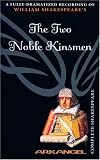
I had this queued up to listen to for three days before I finally ripped through it in one gulp. And initially, I hated it. I mean, yeah yeah, love at first sight and all that, but damn, a pair of cousins actually somewhat joyful at being imprisoned together for the rest of their lives and swearing undying love for each other almost immediately become sworn enemies at the sight of a woman?
There's love at first sight, and then there's utter ridiculousness.
Anyway, okay, the story hinges on show more this, so fair enough, grudgingly accept it and move on.
...and then the jailer's daughter falls for the remaining imprisoned cousin, then goes stark raving bonkers when it's unrequited.
Ladies and gentlemen, we've officially entered J. Geils Band territory...
You love her
But she loves him
And he loves somebody else
You just can't win
And so it goes
Till the day you die
This thing they call love
It's gonna make you cry
I've had the blues
The reds and the pinks
One thing for sure (in the worlds of Shakespeare)
Love stinks
Honestly, for the entire second half of this, my final play of Shakespeare's, that's the song that kept rolling through my head.
Regardless, it had a suitably tragic twist at the end, worth of the Bard, and overall, I think I enjoyed this one more than any of the previous few I'd gone through, so I'll take that as a win.
Final thoughts on Shakespeare? Don't fall in love in a Shakespeare play, cuz someone's gonna die. show less
There's love at first sight, and then there's utter ridiculousness.
Anyway, okay, the story hinges on show more this, so fair enough, grudgingly accept it and move on.
...and then the jailer's daughter falls for the remaining imprisoned cousin, then goes stark raving bonkers when it's unrequited.
Ladies and gentlemen, we've officially entered J. Geils Band territory...
You love her
But she loves him
And he loves somebody else
You just can't win
And so it goes
Till the day you die
This thing they call love
It's gonna make you cry
I've had the blues
The reds and the pinks
One thing for sure (in the worlds of Shakespeare)
Love stinks
Honestly, for the entire second half of this, my final play of Shakespeare's, that's the song that kept rolling through my head.
Regardless, it had a suitably tragic twist at the end, worth of the Bard, and overall, I think I enjoyed this one more than any of the previous few I'd gone through, so I'll take that as a win.
Final thoughts on Shakespeare? Don't fall in love in a Shakespeare play, cuz someone's gonna die. show less

The portrait of a monarchy in crisis, this historical drama concerns the famous king's efforts to secure a divorce from his dignified and popular queen in order to marry an enchanting courtesan and produce a male heir. The play ranks among Shakespeare's most sumptuous and spectacular works, offering a splendid pageant of masques and royal ceremony. Occasional lapses in historical accuracy are compensated for by keen psychological and political insights, vivid characterizations, and evocative show more language. Possibly the last of Shakespeare's dramas, Henry VIII was almost certainly co-written with John Fletcher. It is a play of farewells ― to the world, to life, to power ― in which major historical characters make memorable exits, including Cardinal Wolsey's rueful observation: "Had I but served my God with half the zeal/I served my king, he would not in mine age/Have left me naked to mine enemies. " Nevertheless, the play ends in triumph and hopeful expectations with the prophecy of the coming Elizabethan age. show less

As I work my way through the complete list of Shakespeare's plays, I'm stumbling upon many of his lesser-known works with little to no knowledge going into them. It's an interesting way to approach Shakespeare, because so many of the plays we read of his are ones we already familiar with before we ever reach the actual text. Shows like Hamlet and Romeo and Juliet are woven into the tapestry of pop culture in so many different ways that we learn the story even if we haven't read the show more book.
Unlike those shows, I had no previous knowledge of The Two Noble Kinsmen before I started it. In my head I kept confusing it with The Two Gentlemen of Verona, and there's good reason for that. Both plays take a pair of best friends and then pit them against each other for the love of a woman. I can't help but wonder if this ever happened to Shakespeare, because he seems to bring it up a lot. Did he have some friend who was kind of a jerk and kept going after whoever his buddy Bill had a crush on?
In The Two Noble Kinsmen we meet Palamon and Arcite. They are devoted friends… until they see Emilia. After that it’s every man for himself. Unfortunately another woman, the daughter of a jailer, falls for one of the two men, Palamon. So now she’s trapped in this horrible cycle too. In the end, one kinsman ends up with the girl and everyone is “happy”. It’s all tied up a bit too neatly to be believable.
It’s also one of Shakespeare’s more frustrating plays when it comes to the women. No one seems to care what Emilia or the jailer’s daughter actually wants. I felt like the women in The Two Gentlemen of Verona, particularly Silvia, are much stronger characters.
BOTTOM LINE: It’s Shakespeare’s final play, but not his strongest. A tidy ending and weak female characters don’t leave a great lasting impression, but it still holds some beautiful language from Shakespeare.
“This world's a city full of straying streets, and death's the market-place where each one meets.” show less
Unlike those shows, I had no previous knowledge of The Two Noble Kinsmen before I started it. In my head I kept confusing it with The Two Gentlemen of Verona, and there's good reason for that. Both plays take a pair of best friends and then pit them against each other for the love of a woman. I can't help but wonder if this ever happened to Shakespeare, because he seems to bring it up a lot. Did he have some friend who was kind of a jerk and kept going after whoever his buddy Bill had a crush on?
In The Two Noble Kinsmen we meet Palamon and Arcite. They are devoted friends… until they see Emilia. After that it’s every man for himself. Unfortunately another woman, the daughter of a jailer, falls for one of the two men, Palamon. So now she’s trapped in this horrible cycle too. In the end, one kinsman ends up with the girl and everyone is “happy”. It’s all tied up a bit too neatly to be believable.
It’s also one of Shakespeare’s more frustrating plays when it comes to the women. No one seems to care what Emilia or the jailer’s daughter actually wants. I felt like the women in The Two Gentlemen of Verona, particularly Silvia, are much stronger characters.
BOTTOM LINE: It’s Shakespeare’s final play, but not his strongest. A tidy ending and weak female characters don’t leave a great lasting impression, but it still holds some beautiful language from Shakespeare.
“This world's a city full of straying streets, and death's the market-place where each one meets.” show less
The Complete Arkangel Shakespeare: the Two Noble Kinsmen (Arkangel Complete Shakespeare) by William Shakespeare
http://nwhyte.livejournal.com/1227279.html
The two noble kinsmen of the title are Palamon and Arcite, kin of the ruler of Thebes, taken as prisoners of war to Athens where they both fall in love with the Duke's sister. Arcite is paroled, Palamon escapes, and they are duelling to the death for the fair Emilia when the Duke discovers them and makes them go away for a while in order to come back and fight properly. Arcite wins the combat, but just as Palamon and his team-mates are about to be show more executed, Arcite falls off his horse and dies, so Palamon gets to marry Emilia and everyone (except Arcite) lives happily ever after.
As you can tell from the summary, the sexual politics of this play is a bit, er, challenging. And I haven't mentioned the unfortunate jailer's daughter who falls in love with Palamon, engineers his escape, goes mad with guilt, and eventually goes off with the anonymous Athenian bloke who was always in love with her. He is described in the cast list as 'Wooer'. Her doctor advises him to have sex with her even though she thinks he is Palamon, but only if it will make her feel better.
As you can tell from that second paragraph, the deeper sexual politics of this play is a bit, er, challenging. And I haven't mentioned the deep manly love that Palamon and Arcite profess for one another when they are not competing to win Emilia, nor Emilia's early professed deep womanly love for the otherwise unmentioned Flavinia (though if I was directing this I would make her the jailer's daughter). The least odd bit of the play is the first scene where three widowed queens beg the Duke of Athens to make war on Thebes to recover their husbands' corpses. There is also a comic rustic dance and some divine manifestations.
And yet plenty of other Shakespeare plays have very dodgy sexual politics - thinking especially of The Taming of the Shrew - and can be staged effectively, and I expect that this is no exception. Arkangel have made a very decent fist of it, especially with Jonathan Firth as Palamon and Sarah-Jane Holm as the jailer's daughter (and I've been listening to her father as Frodo Baggins too). I can understand why it is relatively obscure, but I am a little surprised that there has never been a TV or film version of it. It is not a particularly strong piece of work, but it's not all that bad. show less
The two noble kinsmen of the title are Palamon and Arcite, kin of the ruler of Thebes, taken as prisoners of war to Athens where they both fall in love with the Duke's sister. Arcite is paroled, Palamon escapes, and they are duelling to the death for the fair Emilia when the Duke discovers them and makes them go away for a while in order to come back and fight properly. Arcite wins the combat, but just as Palamon and his team-mates are about to be show more executed, Arcite falls off his horse and dies, so Palamon gets to marry Emilia and everyone (except Arcite) lives happily ever after.
As you can tell from the summary, the sexual politics of this play is a bit, er, challenging. And I haven't mentioned the unfortunate jailer's daughter who falls in love with Palamon, engineers his escape, goes mad with guilt, and eventually goes off with the anonymous Athenian bloke who was always in love with her. He is described in the cast list as 'Wooer'. Her doctor advises him to have sex with her even though she thinks he is Palamon, but only if it will make her feel better.
As you can tell from that second paragraph, the deeper sexual politics of this play is a bit, er, challenging. And I haven't mentioned the deep manly love that Palamon and Arcite profess for one another when they are not competing to win Emilia, nor Emilia's early professed deep womanly love for the otherwise unmentioned Flavinia (though if I was directing this I would make her the jailer's daughter). The least odd bit of the play is the first scene where three widowed queens beg the Duke of Athens to make war on Thebes to recover their husbands' corpses. There is also a comic rustic dance and some divine manifestations.
And yet plenty of other Shakespeare plays have very dodgy sexual politics - thinking especially of The Taming of the Shrew - and can be staged effectively, and I expect that this is no exception. Arkangel have made a very decent fist of it, especially with Jonathan Firth as Palamon and Sarah-Jane Holm as the jailer's daughter (and I've been listening to her father as Frodo Baggins too). I can understand why it is relatively obscure, but I am a little surprised that there has never been a TV or film version of it. It is not a particularly strong piece of work, but it's not all that bad. show less
Lists
You May Also Like


Associated Authors
Statistics
- Works
- 86
- Also by
- 18
- Members
- 3,503
- Popularity
- #7,260
- Rating
- 3.6
- Reviews
- 56
- ISBNs
- 564
- Languages
- 16
- Favorited
- 1
