
Peter Wells (2) (1950–2019)
Author of Dangerous Desires
For other authors named Peter Wells, see the disambiguation page.
Works by Peter Wells
Journey To a Hanging: the Events That Set New Zealand Race Relations Back By a Century (2014) 8 copies, 1 review
Outing 1 copy
Associated Works
In Another Part of the Forest: An Anthology of Gay Short Fiction (1994) — Contributor — 191 copies, 2 reviews
Out here : an anthology of Takatāpui and LGBTQIA writers from Aotearoa (2021) — Contributor — 13 copies
A passion for travel : New Zealand writers & their adventures overseas (1998) — Contributor — 2 copies
Tagged
Common Knowledge
- Legal name
- Wells, Peter Northe
- Birthdate
- 1950
- Date of death
- 2019-02-18
- Gender
- male
- Education
- Mt Albert Grammar School
- Occupations
- author
screenwriter
filmmaker - Awards and honors
- Michael King Writer’s Fellowship (2011)
New Zealand Order of Merit (Member, 2006)
Waikato University Writer in Residence (2006)
Randell Cottage Writers' Residency (2002) - Nationality
- New Zealand
- Birthplace
- Auckland, New Zealand
- Place of death
- Auckland, New Zealand
- Associated Place (for map)
- Auckland, New Zealand
Members
Reviews
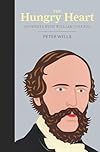
This is a stunning biography of a figure who looms large in New Zealand's history. I use the word 'looms' intentionally as William Colenso is one of those figures who is there, who did so much, who wrote so much, who has a secondary school named after him, who has plant species with his name attached, but who is often not acknowledged.
He was a missionary, collector, speaker of Te Reo, botanist, tramper and explorer, and historian. Wells also describes a young unmarried man in colonial New show more Zealand, a lover and a father, a husband and finally a man alone.
It is not usual in biographies of notable men to read of how they might have felt and re-acted to circumstances and this is where the title of the biography comes from. Colenso was hungry for approval, for connection and for love.
In the first instance he was a missionary for the Church Missionary Society and his zeal for his calling underpins his later history.
In writing this fine piece of work Peter Wells reveals a lot about himself - his way of writing, his feelings, his interest in New Zealand history and I think too his love of his country.
Wells appears to have written an exhaustive biography which is carefully footnoted and referenced. There is so much to learn here both about our country and about the art of writing a biography.
The author uses photography extensively and while that is not always easy to see in a Kindle version, it supports and accompanies the text. The photographs draw you in - especially those showing locations where Wells is looking for evidence.
If I had any quibbles about the coverage of this life. I would have liked to find out what he died from in 1899 and how his death was reacted to in public spheres at the time.
Peter Wells never pretends that he has written the definitive biograpohy of William Colenso and he acknowledges the loose ends which will always be evident when an author tries to get under the skin, into the mind and feelings of his subject. show less
He was a missionary, collector, speaker of Te Reo, botanist, tramper and explorer, and historian. Wells also describes a young unmarried man in colonial New show more Zealand, a lover and a father, a husband and finally a man alone.
It is not usual in biographies of notable men to read of how they might have felt and re-acted to circumstances and this is where the title of the biography comes from. Colenso was hungry for approval, for connection and for love.
In the first instance he was a missionary for the Church Missionary Society and his zeal for his calling underpins his later history.
In writing this fine piece of work Peter Wells reveals a lot about himself - his way of writing, his feelings, his interest in New Zealand history and I think too his love of his country.
Wells appears to have written an exhaustive biography which is carefully footnoted and referenced. There is so much to learn here both about our country and about the art of writing a biography.
The author uses photography extensively and while that is not always easy to see in a Kindle version, it supports and accompanies the text. The photographs draw you in - especially those showing locations where Wells is looking for evidence.
If I had any quibbles about the coverage of this life. I would have liked to find out what he died from in 1899 and how his death was reacted to in public spheres at the time.
Peter Wells never pretends that he has written the definitive biograpohy of William Colenso and he acknowledges the loose ends which will always be evident when an author tries to get under the skin, into the mind and feelings of his subject. show less

This is an amazing achievement by Peter Wells - finding, researching and bringing together a wealth of sources to explore such a key topic in New Zealand history.
Like his other book on Colenso it is eminently readable. Indeed Colenso features in this book as well and emerges as a balanced and even-handed man in spite of all that he had personally suffered.
Colonial New Zealand, its levels of government and the legal system don't come out of this account well. Neither do the churches for that show more matter.
By the end of the book I felt it was a book about Kereopa Te Rau - it is easy to forget that the first half is about the Rev. Carl Sylvius Volkner - an Anglican missionary at Opotiki in the Bay of Plenty. Of course Wells actually does arrange his writing into two books. It is testament to his writing and research that one has almost forgotten the person of Volkner and his wife Emma. She left New Zealand in 1866 the year after Volkner's death. It would have been fascinating to read what she might have said, thought or wrote about the hanging of Kereopa Te Rau.
Kereopa was posthumously pardoned as part of a Treaty of Waitangi settlement in 2014. Wells says p.145 that Kereopa was a minor prophet of the new faith Pai Marire. Te Ara - the New Zealand Encyclopedia says that Kereopa Te Rau was one of the five original disciples of Te Ua Haumene, the founder of Pai Marire. Te Ara also notes that Kereopa is a transliteration of the biblical name Cleophas. - the name given to him when he was baptised by Fr Reignier.
It has a really useful index and is well illustrated; indeed the illustrations add a dimension that Wells seems to feel he wasn't able to give through his writing. I am referring to his photos of the sea, of the beach and its stones. show less
Like his other book on Colenso it is eminently readable. Indeed Colenso features in this book as well and emerges as a balanced and even-handed man in spite of all that he had personally suffered.
Colonial New Zealand, its levels of government and the legal system don't come out of this account well. Neither do the churches for that show more matter.
By the end of the book I felt it was a book about Kereopa Te Rau - it is easy to forget that the first half is about the Rev. Carl Sylvius Volkner - an Anglican missionary at Opotiki in the Bay of Plenty. Of course Wells actually does arrange his writing into two books. It is testament to his writing and research that one has almost forgotten the person of Volkner and his wife Emma. She left New Zealand in 1866 the year after Volkner's death. It would have been fascinating to read what she might have said, thought or wrote about the hanging of Kereopa Te Rau.
Kereopa was posthumously pardoned as part of a Treaty of Waitangi settlement in 2014. Wells says p.145 that Kereopa was a minor prophet of the new faith Pai Marire. Te Ara - the New Zealand Encyclopedia says that Kereopa Te Rau was one of the five original disciples of Te Ua Haumene, the founder of Pai Marire. Te Ara also notes that Kereopa is a transliteration of the biblical name Cleophas. - the name given to him when he was baptised by Fr Reignier.
It has a really useful index and is well illustrated; indeed the illustrations add a dimension that Wells seems to feel he wasn't able to give through his writing. I am referring to his photos of the sea, of the beach and its stones. show less

(8.5) I have had this book for some years but following the death of this author last week, it seemed like it was time to read one of his books.
I mostly start reading a book without reading what it is about, as in this instance. All I knew was that he was an openly, gay writer, well-respected in the local literary scene.
I was surprised therefore to find myself transported to Napier in the Hawkes Bay, famous for its Art Deco architecture and wineries, in the 1870's.
My first impressions were show more appreciation for his wonderful use of language in depicting settings and characters. I also became absorbed in the tale of newly arrived Samuel Barton from London, who is struggling to adapt to the small provincial town. It becomes obvious that he left London under a cloud and I immediately assumed that he was, in fact homosexual as proved to be the case. The second section takes us back to London and provides the events which lead to his departure from London and society. It was well-written and reminiscent of [[Sarah Waters]] novels. Be warned however, that there are several sexually explicit passages.
It demonstrates how far we have come in our acceptance of gay and transgender relationships and that these people are no longer demonized. show less
I mostly start reading a book without reading what it is about, as in this instance. All I knew was that he was an openly, gay writer, well-respected in the local literary scene.
I was surprised therefore to find myself transported to Napier in the Hawkes Bay, famous for its Art Deco architecture and wineries, in the 1870's.
My first impressions were show more appreciation for his wonderful use of language in depicting settings and characters. I also became absorbed in the tale of newly arrived Samuel Barton from London, who is struggling to adapt to the small provincial town. It becomes obvious that he left London under a cloud and I immediately assumed that he was, in fact homosexual as proved to be the case. The second section takes us back to London and provides the events which lead to his departure from London and society. It was well-written and reminiscent of [[Sarah Waters]] novels. Be warned however, that there are several sexually explicit passages.
It demonstrates how far we have come in our acceptance of gay and transgender relationships and that these people are no longer demonized. show less

Peter Wells' use of language in "Boy Overboard" is lavish and very beautiful. It is sensual. subtly erotic and mysterious. It has a psychological flavour not unlike the novels of Yukio Mishima or Ishiguro's "Unconsoled".
The boy overboard is Jammie, floating in the world of boys towards the world of adults. His parents have gone away for a while and he and his brother are staying (separately) with family friends.
There are many unresolved and mysterious events in the story, but most enigmatic show more is the absence of any kind of frame to the whole story. The almost infantile speech of the young Jammie contrasts with the elaborate eloquence of the narrator, an apparently much older Jammie remembering his boyhood experience. This distance in time that I have assumed seems to contradict the intimacy and detail of his memories and adds to the feeling of strangeness (sometimes perversity) that I felt when reading this story.
Beautiful, mysterious, psychological and a bit strange … wonderful. show less
The boy overboard is Jammie, floating in the world of boys towards the world of adults. His parents have gone away for a while and he and his brother are staying (separately) with family friends.
There are many unresolved and mysterious events in the story, but most enigmatic show more is the absence of any kind of frame to the whole story. The almost infantile speech of the young Jammie contrasts with the elaborate eloquence of the narrator, an apparently much older Jammie remembering his boyhood experience. This distance in time that I have assumed seems to contradict the intimacy and detail of his memories and adds to the feeling of strangeness (sometimes perversity) that I felt when reading this story.
Beautiful, mysterious, psychological and a bit strange … wonderful. show less
Lists
Awards


You May Also Like


Associated Authors
Statistics
- Works
- 15
- Also by
- 9
- Members
- 236
- Popularity
- #95,934
- Rating
- 3.8
- Reviews
- 8
- ISBNs
- 61
- Languages
- 3