
Jim Heimann
Author of All-American Ads of the 50s
About the Author
In addition to a career as a graphic designer and illustrator, Jim Heimann is a teacher and author. His graphic design works have been exhibited in several California galleries as well as at a number of shows in Germany and Japan. Heimann's design clients include CBS Records, Columbia Pictures, The show more Screen Actors Guild, and the National Football League. Heimann's written works include such books as California Crazy!, Hooray For Hollywood, Out With The Stars, Close Cover Before Striking, and Car Hops and Curb Service. He has also written on popular culture and regional history and architecture for many publications, among them the Los Angeles Times and Rolling Stone magazine. Heimann graduated from California State College in Long Beach with a Bachelor of Arts degree. He is a native of Los Angeles. (Bowker Author Biography) show less
Image credit: Jim Heimann at The Buck House on June 6, 2010 in Los Angeles, California
Series
Works by Jim Heimann
Los Angeles: Portrait of a city; Porträt einer Stadt; portrait d'une ville {complete} (2009) — Editor — 122 copies, 1 review
Car hops and curb service : a history of American drive-in restaurants, 1920-1960 (1996) 62 copies, 2 reviews
Los Angeles: Portrait of a city; Porträt einer Stadt; portrait d'une ville {abridged} (2009) — Editor — 18 copies, 1 review
LeRoy Grannis. Surf Photography of the 1960s and 1970s. Ediz. italiana, spagnola e portoghese (2010) 2 copies
All American Ads. 1 copy
Associated Works
Tagged
Common Knowledge
- Canonical name
- Heimann, Jim
- Birthdate
- 1948
- Gender
- male
- Occupations
- graphic designer
historian
instructor, Art Center College of Design, Pasadena - Nationality
- USA
- Places of residence
- Los Angeles, California, USA
- Associated Place (for map)
- California, USA
Members
Reviews
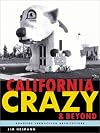
California Crazy and Beyond: Roadside Vernacular Architecture
By Jim Heimann
Chronicle Books (2001)
Review by Karl Wolff
As a kid I sat in the backseat of the Oldsmobile station wagon as our family took the annual trip "up north." Road trips could become boring affairs, the rolling hills of Wisconsin farm country not exactly riveting to someone raised on Transformers, dinosaur books, and Choose Your Own Adventure. "Another farm? Are we there yet?" Cue eye-roll and audible sigh. Luckily the road show more trip wasn't without the occasional flash of novelty and oddity. On the way up to Tomahawk, Wisconsin, the very long four hours (to Single-Digit Aged Me) I saw Delafield's Smiley Barn and the Mauston, Wisconsin gas station that has a semi-truck shishkebabed on the sign. In Greater Milwaukee there stands a lone dinosaur holding a large bone, the relic of Johnson's Park and Mini Golf. I remember seeing the kitschy assemblage of dinosaurs, monsters, and mythical creatures dotting the mini-golf course. I never golfed there, but I was driven past it countless times. During high school, one of my friends worked at the State Fair in the Root Beer Barrel. Guess what he sold?
Nostalgia aside, I've long been fascinated by roadside attractions. Unlike Beaux-Arts architecture or Roman ruins, it is a facet of American cultural and architectural history usually viewed with dismissive scorn from highbrow academia or an overly simplified view of the past. The challenge remains how to look at these roadside attractions without getting bogged down in kitsch or nostalgia. California Crazy and Beyond: Roadside Vernacular Architecture by Jim Heimann seeks to investigate this oddball strain of Americana. Included in this updated edition is an essay by architectural historian David Gebhard. He uses the term "programatic" (his spelling) to describe this cultural trend. Heimann narrows the focus of the book to eccentric buildings from California during the Great Depression. "California Crazy" thrived in the brief window of 1924 to 1934.
Heimann explains how "programmatic architecture" thrived in California. A unique confluence of events occurred. First, California existed as a beacon of individualism and eccentricity. Even before John Steinbeck made the state famous as a promised land for the Okies, California beckoned. Second, wide-open expanses of cheap land became available. This real estate had few legal restrictions about what could be built. Third, California in the Twenties supported a growing "car culture." Due to Henry Ford's innovations in mass production, the Model T became cheap and readily available. The Great Depression turned American entrepreneurial into a desperate rush to grab at a shrinking customer base. In their desperation, American businesses created cheap and inventive buildings to sell their wares. Gebhard explains how these buildings operated in two ways: direct and indirect associations. (This text would be a wonderful introduction into the concept of semantics.) If you're selling shoes, what better way to sell than out of a giant shoe? Or selling chili from a building shaped like a dog? (Those who have seen The Rocketeer should remember the dog building.)
At its most basic, these oddball vernacular buildings existed for one purpose: to sell. An eccentric structure is the best free advertisement. Memorable and the consumer immediately associates the building with the product. Heimann widens his survey to include architecture throughout the United States. He ends with a brief look at statuary (Muffler Man! Big Boy!) and vehicles (The Wienermobile!). The "art car" phenomenon is tangentially related here, but not included due to its non-commercial purpose.
It would be easy to dismiss these buildings as culprits of urban blight, bad taste, and crass commercialism. But Gebhard in his Introduction traces the genealogy of these structures back to the eighteenth and nineteenth century. The genealogy includes both highbrow and lowbrow strands. The highbrow comes from the various national and ethnic revivalisms that thrived throughout the centuries. Parliament in London is a famous example of Gothic Revival. The US Capitol is Greek Revival, giving visitors, lawmakers, and lobbyists mental associations with the grand tradition of Greek democracy. The Chrysler Building (see my essay on Matthew Barney's Cremaster Cycle) has gargoyles shaped like Chrysler hood ornaments and other architectural elements were lifted from car design. Yet the Chrysler Building epitomizes Art Deco elegance and cultural legitimacy. On the lowbrow end, World's Fairs had attractions and buildings in fantastical shapes.
Heimann traces the California Crazy architecture from its inception during the Roaring Twenties into the present. After suffering through the Second World War because of fuel and material rationing, oddball architecture bounced back with Googie Style. Increased building regulations put a damper on more brazen designs. In the end, oddball architecture lives on. Las Vegas sports gigantic Roman palaces, a faux-New York City skyline, and a medieval castle. But like Las Vegas, these remaining buildings across the nation face demolition, abandonment, and community neglect. Not all can be saved. Yet it should be instrumental that local community's re-assess these aging relics of a by-gone era. The best cityscapes mix the old and the new, kitsch and classical, commercial and non-commercial. Establishing the best mix is never an easy task. But Heimann presents a riveting summary of why these oddball architectural structures should be preserved.
http://www.cclapcenter.com/2015/08/american_odd_california_crazy_.html show less
By Jim Heimann
Chronicle Books (2001)
Review by Karl Wolff
As a kid I sat in the backseat of the Oldsmobile station wagon as our family took the annual trip "up north." Road trips could become boring affairs, the rolling hills of Wisconsin farm country not exactly riveting to someone raised on Transformers, dinosaur books, and Choose Your Own Adventure. "Another farm? Are we there yet?" Cue eye-roll and audible sigh. Luckily the road show more trip wasn't without the occasional flash of novelty and oddity. On the way up to Tomahawk, Wisconsin, the very long four hours (to Single-Digit Aged Me) I saw Delafield's Smiley Barn and the Mauston, Wisconsin gas station that has a semi-truck shishkebabed on the sign. In Greater Milwaukee there stands a lone dinosaur holding a large bone, the relic of Johnson's Park and Mini Golf. I remember seeing the kitschy assemblage of dinosaurs, monsters, and mythical creatures dotting the mini-golf course. I never golfed there, but I was driven past it countless times. During high school, one of my friends worked at the State Fair in the Root Beer Barrel. Guess what he sold?
Nostalgia aside, I've long been fascinated by roadside attractions. Unlike Beaux-Arts architecture or Roman ruins, it is a facet of American cultural and architectural history usually viewed with dismissive scorn from highbrow academia or an overly simplified view of the past. The challenge remains how to look at these roadside attractions without getting bogged down in kitsch or nostalgia. California Crazy and Beyond: Roadside Vernacular Architecture by Jim Heimann seeks to investigate this oddball strain of Americana. Included in this updated edition is an essay by architectural historian David Gebhard. He uses the term "programatic" (his spelling) to describe this cultural trend. Heimann narrows the focus of the book to eccentric buildings from California during the Great Depression. "California Crazy" thrived in the brief window of 1924 to 1934.
Heimann explains how "programmatic architecture" thrived in California. A unique confluence of events occurred. First, California existed as a beacon of individualism and eccentricity. Even before John Steinbeck made the state famous as a promised land for the Okies, California beckoned. Second, wide-open expanses of cheap land became available. This real estate had few legal restrictions about what could be built. Third, California in the Twenties supported a growing "car culture." Due to Henry Ford's innovations in mass production, the Model T became cheap and readily available. The Great Depression turned American entrepreneurial into a desperate rush to grab at a shrinking customer base. In their desperation, American businesses created cheap and inventive buildings to sell their wares. Gebhard explains how these buildings operated in two ways: direct and indirect associations. (This text would be a wonderful introduction into the concept of semantics.) If you're selling shoes, what better way to sell than out of a giant shoe? Or selling chili from a building shaped like a dog? (Those who have seen The Rocketeer should remember the dog building.)
At its most basic, these oddball vernacular buildings existed for one purpose: to sell. An eccentric structure is the best free advertisement. Memorable and the consumer immediately associates the building with the product. Heimann widens his survey to include architecture throughout the United States. He ends with a brief look at statuary (Muffler Man! Big Boy!) and vehicles (The Wienermobile!). The "art car" phenomenon is tangentially related here, but not included due to its non-commercial purpose.
It would be easy to dismiss these buildings as culprits of urban blight, bad taste, and crass commercialism. But Gebhard in his Introduction traces the genealogy of these structures back to the eighteenth and nineteenth century. The genealogy includes both highbrow and lowbrow strands. The highbrow comes from the various national and ethnic revivalisms that thrived throughout the centuries. Parliament in London is a famous example of Gothic Revival. The US Capitol is Greek Revival, giving visitors, lawmakers, and lobbyists mental associations with the grand tradition of Greek democracy. The Chrysler Building (see my essay on Matthew Barney's Cremaster Cycle) has gargoyles shaped like Chrysler hood ornaments and other architectural elements were lifted from car design. Yet the Chrysler Building epitomizes Art Deco elegance and cultural legitimacy. On the lowbrow end, World's Fairs had attractions and buildings in fantastical shapes.
Heimann traces the California Crazy architecture from its inception during the Roaring Twenties into the present. After suffering through the Second World War because of fuel and material rationing, oddball architecture bounced back with Googie Style. Increased building regulations put a damper on more brazen designs. In the end, oddball architecture lives on. Las Vegas sports gigantic Roman palaces, a faux-New York City skyline, and a medieval castle. But like Las Vegas, these remaining buildings across the nation face demolition, abandonment, and community neglect. Not all can be saved. Yet it should be instrumental that local community's re-assess these aging relics of a by-gone era. The best cityscapes mix the old and the new, kitsch and classical, commercial and non-commercial. Establishing the best mix is never an easy task. But Heimann presents a riveting summary of why these oddball architectural structures should be preserved.
http://www.cclapcenter.com/2015/08/american_odd_california_crazy_.html show less

Typical ads until the last section focusing on war-time ads. Cannon towels has a lovely two page spread of buck naked and seductive doughboys romping in a swimming hole.
American Locomotive has much more pointed war supportive ads - 'A High Honor for your Daughter' recounts Nazi eugenics shipping Austrian and Hungarian girls to the Northern countries for forced breeding. Others by the same company - 'Ever Face a Firing Squad?' and 'They'll Give You a Fresh Start in Life.'
Another show more acknowledging the practice of slave labor. A few extremely gruesome; most extolling American technology.
All text repeated in German, French and Spanish. show less
American Locomotive has much more pointed war supportive ads - 'A High Honor for your Daughter' recounts Nazi eugenics shipping Austrian and Hungarian girls to the Northern countries for forced breeding. Others by the same company - 'Ever Face a Firing Squad?' and 'They'll Give You a Fresh Start in Life.'
Another show more acknowledging the practice of slave labor. A few extremely gruesome; most extolling American technology.
All text repeated in German, French and Spanish. show less
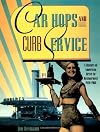
I was in the library in the Architecture section and saw this book. The drive-in is a perfect example of where two major American desires intersect. Americans love to eat (just look at your fellow citizens if not at your own stomach). Americans love to be in their cars (even parked, talking into their cell phones). Food + car = drive-in.
From the first Pig Stand in Texas to the last Bob's Big Boy, they're all here. A lot of the history related here has to do with the buildings and how to show more dazzle the passing motorist. Car hops came later. One recurring feature was the central pylon jutting skyward (ahem!).
At first, the fare was mostly BBQ pork sandwiches and "chicken in the rough" before the proprietors figured out that they could serve more people faster with burgers. Thus, the ubiquitous burger.
This is pretty well written and the interesting facts just keep coming. Contrary to popular belief, the drive-in was in decline by the time teenagers in the 50's were hanging out at them. And did you know that Hollywood stars would frequent the drive-ins near the studios back in the 30's? show less
From the first Pig Stand in Texas to the last Bob's Big Boy, they're all here. A lot of the history related here has to do with the buildings and how to show more dazzle the passing motorist. Car hops came later. One recurring feature was the central pylon jutting skyward (ahem!).
At first, the fare was mostly BBQ pork sandwiches and "chicken in the rough" before the proprietors figured out that they could serve more people faster with burgers. Thus, the ubiquitous burger.
This is pretty well written and the interesting facts just keep coming. Contrary to popular belief, the drive-in was in decline by the time teenagers in the 50's were hanging out at them. And did you know that Hollywood stars would frequent the drive-ins near the studios back in the 30's? show less
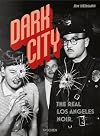
As advertised, a whirlwind tour through the seedy history of LA. Very nicely done & produced, with ample crime scene photos. There are several pulp magazine reproduction inserts that help set the mood. The last chapter is a review of Hollywood noir. Very well done, a must for any noir fan.
Lists
You May Also Like


Associated Authors
Statistics
- Works
- 62
- Also by
- 2
- Members
- 3,747
- Popularity
- #6,766
- Rating
- 3.9
- Reviews
- 17
- ISBNs
- 104
- Languages
- 5
- Favorited
- 1
