
Simon Young (3)
Author of Designer Evolution: A Transhumanist Manifesto
For other authors named Simon Young, see the disambiguation page.
Works by Simon Young
Tagged
Common Knowledge
There is no Common Knowledge data for this author yet. You can help.
Members
Reviews
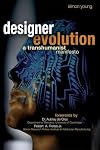
I heartily agree with Young when he says that _Homo sapiens_ (or elements thereof) should use science to control its own future evolution so as to foster the emergence of a successor species, one that would be free of such scourges as theism and short lifespans. The "bio-Luddites" who oppose this idea exhibit "malanthropy, hubraphobia, entelephobia, noophobia, sciphobia, technophobia, and euphobia." (You wouldn't want to suffer from any of those, would you? [!]) Much of the book seeks to show more provide "an outline of transhumanism as a totalized philosophical system in the Western tradition."
Young makes things harder for himself, it seems to me, by taking a libertarian political stance, and thus adopting a too-positive view of humanity as it is now. (Libertarians, apart from "socialist libertarians" such as Chomsky and me [?!], fail to recognize that strong government is needed to protect people from each other.) The case for transhumanism becomes even stronger when present-era humanity's incorrigible cussedness is conceded.
Another bothersome contention of Young's is that a certain _dualist_ position on the mind/brain issue is correct, albeit not the ridiculous immortal-souls variety of dualism. I have always found anti-dualism arguments, such as those of philosopher Daniel Dennett, to be completely convincing. On the other hand, I am also sympathetic to the idea that the mind is, in principle, copiable and/or uploadable, and authors such as Young and roboticist Hans Moravec claim that copiability/uploadability entails (a kind of) dualism. I wonder if they are right, and I wonder how Dennett would answer them. (Dennett is friendly toward strong AI, which contemplates the possibility of artificial consciousness and, I would think, copiability/uploadability.) Maybe it's all nothing but arbitrary terminology, but I sure don't want to be classed as any kind of dualist if it's at all avoidable. show less
Young makes things harder for himself, it seems to me, by taking a libertarian political stance, and thus adopting a too-positive view of humanity as it is now. (Libertarians, apart from "socialist libertarians" such as Chomsky and me [?!], fail to recognize that strong government is needed to protect people from each other.) The case for transhumanism becomes even stronger when present-era humanity's incorrigible cussedness is conceded.
Another bothersome contention of Young's is that a certain _dualist_ position on the mind/brain issue is correct, albeit not the ridiculous immortal-souls variety of dualism. I have always found anti-dualism arguments, such as those of philosopher Daniel Dennett, to be completely convincing. On the other hand, I am also sympathetic to the idea that the mind is, in principle, copiable and/or uploadable, and authors such as Young and roboticist Hans Moravec claim that copiability/uploadability entails (a kind of) dualism. I wonder if they are right, and I wonder how Dennett would answer them. (Dennett is friendly toward strong AI, which contemplates the possibility of artificial consciousness and, I would think, copiability/uploadability.) Maybe it's all nothing but arbitrary terminology, but I sure don't want to be classed as any kind of dualist if it's at all avoidable. show less
Statistics
- Works
- 1
- Members
- 42
- Popularity
- #357,756
- Rating
- 3.0
- Reviews
- 1
- ISBNs
- 45
- Languages
- 3