
Kathy Hoopmann
Author of All Cats Have Asperger Syndrome
About the Author
Kathy Hoopmann is the author of the award-winning book, All Cats Have Asperger Syndrome, published by Jessica Kingsley Publishers. She has also written the Asperger Adventure series for younger children; Blue Bottle Mystery, Of Mice and Aliens, and Lisa and the Lacemaker as well as an Asperger teen show more fiction book, Haze, also published by Jessica Kingsley Publishers. Currently she lives in Dubai with her husband and three children. show less
Series
Works by Kathy Hoopmann
Tagged
Common Knowledge
- Birthdate
- 20th century
- Gender
- female
- Birthplace
- Toowoomba, Queensland, Australia
- Places of residence
- Brisbane, Queensland, Australia
Dubai, United Arab Emirates - Associated Place (for map)
- Queensland, Australia
Members
Reviews
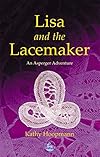
Lisa lives largely in a world of her own, tolerating a select few friends and family members but otherwise extremely sensitive to sensory over-stimulation. But that doesn't mean she doesn't have a strong imagination or a rich mental landscapes; and it doesn't mean she is unable to focus on things that matter to her, or to say things as she sees them. For Lisa, as is immediately made clear, has Asperger's Syndrome.
One day, in the backyard of her only friend Ben---who also has Asperger's---she show more unexpectedly comes across a door obscured by undergrowth. This turns out to be the lost and forgotten servants' quarters of the Victorian house in which Ben's family now live. In exploring it she starts to uncover its secrets, leading to family histories involving long lost loves, the ancient art of lacemaking, and the ghost of one of the dwelling's former residents.
Lisa and the Lacemaker is an engaging short read aimed, I would guess, at pre-teens. The author, based in Australia's Queensland, has crafted a charming ghost story that is likely to appeal to all bookish youngsters but most especially those with Asberger's Syndrome. The publishers are best known for their works on autism spectrum, social work and other therapies, for example, with fiction and non-fiction lists covering mental health, counselling and palliative care. As a result, it's hard to avoid the educational emphasis of this children's novel, highlighting as it does the kind of emotions, behaviours and mental processes that many on the spectrum (and not just Lisa) may be associated with. As someone on the spectrum, I can vouch for many of the symptoms that Lisa displays as being typical of the condition.
But does that make the entertaining aspect of this fiction poorer? I don't think so: as a narrative of discovery and of twists and turns it's for children of all ages and abilities, whether on the spectrum or not. Lisa finds a new friend in a great aunt, an adult who truly understands her; she has a new interest---uncovering the dwelling's backstory---which she can obsess about; and she comes across and then develops a new skill with a hobby that relies on care and precision, namely lacemaking.
That this interlace, and especially the crucial thread known as the gimp, becomes a metaphor for Lisa to engage more with society is just one, maybe the most important, aspect that adds to the mini-tapestry of the narrative. And one can argue---as Lisa and the Lacemaker itself illustrates---that much fiction includes an implicit moral in its telling, teaching us lessons about life and giving guidance on how to think and behave. show less
One day, in the backyard of her only friend Ben---who also has Asperger's---she show more unexpectedly comes across a door obscured by undergrowth. This turns out to be the lost and forgotten servants' quarters of the Victorian house in which Ben's family now live. In exploring it she starts to uncover its secrets, leading to family histories involving long lost loves, the ancient art of lacemaking, and the ghost of one of the dwelling's former residents.
Lisa and the Lacemaker is an engaging short read aimed, I would guess, at pre-teens. The author, based in Australia's Queensland, has crafted a charming ghost story that is likely to appeal to all bookish youngsters but most especially those with Asberger's Syndrome. The publishers are best known for their works on autism spectrum, social work and other therapies, for example, with fiction and non-fiction lists covering mental health, counselling and palliative care. As a result, it's hard to avoid the educational emphasis of this children's novel, highlighting as it does the kind of emotions, behaviours and mental processes that many on the spectrum (and not just Lisa) may be associated with. As someone on the spectrum, I can vouch for many of the symptoms that Lisa displays as being typical of the condition.
But does that make the entertaining aspect of this fiction poorer? I don't think so: as a narrative of discovery and of twists and turns it's for children of all ages and abilities, whether on the spectrum or not. Lisa finds a new friend in a great aunt, an adult who truly understands her; she has a new interest---uncovering the dwelling's backstory---which she can obsess about; and she comes across and then develops a new skill with a hobby that relies on care and precision, namely lacemaking.
That this interlace, and especially the crucial thread known as the gimp, becomes a metaphor for Lisa to engage more with society is just one, maybe the most important, aspect that adds to the mini-tapestry of the narrative. And one can argue---as Lisa and the Lacemaker itself illustrates---that much fiction includes an implicit moral in its telling, teaching us lessons about life and giving guidance on how to think and behave. show less
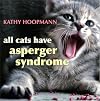
I normally dispise cutesy books like this and I am not really a cat person. But I saw this and started flipping through it, nodding my head-almost crying in the Barnes and Nobles. It's such a well-written, simple book that is very heartwarming, charming, and funny. It makes finding more things to love about my son so much more fun! I've given this book as a gift to several family members to explain AS to them in a way that reminds them that there are wonderful things about my son, many of show more them can even be attributed to his AS. It's very positive. I also recommend this one to teachers of inclusion classes who will have a child with an ASD in their classroom, to help them and their students know what to expect in their new classmate. show less
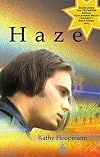
I picked this YA book to read because of the Asperger's theme. My brother has severe autism and I met one man with Asperger's at work.
I am split on this book. I thought the protrayal of Seb was great, how he interacted with people really fit. And it was realistic that the other teenagers at school did not have a clue of how to interact wr ith him or any understanding of Asperger's. I wondered why his parents did not know anything about why he was different. I thought that was unrealistic. He show more is great with numbers and computers but maybe that is becoming a stereotype of people with Asperger's. There are other fields like music and art that could be explored.
Madeline, who later bonds with Seb and learns the best way to commicate with him has a demented mother who constantly belittles her and abuses her physically and emotionally.Madeline hid her troubles for fear of more punishment from her mother. I really do not understand how she was able to survive her situation except for the help of her granny.
I think I would have made Madeline into a book of her own. I did care about both of the main characters but wish that the author developed them more. show less
I am split on this book. I thought the protrayal of Seb was great, how he interacted with people really fit. And it was realistic that the other teenagers at school did not have a clue of how to interact wr ith him or any understanding of Asperger's. I wondered why his parents did not know anything about why he was different. I thought that was unrealistic. He show more is great with numbers and computers but maybe that is becoming a stereotype of people with Asperger's. There are other fields like music and art that could be explored.
Madeline, who later bonds with Seb and learns the best way to commicate with him has a demented mother who constantly belittles her and abuses her physically and emotionally.Madeline hid her troubles for fear of more punishment from her mother. I really do not understand how she was able to survive her situation except for the help of her granny.
I think I would have made Madeline into a book of her own. I did care about both of the main characters but wish that the author developed them more. show less
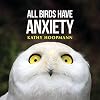
Impulse grab at the library. Much better than I even hoped! Very short and accessible so the shelving of juv. nf makes sense, but really for all ages. I wouldn't mind owning this for the next time I feel overwhelmed. Funny photos of birds really help, and so does the empathy & guidance in the text.
I particularly liked the penguin depicted as having social anxiety. Yes, I know, it was just grooming, but still awfully cute. There is a 'key' to the birds' species in the back, but it's not a show more science book, and it's not to be read as one.
There are companion books and I will absolutely look for them. show less
I particularly liked the penguin depicted as having social anxiety. Yes, I know, it was just grooming, but still awfully cute. There is a 'key' to the birds' species in the back, but it's not a show more science book, and it's not to be read as one.
There are companion books and I will absolutely look for them. show less
Lists
Awards


You May Also Like


Statistics
- Works
- 24
- Members
- 1,111
- Popularity
- #23,120
- Rating
- 3.9
- Reviews
- 56
- ISBNs
- 51
- Languages
- 5