
Cheryl Willis Hudson
Author of Bright Eyes, Brown Skin
About the Author
Image credit: via author's website
Works by Cheryl Willis Hudson
Hold Christmas In Your Heart: African American Songs, Poems, and Stories for the Holidays (1995) 59 copies, 1 review
Recognize!: An Anthology Honoring and Amplifying Black Life (2021) — Editor; Narrator, some editions — 55 copies, 3 reviews
Tagged
Common Knowledge
- Canonical name
- Hudson, Cheryl Willis
- Other names
- HUDSON, Cheryl Willis
HUDSON, Cheryl - Birthdate
- 1948-04-07
- Gender
- female
- Education
- Oberlin College
- Occupations
- writer
editor
art director
art editor
book designer - Organizations
- Just Us Books (cofounder ∙ editorial director)
Sankofa Books
Marimba Books
Authors Guild
PEN America
Society of Book Writers and Illustrators - Awards and honors
- Stephen Crane Award
Carle Honors (2022) - Relationships
- Hudson, Wade (husband)
- Nationality
- USA
- Birthplace
- Portsmouth, Virginia, USA
- Places of residence
- Portsmouth, Virginia, USA
Cambridge, Massachusetts, USA
New Jersey, USA - Associated Place (for map)
- USA
Members
Reviews
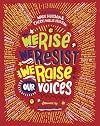
This book is extraordinary, and by some coincidence, I had brought it home from my library to read the same week that my 17 year-old daughter, exhilarated by opening night of the musical she is stage managing, fighting a cold, and exhausted from school and the show engaged me in a passionate conversation that ended up with her in tears and hysterically enraged at the state of the country and the planet and "if ONE MORE adult says 'these are problems for your generation to solve...'". You show more know, as the exhausted, stressed out, politically aware, knowledgable but somewhat know-it-all teenager will. Then I picked up this book. The book was inspired by the editors' great niece who was distraught after the 2016 election as she "had heard the cruel and hateful words that had been spewed at women, those with disabilities, people of different faiths, and people of color." The book is an attempt to reassure and comfort the young people of today - particularly those of color - to not be afraid or despondent, but to raise their voices and make a difference. It is a collection of open letters, poems, stories, illustrations, photos, and essays by more than 40 contributors including Sharon Draper, Kwame Alexander, Rita Williams-Garcia, Hena Khan, Jacqueline Woodson, and many more. It puts into perspective the struggle of this generation of young people with those who came before and paved the way. It is calming, soul-stirring, uplifting, and inspiring. I never give stars, but this one earns 5 from me, and I will be purchasing as gifts for just about every young person I know. show less
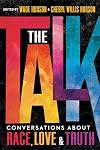
Each brief piece in this concise collection packs a punch. Many are in the form of letters or poems to the creators' children, or conversations (real or imagined) with them. Authors/artists are African-American, immigrants, bilingual, Jewish, Cherokee, and more; "The Talk" varies depending on the background and identity, and this variety and complexity is what makes this such a valuable collection. Everyone in the U.S. must confront the role of racism and prejudice in our lives and the lives show more of others.
Quotes
Measures of success in the mainstream culture of the U.S. do not mirror ours....Achievements in school or at work are never more important than caring about other living creatures. ("The Way of the Anigiduwagi," Traci Sorrell, 29-30)
At different times throughout history, selfish men have created unjust, racist laws and have spread racist attitudes as a way to divide the people they take advantage of. ("Why Are There Racist People?" Duncan Tonatiuh, 42)
Racism is wrong. It is important to condemn it, but it is also important to think critically and ask where racism comes from....Recognizing our similarities is a powerful way to combat prejudice. (46-47)
I do not want to raise you to be afraid.
But I do want you to be aware.
I want to help you grow.
I want to help you move through the world outside. ("My Olmec," Selina Alko, 60)
Our words are beautiful. Our words belong here. They give you more ways to understand the people around you....Remember that no language is better than another. No tongue makes one person more real or more important that someone else. And no great country ever tried to silence its people or make them all the same. ("Hablar," Meg Medina, 91)
"Being a polluter is a lot like being a racist. I hate pollution. And I hate racism. But I sit here and I benefit from them both." ("Our Inheritance," Adam Gidwitz, 101)
"Some folk will always
call you outside your name,"
she explained.
"Honey,
you can't stop hateful people
slinging hurtful words
like stones.
But who says
you have to pick them up
and put them in your pocket?"
("Tough Tuesday," Nikki Grimes, 106)
And while I want you to be aware of potential danger, you have also been born with tremendous privileges, things that could make you unaware of other people's struggles. We all have important issues that we are initially unaware of, but it is our responsibility to learn. Obliviousness is not an excuse. ("The Road Ahead," Minh Lê, 111)
Stories have such long ghosts. ("Mazes," Christopher Myers, 120) show less
Quotes
Measures of success in the mainstream culture of the U.S. do not mirror ours....Achievements in school or at work are never more important than caring about other living creatures. ("The Way of the Anigiduwagi," Traci Sorrell, 29-30)
At different times throughout history, selfish men have created unjust, racist laws and have spread racist attitudes as a way to divide the people they take advantage of. ("Why Are There Racist People?" Duncan Tonatiuh, 42)
Racism is wrong. It is important to condemn it, but it is also important to think critically and ask where racism comes from....Recognizing our similarities is a powerful way to combat prejudice. (46-47)
I do not want to raise you to be afraid.
But I do want you to be aware.
I want to help you grow.
I want to help you move through the world outside. ("My Olmec," Selina Alko, 60)
Our words are beautiful. Our words belong here. They give you more ways to understand the people around you....Remember that no language is better than another. No tongue makes one person more real or more important that someone else. And no great country ever tried to silence its people or make them all the same. ("Hablar," Meg Medina, 91)
"Being a polluter is a lot like being a racist. I hate pollution. And I hate racism. But I sit here and I benefit from them both." ("Our Inheritance," Adam Gidwitz, 101)
"Some folk will always
call you outside your name,"
she explained.
"Honey,
you can't stop hateful people
slinging hurtful words
like stones.
But who says
you have to pick them up
and put them in your pocket?"
("Tough Tuesday," Nikki Grimes, 106)
And while I want you to be aware of potential danger, you have also been born with tremendous privileges, things that could make you unaware of other people's struggles. We all have important issues that we are initially unaware of, but it is our responsibility to learn. Obliviousness is not an excuse. ("The Road Ahead," Minh Lê, 111)
Stories have such long ghosts. ("Mazes," Christopher Myers, 120) show less
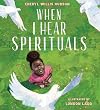
An exuberant and picturesque celebration of African American spirituals.
A Black child with dark skin and an Afro puff waxes rhapsodic about spirituals in free verse, while choruses from relevant songs accompany the youngster’s words. Sometimes the narrator feels mournful while listening to the music, and “a big lump / Gets stuck / In my throat.” The chorus from “Nobody Knows the Trouble I’ve Seen” appears. But this music can be healing, too; here, Hudson includes an excerpt from show more “There Is a Balm in Gilead.” And sometimes the music moves the young protagonist to “stomp my feet” and “sway to the beat”; the opposite page presents the chorus from “Bosom of Abraham.” Pairing beautifully with the well-chosen lyrics and Hudson’s rhythmic, affirming text, Ladd’s richly saturated mixed-media illustrations demonstrate the cultural and historical importance of these songs. Churchgoers lift their hands in praise, Harriet Tubman leads her people to freedom, and Martin Luther King Jr., Coretta Scott King, and John Lewis raise their voices in protest. The use of cut paper gives the artwork a heavily textured look; emotion feels carved into every spread. Thorough backmatter discusses how spirituals have allowed Black Americans to forge an identity and chronicle their history; Hudson also expands on the people and events depicted in the illustrations.
A deeply resonant work that speaks to these songs’ historical—and present—meaning. (author’s note, glossary, bibliography) (Informational picture book. 6-10)
-Kirkus Review show less
A Black child with dark skin and an Afro puff waxes rhapsodic about spirituals in free verse, while choruses from relevant songs accompany the youngster’s words. Sometimes the narrator feels mournful while listening to the music, and “a big lump / Gets stuck / In my throat.” The chorus from “Nobody Knows the Trouble I’ve Seen” appears. But this music can be healing, too; here, Hudson includes an excerpt from show more “There Is a Balm in Gilead.” And sometimes the music moves the young protagonist to “stomp my feet” and “sway to the beat”; the opposite page presents the chorus from “Bosom of Abraham.” Pairing beautifully with the well-chosen lyrics and Hudson’s rhythmic, affirming text, Ladd’s richly saturated mixed-media illustrations demonstrate the cultural and historical importance of these songs. Churchgoers lift their hands in praise, Harriet Tubman leads her people to freedom, and Martin Luther King Jr., Coretta Scott King, and John Lewis raise their voices in protest. The use of cut paper gives the artwork a heavily textured look; emotion feels carved into every spread. Thorough backmatter discusses how spirituals have allowed Black Americans to forge an identity and chronicle their history; Hudson also expands on the people and events depicted in the illustrations.
A deeply resonant work that speaks to these songs’ historical—and present—meaning. (author’s note, glossary, bibliography) (Informational picture book. 6-10)
-Kirkus Review show less
"An anthology of poetry, essays, short stories and art designed to lift children up, especially children from traditionally marginalized communities, during difficult times.
This collection encourages America’s children to remember their history, learn from it, and choose to be kind in the face of hatred, racism, and oppression. “Throughout history, kids like you / were right there. / With picket signs and petitions….They changed this world for the better. / And you will too,” Kelly show more Starling Lyons tells readers in her poem “Drumbeat for Change.” Featuring contributions from such writers as Jacqueline Woodson, Ellen Oh, and Hena Khan, and an equally august lineup of illustrators, including Rafael López, Vanessa Brantley-Newton, and Javaka Steptoe, every work packs an emotional punch. In his poem “A Thousand Winters,” Kwame Alexander wonders “if words, sentences, and books aren’t enough, anymore” as he reflects on the state of the world and hard conversations with his daughter. A stunning collage by Ekua Holmes accompanies Alexander’s poem; in it, a vivid, violet sky surrounds a sleepy black girl sitting atop her father’s shoulders. Every work in this beautiful collection feels personal and is meant to inspire and comfort.
A love song from children’s literature’s brightest stars to America’s Indigenous children and children of color, encouraging them to be brave and kind. (contributor biographies, index) (Anthology. 8-18)" A Kirkus Starred Review, www.kirkusreviews.com show less
This collection encourages America’s children to remember their history, learn from it, and choose to be kind in the face of hatred, racism, and oppression. “Throughout history, kids like you / were right there. / With picket signs and petitions….They changed this world for the better. / And you will too,” Kelly show more Starling Lyons tells readers in her poem “Drumbeat for Change.” Featuring contributions from such writers as Jacqueline Woodson, Ellen Oh, and Hena Khan, and an equally august lineup of illustrators, including Rafael López, Vanessa Brantley-Newton, and Javaka Steptoe, every work packs an emotional punch. In his poem “A Thousand Winters,” Kwame Alexander wonders “if words, sentences, and books aren’t enough, anymore” as he reflects on the state of the world and hard conversations with his daughter. A stunning collage by Ekua Holmes accompanies Alexander’s poem; in it, a vivid, violet sky surrounds a sleepy black girl sitting atop her father’s shoulders. Every work in this beautiful collection feels personal and is meant to inspire and comfort.
A love song from children’s literature’s brightest stars to America’s Indigenous children and children of color, encouraging them to be brave and kind. (contributor biographies, index) (Anthology. 8-18)" A Kirkus Starred Review, www.kirkusreviews.com show less
Lists
Awards


You May Also Like


Associated Authors
Statistics
- Works
- 32
- Members
- 3,147
- Popularity
- #8,113
- Rating
- 3.9
- Reviews
- 80
- ISBNs
- 111
- Languages
- 2
- Favorited
- 1