
Michael Gilbert (1912–2006)
Author of Smallbone Deceased
About the Author
Series
Works by Michael Gilbert
The Two Footmen [Short story] 3 copies
Signal Tresham [Short story] 2 copies
The Uninvited [short story] 2 copies
Windfall 1 copy
Skår i de fine kopper 1 copy
A CHAVE DO ENIGMA 1 copy
Eat, Drink and Be Murdered: A Food and Drink Anthology: 154 (British Library Crime Classics) (2026) 1 copy
Rum utan utsikt 1 copy
The Spoilers [Short Story] 1 copy
Counterplot [Short story] 1 copy
Early Warning [Short story] 1 copy
Lost Leader [Short story] 1 copy
Caccia all'uomo 1 copy
The Shot in Question 1 copy
Old Mr. Marten [Short story] 1 copy
Emergency Exit [Short story] 1 copy
The Wrong Fox [short story] 1 copy
Associated Works
The New Adventures of Sherlock Holmes: Original Stories by Eminent Mystery Writers (1976) — Contributor — 391 copies, 4 reviews
Murder on the Menu: Cordon Bleu Stories of Crime and Mystery, Volume 1 (1984) — Contributor — 211 copies, 2 reviews
Alfred Hitchcock Presents: Stories to Be Read with the Door Locked (1975) — Contributor — 187 copies, 4 reviews
Who Killed Father Christmas? and Other Seasonal Mysteries (2023) — Contributor — 77 copies, 2 reviews
Bodies from the Library 5: Forgotten Stories of Mystery and Suspense from the Golden Age of Detection (2022) — Contributor — 47 copies, 1 review
The Mammoth Book of Short Spy Novels: Twelve Espionage Masterpieces (1986) — Contributor — 36 copies
Murder on the Menu: Cordon Bleu Stories of Crime and Mystery, Volume 2 (1993) — Contributor — 20 copies
The Year's 25 Finest Crime and Mystery Stories: First Annual Edition (1992) — Contributor — 16 copies
Ellery Queen's headliners; 20 stories from Ellery Queen's mystery magazine. (1972) — Contributor — 15 copies
Academy Mystery Novellas: Women Sleuths, Police Procedurals, Locked Room Puzzles, Great British Detectives (1991) — Contributor — 13 copies
More Murder on Cue: Stage, Screen & Radio Favorites: Stories from Ellery Queen's Mystery Magazine (1990) — Contributor — 9 copies
A Choice of Murders: 23 Stories by Members of the Mystery Writers of America (1958) — Contributor — 5 copies
Killers of the Mind: A Collection of Stories by the Mystery Writers of America (1974) — Contributor — 5 copies
Exciting Short Stories ; The Unstoppable Man ; The Most Dangerous Game ; The Homesick Buick ; Leiningen Versus the Ants ; The Monkey's Paw ; Remember the Night ; The Baby in… (1960) — Contributor — 4 copies
Suspense, October 1960 [Vol. 3, No. 10] — Contributor — 3 copies
Edgar Wallace Mystery Magazine Vol. 02, No. 12: July, 1965 — Contributor — 2 copies
The Long Journey Home | Someone At The Door | The Grub-And-Stakers Quilt A Bee (1985) — Contributor — 2 copies
Ellery Queen's Mystery Magazine - Australian Edition No 137 - Nov 1958 (1958) — Contributor — 1 copy
The Amateur: and Other Modern Stories (English Language Learning: Reading Scheme) (1979) — Contributor — 1 copy
Tagged
Common Knowledge
- Canonical name
- Gilbert, Michael
- Legal name
- Gilbert, Michael Francis
- Birthdate
- 1912-07-17
- Date of death
- 2006-02-08
- Gender
- male
- Education
- University of London (LL.B|1937)
Blundell's School
St. Peters School - Occupations
- solicitor
playwright
mystery writer
book critic - Organizations
- Trower, Still & Keeling
Lincoln's Inn
British Army (WWII) - Awards and honors
- MWA Grand Master (1987)
Cartier Diamond Dagger (1994)
Order of the British Empire (Commander, 1980)
Bouchercon Lifetime Achievement Award (1990)
Territorial Decoration - Relationships
- Gilbert, Harriett (daughter)
- Nationality
- UK
- Birthplace
- Billinghay, Lincolnshire, England, UK
- Places of residence
- Kent, England, UK
- Place of death
- Luddesdown, Kent, England, UK
- Map Location
- England, UK
Members
Reviews
Death Has Deep Roots: A Second World War Mystery (British Library Crime Classics) by Michael Gilbert
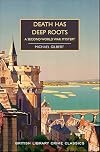
This book is an excellent blend of whodunnit murder mystery, detective thriller and courtroom drama. The story is set in post WW2 years, but there's a backstory centres on events occurring in France during the German Occupation in the war. The language is not dated even though the book was written in 1951.
It begins with an accused killer changing her legal defence team on the eve of the beginning of her trial. Her previous team wanted her to plead guilty and throw herself n the mercy of the show more court. The suggestion is that they did not want to mount a vigorous defence out of either laziness or a lack of financial incentive. A new team comes in to prove that she's innocent.
The story opens literally on the courtroom steps and moves through the trial process. This process is presented in clear language with minimal arcane legal jargon. The barristers are seasoned and act professionally, no phoney rhetoric or histrionics.
Alternating with the court proceeding is the story of the detective work undertaken by a junior defence solicitor and a veteran British commando. The solicitor travels to France while the veteran stays in England. However, both face danger from people wanting to thwart their inquiries.
The author is good at building suspense. With the detectives, it's the tension of the thriller -- can they elude their pursuers? In the courtroom, it's a race against time to find the information to prove the defence case before the end of the trial.
All in all, it's a brilliant work of crime fiction: suspenseful, well-plotted and fast-paced with an ensemble cast of interesting characters. The description of post war rural France adds to the atmosphere in a meaningful way too. It's one of those books you want to read in one sitting.
The comprehensive Introduction written by Martin Edwards provides insight into the author and the book.
Recommended reading.
Thanks to Poisoned Pen Press for providing an advance reading copy of this eBook of the British Library Crime Classic edition. The comments about it are my own. show less
It begins with an accused killer changing her legal defence team on the eve of the beginning of her trial. Her previous team wanted her to plead guilty and throw herself n the mercy of the show more court. The suggestion is that they did not want to mount a vigorous defence out of either laziness or a lack of financial incentive. A new team comes in to prove that she's innocent.
The story opens literally on the courtroom steps and moves through the trial process. This process is presented in clear language with minimal arcane legal jargon. The barristers are seasoned and act professionally, no phoney rhetoric or histrionics.
Alternating with the court proceeding is the story of the detective work undertaken by a junior defence solicitor and a veteran British commando. The solicitor travels to France while the veteran stays in England. However, both face danger from people wanting to thwart their inquiries.
The author is good at building suspense. With the detectives, it's the tension of the thriller -- can they elude their pursuers? In the courtroom, it's a race against time to find the information to prove the defence case before the end of the trial.
All in all, it's a brilliant work of crime fiction: suspenseful, well-plotted and fast-paced with an ensemble cast of interesting characters. The description of post war rural France adds to the atmosphere in a meaningful way too. It's one of those books you want to read in one sitting.
The comprehensive Introduction written by Martin Edwards provides insight into the author and the book.
Recommended reading.
Thanks to Poisoned Pen Press for providing an advance reading copy of this eBook of the British Library Crime Classic edition. The comments about it are my own. show less
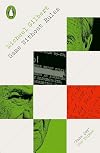
BookBub brought this book and the rather wonderful Penguin Modern Classics – Crime & Espionage series to my attention. Amazon were offering it for £0.99, so I gave it a try. It’s the first of two short story collections dealing with two allegedly retired spies who are actually working in a special department that takes care of the more unpleasant operational tasks performed in the interests of national security.
The stories were short and grim. They were made grimmer by the civilised, show more cultured matter-of-fact tone of these two retired men as they killed for their country.
The prose was sparse but very effective. It reinforced the chillingly efficient violence that our two main characters brought to bear on every problem,
These stories were like opening a time capsule to the 1960s as seen from the point of view of men who were already adults when World War II started. It’s grim but thoughtful. It speaks of a generation that drew its energy from a dogged determination not to lose what they have, rather than from hopes for a brighter future.
Each story is completely self-contained, but, as I read through them, they built a picture of Calder and Behrens as men who had been honed down to their essential selves and had understood that they were the people who would always do what needed to be done and would then bury the outcome.
I've rated and commented on each story in the collection below.
THE ROAD TO DAMASCUS ★★★★
A great start to the collection. A local woodsman uncovers a WWII secret and so takes it to Calder, as he's a man who would know about such things. Calder delves into the secret, knows what it means and shares the secret with Behrens. Together they hunt down the person responsible and mete out justice. What they do is undramatic, remorselessly efficient and completely outside the law. I realised that, for these two men, and perhaps for many like them, the war didn't end; there was simply a change in the rules of engagement.
ON SLAY DOWN ★★★
There's an exchange in this story between Calder and Behrens (listened to but not commented on by Rasselas, Calder's deerhound) that does a lot to establish who they are. Calder tells Behrens that the day before, he had met with their mutual boss. Here's the exchange.
‘Yes,’ said Mr Behrens. ‘He told me you had been to see him. I meant to ask you about that. What did he want?’
‘There’s a woman. She has to be killed.’
Rasselas flicked his right ear at an intrusive fly; then, when this proved ineffective, growled softly and shook his head.
‘Anyone I know?’ said Mr Behrens.
The rest of the story explains why the woman must be killed and how the two of them go about it. It's chillingly dispassionate.
THE SPOILERS ★★★
This story was longer, more complex and harder edged. It emphasised bothe 'the enemy within' threat and the ignorance of the threat and or reluctance to deal with it that civilians and politicians feel.
This quote made me smile and shows the mindset of the story:
‘We’re getting so Security-minded,’ said Miss Nicholson, ‘that we might as well be living in a totalitarian state, under the control of the Gestapo.’ Miss Nicholson, who was an intellectual liberal, often said things like this in letters to the Press and at public meetings, possibly because she had never lived in a totalitarian state and had no experience of the Gestapo …
The prose is sparse but very effective. It reinforces the air chillingly efficient violence that our Calder and Behrens bring to bear on every problem,
THE CAT CRACKER ★★★
This story uses a catalytic cracking plant as an analogy for how to break people. It's introduced in a quietly pragmatic way that deliberately robs it of emotion. Unexpectedly, but amusingly, the problem is resolved not by the application of pressure but by an entirely different kind of inducement that neither Calder nor Behrens foresaw.
TREMBLING'S TOURS ★★★★
This story caught me by surprise. Once the plot was revealed, it was a classic counter-intelligence story, but I didn't see it coming. It's credible and well told, and, for once, the mission is not entirely successful, which made the story easier to believe.
THE HEADMASTER ★★★★
A story of an attempt to catch a master spy operating in England. This time, the other side demonstrates that it's just as ready to kill when it's deemed expedient to do so. Somehow, the dispassion of that kind of decision is more chilling than either personal enmity or an adrenaline-fueled reaction to a threat. In the first part of the story, I got to see Rasselas, the deerhound, do his thing. He's as quietly menacing as his master, Calder. The resolution was beautifully done. It kept me guessing until the end. The end itself was dramatic and credible. This story was a good example of what it means to play a 'game without rules'.
HEILIGE NACHT ★★★
This story took us to West Germany on Christmas Eve, where what should have been a simple operation had gone badly wrong. I liked the way the complacent attitude of the diplomats at the British Embassy in Bonn turned a risky situation into a potential disaster. The story brought the Cold War to life as a real, blood-in-the-snow conflict for both sides and reminded me that World War II was still a recent memory for many of those involved on either side of the Cold War conflict. The ending was swift, clever, but perhaps just a little too like a 'Boys Own' adventure to be satisfying.
'UPON THE KING...' ★★
This is the only story that didn't work for me. It was written to the same standard, but the premise was more of a stretch, the violence felt less real, and the ending was too neat.
CROSS-OVER ★★★★
A full catch-a-spy black op story, complete with (for the times) high-tech equipment, a pursuit across Europe, tension and a very violent conclusion.
PROMETHEUS UNBOUND ★★★
TThis one misled me completely. It was a bold idea. I could see it working. But the emotional cost to those who survived was considerable. A lot of time was invested, and, of course, there were fatalities. It showed that this was not just a game without rules, it was a game without limits for the players.
A PRINCE OF ABYSSINIA ★★★★
This was an excellent story to end with because it had a big emotional impact. Calder believes that someone from his past is coming to kill him. When he's asked what makes him so sure, he replies:
"I tortured him," said Mr Calder, "And broke him. He'd never forget."
That succinct factual statement gave Calder's current use of violence a more detailed context. It made him more intimidating than ever.
The story is told in measured tones that increase rather than diminish the tension. The outcome was unpleasant. To my surprise, I felt sorry for everyone involved. show less
The stories were short and grim. They were made grimmer by the civilised, show more cultured matter-of-fact tone of these two retired men as they killed for their country.
The prose was sparse but very effective. It reinforced the chillingly efficient violence that our two main characters brought to bear on every problem,
These stories were like opening a time capsule to the 1960s as seen from the point of view of men who were already adults when World War II started. It’s grim but thoughtful. It speaks of a generation that drew its energy from a dogged determination not to lose what they have, rather than from hopes for a brighter future.
Each story is completely self-contained, but, as I read through them, they built a picture of Calder and Behrens as men who had been honed down to their essential selves and had understood that they were the people who would always do what needed to be done and would then bury the outcome.
I've rated and commented on each story in the collection below.
THE ROAD TO DAMASCUS ★★★★
A great start to the collection. A local woodsman uncovers a WWII secret and so takes it to Calder, as he's a man who would know about such things. Calder delves into the secret, knows what it means and shares the secret with Behrens. Together they hunt down the person responsible and mete out justice. What they do is undramatic, remorselessly efficient and completely outside the law. I realised that, for these two men, and perhaps for many like them, the war didn't end; there was simply a change in the rules of engagement.
ON SLAY DOWN ★★★
There's an exchange in this story between Calder and Behrens (listened to but not commented on by Rasselas, Calder's deerhound) that does a lot to establish who they are. Calder tells Behrens that the day before, he had met with their mutual boss. Here's the exchange.
‘Yes,’ said Mr Behrens. ‘He told me you had been to see him. I meant to ask you about that. What did he want?’
‘There’s a woman. She has to be killed.’
Rasselas flicked his right ear at an intrusive fly; then, when this proved ineffective, growled softly and shook his head.
‘Anyone I know?’ said Mr Behrens.
The rest of the story explains why the woman must be killed and how the two of them go about it. It's chillingly dispassionate.
THE SPOILERS ★★★
This story was longer, more complex and harder edged. It emphasised bothe 'the enemy within' threat and the ignorance of the threat and or reluctance to deal with it that civilians and politicians feel.
This quote made me smile and shows the mindset of the story:
‘We’re getting so Security-minded,’ said Miss Nicholson, ‘that we might as well be living in a totalitarian state, under the control of the Gestapo.’ Miss Nicholson, who was an intellectual liberal, often said things like this in letters to the Press and at public meetings, possibly because she had never lived in a totalitarian state and had no experience of the Gestapo …
The prose is sparse but very effective. It reinforces the air chillingly efficient violence that our Calder and Behrens bring to bear on every problem,
THE CAT CRACKER ★★★
This story uses a catalytic cracking plant as an analogy for how to break people. It's introduced in a quietly pragmatic way that deliberately robs it of emotion. Unexpectedly, but amusingly, the problem is resolved not by the application of pressure but by an entirely different kind of inducement that neither Calder nor Behrens foresaw.
TREMBLING'S TOURS ★★★★
This story caught me by surprise. Once the plot was revealed, it was a classic counter-intelligence story, but I didn't see it coming. It's credible and well told, and, for once, the mission is not entirely successful, which made the story easier to believe.
THE HEADMASTER ★★★★
A story of an attempt to catch a master spy operating in England. This time, the other side demonstrates that it's just as ready to kill when it's deemed expedient to do so. Somehow, the dispassion of that kind of decision is more chilling than either personal enmity or an adrenaline-fueled reaction to a threat. In the first part of the story, I got to see Rasselas, the deerhound, do his thing. He's as quietly menacing as his master, Calder. The resolution was beautifully done. It kept me guessing until the end. The end itself was dramatic and credible. This story was a good example of what it means to play a 'game without rules'.
HEILIGE NACHT ★★★
This story took us to West Germany on Christmas Eve, where what should have been a simple operation had gone badly wrong. I liked the way the complacent attitude of the diplomats at the British Embassy in Bonn turned a risky situation into a potential disaster. The story brought the Cold War to life as a real, blood-in-the-snow conflict for both sides and reminded me that World War II was still a recent memory for many of those involved on either side of the Cold War conflict. The ending was swift, clever, but perhaps just a little too like a 'Boys Own' adventure to be satisfying.
'UPON THE KING...' ★★
This is the only story that didn't work for me. It was written to the same standard, but the premise was more of a stretch, the violence felt less real, and the ending was too neat.
CROSS-OVER ★★★★
A full catch-a-spy black op story, complete with (for the times) high-tech equipment, a pursuit across Europe, tension and a very violent conclusion.
PROMETHEUS UNBOUND ★★★
TThis one misled me completely. It was a bold idea. I could see it working. But the emotional cost to those who survived was considerable. A lot of time was invested, and, of course, there were fatalities. It showed that this was not just a game without rules, it was a game without limits for the players.
A PRINCE OF ABYSSINIA ★★★★
This was an excellent story to end with because it had a big emotional impact. Calder believes that someone from his past is coming to kill him. When he's asked what makes him so sure, he replies:
"I tortured him," said Mr Calder, "And broke him. He'd never forget."
That succinct factual statement gave Calder's current use of violence a more detailed context. It made him more intimidating than ever.
The story is told in measured tones that increase rather than diminish the tension. The outcome was unpleasant. To my surprise, I felt sorry for everyone involved. show less
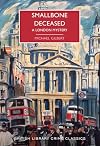
The deed boxes found in a mid-20th-century London solicitor’s office usually contain paper deeds. However, one deed box at the firm of Horniman, Birley and Craine contains evidence of a much fouler deed: the body of Marcus Smallbone. And as if that weren’t enough scandal, the fact of the body being found where it was suggests strongly that someone involved in the firm committed the crime. It’s up to Inspector Hazlerigg to figure out who it was.
I found this a highly satisfying entry in show more the British Library Crime Classics imprint and well worth inclusion on the “best crime novel” lists it’s been added to over the years. Gilbert worked for a law firm and deploys this expertise to advantage without overwhelming the general reader. The writing style is smooth and Inspector Hazlerigg in particular gets some good one-liners—I do like a detective who doesn’t take themselves too seriously, and I like when characters in detective stories accuse each other of reading too many detective stories. It’s a bit of a cliche now, I think, but in the classic crime novels it’s always delightfully meta. show less
I found this a highly satisfying entry in show more the British Library Crime Classics imprint and well worth inclusion on the “best crime novel” lists it’s been added to over the years. Gilbert worked for a law firm and deploys this expertise to advantage without overwhelming the general reader. The writing style is smooth and Inspector Hazlerigg in particular gets some good one-liners—I do like a detective who doesn’t take themselves too seriously, and I like when characters in detective stories accuse each other of reading too many detective stories. It’s a bit of a cliche now, I think, but in the classic crime novels it’s always delightfully meta. show less
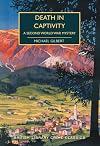
Italy, 1943. A prisoner of war camp run by the Italians. The activities are as varied as the prisoners: escape attempts, plays put on by the POW theatre troupe, rugby…and murder? One of the more unpopular prisoners has been found dead in the Escape Committee’s prime tunnel, and they have to make sure he’s not found there, or the game is up. But at the same time, who killed him? One of the POWs is elected to solve the case. Will he find out whodunnit, or will his detective career end show more with the death meted out to spies?
I really liked this mystery. The plot is an excellent hook, and the environment is richly imagined. All the clever escape attempts and mechanisms to undermine the defences of the camp reminded me very much of Hogan’s Heroes, which I watched a lot of when the local retro channel aired it. But I did think that slightly irreverent of me to take interest in, because Michael Gilbert was himself an officer in the British Army and served in a POW camp himself in Italy around the time the story is set. So this story probably contains more of the autobiographical than his other novels, and there were probably many more harrowing details of his time there that would not have made their way to the pages of this particular book.
I would absolutely recommend this if you like closed-circle mysteries and are interested in WW2. show less
I really liked this mystery. The plot is an excellent hook, and the environment is richly imagined. All the clever escape attempts and mechanisms to undermine the defences of the camp reminded me very much of Hogan’s Heroes, which I watched a lot of when the local retro channel aired it. But I did think that slightly irreverent of me to take interest in, because Michael Gilbert was himself an officer in the British Army and served in a POW camp himself in Italy around the time the story is set. So this story probably contains more of the autobiographical than his other novels, and there were probably many more harrowing details of his time there that would not have made their way to the pages of this particular book.
I would absolutely recommend this if you like closed-circle mysteries and are interested in WW2. show less
Lists
THE WAR ROOM (1)
Reading LIst (1)
Awards


You May Also Like


Associated Authors
Statistics
- Works
- 95
- Also by
- 128
- Members
- 3,855
- Popularity
- #6,577
- Rating
- 3.8
- Reviews
- 95
- ISBNs
- 373
- Languages
- 6
- Favorited
- 4