
Michael Pollan
Author of The Omnivore's Dilemma: A Natural History of Four Meals
About the Author
Michael Pollan is a contributing writer for "The New York Times Magazine" as well as a contributing editor at "Harper's" magazine. He is the author of two prize-winning books: "Second Nature: A Gardener's Education" and "A Place of My Own: The Education of an Amateur Builder." Pollan lives in show more Connecticut with his wife and son. (Publisher Provided) Michael Pollan was born in 1955 and raised on Long Island, NY. He received his B.A. in English from Bennington College in 1977 and his Masters, also in English, from Columbia University, in 1981. He is the author of Cooked: A Natural History of Transformation, as well as 5 New York Times bestselling books: Food Rules: An Eater's Manual, In Defense of Food: An Eater's Manifesto, The Omnivore's Dilemma: A Natural History of Four Meals. The Botany of Desire: A Plant's-Eye View of the World and Ho wto Change Your Mind: What the New Science of Psychedelics Teaches Us about Consciousness, Dying, Addiction, Depression, and Transcendence. (Bowker Author Biography) show less
Works by Michael Pollan
How to Change Your Mind: What the New Science of Psychedelics Teaches Us About Consciousness, Dying, Addiction, Depression, and Transcendence (2018) 2,826 copies, 81 reviews
Cooked: A Natural History of Transformation (2013) — Narrator, some editions — 1,882 copies, 59 reviews
The Botany of Desire Young Readers Edition: Our Surprising Relationship with Plants (2023) 18 copies, 1 review
Cat Treat Recipes: Homemade Cat Treats, Natural Cat Treats and How to Make Cat Treats (2010) 2 copies
Vote for the Dinner Party 1 copy
Omnivore's Dilemma 1 copy
Michael Pollan Bestselling 3 Books Set - The Omnivore's Dilemma, In Defense of Food, Food Rule (2023) 1 copy
Town-Building Is No Mickey Mouse Operation {The New York Times Magazine, December 14, 1997} (1997) 1 copy
Unhappy Meals [article] 1 copy
A Model Summer 1 copy
Associated Works
Salt, Fat, Acid, Heat: Mastering the Elements of Good Cooking (2017) — Foreword, some editions — 3,553 copies, 30 reviews
The Art of Fermentation: An In-Depth Exploration of Essential Concepts and Processes from around the World (2012) — Foreword — 997 copies, 13 reviews
Drawdown: The Most Comprehensive Plan Ever Proposed to Reverse Global Warming (2016) — Contributor — 620 copies, 13 reviews
Food Inc.: A Participant Guide: How Industrial Food is Making Us Sicker, Fatter, and Poorer-And What You Can Do About It (2009) — Contributor — 539 copies, 3 reviews
Brilliant Green: The Surprising History and Science of Plant Intelligence (2013) — Foreword, some editions — 259 copies, 8 reviews
This Is My Best: Great Writers Share Their Favorite Work (2004) — Contributor — 173 copies, 3 reviews
Fantastic Fungi: Expanding Consciousness, Alternative Healing, Environmental Impact // Official Book of Smash Hit Documentary (2019) — Contributor — 138 copies, 1 review
A Fork in the Road: Tales of Food, Pleasure, and Discovery on the Road (2013) — Contributor — 114 copies, 2 reviews
My Favorite Plant: Writers and Gardeners on the Plants They Love (1998) — Contributor — 100 copies, 1 review
Old Growth: The Best Writing about Trees from Orion Magazine (2021) — Contributor — 16 copies, 1 review
Tagged
Common Knowledge
- Canonical name
- Pollan, Michael
- Legal name
- Pollan, Michael Kevin
- Other names
- POLLAN, Michael
- Birthdate
- 1955-02-06
- Gender
- male
- Education
- Bennington College (B.A. | 1977)
University of Oxford (Mansfield College)
Columbia University (M.A. | English | 1981) - Occupations
- journalist
journalism professor
activist
producer - Organizations
- Harper's Magazine
The New York Times Magazine
University of California, Berkeley Graduate School of Journalism - Awards and honors
- Knight Professor of Journalism (Berkeley)
James Beard Award (2007)
Borders Original Voices Award for Botany of Desire (2001)
Reuters/World Conservation Union Global Award in Environmental Journalism
Genesis Award from the American Humane Association
Orwell Award (2010) (show all 8)
Nierenberg Prize (2014)
Washington University International Humanities Medal (2008) - Agent
- Ann Godoff
- Relationships
- Fox, Michael J. (brother-in-law)
Pollan, Stephen M. (father)
Pollan, Corky (mother)
Belzer, Judith (wife)
Pollan, Tracy (sister) - Short biography
- Michale Pollan lives in the Bay Area with his wife, the painter Judith Belzer, and their son, Isaac.
- Nationality
- USA
- Birthplace
- Long Island, New York, USA
- Places of residence
- Berkeley, California, USA
Manhattan, New York, New York, USA
Cornwall, Connecticut, USA - Associated Place (for map)
- USA
Members
Reviews
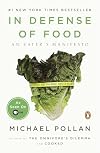
Michael Pollan writes about food and nutrition the same way Farley Mowat wrote about animals i.e. with passion, insight, and definite opinions. Mowat certainly angered people during his writing life and I have no doubt that some people take offense at the things Pollan writes. As a food scientist, a class of researchers that Pollan criticizes, I guess I could have been among those detractors. However, I acknowledge that a lot of the criticism Pollan makes is deserved even though I don't show more completely disavow my previous employment.
The title almost seems like an oxymoron. Who would be opposed to food? Food is essential, isn't it? Pollan suggests that the modern diet (at least in North America) is "no longer, strictly speaking, food at all, and how we're consuming it -- in the car, in front of the TV, and, increasingly, alone -- is not really eating..." (quoted from page 7). For this turn of events he blames nutrition science and the food industry. Nutrition (or food) science comes in for a lot of finger-pointing because scientists look for molecules inside food that could cause effects on our bodies instead of looking at a big picture or more holistic view. I agree that some of the studies that have been published over the past number of years go to ridiculous lengths to draw conclusions based upon a certain nutrient. When those studies get picked up by main stream media all of a sudden everyone is buying acai berries or (even worse) bars with acai berries in them along with a ton of sugar and fat. It is especially worrisome when the studies are done by people who work for a certain industry or who receive funding from manufacturers. Pollan, and another writer I read regularly, Marion Nestle, regularly showcase studies that are biased by the funding they have received. In defence of my former career, most researchers I know would never consider biasing their results to benefit a funder and most would usually state that their findings do not establish that eating a particular food or nutrient would cure disease or ill health. I think that we need both the micro and the macro examination of food and, providing people take a common-sense approach to eating, it helps to understand how our body reacts to certain elements.
In The Omnivore's Dilemma Pollan concluded by offering the following advice: Eat Food, Not too Much, Mostly Plants. In this book in Part III he expands on those suggestions. That's probably the most valuable part of the book for anyone considering how to change their diet. Personally, since reading The Omnivore's Dilemma I have tried to eat better by eating more fruits, vegetables and pulses and eating less meat. The meat I do eat is quite often purchased from local farmers which may cost a little more than mass-produced meat but has a better fat ratio and is far better tasting. I grew up on a farm and I know the trials and tribulations of being a farmer so I also feel good about supporting local farms. show less
The title almost seems like an oxymoron. Who would be opposed to food? Food is essential, isn't it? Pollan suggests that the modern diet (at least in North America) is "no longer, strictly speaking, food at all, and how we're consuming it -- in the car, in front of the TV, and, increasingly, alone -- is not really eating..." (quoted from page 7). For this turn of events he blames nutrition science and the food industry. Nutrition (or food) science comes in for a lot of finger-pointing because scientists look for molecules inside food that could cause effects on our bodies instead of looking at a big picture or more holistic view. I agree that some of the studies that have been published over the past number of years go to ridiculous lengths to draw conclusions based upon a certain nutrient. When those studies get picked up by main stream media all of a sudden everyone is buying acai berries or (even worse) bars with acai berries in them along with a ton of sugar and fat. It is especially worrisome when the studies are done by people who work for a certain industry or who receive funding from manufacturers. Pollan, and another writer I read regularly, Marion Nestle, regularly showcase studies that are biased by the funding they have received. In defence of my former career, most researchers I know would never consider biasing their results to benefit a funder and most would usually state that their findings do not establish that eating a particular food or nutrient would cure disease or ill health. I think that we need both the micro and the macro examination of food and, providing people take a common-sense approach to eating, it helps to understand how our body reacts to certain elements.
In The Omnivore's Dilemma Pollan concluded by offering the following advice: Eat Food, Not too Much, Mostly Plants. In this book in Part III he expands on those suggestions. That's probably the most valuable part of the book for anyone considering how to change their diet. Personally, since reading The Omnivore's Dilemma I have tried to eat better by eating more fruits, vegetables and pulses and eating less meat. The meat I do eat is quite often purchased from local farmers which may cost a little more than mass-produced meat but has a better fat ratio and is far better tasting. I grew up on a farm and I know the trials and tribulations of being a farmer so I also feel good about supporting local farms. show less
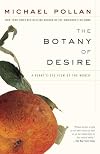
I'm not an agronomist, a scientist, or even a gardener, but I found "The Botany of Desire" pretty fascinating. This one is incredibly dense: we hear about the history, genes, varieties, social consequences, survival strategies, and the potential future of four well-known plants. In many ways, it's positively eye opening. Pollan emphasizes both how much these plants have changed over the centuries' we've spent with them and how much they've changed us. As the subtitle promises, he even goes show more out of his way to explain why a certain plant -- or insect, or bacteria -- might benefit from changes in often unexpected ways. "The Botany of Desire" leaves the reader with the impression that nature's logic doesn't necessarily resemble our own. Nor, it argues, does our view of these plants necessarily resemble our ancestors': there's a lot of historical weirdness to be found here. I particularly enjoyed hearing about the role of hard cider in frontier America, a man who made it his life's work to preserve old, out-of-fashion apple varieties, and the madness that famously affected Dutch tulip collectors in the 1600s. For contrast, we hear about factory-like potato farms and the intensely futuristic way that marijuana is grown today. Our great-grandfathers might not recognize how we now grow and consume these plants. Pollan seems to want to communicate that what the average person considers "natural" is really anything but. That's an important perspective to have.
The other thing that makes "The Botany of Desire" such a good read the obvious passion that Pollan has for his subject. More than just an understanding of plants, the author might actually be said to have real empathy for them. His descriptions of his garden are nothing short of rapturous. He comes off as a man who's most at peace when he's got his hands in the dirt. Of course, I expect that not everyone will enjoy this aspect of the book. Pollan's an excellent writer, but he doesn't write much like the average scientist, and I couldn't help thinking that some of his tastes and priorities were a bit bougie. He even lives in Connecticut, for Pete's sake! Readers who want a more technical, straightforward look at plant development might want to look elsewhere. But I'm sort of a beginner here, so I really enjoyed this one. Maybe you will, too. show less
The other thing that makes "The Botany of Desire" such a good read the obvious passion that Pollan has for his subject. More than just an understanding of plants, the author might actually be said to have real empathy for them. His descriptions of his garden are nothing short of rapturous. He comes off as a man who's most at peace when he's got his hands in the dirt. Of course, I expect that not everyone will enjoy this aspect of the book. Pollan's an excellent writer, but he doesn't write much like the average scientist, and I couldn't help thinking that some of his tastes and priorities were a bit bougie. He even lives in Connecticut, for Pete's sake! Readers who want a more technical, straightforward look at plant development might want to look elsewhere. But I'm sort of a beginner here, so I really enjoyed this one. Maybe you will, too. show less
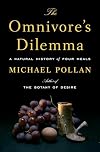
Almost everyone has at least heard of this book, and a number of you reading this have read it. This is kind of an odd situation given my usual obscure reading habits. =)
The book centers around Pollan's desire to understand the origin of four different meals. The essence of the industrial meal is corn. Industrial corn is grown as huge monocultures. Many of the farmers who grow the corn can barely make a living off of the corn, but the system is set up so that is the only thing they can grow. show more The corn they grown is not fit direct human consumption. It must be processed into unrecognizable forms that make it into nearly every processed food product, or it must be fed to animals, even those never meant to eat it. Industrial farming is bad for human health, animal health, the land, and farmers, but it is the system we are currently stuck in through the power of agribusinesses and government regulations.
The second and third meals present different senses of the word "organic". The "industrial organic" meal is the meal from Whole Foods. Industrial organic farming is still industrial farming, but it avoids the chemical additives that make industrial farming particularly harmful. Organic farming treats the land better and our health better than industrial farming, but it still relies on monocultures to achieve an industrial scale.
Perhaps we can hope for nothing more. It may be that no other food system would produce enough food to provide everyone with affordable food. But maybe not. Pollan's third meal was the "pastoral" meal. There was a time when organic farming meant more than avoiding chemicals. The organic farm based its methods off of nature. Not because nature is inherently better but because nature provides the best examples of long lived systems.
If we want to still be producing food on the same land in 1000 years, we should pay attention to how natural systems replenish their resources. These systems depend on complex interactions of many species and an elimination of waste. Sustainable food production does not mimic nature, but it does learn from these fundamental lessons. It gives up some efficiency (but not as much as you might think) to gain healthier food that does not destroy the land.
The last meal was the foraged meal. Pollan admits up front that this meal is an academic exercise. If most people foraged, and the environment would suffer from over use. However, as an exercise, the foraged meal is valuable. The forager cannot assume, as the farmer or the gardener can, that what they harvest is safe to eat. The forager is directly connected with the fact that nature's purpose is not to produce food for us. Yet the forager also sees the natural world in greater detail. A forager in the wood observes which species which are good to eat, which are not, and which are a mystery. The foraged meal also gives Pollan a change to come face-to-face with the fact that eating meat means killing an animal; killing a chicken raised to be killed does not have the same intensity as shooting and eating a wild animal. In the end, the foraged meal is Pollan's favorite meal because he knows the story of each component of the meal.
The Omnivore's Dilemma was excellent. It was educational and engrossing. At the same time, Pollan had me switching between being inspired and discouraged. I was inspired to learn that there are better ways to produce our food. Producing food does not have to destroy our health and our planet. Sustainable, quality food production also has the capability to be competitive with industrial food. It just needs to free itself from the shadow of government subsidies and regulations that favor large agribusiness farms over smaller farms and more sustainable practices.
But industrial food production is backed by both the government and strong, rich special interests. Americans have gotten use to cheap food. They have fully bought in to the idea that beef is beef is beef, even though different sources of beef have different effects on our health and on the land. Changing this system is not easy. On the one hand, the special interests that resist change. On the other hand, there is the reasonable fear of mucking about with our food system. Food is fundamental, and wide spread hunger is both wrong and dangerous for societal stability. Better a system that has some negative effects but works well enough than to change the system in ways with unknown effects, or so some might think.
But now that I understand that the negative effects of our food system are destroying our health, destroying our land, and even endangering our ability to feed ourselves in the future, it is hard to believe we can ignore those effects. And so I will do what I can. I have been trying to eat responsibly produced food. I am trying to be more aware of what is in my food and where it came from. I am not an activist or a policy maker, but I can change my own habits. I can encourage policy makers and activists who try to make it so that changing habits is not a choice mainly available to the fortunate. Sustainable healthy food does not have to be elitist or expensive, should not be elitist or expensive, but it is for now. That needs to change. show less
The book centers around Pollan's desire to understand the origin of four different meals. The essence of the industrial meal is corn. Industrial corn is grown as huge monocultures. Many of the farmers who grow the corn can barely make a living off of the corn, but the system is set up so that is the only thing they can grow. show more The corn they grown is not fit direct human consumption. It must be processed into unrecognizable forms that make it into nearly every processed food product, or it must be fed to animals, even those never meant to eat it. Industrial farming is bad for human health, animal health, the land, and farmers, but it is the system we are currently stuck in through the power of agribusinesses and government regulations.
The second and third meals present different senses of the word "organic". The "industrial organic" meal is the meal from Whole Foods. Industrial organic farming is still industrial farming, but it avoids the chemical additives that make industrial farming particularly harmful. Organic farming treats the land better and our health better than industrial farming, but it still relies on monocultures to achieve an industrial scale.
Perhaps we can hope for nothing more. It may be that no other food system would produce enough food to provide everyone with affordable food. But maybe not. Pollan's third meal was the "pastoral" meal. There was a time when organic farming meant more than avoiding chemicals. The organic farm based its methods off of nature. Not because nature is inherently better but because nature provides the best examples of long lived systems.
If we want to still be producing food on the same land in 1000 years, we should pay attention to how natural systems replenish their resources. These systems depend on complex interactions of many species and an elimination of waste. Sustainable food production does not mimic nature, but it does learn from these fundamental lessons. It gives up some efficiency (but not as much as you might think) to gain healthier food that does not destroy the land.
The last meal was the foraged meal. Pollan admits up front that this meal is an academic exercise. If most people foraged, and the environment would suffer from over use. However, as an exercise, the foraged meal is valuable. The forager cannot assume, as the farmer or the gardener can, that what they harvest is safe to eat. The forager is directly connected with the fact that nature's purpose is not to produce food for us. Yet the forager also sees the natural world in greater detail. A forager in the wood observes which species which are good to eat, which are not, and which are a mystery. The foraged meal also gives Pollan a change to come face-to-face with the fact that eating meat means killing an animal; killing a chicken raised to be killed does not have the same intensity as shooting and eating a wild animal. In the end, the foraged meal is Pollan's favorite meal because he knows the story of each component of the meal.
The Omnivore's Dilemma was excellent. It was educational and engrossing. At the same time, Pollan had me switching between being inspired and discouraged. I was inspired to learn that there are better ways to produce our food. Producing food does not have to destroy our health and our planet. Sustainable, quality food production also has the capability to be competitive with industrial food. It just needs to free itself from the shadow of government subsidies and regulations that favor large agribusiness farms over smaller farms and more sustainable practices.
But industrial food production is backed by both the government and strong, rich special interests. Americans have gotten use to cheap food. They have fully bought in to the idea that beef is beef is beef, even though different sources of beef have different effects on our health and on the land. Changing this system is not easy. On the one hand, the special interests that resist change. On the other hand, there is the reasonable fear of mucking about with our food system. Food is fundamental, and wide spread hunger is both wrong and dangerous for societal stability. Better a system that has some negative effects but works well enough than to change the system in ways with unknown effects, or so some might think.
But now that I understand that the negative effects of our food system are destroying our health, destroying our land, and even endangering our ability to feed ourselves in the future, it is hard to believe we can ignore those effects. And so I will do what I can. I have been trying to eat responsibly produced food. I am trying to be more aware of what is in my food and where it came from. I am not an activist or a policy maker, but I can change my own habits. I can encourage policy makers and activists who try to make it so that changing habits is not a choice mainly available to the fortunate. Sustainable healthy food does not have to be elitist or expensive, should not be elitist or expensive, but it is for now. That needs to change. show less
How to Change Your Mind: What the New Science of Psychedelics Teaches Us About Consciousness, Dying, Addiction, Depression, and Transcendence by Michael Pollan
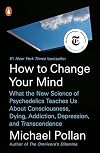
Last night I finished reading Michael Pollan's latest book, How to Change Your Mind - What the New Science of Psychedelics Teaches Us About Consciousness, Dying, Addiction, Depression, and Transcendence (Penguin Press, 2018). I'd ordered the book pre-publication, so they sent it to me on the day of its release. I'd been happily anticipating the book as I've admired Pollan's previous works very much. His journalism has long dealt with 'Gaia-related' topics and his even-handed, well written show more and researched presentations have always included the aspects of conciousness at their core. I can unhesitatingly recommend this volume. He presents both a history of modern (1950-70s) 'psychedelic' research studies & explorations and a current report of the newly resumed studies in the many uses of entheogens. This includes both overviews of clinical studies, practices of 'shamanic traditions', and his own personal experiences. I'm sure you'd recognize the names of many of the principle players & circumstances he describes; old friends of psychedelic literature & exploration.
I think it's great that such a thoughtful book would be offered by this well-accomplished 'mainstream' journalist. This can only lend more weight to the general public & our authorities to developing a less reactionary and more sane view of these sacramental benefactors. Pollan, like all of us, is very concerned about how we can continue to sustainably exist as individuals, a society, a species. He sees that there may be some allies, close to hand, that have long been available to help us adjust our perceptions and continue on an evolutionary journey, to grow & to expand rather than self-destructing. "How to change your mind" is a well chosen phrase, an observation that often our 'problems' are ones of perception rather than actual unyielding obstacles. Good work, good book, good gracious. show less
I think it's great that such a thoughtful book would be offered by this well-accomplished 'mainstream' journalist. This can only lend more weight to the general public & our authorities to developing a less reactionary and more sane view of these sacramental benefactors. Pollan, like all of us, is very concerned about how we can continue to sustainably exist as individuals, a society, a species. He sees that there may be some allies, close to hand, that have long been available to help us adjust our perceptions and continue on an evolutionary journey, to grow & to expand rather than self-destructing. "How to change your mind" is a well chosen phrase, an observation that often our 'problems' are ones of perception rather than actual unyielding obstacles. Good work, good book, good gracious. show less
Lists
Favourite Books (1)
Reading LIst (1)
Read These Too (1)
Nature Writing (1)
Unread books (1)
Carole's List (3)
Food Memoirs (2)
Seeking the Soul (2)
To Read (1)
Big tags (1)
. (1)
el (1)
Awards


You May Also Like


Associated Authors
Statistics
- Works
- 32
- Also by
- 33
- Members
- 42,532
- Popularity
- #403
- Rating
- 4.1
- Reviews
- 1,121
- ISBNs
- 316
- Languages
- 19
- Favorited
- 112
