
Jan Morris (1926–2020)
Author of Pax Britannica: the Climax of an Empire
About the Author
Jan Morris served as an intelligence officer with the 9th Queen's Royal Lancers, studied at Oxford University, and was a reporter for the Times and the Guardian before launching a successful career as a novelist, history author, and travel writer
Image credit: LGBT History Month
Series
Works by Jan Morris
Turner and Venice [cat. exp., London, Tate Britain, 9 Oct. 2003-11 Jan. 2004, Kimbell Art Museum, Fort Worth, 15 Feb-30 May, 2004] (2003) 65 copies, 1 review
Venetia 1 copy
New York Reflections 1 copy
A View of the Royal Navy 1 copy
Associated Works
The Condé Nast Traveler Book of Unforgettable Journeys: Great Writers on Great Places (2007) — Contributor — 283 copies, 5 reviews
I Should Have Stayed Home: The Worst Trips of the Great Writers (1994) — Introduction — 187 copies, 5 reviews
This Is My Best: Great Writers Share Their Favorite Work (2004) — Contributor — 173 copies, 3 reviews
The Pleasure of Reading: 43 Writers on the Discovery of Reading and the Books That Inspired Them (2015) — Contributor — 103 copies, 2 reviews
100 Journeys for the Spirit: Sacred, Inspiring, Mysterious, Enlightening (2010) — Contributor — 67 copies
Great Tours and Detours: The Sophisticated Traveler Series (1985) — Contributor — 35 copies, 1 review
Mexico: Some Travels and Some Travelers There (Destinations) (1991) — Introduction, some editions — 23 copies
MHQ: The Quarterly Journal of Military History — Autumn 1993 (1993) — Author "Fisher's Face" and "The Battle of Fatshan Creek" — 19 copies
Penguins 60s Classics (Loose as the Wind; Now Remember; Florence Nightingale; Rumpole and the Younger Generation; Elephant Tales; Scenes from Havian Life; Less is More Please;… (1996) — Contributor — 12 copies
Adventures in Japan: A Literary Journey in the Footsteps of a Victorian Lady (2000) — Introduction, some editions — 12 copies, 1 review
Great Interviews of the 20th Century: Fidel Castro by Herbert Matthews 1957 (2007) — Contributor — 4 copies
Tagged
Common Knowledge
- Canonical name
- Morris, Jan
- Legal name
- Morris, Catharine Jan
- Other names
- Morris, James Humphrey (birth name-1974)
- Birthdate
- 1926-10-02
- Date of death
- 2020-11-20
- Gender
- female
- Education
- Christ Church College, Oxford (BA|1951|MA|1961)
Lancing College - Occupations
- journalist
travel writer
historian - Organizations
- Manchester Guardian
The Times
British Army (WWII) - Awards and honors
- Royal Society of Literature (fellow|1961)
Gorsedd y Beirdd (1992)
Glyndŵr Award (1996)
Order of the British Empire (commander|1999)
Golden PEN Award (2005)
Edward Stanford Outstanding Contribution to Travel Writing Award (2018) - Relationships
- Morys, Twm (son)
Tuckniss, Elizabeth (wife, partner)
Morris, Mark (son) - Nationality
- UK
- Birthplace
- Clevedon, Somerset, England, UK
- Places of residence
- Somerset, England, UK
Llanystumdwy, Caernarfonshire, Wales, UK
Fforest, Monmouthshire, Wales, UK - Place of death
- Pwllheli, Gwynedd, Wales, UK
- Burial location
- ashes are scattered on a tiny island in the Afon Dwyfor, Gwynedd, Wales, UK
- Map Location
- Wales, UK
Members
Discussions
British Author Challenge May 2023: Jan Morris & R.F. Delderfield in 75 Books Challenge for 2023 (June 2023)
Reviews
Hav by Jan Morris
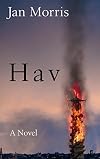
A travel writer arrives at a tiny, once thriving Levantine city-state on the shores of the Mediterranean. She meets the people, sees the sights, evokes past and present through delicate description and historical anecdote, not always reliable, but even the stories are indicative of some aspect of the personality of the place. It is rich with culture and full of history, and yet it is an odd, elusive place, all surface, all smiles, hard to pin down, hard to truly understand. She will never show more understand the place. Her account is occasionally interrupted by odd little hints of things beneath the surface. They never coalesce into any real threat or danger or suspense, until the final pages, when with discreet and refined bewilderment she is ushered to the border, building to the incredible, subtle crescendo of the final line of Letters To Hav.
Hav, of course, is fictional, an invention by travel writer Jan Morris, who is also a character in this book. It is a 'hazy allegory,' but its true allegory is the difficulty of understanding a place. In Hav of The Myrmidons she returns, briefly, and discovers it transformed. It is more surface, louder, brighter, richer. And though she clearly prefers to withhold judgement and let people's own words speak for them, she cannot hide her frustration and even her anger that the changes have made the place even more hidden and ambiguous and secret.
A brilliant book, beautifully written, an astonishing piece of worldbuilding that hauntingly evokes modern dilemmas and confusions as much as it evokes a place. show less
Hav, of course, is fictional, an invention by travel writer Jan Morris, who is also a character in this book. It is a 'hazy allegory,' but its true allegory is the difficulty of understanding a place. In Hav of The Myrmidons she returns, briefly, and discovers it transformed. It is more surface, louder, brighter, richer. And though she clearly prefers to withhold judgement and let people's own words speak for them, she cannot hide her frustration and even her anger that the changes have made the place even more hidden and ambiguous and secret.
A brilliant book, beautifully written, an astonishing piece of worldbuilding that hauntingly evokes modern dilemmas and confusions as much as it evokes a place. show less
It seems to me that what has happened to me and what I have tried to describe in this book is one of the most fascinating experiences that ever befell a human being.
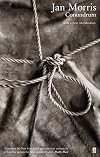
What does it feel like for a man to be a man, for a woman to be a woman? Is it possible for a man, never ceasing to be a man and therefore to gain the necessary perspective, to objectively experience, and then to articulate, what it feels like to inhabit a male body? And likewise for woman? These are some of the questions Jan show more Morris's courageous memoire of her sex change attempts to cast light on.
The facts are well known, how James Morris, man, journalist, historian, adventurer and travel writer became Jan Morris, grandmother, dame, traveller, novelist and woman. Morris gives here a very personal account of her life. Her memoire is searching, candid, and of course, as one would expect from a writer of Morris's stature and accomplishment, beautifully written. She gives an intimate account of the relationship between gender, sexuality and the self, an account which does more to illuminate the enigma of trans-sexuality than a whole bibliography of psychological text books and case studies. It's a tale told from the inside, and thus doubly valuable, both as a record of the personal and of the universal.
At the same time this inner perspective reveals a few ideological blindnesses about our dear Jan. First, is the entrapment in Western modes of sexuality in which male and female are clearly differentiated. Eastern genders are much less clearly defined. Asian men display more qualities associated in the West with femininity: grace, forgiveness, delicacy, softness; while Asian women frequently display qualities designated in the West as masculine: strength, dogmaticism, insensitivity, ambition. The most important deity of Asia is the trans-sexual Guan Yin, who appears in male and female guises.Perhaps Morris was as much a victim of her milieu as a product of it.
Secondly, it has to be said that Morris has been a life long member of the Establishment. Educated at Oxford and Lancing, with an early career in the 9th Lancers, then a job with The Times during the long decline of Empire, her journey from male to female has therefore been eased by the tolerance towards eccentricity, the politeness of members of the Establishment towards one of their own. I couldn't help feeling, as Morris describes how 'a man from the Ministry' drove all the way to her dacha in Wales to give her her new social security card, that, had Morris been born into a lower social class and been living in a semi-detached in Nottingham, the powers who rule our lives would not have been quite so sycophantically helpful. Indeed, tales of official and legal obstruction for those seeking to change their sex are still the norm. In this sense, Conundrum cannot be regarded as typical of the transsexual experience.
Thirdly, and this is my main objection to an otherwise fascinating and moving book, is Morris's attitude to homosexuality. Morris writes of a childfree homosexual couple she once knew:
They left behind them... only a void. A marriage as loyal as marriage could be had ended sterile and uncreative, and if the two of them had lived into old age their lives I fear, would have proved progressively more sterile still, the emptiness creeping in, the fullness retreating.
Here we have two myths with which heterosexual people love to bolster their gender hegemony: the sickly kind of sentimentality 'liberal' people display towards homosexuals (the truth and pathos of their condition), and 'breeder fascism'.
'Breeder fascism', as Chavenet defined it, is the attitude that those who do not have children are somehow incomplete, lacking (childless), diminished, sterile, uncreative, and by virtue of having no offspring, lead empty, unfulfilled lives, unable to experience the loftier human virtues of selfless love, responsibility, blood loyalty, self-sacrifice, duty and devotion, which can only be the exclusive prerogative of those who reproduce. Breeder fascism is the attitude that having children is a uniquely special achievement which lifts parents onto a higher level of human development. To encounter this attitude in otherwise quite sane, normal, educated, enlightened people is always something of a shock. To encounter it here in a tale of a trans-sexual is something of a grotesque.
Having offspring is not a special achievement; it is mere biology. Every known life form in the universe does it, even the lowliest micro-structure does it. It is not unique or special, it is ubiquitous, commonplace, mundane, uninteresting even; and claiming that it gives exclusive access to a higher level of human development is just offensive nonsense. Worse, given the way the planet is currently groaning under an unsustainable burden of a human population fast approaching 7 billion, it is also a sign of gross selfishness, incontinence and irresponsibility.
Raising children, however, so that they become tolerant, considerate, well-adjusted members of a global community is another matter. That is special, and, given the large number of people who fail so spectacularly at it, must be uncommonly difficult. However, this is not the exclusive prerogative of breeders, but can be attempted by anyone of any gender or sexual persuasion who has access to an adoption agency and a large enough income.
To claim that having children is the only way to protect one from the void, as Jan Morris does here, is the key sign of breeder fascism. (Shakespeare says the same thing in the early, most tedious, sonnets of his cycle.) The fact is, every human being faces the void. The generations of men are like leaves, the blind poet said, and having offspring is only a postponement of the void, a postponement which in the face of that void, is infinitely insignificant.
From The Lectern show less
What does it feel like for a man to be a man, for a woman to be a woman? Is it possible for a man, never ceasing to be a man and therefore to gain the necessary perspective, to objectively experience, and then to articulate, what it feels like to inhabit a male body? And likewise for woman? These are some of the questions Jan show more Morris's courageous memoire of her sex change attempts to cast light on.
The facts are well known, how James Morris, man, journalist, historian, adventurer and travel writer became Jan Morris, grandmother, dame, traveller, novelist and woman. Morris gives here a very personal account of her life. Her memoire is searching, candid, and of course, as one would expect from a writer of Morris's stature and accomplishment, beautifully written. She gives an intimate account of the relationship between gender, sexuality and the self, an account which does more to illuminate the enigma of trans-sexuality than a whole bibliography of psychological text books and case studies. It's a tale told from the inside, and thus doubly valuable, both as a record of the personal and of the universal.
At the same time this inner perspective reveals a few ideological blindnesses about our dear Jan. First, is the entrapment in Western modes of sexuality in which male and female are clearly differentiated. Eastern genders are much less clearly defined. Asian men display more qualities associated in the West with femininity: grace, forgiveness, delicacy, softness; while Asian women frequently display qualities designated in the West as masculine: strength, dogmaticism, insensitivity, ambition. The most important deity of Asia is the trans-sexual Guan Yin, who appears in male and female guises.Perhaps Morris was as much a victim of her milieu as a product of it.
Secondly, it has to be said that Morris has been a life long member of the Establishment. Educated at Oxford and Lancing, with an early career in the 9th Lancers, then a job with The Times during the long decline of Empire, her journey from male to female has therefore been eased by the tolerance towards eccentricity, the politeness of members of the Establishment towards one of their own. I couldn't help feeling, as Morris describes how 'a man from the Ministry' drove all the way to her dacha in Wales to give her her new social security card, that, had Morris been born into a lower social class and been living in a semi-detached in Nottingham, the powers who rule our lives would not have been quite so sycophantically helpful. Indeed, tales of official and legal obstruction for those seeking to change their sex are still the norm. In this sense, Conundrum cannot be regarded as typical of the transsexual experience.
Thirdly, and this is my main objection to an otherwise fascinating and moving book, is Morris's attitude to homosexuality. Morris writes of a childfree homosexual couple she once knew:
They left behind them... only a void. A marriage as loyal as marriage could be had ended sterile and uncreative, and if the two of them had lived into old age their lives I fear, would have proved progressively more sterile still, the emptiness creeping in, the fullness retreating.
Here we have two myths with which heterosexual people love to bolster their gender hegemony: the sickly kind of sentimentality 'liberal' people display towards homosexuals (the truth and pathos of their condition), and 'breeder fascism'.
'Breeder fascism', as Chavenet defined it, is the attitude that those who do not have children are somehow incomplete, lacking (childless), diminished, sterile, uncreative, and by virtue of having no offspring, lead empty, unfulfilled lives, unable to experience the loftier human virtues of selfless love, responsibility, blood loyalty, self-sacrifice, duty and devotion, which can only be the exclusive prerogative of those who reproduce. Breeder fascism is the attitude that having children is a uniquely special achievement which lifts parents onto a higher level of human development. To encounter this attitude in otherwise quite sane, normal, educated, enlightened people is always something of a shock. To encounter it here in a tale of a trans-sexual is something of a grotesque.
Having offspring is not a special achievement; it is mere biology. Every known life form in the universe does it, even the lowliest micro-structure does it. It is not unique or special, it is ubiquitous, commonplace, mundane, uninteresting even; and claiming that it gives exclusive access to a higher level of human development is just offensive nonsense. Worse, given the way the planet is currently groaning under an unsustainable burden of a human population fast approaching 7 billion, it is also a sign of gross selfishness, incontinence and irresponsibility.
Raising children, however, so that they become tolerant, considerate, well-adjusted members of a global community is another matter. That is special, and, given the large number of people who fail so spectacularly at it, must be uncommonly difficult. However, this is not the exclusive prerogative of breeders, but can be attempted by anyone of any gender or sexual persuasion who has access to an adoption agency and a large enough income.
To claim that having children is the only way to protect one from the void, as Jan Morris does here, is the key sign of breeder fascism. (Shakespeare says the same thing in the early, most tedious, sonnets of his cycle.) The fact is, every human being faces the void. The generations of men are like leaves, the blind poet said, and having offspring is only a postponement of the void, a postponement which in the face of that void, is infinitely insignificant.
From The Lectern show less

Admiral Sir John Fisher – "Jacky" to his friends, and to the sailors who idolized him – dragged the Royal Navy, kicking and screaming, into the twentieth century. The battleships that fought the Germans to a standstill at Jutland in 1916, sank the Bismarck in 1941, and bombarded the Normandy beaches in 1944 were the children of his tireless mind. His innovations, however, went far beyond his enthusiasm for big guns. He championed the submarine at a time when most senior admirals wanted show more nothing to do with them, and the destroyer fleet that would (ironically) help to save Britain from German submarines twice in a generation. He gleefully trampled on centuries of naval tradition, valuing technical excellence over superficial spit-and-polish, and professional merit over class-based privilege. He treated engineering officers, whether they served afloat in engine rooms or ashore in dockyard and gunnery schools, as professional and social equals: unconscionable radicalism in the late 1800s, when they were regarded as the naval equivalent of plumbers, but essential to winning the technology-driven "next war" that arrived in 1914, as well as those that came after.
Jan Morris is interested in Fisher the innovator and Fisher the naval professional, but she is captivated by Fisher the man. She is a "Fisher enthusiast" in both the transatlantic sense of the word (she genuinely likes, and deeply admires him), and in the uniquely British sense that conveys the boundless enthusiasm of "geek" but not the social awkwardness (she's fascinated by the details of him, and eager to share what she knows ). Fisher's Face reflects both aspects of her enthusiasm. Its organization is an odd mixture of the chronological and the thematic—a guided tour rather than a structured narrative—and its tone an odd mixture of the authoritative and the chatty. Morris started as a travel writer and later (with her Pax Britannia trilogy) did for the British Empire what Shelby Foote did for the American Civil War: created a narrative of it compounded of equal parts history and literature. She is a superlative writer, and her prose unspools like satin on a polished tabletop, shimmering and flowing.
If you're more interested in what Fisher did than who he was, you'll likely find Morris's approach baffling after three chapters, and maddening after six. If you, however, you like compact, unorthodox biographies of fascinating, idiosyncratic individuals, you'll likely be fascinated – and delighted – by Fisher's Face, regardless of your level of interest in naval history. It may be only a minor classic of biography, but it's a classic nonetheless. show less
Jan Morris is interested in Fisher the innovator and Fisher the naval professional, but she is captivated by Fisher the man. She is a "Fisher enthusiast" in both the transatlantic sense of the word (she genuinely likes, and deeply admires him), and in the uniquely British sense that conveys the boundless enthusiasm of "geek" but not the social awkwardness (she's fascinated by the details of him, and eager to share what she knows ). Fisher's Face reflects both aspects of her enthusiasm. Its organization is an odd mixture of the chronological and the thematic—a guided tour rather than a structured narrative—and its tone an odd mixture of the authoritative and the chatty. Morris started as a travel writer and later (with her Pax Britannia trilogy) did for the British Empire what Shelby Foote did for the American Civil War: created a narrative of it compounded of equal parts history and literature. She is a superlative writer, and her prose unspools like satin on a polished tabletop, shimmering and flowing.
If you're more interested in what Fisher did than who he was, you'll likely find Morris's approach baffling after three chapters, and maddening after six. If you, however, you like compact, unorthodox biographies of fascinating, idiosyncratic individuals, you'll likely be fascinated – and delighted – by Fisher's Face, regardless of your level of interest in naval history. It may be only a minor classic of biography, but it's a classic nonetheless. show less
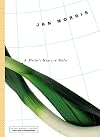
I can’t think of a better way to describe Morris’s meditative book about her home, Trefan Morys, than charming. The charm is equal parts her memoirs, the descriptions of a former farm outbuilding turned into a domicile, the woods and countryside in northwest Wales, and the character of her neighbors and the Welsh population as a whole.
Lists
Awards


You May Also Like


Associated Authors
Statistics
- Works
- 86
- Also by
- 53
- Members
- 10,609
- Popularity
- #2,242
- Rating
- 4.0
- Reviews
- 170
- ISBNs
- 417
- Languages
- 16
- Favorited
- 28

