
Colum McCann
Author of Let the Great World Spin: A Novel
About the Author
Irish writer Colum McCann was born near Dublin in 1965 and graduated from the University of Texas with a B.A. degree. He has worked as a newspaper journalist in Ireland and written several short stories and bestselling novels. The short film of Everything in this Country Must was nominated for an show more Academy Award in 2005. McCann's work has appeared in publications including The New York Times, The Atlantic Monthly, GQ, The Irish Times, La Repubblica, Die Zeit, Paris Match, the Guardian, and the Independent. He has won numerous awards, such as a Pushcart Prize, the Rooney Prize, the Irish Novel of the Year Award, and the 2002 Ireland Fund of Monaco Princess Grace Memorial Literary Award. In 2009 McCann was inducted into the Irish arts association Aosdana. He teaches in the Master of Fine Arts Creative Writing program at New York's Hunter College. (Bowker Author Biography) show less
Works by Colum McCann
Associated Works
The Art of the Story: An International Anthology of Contemporary Short Stories (1999) — Contributor — 394 copies, 5 reviews
Kingdom of Olives and Ash: Writers Confront the Occupation (2017) — Contributor — 164 copies, 5 reviews
Know the Past, Find the Future: The New York Public Library at 100 (2011) — Contributor — 132 copies, 4 reviews
Eat Joy: Stories and Comfort Food from 31 Celebrated Writers (2019) — Contributor — 84 copies, 3 reviews
Bullets Into Bells: Poets and Citizens Respond to Gun Violence (2017) — Introduction — 69 copies, 3 reviews
New Dubliners: Original Stories Celebrating 100 Years of Joyce's Dubliners (2005) — Contributor — 27 copies, 2 reviews
Tagged
Common Knowledge
- Birthdate
- 1965-02-28
- Gender
- male
- Education
- University of Texas
- Occupations
- writer
teacher - Organizations
- American Academy of Arts and Letters (2017)
- Awards and honors
- Esquire Magazine's "Best and Brightest (2003)
Hennessy Hall of Fame (2006)
Hughes and Hughes Novel of the Year (2003)
Ireland Fund of Monaco Literary Award
Rooney Prize for Irish Literature
Hennessy Award for Irish Literature (show all 11)
Oscar Nomination (Best Short Film ∙ 2005)
National Book Award 2009
Deauville Literary Prize 2009
International Dublin Literary Award 2011
Prix du Meilleur Livre Étranger 2020 - Agent
- Sarah Chalfant (Wylie Agency)
The Lavin Agency
Michael Prevett (Gotham Group) - Nationality
- Ireland (birth)
USA - Birthplace
- Dublin, County Dublin, Ireland
- Places of residence
- New York, New York, USA
Japan - Associated Place (for map)
- Dublin, County Dublin, Ireland
Members
Reviews

I’m all in with unconventionally structured literature, but even I struggled a bit at the beginning of Colm McCann’s new novel, Apeirogon. First of all, what is that word, apeirogon? For a math-illiterate like myself, looking it up hardly helped--but if it makes sense to others, well, here you go: a generalized polygon with a countably infinite number of sides. Countably infinite? OK. I also read a digital ARC, and this was definitely a time where a physical book would have been a show more superior experience. (To flip through the pages and actually see the numbered sections rise to 500 and then descend back down to one as opposed to jumping ahead in chunks trying to see where the numbers went, getting confused and then finally figuring out after about 10 minutes of flopping around.)
But, once I settled into it, McCann has written something pretty spectacular. Yes, it is written in one thousand sections--some only a sentence, most short paragraphs, and some a few pages. And yes, countably infinite sides. The story revolves around the Israeli/Palestine conflict while focusing mainly on two real men and their daughters, both killed during the struggle. McCann’s narrative weaves in and out with historical stories, quotations, and seemingly unconnected pieces that he eventually returns to with such finesse the connection then feels obvious. At times the narrative becomes so pervasive it feels like nonfiction, but that is not a negative for me as I was so wrapped up in the men’s story. McCann spins a complicated tale with infinite sides that is sure to be on many best of the year lists, and a must-read for literary fiction fans not afraid of a challenging structure and topic. show less
But, once I settled into it, McCann has written something pretty spectacular. Yes, it is written in one thousand sections--some only a sentence, most short paragraphs, and some a few pages. And yes, countably infinite sides. The story revolves around the Israeli/Palestine conflict while focusing mainly on two real men and their daughters, both killed during the struggle. McCann’s narrative weaves in and out with historical stories, quotations, and seemingly unconnected pieces that he eventually returns to with such finesse the connection then feels obvious. At times the narrative becomes so pervasive it feels like nonfiction, but that is not a negative for me as I was so wrapped up in the men’s story. McCann spins a complicated tale with infinite sides that is sure to be on many best of the year lists, and a must-read for literary fiction fans not afraid of a challenging structure and topic. show less
“I love the fact that our stories can cross all sorts of borders and boundaries.” – Colum McCann
Set in Jerusalem and surrounding area, each of two fathers, a Palestinian and an Israeli, has lost a daughter to radical violence. United in loss, they become friends and join Combatants for Peace, “a bi-national, volunteer based, movement working throughout Palestine and Israel to promote peace.” Their friendship is grounded in fact. This book provides insight into how their daily lives show more are impacted by the conflict. The primary theme is how we are similar in our response to grief, despite whatever differences we have in life. McCann’s message is geared at instilling a spirit of peace and understanding in the world.
“In geometry, an apeirogon (from the Greek apeiros, ‘infinite, boundless’ and gonia, ‘angle’) is a generalized polygon with a countably infinite number of sides. It can be considered as the limit of an n -sided polygon as n approaches infinity.” Thus, as more sides are included, it approaches the form of a circle. McCann has structured his book in such a manner. He takes pieces and parts of history, nature, war, art, and geography, and each becomes a “chapter.” Many of these subjects are further elaborated in subsequent chapters. Some include only a single sentence, while others are many paragraphs in length. The chapters count up to 500, then back down to 1. It is an inventive and unusual way to tell a story, or in this case, series of stories showing the interconnectivity of seemingly disparate entities.
The storyline is intentionally fragmented, with snippets of information scattered here and there. It is up to the individual to piece it all together in the mind’s eye. This aspect will appeal to some readers more than others. I found it extremely creative and applaud the author for attempting to bring more harmony into a discordant world. I will be interested to see how it is received by those that live in the areas described. This ambitious book will appeal to readers of experimental fiction. I expect it will win literary awards.
Many thanks to NetGalley for providing me with an advance reader's copy. This book is scheduled to be released February 25, 2020. show less
Set in Jerusalem and surrounding area, each of two fathers, a Palestinian and an Israeli, has lost a daughter to radical violence. United in loss, they become friends and join Combatants for Peace, “a bi-national, volunteer based, movement working throughout Palestine and Israel to promote peace.” Their friendship is grounded in fact. This book provides insight into how their daily lives show more are impacted by the conflict. The primary theme is how we are similar in our response to grief, despite whatever differences we have in life. McCann’s message is geared at instilling a spirit of peace and understanding in the world.
“In geometry, an apeirogon (from the Greek apeiros, ‘infinite, boundless’ and gonia, ‘angle’) is a generalized polygon with a countably infinite number of sides. It can be considered as the limit of an n -sided polygon as n approaches infinity.” Thus, as more sides are included, it approaches the form of a circle. McCann has structured his book in such a manner. He takes pieces and parts of history, nature, war, art, and geography, and each becomes a “chapter.” Many of these subjects are further elaborated in subsequent chapters. Some include only a single sentence, while others are many paragraphs in length. The chapters count up to 500, then back down to 1. It is an inventive and unusual way to tell a story, or in this case, series of stories showing the interconnectivity of seemingly disparate entities.
The storyline is intentionally fragmented, with snippets of information scattered here and there. It is up to the individual to piece it all together in the mind’s eye. This aspect will appeal to some readers more than others. I found it extremely creative and applaud the author for attempting to bring more harmony into a discordant world. I will be interested to see how it is received by those that live in the areas described. This ambitious book will appeal to readers of experimental fiction. I expect it will win literary awards.
Many thanks to NetGalley for providing me with an advance reader's copy. This book is scheduled to be released February 25, 2020. show less
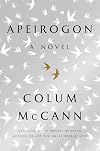
Extraordinary! Truly masterful writing. This novel will probably be my favorite book of the entire year.
I am Jewish, have several Arab friends, and have spent a lot of time in Israel so this book captured my attention when I first heard about it. The novel is based on the true story of a friendship between an Israeli father and a Palestinian father; a friendship, between two men who were raised to hate each other, formed from the shared grief of two fathers. Rami Elhanan’s 13-year-old show more daughter was killed by a suicide bomber; Bassam Aramin’s 10-year-old daughter killed by a rubber bullet.
Apeirogon - a shape with a countably infinite number of sides. This so aptly describes the complexity of the Israeli-Palestinian situation.
McCann presents the heartbreaking story of these two men with sensitivity and compassion and leaves us with a slight glimmer of hope. Written in fragments, instead of chapters, I got the sense of snapshots of the reality of life in Israel – a kaleidoscope of fragments coming together and shifting, morphing from one reality to another, constantly changing, yet remaining the same.
(Note: The movie rights for this book have already been purchased by Steven Spielberg’s company Amblin.)
Heartfelt thanks to Random House for the Advance Reading Copy. show less
I am Jewish, have several Arab friends, and have spent a lot of time in Israel so this book captured my attention when I first heard about it. The novel is based on the true story of a friendship between an Israeli father and a Palestinian father; a friendship, between two men who were raised to hate each other, formed from the shared grief of two fathers. Rami Elhanan’s 13-year-old show more daughter was killed by a suicide bomber; Bassam Aramin’s 10-year-old daughter killed by a rubber bullet.
Apeirogon - a shape with a countably infinite number of sides. This so aptly describes the complexity of the Israeli-Palestinian situation.
McCann presents the heartbreaking story of these two men with sensitivity and compassion and leaves us with a slight glimmer of hope. Written in fragments, instead of chapters, I got the sense of snapshots of the reality of life in Israel – a kaleidoscope of fragments coming together and shifting, morphing from one reality to another, constantly changing, yet remaining the same.
(Note: The movie rights for this book have already been purchased by Steven Spielberg’s company Amblin.)
Heartfelt thanks to Random House for the Advance Reading Copy. show less
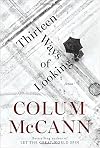
Perspective defines reality. Because perspectives vary so much between individuals and over time, objective definitions of reality can be illusive. Colum McCann explores these truisms in his new collection. The title story—actually a novella—uses Wallace Stevens’ 13 stanza poem, “Thirteen Ways of Looking at a Blackbird”, to remind us of the importance of perspective in defining reality. In thirteen chapters, we follow octogenarian, Peter Mendelssohn through his morning and lunch show more with his son at a posh Manhattan restaurant. With the deft use of memory and minor detail (“That little speck of blue on her wrist: such a perfect addition, like the wrongly tied knot on a Persian carpet.”), Mendelssohn reveals himself as a kind man. He is a retired judge and widower, who judges his situation and surroundings with good humor. The people who care for him are all minorities, but despite joking with them (He references aggressive drivers from NJ and the marginal driving skills of Asian immigrants by saying: “If you ever meet a Chinese man from New Jersey, buckle up.”), he is definitely not a racist. Without exception, he finds these people admirable and they find him endearing. After all, Mendelssohn himself was an immigrant, twice over. The plot turns on his son, Eliot, who has evolved from being a loving boy to a greedy, self-absorbed Wall Street moneyman, who is a racist and uses people. Mendelssohn is wrongly perceived as being linked with his son by one of the busboys in the restaurant and suffers dire consequences as a result. McCann skillfully uses the metaphor of closed circuit TV cameras like Stevens’ blackbirds to emphasize that even these devices have perspectives and may not always reliably represent reality. “More cameras in the city than birds in the sky.”
“What Time Is It Now, Where Are You?” explores—also in 13 chapters—the process of writing a story. The story the writer tells evolves into one where a woman Marine is alone on New Years Eve at an outpost in Afghanistan. Sandy Jewell longs to connect with her teenage stepson at midnight. As the narrative develops, the reader is introduced to the endless possibilities that are at the writer’s disposal to tell a story and how each may impact meaning. McCann wisely leaves the outcome of this one hanging. After all, he has made his point by then “The phone rings: it rings and rings and rings.”
In “Sh'khol”, Rebecca is working on a translation of an Arab Israeli’s story about a middle-aged couple whose two children die. McCann’s title comes from a word that Rebecca struggles to translate: Sh'khol = a parent who has lost a child. This soon becomes meaningful for Rebecca. The setting is an isolated house in Western Ireland at Christmas. She is there alone with her adopted 13-year-old son, Tomas, who is deaf and may be slightly retarded from the effects of fetal alcohol syndrome. Thrilled by her gift of a wetsuit, Tomas disappears on Christmas morning presumably to try out the suit in the sea. A fruitless search leaves Rebecca stricken with guilt and the reader totally engrossed. It is not possible to reveal the outcome of this story without spoiling it, but once again McCann expertly leaves the reader with much to consider regarding how his characters may be perceived.
The narrator of “Treaty” is Sister Beverly Clarke, an ageing Catholic nun who struggles with memories of having been tortured and raped in the jungle many years previously by Carlos, a Latin American revolutionary. When she sees him on a television news program transformed into a peace negotiator in London, she is shocked and decides that confronting him now may help her to overcome her trauma. She wonders how it is possible for a person to change their persona so radically. The final confrontation is remarkable in it understatement, but the resolution seems more firm than those in the other stories in the collection. McCann manages to expose the truth with just one word spoken in Spanish by Carlos. Unfortunately, repeating that word here would spoil the story. Once again, closed circuit cameras are used as a metaphor for objective reality here, but we realize that they cannot capture the reality of the confrontation. Instead they capture what can be seen and this is not the reality that Sister Clarke learns from Carlos’ single word.
Clearly, McCann is a master of his craft. These stories are well-written and suspenseful; the narratives are lyrical; few words carry immense meaning; the detail and depth are indeed remarkable. show less
“What Time Is It Now, Where Are You?” explores—also in 13 chapters—the process of writing a story. The story the writer tells evolves into one where a woman Marine is alone on New Years Eve at an outpost in Afghanistan. Sandy Jewell longs to connect with her teenage stepson at midnight. As the narrative develops, the reader is introduced to the endless possibilities that are at the writer’s disposal to tell a story and how each may impact meaning. McCann wisely leaves the outcome of this one hanging. After all, he has made his point by then “The phone rings: it rings and rings and rings.”
In “Sh'khol”, Rebecca is working on a translation of an Arab Israeli’s story about a middle-aged couple whose two children die. McCann’s title comes from a word that Rebecca struggles to translate: Sh'khol = a parent who has lost a child. This soon becomes meaningful for Rebecca. The setting is an isolated house in Western Ireland at Christmas. She is there alone with her adopted 13-year-old son, Tomas, who is deaf and may be slightly retarded from the effects of fetal alcohol syndrome. Thrilled by her gift of a wetsuit, Tomas disappears on Christmas morning presumably to try out the suit in the sea. A fruitless search leaves Rebecca stricken with guilt and the reader totally engrossed. It is not possible to reveal the outcome of this story without spoiling it, but once again McCann expertly leaves the reader with much to consider regarding how his characters may be perceived.
The narrator of “Treaty” is Sister Beverly Clarke, an ageing Catholic nun who struggles with memories of having been tortured and raped in the jungle many years previously by Carlos, a Latin American revolutionary. When she sees him on a television news program transformed into a peace negotiator in London, she is shocked and decides that confronting him now may help her to overcome her trauma. She wonders how it is possible for a person to change their persona so radically. The final confrontation is remarkable in it understatement, but the resolution seems more firm than those in the other stories in the collection. McCann manages to expose the truth with just one word spoken in Spanish by Carlos. Unfortunately, repeating that word here would spoil the story. Once again, closed circuit cameras are used as a metaphor for objective reality here, but we realize that they cannot capture the reality of the confrontation. Instead they capture what can be seen and this is not the reality that Sister Clarke learns from Carlos’ single word.
Clearly, McCann is a master of his craft. These stories are well-written and suspenseful; the narratives are lyrical; few words carry immense meaning; the detail and depth are indeed remarkable. show less
Lists
Five star books (4)
Check Library (1)
To Read (1)
Ballet Fiction (1)
Awards


You May Also Like


Associated Authors
Statistics
- Works
- 23
- Also by
- 16
- Members
- 14,310
- Popularity
- #1,609
- Rating
- 3.9
- Reviews
- 764
- ISBNs
- 430
- Languages
- 21
- Favorited
- 42


