
Harold Long
Author of Dynamics of Isshinryu Karate Blue and Green Belt Book 2
Works by Harold Long
The Dynamics of Isshinryu Karate 2 copies
Counter Attack 2 copies
Long and Wheeler's Who's Who in Isshinryu Directory of Black Belts and Dojos (1981) 1 copy, 1 review
Tagged
Common Knowledge
Members
Reviews

I studied Isshin-ryu about 25 years ago and wanted to relearn the kata. The book is great for this purpose. My only complaint is that the 15 basic exercises section is textual only. The history section is pretty good too, as is the who's who in Isshin-ryu. -E. Pesak
We consider this book as the definitive text for our Dojo. It has a bit of history and all of the basics of Isshin-Ryu karate as taught by Harold Long.
The history portion of the book is easy to read and informative. The Kata show more portion is an excellent reference with step-by-step photos.-William McKeehan
Contents
Acknowledgements
Dedication
Introduction
Chapter 1 The evolution of karate
Karate's evolution
The Okinawan masters
Okinawan weapons
Chapter 2 The hsitory of isshin-ryu karate
The beginnings
The birth of isshin-ryu karate
Isshin-ryu: One heart way
Chapter 3 Principles and philosophy
Philosophy of karate
Twelve major features of isshin-ryu
Code of isshin-ryu karate
Isshin-ryu oath
What is karate?
Courtesy and respect
Secrets of Okinawan defense
Discovering your ki-The mysterious energy
Breath control
Principles of self-defense
How to generate power punches
How to take a punch
Chapter 4 Basics
Stances
Charts I and II
Kata
Kumite
Kobudo
Seven steps to learning katas
Kata movement indicators
Hand striking surfaces
Chapter 5 Seisan kata
Chapter 6 Seiuchin kata
Chapter 7 Naihanchin kata
Chapter 8 Wansu kata
Chapter 9 Chinto kata
Chapter 10 Kusanku kata
Chapter 11 Sunsu kata
Chapter 12 Sanchin kata
Chapter 13 Insight
Chapter 14 People
Chapter 15 Interview
Chapter 16 Glossary
Chapter 17 About the authors
Bibliography
Appendix
Karate genealogy
The birth of isshin-ryu karate-family tree show less
We consider this book as the definitive text for our Dojo. It has a bit of history and all of the basics of Isshin-Ryu karate as taught by Harold Long.
The history portion of the book is easy to read and informative. The Kata show more portion is an excellent reference with step-by-step photos.-William McKeehan
Contents
Acknowledgements
Dedication
Introduction
Chapter 1 The evolution of karate
Karate's evolution
The Okinawan masters
Okinawan weapons
Chapter 2 The hsitory of isshin-ryu karate
The beginnings
The birth of isshin-ryu karate
Isshin-ryu: One heart way
Chapter 3 Principles and philosophy
Philosophy of karate
Twelve major features of isshin-ryu
Code of isshin-ryu karate
Isshin-ryu oath
What is karate?
Courtesy and respect
Secrets of Okinawan defense
Discovering your ki-The mysterious energy
Breath control
Principles of self-defense
How to generate power punches
How to take a punch
Chapter 4 Basics
Stances
Charts I and II
Kata
Kumite
Kobudo
Seven steps to learning katas
Kata movement indicators
Hand striking surfaces
Chapter 5 Seisan kata
Chapter 6 Seiuchin kata
Chapter 7 Naihanchin kata
Chapter 8 Wansu kata
Chapter 9 Chinto kata
Chapter 10 Kusanku kata
Chapter 11 Sunsu kata
Chapter 12 Sanchin kata
Chapter 13 Insight
Chapter 14 People
Chapter 15 Interview
Chapter 16 Glossary
Chapter 17 About the authors
Bibliography
Appendix
Karate genealogy
The birth of isshin-ryu karate-family tree show less
Harold G. Long was born in Rockwood, Tennessee, on September 3, 1930. He was one of thirteen children born of Bessie Marie Fance Long and John Riley Long. His family moved from Rockwood to Morgan County in 1934 where he attended elementary school in Petros, Tennessee. Mr. Long attended Central High School in Wartburg, Tennessee where he excelled as a football player.
In 1949, Mr. Long joined the United States Marine Corps, but was not called to duty until 1950. He was sent to Paris Island, show more South Carolina where completed his basic training, and then to Camp LeJeune, North Carolina, where he completed advance training. Shortly thereafter, the Korean conflict broke out and he was transferred to Camp Pendleton, California, to bring the 1st Marine Division up to strength.
In 1950, as a young marine in Korea, he fought in the battle of the Chosen Reservoir against the Chinese Army. While temperatures ranged between four degrees below zero to thirty-five degrees below zero, the Chinese Army had orders to annihilate the marines at the Chosen Reservoir. This battle has been termed 'the most savage fighting in modern warfare' by today's historians. The marines who survived this battle became known as the 'Chosen Few'. Today, this group is referred to as the 'Eternal Band of Brothers'.
Mr. Long married Doris Witsberger on October 18, 1952 in Wheeling, West Virginia. They had three sons, Richard, the oldest, born in Camp LeJeune, North Carolina; Michael, born in San Diego, California; and Gary, born in Albuquerque, New Mexico.
In the mid 1950's, Mr. Long was stationed on Okinawa. He had always had the desire to study martial arts and inquired of his house girl who the best karate instructor was on Okinawa. She did not hesitate in telling him that in Chun Village there was a teacher by the name of Tatsuo Shimabuku, who had the reputation of being the top karate instructor on Okinawa. After three visits to Master Shimabuku's dojo, he was accepted as a student and began training. He studied for nineteen months, as much as eight hours a day, seven days a week, in some cases.
When Mr. Long returned to the United States, he was stationed at Twenty-nine Palms, California, where he opened his first dojo in his back yard. After his discharge from the Marine Corps, in July 1959, he returned to East Tennessee, and opened a dojo at the Marine Reserve Training Center.
In 1963, he attended the 'Systems Head meeting' of the first World Karate Tournament in Chicago, Illinois, to set-up rules for all American karate tournaments. In attendance were John Kehan, Phil Kepal, Harold Long, George Mattson, Anthony Mirikan, Roy Oshiro, Don Nagle, Ed Parker, Wendall Reeves, Jun Rehe, Mas Tsuroka, and Robert Trias. Rules for kata and kumite were adopted at this meeting to be used for all tournaments in the United States regardless of style. All of these rules, with one exception, were proposed by Mr. Long. He also served as Vice President of the United States Karate Association for several years.
In 1974, Mr. Long returned to Okinawa to visit with Grand Master Tatsuo Shimabuku. During this visit, he received permission to start a new Isshin-Ryu karate association in the United States.
In December of 1995, Master Long closed his dojo in Knoxville, Tennessee, and retired from active teaching. He moved into the US Navel Retirement Home in Gulfport, Mississippi, in 1996. He remained active representing Isshin-Ryu Karate at tournaments, clinics, seminars and special events.
In December of 1997, he represented Isshin-Ryu karate at the World Karate Union Hall of Fame's annual event in Australia. While returning home to Gulfport, he was involved in an automobile accident. He underwent several surgeries to repair ruptured blood vessels in his brain. In August of 1998, while still recovering from the accident, he flew to Knoxville, Tennessee to visit his family. During this visit, he was diagnosed with terminal cancer. He remained in Knoxville until his passing on October 12, 1998. Master Long was laid to rest at Oak Grove Cemetery in Rockwood, Tennessee on October 15, 1998.
Listed below are his major accomplishments and contributions to Isshin-Ryu Karate.
1975 - Founded the International Isshin-Ryu Karate Association (IIKA).
1978 - Co-authored a three book series, The Dynamics of Isshin-Ryu Karate,
with Allen Wheeler.
1981 - Founded the Isshin-Ryu Hall of Fame.
1987 - Inducted into the Isshin-Ryu Hall of Fame.
1988 - Co-authored 'Okinawan Weapons' with Phil Little.
1991 - Founded the Isshin-Ryu Black Belt Society.
- Co-produced an eight tape instructional video series, Isshin-Ryu Karate
1992 - The Ultimate Self-Defense with Tim McGhee.
1993 - Inducted into the Knoxville Sports Hall of Fame, in Knoxville, Tennessee.
1994 - Co-produced the first national television coverage of the Isshin-Ryu Hall of Fame Karate Tournament with Tim McGhee.
1995 - Issued membership into Tao of the Fist Martial Arts Fraternity.
- Co-authored, Who's Who in Isshin-Ryu, with Phyllis Manis and Tim McGhee.
1996 - Issued membership into the World Head of Family Sokeship Council for Isshin-Ryu Karate.
1997 - Awarded a 'Doctorate Degree' by the College of Martial Arts.
1998 - Received the 'Golden Life Achievement Award' and 'Martial Arts Pioneer Award' from the World Head of Family Sokeship Council Hall of Fame.
- Inducted into the World Karate Union Hall of Fame.
- Inducted into the World Head of Family Sokeship Council Hall of Fame.
- Co-authored, Isshin-Ryu Karate - The Ultimate Fighting Art, , with Tim McGhee.
- Inducted into the Universal Martial Arts Hall of Fame.
- Received 'The Living Legend' award from the World Head Of Family Sokeship Council.
Contents
Acknowledgements
Reflections on Master Shimabuku
Biographical sketches
In memoriam
Directory of black belts
Directory of dojos
Personal directory show less
In 1949, Mr. Long joined the United States Marine Corps, but was not called to duty until 1950. He was sent to Paris Island, show more South Carolina where completed his basic training, and then to Camp LeJeune, North Carolina, where he completed advance training. Shortly thereafter, the Korean conflict broke out and he was transferred to Camp Pendleton, California, to bring the 1st Marine Division up to strength.
In 1950, as a young marine in Korea, he fought in the battle of the Chosen Reservoir against the Chinese Army. While temperatures ranged between four degrees below zero to thirty-five degrees below zero, the Chinese Army had orders to annihilate the marines at the Chosen Reservoir. This battle has been termed 'the most savage fighting in modern warfare' by today's historians. The marines who survived this battle became known as the 'Chosen Few'. Today, this group is referred to as the 'Eternal Band of Brothers'.
Mr. Long married Doris Witsberger on October 18, 1952 in Wheeling, West Virginia. They had three sons, Richard, the oldest, born in Camp LeJeune, North Carolina; Michael, born in San Diego, California; and Gary, born in Albuquerque, New Mexico.
In the mid 1950's, Mr. Long was stationed on Okinawa. He had always had the desire to study martial arts and inquired of his house girl who the best karate instructor was on Okinawa. She did not hesitate in telling him that in Chun Village there was a teacher by the name of Tatsuo Shimabuku, who had the reputation of being the top karate instructor on Okinawa. After three visits to Master Shimabuku's dojo, he was accepted as a student and began training. He studied for nineteen months, as much as eight hours a day, seven days a week, in some cases.
When Mr. Long returned to the United States, he was stationed at Twenty-nine Palms, California, where he opened his first dojo in his back yard. After his discharge from the Marine Corps, in July 1959, he returned to East Tennessee, and opened a dojo at the Marine Reserve Training Center.
In 1963, he attended the 'Systems Head meeting' of the first World Karate Tournament in Chicago, Illinois, to set-up rules for all American karate tournaments. In attendance were John Kehan, Phil Kepal, Harold Long, George Mattson, Anthony Mirikan, Roy Oshiro, Don Nagle, Ed Parker, Wendall Reeves, Jun Rehe, Mas Tsuroka, and Robert Trias. Rules for kata and kumite were adopted at this meeting to be used for all tournaments in the United States regardless of style. All of these rules, with one exception, were proposed by Mr. Long. He also served as Vice President of the United States Karate Association for several years.
In 1974, Mr. Long returned to Okinawa to visit with Grand Master Tatsuo Shimabuku. During this visit, he received permission to start a new Isshin-Ryu karate association in the United States.
In December of 1995, Master Long closed his dojo in Knoxville, Tennessee, and retired from active teaching. He moved into the US Navel Retirement Home in Gulfport, Mississippi, in 1996. He remained active representing Isshin-Ryu Karate at tournaments, clinics, seminars and special events.
In December of 1997, he represented Isshin-Ryu karate at the World Karate Union Hall of Fame's annual event in Australia. While returning home to Gulfport, he was involved in an automobile accident. He underwent several surgeries to repair ruptured blood vessels in his brain. In August of 1998, while still recovering from the accident, he flew to Knoxville, Tennessee to visit his family. During this visit, he was diagnosed with terminal cancer. He remained in Knoxville until his passing on October 12, 1998. Master Long was laid to rest at Oak Grove Cemetery in Rockwood, Tennessee on October 15, 1998.
Listed below are his major accomplishments and contributions to Isshin-Ryu Karate.
1975 - Founded the International Isshin-Ryu Karate Association (IIKA).
1978 - Co-authored a three book series, The Dynamics of Isshin-Ryu Karate,
with Allen Wheeler.
1981 - Founded the Isshin-Ryu Hall of Fame.
1987 - Inducted into the Isshin-Ryu Hall of Fame.
1988 - Co-authored 'Okinawan Weapons' with Phil Little.
1991 - Founded the Isshin-Ryu Black Belt Society.
- Co-produced an eight tape instructional video series, Isshin-Ryu Karate
1992 - The Ultimate Self-Defense with Tim McGhee.
1993 - Inducted into the Knoxville Sports Hall of Fame, in Knoxville, Tennessee.
1994 - Co-produced the first national television coverage of the Isshin-Ryu Hall of Fame Karate Tournament with Tim McGhee.
1995 - Issued membership into Tao of the Fist Martial Arts Fraternity.
- Co-authored, Who's Who in Isshin-Ryu, with Phyllis Manis and Tim McGhee.
1996 - Issued membership into the World Head of Family Sokeship Council for Isshin-Ryu Karate.
1997 - Awarded a 'Doctorate Degree' by the College of Martial Arts.
1998 - Received the 'Golden Life Achievement Award' and 'Martial Arts Pioneer Award' from the World Head of Family Sokeship Council Hall of Fame.
- Inducted into the World Karate Union Hall of Fame.
- Inducted into the World Head of Family Sokeship Council Hall of Fame.
- Co-authored, Isshin-Ryu Karate - The Ultimate Fighting Art, , with Tim McGhee.
- Inducted into the Universal Martial Arts Hall of Fame.
- Received 'The Living Legend' award from the World Head Of Family Sokeship Council.
Contents
Acknowledgements
Reflections on Master Shimabuku
Biographical sketches
In memoriam
Directory of black belts
Directory of dojos
Personal directory show less

Master Harold Long is a former sergeant who began his career in isshinryu karate in Chun Village on Okinawa in the mid 1950s under the legendary Grand Master and founder of isshinryu karate, Tatsuo Shimabuku.
Throughout the years, through hard practice and teaching, Master Harold Long has become a very respected karate master. He has directly influenced thousands of isshinryu karate-kas. He presently teaches karate full time, writes books, holds clinics and seminars and holds the position of show more Chairman of the Board of the International Isshinryu Karate Association, which also operates the Isshinryu Hall of Fame for the entire world-wide system of isshinryu karate. Master Long is presently a 10th degree black belt.
Master Long hopes that all of his books on isshinryu karate will be used by all isshinryu karate-kas to study, teach and preserve the lifetime work of Grand Master Tatsuo Shimabuku, whose ultimate goal was to leave a rich legacy of karate knowledge for all of his followers.
Phil Little was raised in Knoxville, Tennessee. The art of isshinryu karate has been an important part of his life for the last 20 years. He was introduced to this elite martial art as a boy and was fortunate to be under the direction of Master Harold Long.
Through Master Long's guidance, Little won two international light heavy-weight fighting championships. In 1981, Little ranked 3rd in the U.S. in karate and weapons. He has been featured in many national martial arts magazines.
At the present, Little is a 6th dan. He has promoted, directed and served as chief referee at international tournaments. He was appointed to the Board of Directors of the International Isshinryu Karate Association (IIKA). Later he was elected chairman of the IIKA Hall of Fame Board. In 1985 the IIKA presented Little with the Hall of Fame 'Dojo of the Year Award.'
Little has owned and operated four dojos and a health and fitness center. Presently he is in a diversified consulting business, which included martial arts, health and fitness, engineering and construction.
Contents
Introduction to the bo
Bo stances
Technique illustrations
Bo basics
Kata 1: Tokomeni no kon
Kata 2: Urasoe-no-kon
Kata 3: Shishin no kon dai show less
Throughout the years, through hard practice and teaching, Master Harold Long has become a very respected karate master. He has directly influenced thousands of isshinryu karate-kas. He presently teaches karate full time, writes books, holds clinics and seminars and holds the position of show more Chairman of the Board of the International Isshinryu Karate Association, which also operates the Isshinryu Hall of Fame for the entire world-wide system of isshinryu karate. Master Long is presently a 10th degree black belt.
Master Long hopes that all of his books on isshinryu karate will be used by all isshinryu karate-kas to study, teach and preserve the lifetime work of Grand Master Tatsuo Shimabuku, whose ultimate goal was to leave a rich legacy of karate knowledge for all of his followers.
Phil Little was raised in Knoxville, Tennessee. The art of isshinryu karate has been an important part of his life for the last 20 years. He was introduced to this elite martial art as a boy and was fortunate to be under the direction of Master Harold Long.
Through Master Long's guidance, Little won two international light heavy-weight fighting championships. In 1981, Little ranked 3rd in the U.S. in karate and weapons. He has been featured in many national martial arts magazines.
At the present, Little is a 6th dan. He has promoted, directed and served as chief referee at international tournaments. He was appointed to the Board of Directors of the International Isshinryu Karate Association (IIKA). Later he was elected chairman of the IIKA Hall of Fame Board. In 1985 the IIKA presented Little with the Hall of Fame 'Dojo of the Year Award.'
Little has owned and operated four dojos and a health and fitness center. Presently he is in a diversified consulting business, which included martial arts, health and fitness, engineering and construction.
Contents
Introduction to the bo
Bo stances
Technique illustrations
Bo basics
Kata 1: Tokomeni no kon
Kata 2: Urasoe-no-kon
Kata 3: Shishin no kon dai show less
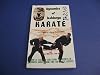
The founder of isshinryu, Master Ttsuo Shimaabuku: Master of shorin-riyiu karrate; Master of goju-ryui karate; Master of weaons
Instructor to the Japanese armed forces
Instructor to the U.S. Marines
Innovator of the ancient orinetal system of dynamic tension used to build a body of explosive ower
The most authoritative book on isshinryu karate-Complete and fully illustrated wtih action photos
Learn self-defense against multipel attackers
Develop the mysterious power of ki
Learn the secrets of show more making a proper fist
Develop the punch that recoils faster than you send it out
Be able to withstand the strongest punch
Learn the three seacrets that will double your hitting power
Contents
About the book
Foreward
How to use
Belt requirements
Biographies-Long; Wheeler; Shimabuku
Blows: Consequences
Code Drills-Chart I, and II; Knife
Emblem
Features of system
Glossary
Katas-Naihanchin; Sanchin; Seisan; Seiuchin; Seven steps
Matching-Sample rules; Techniques
Kata movement indicators
Punching power-How to generate; How to take
Self-defense-Principles; Tactics (Men); Tactics (Woment)
Sources for study
Stances show less
Instructor to the Japanese armed forces
Instructor to the U.S. Marines
Innovator of the ancient orinetal system of dynamic tension used to build a body of explosive ower
The most authoritative book on isshinryu karate-Complete and fully illustrated wtih action photos
Learn self-defense against multipel attackers
Develop the mysterious power of ki
Learn the secrets of show more making a proper fist
Develop the punch that recoils faster than you send it out
Be able to withstand the strongest punch
Learn the three seacrets that will double your hitting power
Contents
About the book
Foreward
How to use
Belt requirements
Biographies-Long; Wheeler; Shimabuku
Blows: Consequences
Code Drills-Chart I, and II; Knife
Emblem
Features of system
Glossary
Katas-Naihanchin; Sanchin; Seisan; Seiuchin; Seven steps
Matching-Sample rules; Techniques
Kata movement indicators
Punching power-How to generate; How to take
Self-defense-Principles; Tactics (Men); Tactics (Woment)
Sources for study
Stances show less
Statistics
- Works
- 11
- Members
- 40
- Popularity
- #370,099
- Rating
- 3.0
- Reviews
- 6
- ISBNs
- 8