
Alice Munro (1931–2024)
Author of Runaway
About the Author
Alice Munro was born Alice Laidlaw in Wingham, Ontario on July 10, 1931. She published her first story, The Dimensions of a Shadow, while a student at the University of Western Ontario in 1950. She left the university in 1951 to get married and start a family. In 1972 she became Writer in Residence show more at the University of Western Ontario. Her first collection, Dance of the Happy Shades, was published in 1968 and won the Governor General's Award, Canada's highest literary prize. Her other works include Lives of Girls and Women, The View from Castle Rock, Something I've Been Meaning to Tell You, Too Much Happiness, and Dear Life. She has received several awards including the Governor General's Award for fiction for Who Do You Think You Are? and The Progress of Love, the Giller Prize for Runaway in 2004, the Man Booker International Prize in 2009 for her lifetime body of work, and the 2013 Nobel Prize in Literature. Her stories have appeared in numerous publications including The New Yorker, The Paris Review, and The Atlantic Monthly. Also, in 2013, her title Dear Life: Stories made The New York Times Best Seller List. (Bowker Author Biography) show less
Series
Works by Alice Munro
Il ponte galleggiante - Ortiche 20 copies
Julieta (Movie Tie-in Edition): Three Stories That Inspired the Movie (Vintage International) (2016) 19 copies, 2 reviews
Nettles 5 copies
Child's Play 4 copies
Meneseteung 4 copies
Boys and Girls 3 copies
Prue [short story] 2 copies
Lišaj 1 copy
In fuga 1 copy
Жребий; Лицо 1 copy
E SHTRENJTA JETË 1 copy
The Shining Houses 1 copy
Leaving Maverley 1 copy
La vita di chi resta 1 copy
Egy joravalo nö szerelme 1 copy
Lífið að leysa 1 copy
"Walker Brothers Cowboy" 1 copy
Save the reaper 1 copy
ALGO QUE QUERIA CONTARTE 1 copy
"The Peace of Utrecht" 1 copy
Face 1 copy
Munro, Alice Archive 1 copy
Fathers (short story) 1 copy
Munro Alice 1 copy
Stinkreich : eine Erzählung. 1 copy
A Real Life 1 copy
Silence [short story] 1 copy
Dulse (in Le lune di Giove) 1 copy
The Albanian Virgin 1 copy
Teddy Tum Tum's Boating Trip 1 copy
Scary old sex: stories 1 copy
Train 1 copy
Axis 1 copy
Wood 1 copy
Some Women 1 copy
Free Radicals 1 copy
Deep-Holes 1 copy
Wenlock Edge 1 copy
Associated Works
Literature: An Introduction to Fiction, Poetry, and Drama (1995) — Contributor, some editions — 1,010 copies, 7 reviews
The Scribner Anthology of Contemporary Short Fiction: Fifty North American American Stories Since 1970 (1999) — Contributor — 583 copies, 4 reviews
In the Stacks: Short Stories about Libraries and Librarians (2002) — Contributor — 547 copies, 13 reviews
The World of the Short Story: A 20th Century Collection (1986) — Contributor — 511 copies, 4 reviews
Points of View: An Anthology of Short Stories, Revised & Updated Edition (1995) — Contributor — 442 copies, 7 reviews
You've Got to Read This: Contemporary American Writers Introduce Stories that Held Them in Awe (1994) — Contributor — 414 copies, 3 reviews
First Fiction: An Anthology of the First Published Stories by Famous Writers (1994) — Contributor — 196 copies, 1 review
In Another Part of the Forest: An Anthology of Gay Short Fiction (1994) — Contributor — 191 copies, 2 reviews
More Stories We Tell: The Best Contemporary Short Stories by North American Women (2004) — Contributor — 66 copies
Literary Traveller: An Anthology of Contemporary Short Fiction (1994) — Contributor — 55 copies, 1 review
Jo's Girls: Tomboy Tales of High Adventure, True Grit, and Real Life (1997) — Contributor — 48 copies
Rose del Canada : Shields, Munro, Svendsen, Gallant, Birdsell, Laurence, Atwood (1994) — Contributor — 3 copies
Tagged
Common Knowledge
- Canonical name
- Munro, Alice
- Legal name
- Laidlaw, Alice Anne (born)
- Birthdate
- 1931-07-10
- Date of death
- 2024-05-13
- Gender
- female
- Education
- University of Western Ontario
- Occupations
- bookstore owner
short story writer
novelist - Organizations
- Munro's Books
- Awards and honors
- Nobel Prize (Literature, 2013)
American Academy of Arts and Letters (Foreign Honorary, Literature, 1992)
Cavaliere dell'Ordre des Arts et des Lettres (2010)
CBA Libris Award (1995, 1999, 2005)
Lannan Literary Award (1995)
Lorne Pierce Medal (1993) (show all 17)
Molson Prize (1990)
PEN/Malamud Award (1997)
Marian Engel Award (1986)
Governor General's Literary Award (1968, 1978, 1986)
National Book Critics Circle (1998)
Giller Prize (1999, 2004)
Rogers Writers' Trust Fiction Prize (2004)
Trillium Book Award (1991, 1999, 2013)
Canada-Australia Literary Prize (1977)
Canadian Booksellers Award (1971)
U.S. National Arts Club Medal of Honor for Literature (2005) - Agent
- William Loverd
- Relationships
- Munro, Sheila (daughter)
Gibson, Douglas (editor) - Cause of death
- complications of dementia
- Nationality
- Canada
- Birthplace
- Wingham, Ontario, Canada
- Places of residence
- Wingham, Ontario, Canada
Vancouver, British Columbia, Canada
Victoria, British Columbia, Canada
Clinton, Ontario, Canada
Comox, British Columbia, Canada - Place of death
- Port Hope, Ontario, Canada (care home)
- Associated Place (for map)
- Canada
Members
Discussions
Alice Munro legacy in Canadian Literature (November 2024)
Alice Munro in Folio Society Devotees (May 2024)
March 2015: Alice Munro in Monthly Author Reads (July 2015)
Three Cheers for Alice Munro! in Canadian Bookworms (October 2013)
Alice Munro in Book talk (October 2013)
Reviews

Alice Munro’s brilliant fourth book, the story cycle Who Do You Think You Are?, chronicles thirty or so years of Rose’s life, from humble small-town origins to her mature years as a woman who is more-or-less content with where that life has taken her. In hardscrabble Hanratty, Ontario, Rose grows up in a fractured household. Her mother has died and her father married Flo, a woman with a judgmental disposition who scorns pretention and preaches discipline, but who is rarely satisfied and show more constantly criticizes. Rose’s rebellious, questioning nature guarantees conflict, first within the home (“Royal Beatings”) and later on as she grows into a young woman who falls in and out of love and meanders from one profession to another, one lover to another, unsure what she really wants and who she wants to be. Embarrassed by her rustic, backward origins, she is not above playing the poorhouse card when it can be turned to her advantage (“Privilege”). In university she meets Patrick, whose family is well off, but it is more out of obligation than love that she agrees to marry him. Patrick worships her—sees her as a “damsel in distress”—and though Rose rejects that characterization, she can’t stand the idea of disappointing him; and also, being an actress, she can play the part and play it well (“The Beggar Maid”). No wonder the marriage fails, after which Rose sets out to find herself, working in television and on radio, indulging in desultory affairs, and playing little more than a bit part in her daughter’s life. It’s not until she meets Simon that she becomes truly smitten (“Simon’s Luck”) and makes a genuine effort. But the connection doesn’t last as, without explanation, Simon vanishes from her life. Rose’s story comes full circle when, now in her forties, she returns to Hanratty to deal with her aging stepmother, Flo, get her into a care home and pack up the house (“Who Do You Think You Are?”). The question posed by the book’s title resonates throughout, as young Rose chafes against the narrow moral and cultural confines of her upbringing only to escape into a larger world that, as she discovers, will always look for ways to impose limits on what she can say and do, limits that Rose rarely accepts and continually challenges. Published in 1978, in Who Do You Think You Are? Munro is writing about a post-war world that’s struggling to shrug off the stuffy traditions inherited from previous generations, a world where—via new media like television—people are inviting alien, unfamiliar and liberating concepts and behaviours into their homes on a daily basis. The psychological depth of Munro’s writing is often astonishing. Probing her characters without mercy, she reveals them as flawed humans who, though certainly capable of kindness, often choose instead to be manipulative, cruel, and selfish. The volume won Munro her 2nd Governor General’s Award and was shortlisted for the Booker Prize (under its international title The Beggar Maid). A must-read for any student of the 20th-century short story, almost 5 decades after publication Who Do You Think You Are? remains an iconic work of unquestionable power and devastating insight. show less
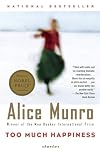
Alice Munro is a marvel. She focuses in on very specific subject matter (though she pushes those boundaries more in this collection than any other I have read, especially in the title story). Yet with all the similarities in her work, every story surprises me, and leaves me feeling off kilter. I think its the way she frames stories. Her narratives start at moments that seem like the middle of a story and make you wonder what came before, and then the stories end somewhere utterly different show more from where you expect them to end. It leaves you feeling like you missed something before and after, and yet each story is absolutely complete. I do not know how she does this, but she always does. I crave that off-kilter feeling. There is a beauty in the way she manages to make you see things from uncomfortable perspectives which implies a mastery of language. Munro brings language to heel and makes it do what she wants to it to do, but her language is not expansive or beautiful. Her language is plain, sometimes rather ugly, sometimes positively vulgar. Yet there are no more perfect words for what she is saying.
Bottom line, another perfect collection, though for me the greatest among equals was Wenlock Edge, which is odd and creepy and speaks exquisitely to the ways in which women accept the unacceptable, repress our honest reactions, take the blame for wrongs visited upon us, and lower our standards to recast situations to make even the most repulsive things appear as if they are satisfying to us. show less
Bottom line, another perfect collection, though for me the greatest among equals was Wenlock Edge, which is odd and creepy and speaks exquisitely to the ways in which women accept the unacceptable, repress our honest reactions, take the blame for wrongs visited upon us, and lower our standards to recast situations to make even the most repulsive things appear as if they are satisfying to us. show less
Chosen for our book group because of Munro's recent death, this was a fantastic read. I haven't read anything by her because I am not a fan of short stories and even though it could be argued this was not really a novel, it was more novel than a set of themed short stories.
The novel tells of the coming-of-age of Del, the narrator who is gradually revealed to us. The stories/chapters each detail a particular point in the growing up but also include all the details of small town life that are show more going on around Del and her family. We start with Flats Road where Del and her family live much to her mother's chagrin. The place is aptly named with Del's mother saying that they live at the end of Flats Road to make it sound as if they don't come from there. In this story we are introduced to the fact that Del's mother is a disappointed woman but one who has modern ideas that don't fit with the rest of her local society or family and who reminds me not a little of Mrs Bucket (pronounced Bouquet). This out of the way, small place is contrasted with the big city where Uncle Benny goes to rescue a little girl and who gets completely and utterly lost and can only come home, never getting to the address that he was searching for. Surely, this is a metaphor for their lives.
The third story, Princess Ida, shifts focus to Del's mother and being unfulfilled in terms of education. By this time, Del and her mother are living in Jubilee whilst Del's father and brother remain out on the edge of the country at the fox farm. Del's mother tries to break into the society where she feels she belongs but it appears desperate and she is ignored by the other women and eventually gives up. It is at this point that Del realises that she is embarrased by her mother and starts to consider her own place in the world.
For the women in this book there is a constant struggle between pride, shame, ambition and education versus sex, jobs and families. I loved the Aunts in the second story, Heirs of the Living Body, who were clever but trained to be domestic and were excellent at it. But sometimes, their cleverness slipped out as they discussed others,
The nimble malice that danced under their courtesies . . .
p49
The writing is sublime, smooth and flowing with all the detail of small towns beautifully brought to our attention. When talking about the woman who led the book club in Jubilee, Munro writes
She had a magnificent name she would serve up to people sometimes, like a scaly fish on a platter, all its silvery, scaly syllables intact, but it was no use, nobody in Jubilee could pronounce or remember it.
p92
In one sentence we learn of the town's difficulties with a foreign name, their attitudes towards it, and how its owner played on this.
I am pretty sure one of the questions that we will discuss will in some way focus on the different ways men and girls and women are portrayed in the book.
The men are frequently weak or failures - Del's dad and her brother and the failed fox farm, uncultured - Uncle Benny, abusive - Uncle Craig, violent and religious zealots, unattractive physically although interesting intellectually.
The women are often under-educated but clever, long -suffering, constantly butting up against society's expectations, spinsters and beautiful but very young. Del is a girl/woman who knows she wants more than Jubilee can offer and that she wants to be a writer. Marriage, babies, housework - she knows this is not for her and has seen the humiliation and shame this has brought on her mother. show less
The novel tells of the coming-of-age of Del, the narrator who is gradually revealed to us. The stories/chapters each detail a particular point in the growing up but also include all the details of small town life that are show more going on around Del and her family. We start with Flats Road where Del and her family live much to her mother's chagrin. The place is aptly named with Del's mother saying that they live at the end of Flats Road to make it sound as if they don't come from there. In this story we are introduced to the fact that Del's mother is a disappointed woman but one who has modern ideas that don't fit with the rest of her local society or family and who reminds me not a little of Mrs Bucket (pronounced Bouquet). This out of the way, small place is contrasted with the big city where Uncle Benny goes to rescue a little girl and who gets completely and utterly lost and can only come home, never getting to the address that he was searching for. Surely, this is a metaphor for their lives.
The third story, Princess Ida, shifts focus to Del's mother and being unfulfilled in terms of education. By this time, Del and her mother are living in Jubilee whilst Del's father and brother remain out on the edge of the country at the fox farm. Del's mother tries to break into the society where she feels she belongs but it appears desperate and she is ignored by the other women and eventually gives up. It is at this point that Del realises that she is embarrased by her mother and starts to consider her own place in the world.
For the women in this book there is a constant struggle between pride, shame, ambition and education versus sex, jobs and families. I loved the Aunts in the second story, Heirs of the Living Body, who were clever but trained to be domestic and were excellent at it. But sometimes, their cleverness slipped out as they discussed others,
The nimble malice that danced under their courtesies . . .
p49
The writing is sublime, smooth and flowing with all the detail of small towns beautifully brought to our attention. When talking about the woman who led the book club in Jubilee, Munro writes
She had a magnificent name she would serve up to people sometimes, like a scaly fish on a platter, all its silvery, scaly syllables intact, but it was no use, nobody in Jubilee could pronounce or remember it.
p92
In one sentence we learn of the town's difficulties with a foreign name, their attitudes towards it, and how its owner played on this.
I am pretty sure one of the questions that we will discuss will in some way focus on the different ways men and girls and women are portrayed in the book.
The men are frequently weak or failures - Del's dad and her brother and the failed fox farm, uncultured - Uncle Benny, abusive - Uncle Craig, violent and religious zealots, unattractive physically although interesting intellectually.
The women are often under-educated but clever, long -suffering, constantly butting up against society's expectations, spinsters and beautiful but very young. Del is a girl/woman who knows she wants more than Jubilee can offer and that she wants to be a writer. Marriage, babies, housework - she knows this is not for her and has seen the humiliation and shame this has brought on her mother. show less
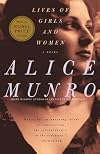
I gave myself two days to settle with this book before even attempting a review. Two days of thinking and reflecting and confirming the marvel that is this book. As one can tell from the title of the book, Munro focuses on the relationships between girls and women in this book and each chapter marked a new development for Del, the protagonist of this story.
Del is a precocious girl living first at the outskirts and then in the poor small town of Jubilee, Canada. Her mother writes in the paper show more and sells encyclopedias, and is considered an eccentric for her agnosticism, beliefs in women’s reproductive rights and other notions that of course must have been extremely “liberal” in a small and religious town in the 1940s, and her father is a fox farmer who lingers at the edges of the story for the most part.
Told in the first person and from Del’s point of view, we journey with her through her childhood and the characters that people her life and thoughts, her awakenings and conflicts and disasters and emerge with her at the end, fully nourished. The kind of story that grows and grows with each turn of the page, filled with brilliant understandings of life, death, spiritualit(ies)y, friendships and love.
One of the most exciting and fascinating aspects of this story is the town of Jubilee itself and the rich detail Munro furnishes it with. From its economic and recreational activities to the townspeople themselves, she creates such an intricate mesh, a breathing steaming town.
If you liked Toni Morrison’s [b:Sula|11346|Sula|Toni Morrison|https://images.gr-assets.com/books/1441578153s/11346.jpg|3207953], William Maxwell’s [b:So Long, See You Tomorrow|14276|So Long, See You Tomorrow|William Maxwell|https://images.gr-assets.com/books/1390750749s/14276.jpg|1267189], Willa Cather’s [b:My Ántonia|17150|My Ántonia (Great Plains Trilogy, #3)|Willa Cather|https://images.gr-assets.com/books/1389151307s/17150.jpg|575450] or [b:The Neapolitan Novels|26828169|The Neapolitan Novels|Elena Ferrante|https://images.gr-assets.com/books/1443412457s/26828169.jpg|46858867] of Elena Ferrante, then you’ll most likely like this one too. With this book Munro solidifies her place in my heart as one of my favourite writers, a great book. show less
Del is a precocious girl living first at the outskirts and then in the poor small town of Jubilee, Canada. Her mother writes in the paper show more and sells encyclopedias, and is considered an eccentric for her agnosticism, beliefs in women’s reproductive rights and other notions that of course must have been extremely “liberal” in a small and religious town in the 1940s, and her father is a fox farmer who lingers at the edges of the story for the most part.
Told in the first person and from Del’s point of view, we journey with her through her childhood and the characters that people her life and thoughts, her awakenings and conflicts and disasters and emerge with her at the end, fully nourished. The kind of story that grows and grows with each turn of the page, filled with brilliant understandings of life, death, spiritualit(ies)y, friendships and love.
One of the most exciting and fascinating aspects of this story is the town of Jubilee itself and the rich detail Munro furnishes it with. From its economic and recreational activities to the townspeople themselves, she creates such an intricate mesh, a breathing steaming town.
If you liked Toni Morrison’s [b:Sula|11346|Sula|Toni Morrison|https://images.gr-assets.com/books/1441578153s/11346.jpg|3207953], William Maxwell’s [b:So Long, See You Tomorrow|14276|So Long, See You Tomorrow|William Maxwell|https://images.gr-assets.com/books/1390750749s/14276.jpg|1267189], Willa Cather’s [b:My Ántonia|17150|My Ántonia (Great Plains Trilogy, #3)|Willa Cather|https://images.gr-assets.com/books/1389151307s/17150.jpg|575450] or [b:The Neapolitan Novels|26828169|The Neapolitan Novels|Elena Ferrante|https://images.gr-assets.com/books/1443412457s/26828169.jpg|46858867] of Elena Ferrante, then you’ll most likely like this one too. With this book Munro solidifies her place in my heart as one of my favourite writers, a great book. show less
Lists
Read These Too (1)
Booker Prize (1)
to get (1)
Unread books (1)
100 New Classics (1)
2000s decade (1)
Take Four Books (1)
Bedbooks (1)
. (2)
Canada (2)
Female Author (3)
Big Jubilee List (1)
To Read (1)
Five star books (1)
Favourite Books (1)
Awards


You May Also Like


Associated Authors
Statistics
- Works
- 126
- Also by
- 82
- Members
- 30,333
- Popularity
- #653
- Rating
- 3.9
- Reviews
- 763
- ISBNs
- 895
- Languages
- 33
- Favorited
- 191

