
Mary Soon Lee
Author of Elemental Haiku: Poems to honor the periodic table, three lines at a time
About the Author
Works by Mary Soon Lee
Elemental Haiku: Poems to honor the periodic table, three lines at a time (2019) 46 copies, 4 reviews
Universal Grammar 2 copies
Shen's Daughter 1 copy
Monstrosity [short story] 1 copy
Ex Terra Ex Astris 1 copy
Lifework 1 copy
Associated Works
The Magazine of Fantasy and Science Fiction September/October 2019, Vol. 137, Nos. 3 & 4 (1991) — Contributor — 18 copies
The Magazine of Fantasy and Science Fiction July/August 2019, Vol. 137, Nos. 1 & 2 (1951) — Contributor — 13 copies, 1 review
The Magazine of Fantasy and Science Fiction May/June 2019, Vol. 136, Nos. 5 & 6 (1944) — Contributor — 12 copies
The Magazine of Fantasy and Science Fiction January/February 2017, Vol. 132, Nos. 1 & 2 (2017) — Contributor — 11 copies, 1 review
Climbing Lightly Through Forests: A Poetry Anthology Honoring Ursula K. Le Guin (2021) — Contributor — 4 copies
Fission #2 Volume 1: Stories from the British Science Fiction Association (2022) — Contributor — 3 copies
Small Wonders, Issue 0: February 2023 — Contributor — 1 copy
Tagged
Common Knowledge
- Birthdate
- 1965
- Gender
- female
- Education
- Trinity Hall, Cambridge (BS, Mathematics and Computer Science)
Cranfield University (MS, Astronautics and Space Engineering) - Organizations
- Science Fiction and Fantasy Writers of America
Science Fiction and Fantasy Poetry Association - Awards and honors
- Rhysling Award (Best Long Poem, 2014)
Rhysling Award (Best Short Poem, 2018)
SFPA Grand Master Award (2022) - Agent
- JABberwocky Literary Agency
- Relationships
- Moore, Andrew (husband)
- Nationality
- USA (naturalized)
- Birthplace
- London, Middlesex, England, UK
- Places of residence
- Pittsburgh, Pennsylvania, USA
Cambridge, Massachusetts, USA - Associated Place (for map)
- USA
Members
Reviews

This was amazing. It's a fantasy epic told completely in verse. The scope is incredibly ambitious, and the execution is perfect. The story follows King Xau, the fourth son who was never meant to be -- or wanted to be -- king. He is innately good, to the point that if the book was in prose, it would have been unbelievable. But as linked poems, threaded throughout with his selfless goodness, it read like Xau was a mythical figure and his goodness was just as mythical. Even when the book gets show more dark (and boy does it get dark, violent, and gruesome) Xau shines through.
By rights, this should not have worked. The story spanned Xau's rule and included some major upheavals in the political status quo. There's an evil queen, and a dragon who eats unworthy princes, and a six-eyed creature. And then peppered throughout are the quiet moments, of Xau spending time with his family, or training with his guards, or just being. And those are some of the most memorable poems. show less
By rights, this should not have worked. The story spanned Xau's rule and included some major upheavals in the political status quo. There's an evil queen, and a dragon who eats unworthy princes, and a six-eyed creature. And then peppered throughout are the quiet moments, of Xau spending time with his family, or training with his guards, or just being. And those are some of the most memorable poems. show less
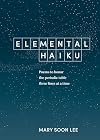
I saw this one in a science museum gift shop, and was instantly charmed by it, and I'm very pleased to report that I still felt that way all the way through reading it. It features one haiku-style poem for every element on the periodic table, relating in some way to that element's properties, history, or uses. These range from deeply serious to mildly amusing, and I'm honestly impressed by how well the author pulls the whole thing off. Nothing ever feels contrived or kitschy or forced, and show more even towards they end where it's mostly a bunch of different ways to say "here's a highly radioactive element somebody made in a lab for two seconds," it doesn't get tiring.
Each entry also includes a sentence or three explaining the science or history behind the poem. For the ones I understood without the explanation, this was a little distracting and detracted from things a bit, but for the ones where I needed the context (something that happened a lot more often as the atomic numbers rose), I found it both helpful and enjoyable.
Basically, the whole thing was just a pleasant little read perfect for my nerdy little soul. show less
Each entry also includes a sentence or three explaining the science or history behind the poem. For the ones I understood without the explanation, this was a little distracting and detracted from things a bit, but for the ones where I needed the context (something that happened a lot more often as the atomic numbers rose), I found it both helpful and enjoyable.
Basically, the whole thing was just a pleasant little read perfect for my nerdy little soul. show less
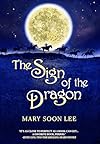
I’m not especially a reader of poetry, with the exception of Homer’s The Odyssey, which I have in various prose, free verse and rhyming verse translations. The Sign of the Dragon caught my eye because of the epic scope it suggested. I found it an easy read in terms of both comprehending the language and following the storyline.
I liked the presentation as a set of individual poems which went together to make up a full story. Xau is noble, responsible, larger than life and too good to be show more true, although he has his moments as a vulnerable human. Similarly, the forces acting against him are irredeemably, grossly evil (other than those that are misled or bewitched). I don’t think such characters would have worked at all well presented in prose. In poetry, we can appreciate the vignettes of Xau’s life and his situations more… symbolically? without worrying too much about realism.
So, despite my not being a reader of poetry, I’ll be watching out for more of the author’s works. show less
I liked the presentation as a set of individual poems which went together to make up a full story. Xau is noble, responsible, larger than life and too good to be show more true, although he has his moments as a vulnerable human. Similarly, the forces acting against him are irredeemably, grossly evil (other than those that are misled or bewitched). I don’t think such characters would have worked at all well presented in prose. In poetry, we can appreciate the vignettes of Xau’s life and his situations more… symbolically? without worrying too much about realism.
So, despite my not being a reader of poetry, I’ll be watching out for more of the author’s works. show less
I love this book. It's as close to perfect as a book can get, which is saying a lot, especially when I add that this is a novel-sized volume of fantasy poetry that truly reads like a novel.
The central character is King Xau, a fourth son never intended to be king. He never wanted to be king. Xau is a good human being, and that is one of the intense joys of this book. Even though it often deals honestly, graphically, with war and depravity, the verses are embodied with an overall positive show more message that good things happen when people strive to do good. We take that in through various viewpoints--Xau's, and those of dozens around him, from commoners in awe of a brief meeting to his avowed enemies to his beloved guards to the palace cat.
As a poetry book, it is entirely accessible. The verses flow, and emotions with them. This is a book that will make you FEEL. I can't even say how many verses brought tears to my eyes, and I had to fight sobs at the end.
I had read the first 60 poems in Mary Soon Lee's previous book Crowned (which I provided a blurb for), plus individual poems in a smattering of other publications. The Sign of the Dragon added 200 never-before-published poems to Xau's tale.
If you don't normally read poetry books, please, read this one. If you do read poetry, you'll be blown away at the beauty and flow of this novel told in verse. I already know this will be one of my favorites for the year. A favorite book, period. show less
The central character is King Xau, a fourth son never intended to be king. He never wanted to be king. Xau is a good human being, and that is one of the intense joys of this book. Even though it often deals honestly, graphically, with war and depravity, the verses are embodied with an overall positive show more message that good things happen when people strive to do good. We take that in through various viewpoints--Xau's, and those of dozens around him, from commoners in awe of a brief meeting to his avowed enemies to his beloved guards to the palace cat.
As a poetry book, it is entirely accessible. The verses flow, and emotions with them. This is a book that will make you FEEL. I can't even say how many verses brought tears to my eyes, and I had to fight sobs at the end.
I had read the first 60 poems in Mary Soon Lee's previous book Crowned (which I provided a blurb for), plus individual poems in a smattering of other publications. The Sign of the Dragon added 200 never-before-published poems to Xau's tale.
If you don't normally read poetry books, please, read this one. If you do read poetry, you'll be blown away at the beauty and flow of this novel told in verse. I already know this will be one of my favorites for the year. A favorite book, period. show less
Lists
Awards


You May Also Like
Associated Authors
Statistics
- Works
- 17
- Also by
- 25
- Members
- 106
- Popularity
- #181,886
- Rating
- 3.8
- Reviews
- 13
- ISBNs
- 8