
Anne Summers (1) (1945–)
Author of Damned Whores and God's Police
For other authors named Anne Summers, see the disambiguation page.
Works by Anne Summers
Associated Works
Tagged
Common Knowledge
- Other names
- Cooper, Anne (birth name)
- Birthdate
- 1945
- Gender
- female
- Occupations
- journalist
commentator
feminist
activist - Awards and honors
- Order of Australia (Officer, 1989)
- Nationality
- Australia
- Birthplace
- Deniliquin, New South Wales, Australia
- Places of residence
- Sydney, New South Wales, Australia
New York, New York, USA - Associated Place (for map)
- New South Wales, Australia
Members
Reviews

On Luck is a book in the Little Books on Big Themes series from Melbourne University Press in which prominent Australians address a topic in about 10,000 words, published in pocket-sized hardback: Gay Bilson On Digestion, Germaine Greer On Rage, Barrie Kosky On Ecstasy, and so on.
It’s no surprise that Summers was included as she has been one of this country’s finest thinkers, social commentators and journalists for more than a generation.
The thing with Summers is that while she is an show more attentive observer and an astute analyst, she is also a bloody good writer.
On Luck considers Australians’ particular relationship with luck, chance, fortune and misfortune. It exoplores our deep-rooted, abiding and inevitably destructive relationship with gambling, from the corrupt behaviour of an individual railways clerk to the social implications for a state dependent on gambling taxation.
With characteristic forensic research, Summers lays out plenty of food for thought:
Australians are ready to spend as much as $60 a week on lottery tickets yet are unwilling to invest even a third of that on their retirement …
And she doesn’t mind putting the boot in:
We advertised ourselves as lucky, which, when you think about the randomness involved in such good fortune, is another way of boasting of being lazy. All that bounty for no effort …
Also inevitable – mandatory, just about, when the words ‘Australia’ and ‘luck’ come into close proximity – is some kind of reflection on The Lucky Country and how the title of Donald Horne’s 1964 book became misappropriated as the self-congratulatory slogan of a country suddenly aware of its riches in mineral resources.
Summers does not disappoint, explaining how Horne was actually referring to a problem he discerned then in how Australia as a nation had got where it had because of luck rather than expertise or application. Summers doesn’t seem to feel the situation has changed.
The problem with luck is the lack of control, and while luck might theoretically carry you forward indefinitely, you can’t rely on it – the consequences of doing so are dire. It’s no coincidence that seasoned professional gamblers do not rely on luck.
Recent developments such as our increasing understanding of climate change to the downturn in international financial markets emphatically affirm Summers’ closing injunction for us to “Stop chancing our arm and start plotting a course”.
It’s an entertaining and provocative read, with Summers’ challenges to the nation coming across as within our power to meet, should we choose to stop believing in our luck. show less
It’s no surprise that Summers was included as she has been one of this country’s finest thinkers, social commentators and journalists for more than a generation.
The thing with Summers is that while she is an show more attentive observer and an astute analyst, she is also a bloody good writer.
On Luck considers Australians’ particular relationship with luck, chance, fortune and misfortune. It exoplores our deep-rooted, abiding and inevitably destructive relationship with gambling, from the corrupt behaviour of an individual railways clerk to the social implications for a state dependent on gambling taxation.
With characteristic forensic research, Summers lays out plenty of food for thought:
Australians are ready to spend as much as $60 a week on lottery tickets yet are unwilling to invest even a third of that on their retirement …
And she doesn’t mind putting the boot in:
We advertised ourselves as lucky, which, when you think about the randomness involved in such good fortune, is another way of boasting of being lazy. All that bounty for no effort …
Also inevitable – mandatory, just about, when the words ‘Australia’ and ‘luck’ come into close proximity – is some kind of reflection on The Lucky Country and how the title of Donald Horne’s 1964 book became misappropriated as the self-congratulatory slogan of a country suddenly aware of its riches in mineral resources.
Summers does not disappoint, explaining how Horne was actually referring to a problem he discerned then in how Australia as a nation had got where it had because of luck rather than expertise or application. Summers doesn’t seem to feel the situation has changed.
The problem with luck is the lack of control, and while luck might theoretically carry you forward indefinitely, you can’t rely on it – the consequences of doing so are dire. It’s no coincidence that seasoned professional gamblers do not rely on luck.
Recent developments such as our increasing understanding of climate change to the downturn in international financial markets emphatically affirm Summers’ closing injunction for us to “Stop chancing our arm and start plotting a course”.
It’s an entertaining and provocative read, with Summers’ challenges to the nation coming across as within our power to meet, should we choose to stop believing in our luck. show less
Damned Whores and God's Police: The Colonization of Women in Australia (A Pelican Original) by Anne Summers

Often called a defining book for Australia’s feminist movement, Summers takes the time in the Introduction to define many terms, including carefully explaining both feminism and sexism, noting that people can be sexist against males, too. Summers then carefully describes how Australia was colonized by the British, and how that society first impressed its patriarchal views on the penal colonies there, then, later, how Australians decided that the center of their economic life was the show more family, which slightly elevated women’s roles in Australia, pushing against the “bourgeois class’” ideal that women were seen only as “a form of property and a as instruments of reproduction” (296).
The most important quotes from the entire book, though, don’t come until the end of the book. These quotes still speak to women of our contemporary times, since so many women have clearly let the “old boy network” continue to influence their actions and thinking:
If women start to recognize the constraints this [patriarchal] ideology places on their behavior and on their way of thinking, they will begin to understand how they have become accomplices in the maintenance of the existing order (472).
And
Women have to be seen as individuals, and as human beings, not as stereotyped representations within a moral dualism devised to perpetuate the patriarchy (472).
What few feminists realize today is that there are at least four levels of patriarchy and at least four levels of matriarchy, but the lack of recognition of these facts means that many feminists fall victim, themselves, to the patriarchal ploy when they assert that there has been no real matriarchy in the world, since they attempt to compare the fourth level of patriarchy to the various levels of matriarchy that actually do exist around the world.
When feminists refuse to acknowledge that cultures that call themselves matriarchies seriously mean they are matriarchal, they undervalue and put a patriarchal stamp on those cultures by branding them as “not real.”
I call on all readers who call themselves feminists to read my book, Pitiless Bronze: A Postpatriarchal Examination of Prepatriarchal Cultures, to learn the four stages of patriarchy, so they can then realize that matriarchies exist, but not as they would like to see them, and that there are no Full On Patriarchies anywhere in the world anymore, but the patriarchist “strong men” around the world are attempting to bring it back. show less
The most important quotes from the entire book, though, don’t come until the end of the book. These quotes still speak to women of our contemporary times, since so many women have clearly let the “old boy network” continue to influence their actions and thinking:
If women start to recognize the constraints this [patriarchal] ideology places on their behavior and on their way of thinking, they will begin to understand how they have become accomplices in the maintenance of the existing order (472).
And
Women have to be seen as individuals, and as human beings, not as stereotyped representations within a moral dualism devised to perpetuate the patriarchy (472).
What few feminists realize today is that there are at least four levels of patriarchy and at least four levels of matriarchy, but the lack of recognition of these facts means that many feminists fall victim, themselves, to the patriarchal ploy when they assert that there has been no real matriarchy in the world, since they attempt to compare the fourth level of patriarchy to the various levels of matriarchy that actually do exist around the world.
When feminists refuse to acknowledge that cultures that call themselves matriarchies seriously mean they are matriarchal, they undervalue and put a patriarchal stamp on those cultures by branding them as “not real.”
I call on all readers who call themselves feminists to read my book, Pitiless Bronze: A Postpatriarchal Examination of Prepatriarchal Cultures, to learn the four stages of patriarchy, so they can then realize that matriarchies exist, but not as they would like to see them, and that there are no Full On Patriarchies anywhere in the world anymore, but the patriarchist “strong men” around the world are attempting to bring it back. show less
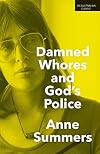
It might seem like reading a 700 page book about women in another country halfway across the world would have little reward. In fact, I was worried that might be the case. I was wrong about that. In spite of the author's reiterating that this was the world of women in Australia, I found little unfamiliar. Oh, some of the phrases - our Madonna and Whore turned into Damn Whores and God's Police, but the roles and the rhetoric, the societal expectations and the demands made on women were more show more similar than different. The names of the early pioneers were, of course, not familiar, except when she was discussing the UK and US movements that inspired the Australian feminists. In the end, though, this book was perhaps too depressingly familiar. All that changes is the cities and states, the politicians, and the terms used for familiar objects. It is a valuable resource to look at ways in which seemingly ordinary things, like living in the suburbs, were turned into ways to isolate women and police their roles. Oh, and I do much prefer the term they use for domestic violence - wife bashing sounds so much more authentic than wife battering, and doesn't bring up those odd images of women deep fried by Long John Silver's. show less
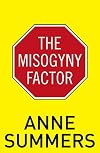
When the new PM of Canada, M. Trudeau, was asked why he had so many women in his cabinet, his reply was succinct and profound. "Because," he said, "it's 2016." Well, here is Anne Summers, writing in 2013, and wondering aloud why the progress towards gender equality so evident in the Australia of the 1970s has been turned backwards as the century turned. In this book, she explains why--setting out a clear political history of failure.
Ironically, the book was written while our Prime Minister show more was Julia Gillard, and the last part of the book is the rip-roaring tale of a temporary fight-back by (I might say) right minded men and women. I say "ironically" because we all know who was our next PM. If only for a little while. Therein lies hope? show less
Ironically, the book was written while our Prime Minister show more was Julia Gillard, and the last part of the book is the rip-roaring tale of a temporary fight-back by (I might say) right minded men and women. I say "ironically" because we all know who was our next PM. If only for a little while. Therein lies hope? show less
Lists
Read in 2011 (1)
Awards


You May Also Like


Associated Authors
Statistics
- Works
- 8
- Also by
- 1
- Members
- 362
- Popularity
- #66,318
- Rating
- 3.9
- Reviews
- 14
- ISBNs
- 38