
Edith Wharton (1862–1937)
Author of The Age of Innocence
About the Author
Edith Wharton was a woman of extreme contrasts; brought up to be a leisured aristocrat, she was also dedicated to her career as a writer. She wrote novels of manners about the old New York society from which she came, but her attitude was consistently critical. Her irony and her satiric touches, as show more well as her insight into human character, continue to appeal to readers today. As a child, Wharton found refuge from the demands of her mother's social world in her father's library and in making up stories. Her marriage at age 23 to Edward ("Teddy") Wharton seemed to confirm her place in the conventional role of wealthy society woman, but she became increasingly dissatisfied with the "mundanities" of her marriage and turned to writing, which drew her into an intellectual community and strengthened her sense of self. After publishing two collections of short stories, The Greater Inclination (1899) and Crucial Instances (1901), she wrote her first novel, The Valley of Decision (1902), a long, historical romance set in eighteenth-century Italy. Her next work, the immensely popular The House of Mirth (1905), was a scathing criticism of her own "frivolous" New York society and its capacity to destroy her heroine, the beautiful Lily Bart. As Wharton became more established as a successful writer, Teddy's mental health declined and their marriage deteriorated. In 1907 she left America altogether and settled in Paris, where she wrote some of her most memorable stories of harsh New England rural life---Ethan Frome (1911) and Summer (1917)---as well as The Reef (1912), which is set in France. All describe characters forced to make moral choices in which the rights of individuals are pitted against their responsibilities to others. She also completed her most biting satire, The Custom of the Country (1913), the story of Undine Spragg's climb, marriage by marriage, from a midwestern town to New York to a French chateau. During World War I, Wharton dedicated herself to the war effort and was honored by the French government for her work with Belgian refugees. After the war, the world Wharton had known was gone. Even her Pulitzer Prize-winning novel, The Age of Innocence (1920), a story set in old New York, could not recapture the former time. Although the new age welcomed her---Wharton was both a critical and popular success, honored by Yale University and elected to The National Institute of Arts and Letters---her later novels show her struggling to come to terms with a new era. In The Writing of Fiction (1925), Wharton acknowledged her debt to her friend Henry James, whose writings share with hers the descriptions of fine distinctions within a social class and the individual's burdens of making proper moral decisions. R.W.B. Lewis's biography of Wharton, published in 1975, along with a wealth of new biographical material, inspired an extensive reevaluation of Wharton. Feminist readings and reactions to them have focused renewed attention on her as a woman and as an artist. Although many of her books have recently been reprinted, there is still no complete collected edition of her work. (Bowker Author Biography) show less
Image credit: Edith Wharton, Portrait, 1921
Series
Works by Edith Wharton
Novels: The House of Mirth / The Reef / The Custom of the Country / The Age of Innocence (1986) 563 copies, 8 reviews
Novellas and Other Writings : Madame de Treymes / Ethan Frome / Summer / Old New York / The Mother's Recompense / A Backward Glance (1990) 403 copies, 1 review
Four Novels of the 1920s: The Glimpses of the Moon / A Son at the Front / Twilight Sleep / The Children (2015) 91 copies
Gramercy Modern Classics: Edith Wharton: Age of Innocence & Two Other Complete Works of Love, Morals, and Manners (1996) 49 copies, 1 review
Three Classics by American Women: The Awakening; Ethan Frome; O Pioneers! (1990) 29 copies, 1 review
Bewitched: The Ghostly Tales of Edith Wharton: 18 (British Library Gilded Nightmares) (2025) 13 copies, 1 review
The Classic Ghost Stories Collection: Chilling Tales from Guy de Maupassant, M. R. James, Edith Wharton, E. F. Benson, Sheridan Le Fanu, Henry James (Arcturus Retro Classics, 6) (2020) — Author — 12 copies
The Complete Works of Edith Wharton. Illustrated: The Age of Innocence, The House of Mirth, Ethan Frome and others (2021) 8 copies
Works of Edith Wharton. The Age of Innocence, The House of Mirth, Ethan Frome, Sanctuary, The Custom of the Country, Summer & more (mobi) (2009) 7 copies
Tre storie del soprannaturale 7 copies
Quartet: Four Stories 5 copies
Opowieści małżeńskie 3 copies
A Bottle of Perrier 3 copies
Edith Wharton: Stories: The Eyes; The Daunt Diana; The Moving Finger; and The Debt (2015) 3 copies, 1 review
La splendeur des âmes : Chez les heureux du monde ; Les Beaux Mariages ; Eté ; Le temps de l'innocence ; La splendeur des Lansing (2012) 3 copies
The Age of Innocence / Summer 3 copies
Triangoli imperfetti 3 copies
The Early Short Fiction: Kerfol, Mrs. Manstey's View, the Bolted Door, the Dilettante, the House of the Dead Hand (2006) 3 copies
An Old New York Collection: The Touchstone, The House of Mirth, The Custom of the Country, The Age of Innocence (2020) 2 copies
Der Unfall 2 copies
The Looking Glass [Short Story] 2 copies
“The Portrait” 2 copies
Opowieści małżeńskie 2 copies
SUFLETUL OMULUI 2 copies
The Valley of Decision, Volume II 2 copies
HOUSE OF MIRTH - WWC 1 copy
Stara panna 1 copy
SST 11- La casa della gioia 1 copy
SST 77 - Le sorelle Bunner 1 copy
SST 34 - L'usanza del paese 1 copy
SST 43 - Estate 1 copy
SST 62 - La scogliera 1 copy
[Title missing] 1 copy
SST 51 - Raggi di luna 1 copy
World War I Poetry 1 copy
Wharton Short Stories 1 copy
Het huis van vreugde 1 copy
WHARTON: NOVELS 1 copy
MOSHA E PAFAJËSISË 1 copy
Le sorelle Bunner 1 copy
Thời thơ ngây 1 copy
Dopo 1 copy
OBSTACOLE 1 copy
NEW YORK-UL DE ALTADATA 1 copy
AGS CLASSICS SHORT STORIES: EDITH WHARTON: THE POMEGRANATE SEED, THE M OVING FINGER (Ags Classic Short Stories) (1994) 1 copy, 1 review
Gli infelicissimi 1 copy
Cuentos 1 copy
Sussurros de Verão 1 copy
DIEU D'AMOUR 1 copy
Wharton, Edith Archive 1 copy
THE WORKS OF EDITH WHARTON ~ 32 Complete Books And Much Poetry [Deluxe Annotated, Illustrated Collection] (2010) 1 copy, 1 review
Hinterher : 1910 1 copy
The Spark - Old New York #3 1 copy
In Trust 1 copy
The Confessional 1 copy
The Twilight of the God 1 copy
An Extraordinary Life 1 copy
Ethan Frome and Stories 1 copy
the mother 1 copy
The Age of Innocence Collection: Old New York (False Dawn, The Old Maid, The Spark, New Year's Day), The Age of Innocence (2020) 1 copy
Confessions Of A Novelist 1 copy
Wharton Novels 1 copy
Relato em Marrocos 1 copy
Associated Works
Great American Short Stories: From Hawthorne to Hemingway (2004) — Contributor — 672 copies, 2 reviews
American Poetry: The Twentieth Century, Volume One: Henry Adams to Dorothy Parker (2000) — Contributor — 481 copies, 1 review
American Fantastic Tales : Terror and the Uncanny from Poe to the Pulps (2009) — Contributor — 290 copies, 4 reviews
World War I and America: Told by the Americans Who Lived It (1918) — Contributor — 222 copies, 1 review
Daughters of Decadence: Women Writers of the Fin-de-Siècle (1993) — Contributor — 205 copies, 2 reviews
New York Stories [Everyman's Library Pocket Classics] (2011) — Contributor, some editions — 197 copies, 5 reviews
The Penguin Book of Ghost Stories: From Elizabeth Gaskell to Ambrose Bierce (2010) — Contributor — 185 copies, 4 reviews
Classic American Short Stories [Barnes & Noble Leatherbound Classics] (2001) — Contributor — 174 copies, 1 review
Vampires, Wine and Roses: Chilling Tales of Immortal Pleasure (1997) — Contributor — 169 copies, 2 reviews
The Graphic Canon, Vol. 3: From Heart of Darkness to Hemingway to Infinite Jest (2013) — Contributor — 162 copies, 1 review
An American Album: One Hundred and Fifty Years of Harper's Magazine (2000) — Contributor — 146 copies, 1 review
Four Stories by American Women: Rebecca Harding Davis, Charlotte Perkins Gilman, Sarah OrneJewett, Edith Wharton (Penguin Classics) (1990) — Contributor — 137 copies, 1 review
The Norton Anthology of American Literature, Volume 2: 1865 to Present (1979) — Contributor, some editions — 135 copies
Writing Women's Lives: An Anthology of Autobiographical Narratives by Twentieth-Century American Women Writers (1994) — Contributor — 128 copies, 3 reviews
The Glorious American Essay: One Hundred Essays from Colonial Times to the Present (2020) — Contributor — 116 copies
Writing New York: A Literary Anthology (Expanded 10th-Anniversary Edition) (2008) — Contributor — 101 copies, 1 review
Celtic Weird: Tales of Wicked Folklore and Dark Mythology (British Library Hardback Classics) (2022) — Contributor — 83 copies
The Heath Anthology of American Literature, Concise Edition (2003) — Contributor — 72 copies, 1 review
The Smiles of Rome: A Literary Companion for Readers and Travelers (2005) — Contributor — 68 copies, 2 reviews
Lovers & Other Monsters: A Collection of Amorous Tales of Fantasy, Old and New (1993) — Contributor — 64 copies, 1 review
There Is a Graveyard That Dwells in Man: More Strange Fiction and Hallucinatory Tales (2020) — Contributor — 63 copies
The Web She Weaves: An Anthology of Mystery and Suspense Stories by Women (1983) — Contributor — 61 copies, 2 reviews
The Signet Classic Book of Contemporary American Short Stories (1985) — Contributor — 47 copies, 1 review
The Lifted Veil: The Book of Fantastic Literature by Women 1800-World War II (1806) — Contributor — 45 copies
Weird Women: Volume 2: 1840-1925: Classic Supernatural Fiction by Groundbreaking Female Writers (2021) — Contributor — 38 copies
Mistresses of Mystery: Two Centuries of Suspense Stories by the Gentle Sex (1973) — Contributor — 34 copies, 1 review
Classic American women writers: Sarah Orne Jewett, Kate Chopin, Edith Wharton, Willa Cather (1980) — Contributor — 26 copies
The Tavern Lamps Are Burning: Literary Journeys through Six Regions and Four Centuries of New York State (1964) — Contributor — 25 copies
Femmes de Siècle: Stories from the 90s - Women Writing at the End of Two Centuries (1992) — Contributor — 18 copies
The Second Ghost Story Megapack: 25 Classic Ghost Stories (2013) — Contributor — 15 copies, 2 reviews
Masters of the Macabre: An Anthology of Mystery, Horror, and Detection (1975) — Contributor — 13 copies
Great American Ghost Stories: Chilling Tales by Poe, Bierce, Hawthorne and Others (2008) — Contributor — 12 copies
Tales of the Undead: Vampires and Visitants (1947) — Contributor, some editions — 10 copies, 1 review
Pulitzer Prize Winning Works Collection: One of Ours, His Family, Miss Lulu Bett, Cornhuskers, Anna Christie, Alice Adams, and More! (11 Works) (2013) 4 copies
The Best from Cosmopolitan — Contributor — 4 copies
The Midnight Inkwell: Sinister Short Stories by Classic Women Writers (2023) — Contributor — 3 copies
A reader for writers — Contributor — 2 copies
The Ethnic Image in Modern American Literature, 1900-1950, Volumes 1-2 (1984) — Contributor — 1 copy
10 Classic Feminist Works You Should Read: Little Women, The Yellow Wallpaper, A Vindication Of The Rights Of Woman, Sultana's Dream... — Contributor — 1 copy
Contos Dramáticos — Contributor — 1 copy
Prize stories from Collier's, 5 volumes — Contributor — 1 copy
Tagged
Common Knowledge
- Canonical name
- Wharton, Edith
- Legal name
- Jones, Edith Newbold (birth)
- Birthdate
- 1862-01-24
- Date of death
- 1937-08-11
- Gender
- female
- Education
- at home
- Occupations
- novelist
short story writer
travel writer
landscape architect
designer - Awards and honors
- Chevalier of the Legion of Honour (1916)
nominated for the Nobel Prize in Literature (1927, 1928, 1930)
American Academy of Arts and Letters (Literature | 1926)
Pulitzer Prize in Literature (1921)
National Women's Hall of Fame (1996) - Relationships
- Clark, Colin (godson)
Farrand, Beatrix (niece)
Fullerton, William Morton (lover)
Wharton, Edward Robbins (ex-husband) - Short biography
- Edith Wharton was born Edith Newbold Jones to a wealthy New York family. She spent her early childhood in Europe, where she developed a gift for languages and a deep appreciation for art, architecture and literature.
She was educated by governesses and by her own reading, and began writing at any early age. Verses, her first volume of poems, was published privately when she was 16. In 1885, she married Edward "Teddy" Wharton, 12 years her senior. In 1897, with Ogden Codman, Jr., an architect friend, she published her first major book, The Decoration of Houses (1897). A few years later, she bought 113-acres in Lenox, Massachusetts, then designed and built The Mount, a country home to meet her needs as a designer, gardener, hostess, and writer. During the next 10 years at The Mount, she wrote some of her greatest works, including The House of Mirth (1905) and Ethan Frome (1911). After a divorce from Teddy Wharton in 1913, she moved permanently to France. During World War I, she did social reform and humanitarian work, including establishing schools for refugee children, for which she received the Legion of Honor. - Cause of death
- stroke
- Nationality
- USA
- Birthplace
- New York, New York, USA
- Places of residence
- New York, New York, USA
Lenox, Massachusetts, USA
Paris, Île-de-France, France
Hyères, Provence-Alpes-Côte d'Azur, France
Saint-Brice-sous-Forêt, Val-d'Oise, France - Place of death
- Saint-Brice-sous-Forêt, Val-d'Oise, France
- Burial location
- Cimetière des Gonards, Versailles, France
- Associated Place (for map)
- France
Members
Discussions
THE DEEP ONES: "All Souls" by Edith Wharton in The Weird Tradition (February 2025)
Folio Archives 267: The House of Mirth by Edith Wharton 1990 in Folio Society Devotees (April 2022)
Found: Wharton-esque Americans in Italy in Name that Book (April 2022)
December 2021: Edith Wharton in Monthly Author Reads (January 2022)
Group Read, June 2021: The Glimpses of the Moon in 1001 Books to read before you die (July 2021)
August: Reading Edith Wharton in Monthly Author Reads (June 2018)
March Read: Edith Wharton in Virago Modern Classics (May 2017)
1913: Wharton - The Custom of the Country in Literary Centennials (February 2014)
The Age of Innocence: Chapters 25-34 in 75 Books Challenge for 2011 (November 2011)
***Group Read: The Age of Innocence in The Highly-Rated Book Group (October 2011)
The Age of Innocence: Chapters 14-24 in 75 Books Challenge for 2011 (October 2011)
The Age of Innocence: Chapters 1-13 in 75 Books Challenge for 2011 (October 2011)
The AGE OF INNOCENCE Group Read: Main Thread in 75 Books Challenge for 2011 (October 2011)
Reviews
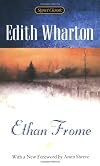
I do not know how to review this book.
I could write about the snow and the cold and the hard work and the sick wife. I could mention a persistent lack of money and an even more persistent lack of hope for any change in the future.
Or, I could write about a rich internal life, full to the brim and ready to spill. The delight of anticipation and the bittersweet memory of a few exchanges with the other. The quality of observing the other: a laugh, an inflection of the voice, a gleam in the show more eye.
Better yet, I could write about Edith and how she put together her Ethan and how she gave him an impossible task, she asked a question that did not have a right answer, she posed a problem that did not have a solution. And then she watched him and let us readers watch together with her. When we knew everything, when the story was told and there was nothing left to share, she turned towards us and masterfully delivered her final blow.
No, Edith Wharton did not need modernism and its flashy new gimmicks, she had at her disposal all the tools needed to smash her characters and her readers to pieces. show less
I could write about the snow and the cold and the hard work and the sick wife. I could mention a persistent lack of money and an even more persistent lack of hope for any change in the future.
Or, I could write about a rich internal life, full to the brim and ready to spill. The delight of anticipation and the bittersweet memory of a few exchanges with the other. The quality of observing the other: a laugh, an inflection of the voice, a gleam in the show more eye.
Better yet, I could write about Edith and how she put together her Ethan and how she gave him an impossible task, she asked a question that did not have a right answer, she posed a problem that did not have a solution. And then she watched him and let us readers watch together with her. When we knew everything, when the story was told and there was nothing left to share, she turned towards us and masterfully delivered her final blow.
No, Edith Wharton did not need modernism and its flashy new gimmicks, she had at her disposal all the tools needed to smash her characters and her readers to pieces. show less
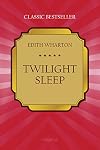
18. Twilight Sleep by Edith Wharton
OPD: 1927
format: 407-page Kindle ebook
acquired: February read: Mar 16 – Apr 3 time reading: 10:12, 1.5 mpp
rating: 4
genre/style: Classic Novel theme: Wharton
locations: 1920’s New York City and some drivable countryside
about the author: 1862-1937. Born Edith Newbold Jones on West 23rd Street, New York City. Relocated permanently to France after 1911.
A later Wharton novel that brings some evolution in her writing. This one is considered modern because of show more the way she handled narrative and switching limited perspectives. The novel is looking at the failures of the 1920's leisure class, people finding various ways to blind themselves from hard realities, while praising progress and spiritual cures.
The novel looks at the efforts to save a bad marriage. Jim, the son of a very wealthy Pauline, married an orphan, Lita, who can't seem to get enough of anything. Jim is insufficient. She wants a divorce and wants to go on and become a movie star. Pauline, along with her own husband, her ex-husband, and her daughter, Nona, all find various ways to get involved, but each from their own limited perspective, and not necessarily in a helpful way. Wharton spends a lot of time on Pauline, who relies on her hired help, and fills her days engaging meaningless contradictory charities and getting healing from spiritual conmen. She is humorously blind to reality, throwing money at all problems. Meanwhile, her family is falling apart.
Twilight Sleep was a medical procedure that put a birthing mother in an amnesic state so they didn't remember the pain of childbirth. It was available only to the very wealthy. Here everyone is trying to not feel the problems of being human, the psychological pain. Pauline by filling her schedule, her current husband by being a workaholic. Lita by searching on for more admiration. Only Nona and Jim are left to actually feel something.
The novel finally comes across as a playful satire on 1920‘s NY moneyed culture. Wharton is having fun mocking supposed progress and 1920‘s shallowness, spiritual fads, bad parenting and human frailties. But there are also real weighty elements here. The youthful 1920‘s are represented in Lita and Nona. Clear-sighted Lita wants to be admired, with no concerns for consequences. Nona quietly sacrifices herself to manage her family‘s failures.
Recommended mainly for Wharton completists, but it's still Wharton. As long as readers are prepared for Wharton to have a little fun, you should be ok. It does reward reflection.
2024
https://www.librarything.com/topic/358760#8498520 show less
OPD: 1927
format: 407-page Kindle ebook
acquired: February read: Mar 16 – Apr 3 time reading: 10:12, 1.5 mpp
rating: 4
genre/style: Classic Novel theme: Wharton
locations: 1920’s New York City and some drivable countryside
about the author: 1862-1937. Born Edith Newbold Jones on West 23rd Street, New York City. Relocated permanently to France after 1911.
A later Wharton novel that brings some evolution in her writing. This one is considered modern because of show more the way she handled narrative and switching limited perspectives. The novel is looking at the failures of the 1920's leisure class, people finding various ways to blind themselves from hard realities, while praising progress and spiritual cures.
The novel looks at the efforts to save a bad marriage. Jim, the son of a very wealthy Pauline, married an orphan, Lita, who can't seem to get enough of anything. Jim is insufficient. She wants a divorce and wants to go on and become a movie star. Pauline, along with her own husband, her ex-husband, and her daughter, Nona, all find various ways to get involved, but each from their own limited perspective, and not necessarily in a helpful way. Wharton spends a lot of time on Pauline, who relies on her hired help, and fills her days engaging meaningless contradictory charities and getting healing from spiritual conmen. She is humorously blind to reality, throwing money at all problems. Meanwhile, her family is falling apart.
Twilight Sleep was a medical procedure that put a birthing mother in an amnesic state so they didn't remember the pain of childbirth. It was available only to the very wealthy. Here everyone is trying to not feel the problems of being human, the psychological pain. Pauline by filling her schedule, her current husband by being a workaholic. Lita by searching on for more admiration. Only Nona and Jim are left to actually feel something.
The novel finally comes across as a playful satire on 1920‘s NY moneyed culture. Wharton is having fun mocking supposed progress and 1920‘s shallowness, spiritual fads, bad parenting and human frailties. But there are also real weighty elements here. The youthful 1920‘s are represented in Lita and Nona. Clear-sighted Lita wants to be admired, with no concerns for consequences. Nona quietly sacrifices herself to manage her family‘s failures.
Recommended mainly for Wharton completists, but it's still Wharton. As long as readers are prepared for Wharton to have a little fun, you should be ok. It does reward reflection.
2024
https://www.librarything.com/topic/358760#8498520 show less

Vance Weston is an aspiring young writer who came of age in the American Midwest in the 1920s. After a sudden illness, his family packs him off to New York’s Hudson Valley to stay with distant relatives and recover in the country air. Vance is thrilled, confident that proximity to New York City will jump-start his career. Early in his stay he meets Halo Spear, a woman a few years older and much wiser in the literary arts, and she becomes a sort of muse, broadening Vance’s literary show more perspective while nurturing his talent.
Poor decision-making sours Vance’s relationship with the relatives and he returns home, but finds his way back to New York a few years later. He leverages contacts made previously to find work at a literary review, but continues to make bad, impulsive decisions including a ridiculously misguided marriage and a series of career missteps borne either of naïveté or arrogance. Vance never achieves the financial success he believes he is entitled to.
And there’s the rub: that entitlement. Vance seems to regard himself as somewhat of a genius, a view that Halo continues to encourage, but Edith Wharton failed to convince me of his talent. Instead, I found him a petulant, annoying young man and the entire novel quite melodramatic, all the way to the end which offered a completely unrealistic resolution to some of Vance’s dilemmas. Apparently I am not alone: in the Afterword of the Virago edition, Marilyn French speculates on Wharton’s intentions for this “portrait of an artist as a young man,” and concludes that she was not entirely successful.
Edith Wharton is one of my favorite authors, but those not familiar with her work would find classics such as House of Mirth or The Age of Innocence a better introduction. show less
Poor decision-making sours Vance’s relationship with the relatives and he returns home, but finds his way back to New York a few years later. He leverages contacts made previously to find work at a literary review, but continues to make bad, impulsive decisions including a ridiculously misguided marriage and a series of career missteps borne either of naïveté or arrogance. Vance never achieves the financial success he believes he is entitled to.
And there’s the rub: that entitlement. Vance seems to regard himself as somewhat of a genius, a view that Halo continues to encourage, but Edith Wharton failed to convince me of his talent. Instead, I found him a petulant, annoying young man and the entire novel quite melodramatic, all the way to the end which offered a completely unrealistic resolution to some of Vance’s dilemmas. Apparently I am not alone: in the Afterword of the Virago edition, Marilyn French speculates on Wharton’s intentions for this “portrait of an artist as a young man,” and concludes that she was not entirely successful.
Edith Wharton is one of my favorite authors, but those not familiar with her work would find classics such as House of Mirth or The Age of Innocence a better introduction. show less

This is perhaps my favorite Edith Wharton but it had been some time since I read it and I forgot how startingly modern it is. Charity Royall is like many a Wharton heroine; difficult and willful but with that streak of self-awareness and wanting something more than life seems to dish out at her. I think she captures the absolutely foolhardy nature of a first great passion and it's demise brilliantly.
Lists
Best First Lines (1)
Which house? (1)
Read This Next (1)
THE WAR ROOM (1)
Elegant Prose (1)
A Novel Cure (1)
Hidden Classics (1)
Summer Books (1)
Writing (1)
Women's Stories (1)
Ghosts (1)
bound (1)
Unmarried women (1)
100 (1)
Take Four Books (1)
Art of Reading (1)
Women in Islam (1)
Short and Sweet (1)
Read (1)
1910s (3)
Out of Copyright (3)
. (2)
American Realism (3)
Five star books (4)
Female Author (5)
Favourite Books (4)
Unread books (3)
AP Lit (3)
el (2)
1920s (2)
Ambleside Books (1)
100 Hemskaste (1)
Winter Books (1)
discontinued (1)
Backlisted (1)
Modernism (1)
. (2)
Book wishlist (2)
Folio Society (2)
Reading LIst (2)
Overdue Podcast (2)
Carole's List (1)
Awards


You May Also Like


Associated Authors
Statistics
- Works
- 378
- Also by
- 215
- Members
- 63,537
- Popularity
- #224
- Rating
- 3.9
- Reviews
- 1,437
- ISBNs
- 3,676
- Languages
- 31
- Favorited
- 371


