
Ryan Avent
Author of The Wealth of Humans: Work, Power, and Status in the Twenty-first Century
Works by Ryan Avent
Associated Works
Tagged
Common Knowledge
- Gender
- male
Members
Reviews

For a little bit, I actually thought I was just reading an excerpt from Edward Glaeser's Triumph of the City; which is, in fact, high praise. This excellent essay, short in length, focused in topic, but expansive in ramifications, shows how limiting development has contributed to a failing economy, a widening income gap, increased carbon emissions, an reliance on foreign oil. Plus, he has a couple of simple suggestions.
A fairly quick overview of how many rich, developed cities are starting to strangle themselves with development restrictions and why it's a bad thing. It's basically a snappier version of Ed Glaeser's awesome Triumph of the City, but, being a Kindle Single, is a good introduction to the more applied side of urban economics. If you live in a big city then it's a good perspective on the neverending conflict between people who wants to change your neighborhood and the people who want it to be show more the same way forever. show less
Really strong and well-written book about housing policy with some decent suggestions. Felt it was a perfect length as well and made me more curious to read Glaeser.
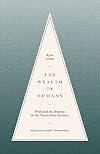
When the world of work defines us as individuals
and societies, what happens when that world
changes for ever?
To work is human. It puts food on the table, meaningfully
structures our days, and strengthens our social ties. When
work works, it provides the basis for a stable social order.
Yet the world of work is changing fast, and in unexpected
ways. With rapid advances in information technology, huge
swathes of the job market - from cleaners and drivers to
journalists and doctors - are being show more automated, or soon will
be: a staggering 47% of American employment is at risk of
automation within the next two to three decades. Yet at the
same time millions more jobs are being created. What does
the future of work hold?
In this illuminating new investigation of what this revolution in
work means for us, Ryan Avent lays bare the contradictions in
today's global labour market. From Volvo's operations in
Sweden to a vast Foxconn production facility in Shenzhen, via
Indian development economists and Silicon Valley venture
capitalists, he offers the first clear explanation of the state
we're in-and how we could get out of it.
With an ever-increasing divide between the rich and the rest,
Avent states, something has got to give. The traditional
escape routes - improved education, wage subsidies, and
new industries built by entrepreneurs-will no longer work as
they once did. In order to navigate our way across today's
rapidly transforming economic landscape, he argues, we must
revisit our previous experiences of massive technological
change - and radically reassess the very idea of how, and
why, we work.
Ryan Avent is a senior editor and economics columnist for The
Economist, where he has covered the global economy since
2007. His work has appeared in the New York Times, the
Washington Post, the New Republic, the Atlantic and the
Guardian. He lives in Arlington, Virginia with his wife, two
children and golden retriever. show less
and societies, what happens when that world
changes for ever?
To work is human. It puts food on the table, meaningfully
structures our days, and strengthens our social ties. When
work works, it provides the basis for a stable social order.
Yet the world of work is changing fast, and in unexpected
ways. With rapid advances in information technology, huge
swathes of the job market - from cleaners and drivers to
journalists and doctors - are being show more automated, or soon will
be: a staggering 47% of American employment is at risk of
automation within the next two to three decades. Yet at the
same time millions more jobs are being created. What does
the future of work hold?
In this illuminating new investigation of what this revolution in
work means for us, Ryan Avent lays bare the contradictions in
today's global labour market. From Volvo's operations in
Sweden to a vast Foxconn production facility in Shenzhen, via
Indian development economists and Silicon Valley venture
capitalists, he offers the first clear explanation of the state
we're in-and how we could get out of it.
With an ever-increasing divide between the rich and the rest,
Avent states, something has got to give. The traditional
escape routes - improved education, wage subsidies, and
new industries built by entrepreneurs-will no longer work as
they once did. In order to navigate our way across today's
rapidly transforming economic landscape, he argues, we must
revisit our previous experiences of massive technological
change - and radically reassess the very idea of how, and
why, we work.
Ryan Avent is a senior editor and economics columnist for The
Economist, where he has covered the global economy since
2007. His work has appeared in the New York Times, the
Washington Post, the New Republic, the Atlantic and the
Guardian. He lives in Arlington, Virginia with his wife, two
children and golden retriever. show less
You May Also Like
Associated Authors
Statistics
- Works
- 7
- Also by
- 1
- Members
- 131
- Popularity
- #154,466
- Rating
- 3.8
- Reviews
- 4
- ISBNs
- 11
- Languages
- 4