
David Talbot (1) (1951–)
Author of The Devil's Chessboard: Allen Dulles, the CIA, and the Rise of America's Secret Government
For other authors named David Talbot, see the disambiguation page.
About the Author
David Talbot is Founder and Editor-in-Chief of Salon.com. He and his wife, Camille Peri, live with their two sons in San Francisco, California.
Image credit: SIMON & SCHUSTER
Series
Works by David Talbot
The Devil's Chessboard: Allen Dulles, the CIA, and the Rise of America's Secret Government (2015) 747 copies, 12 reviews
Season of the Witch: Enchantment, Terror, and Deliverance in the City of Love (2012) 410 copies, 14 reviews
By the Light of Burning Dreams: The Triumphs and Tragedies of the Second American Revolution (2021) 41 copies, 1 review
Associated Works
Trained to Kill: The Inside Story of CIA Plots against Castro, Kennedy, and Che (2017) — Foreword — 31 copies, 2 reviews
The Watchdogs Didn't Bark: The CIA, NSA, and the Crimes of the War on Terror (2018) — Foreword — 30 copies
Tagged
Common Knowledge
- Birthdate
- 1951-09-22
- Gender
- male
- Nationality
- USA
- Birthplace
- Los Angeles, California, USA
- Associated Place (for map)
- California, USA
Members
Reviews
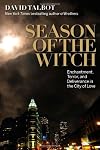
Season of the Witch is all about the human interest stories of San Francisco, in that tumultuous time from 1967 to 1982. This was when Haight-Ashbury invented the hippie counter-culture, and then that brief glimpse of utopia curdled and imploded in a mass of drug addiction, racial violence, and finally a brutal political assassination.
At it's base, San Francisco was a blue collar town, run by a machine of Irish and Italian Catholics. The police force was on the take, the unions were strong, show more and the stolid families and fringes of Barbary Coast dissolution had their nicely separate spheres. But the arrival of thousands of teenage runaways in the Summer of Love was something else, entirely. As many turned from sex and LSD to harder drugs, 'heavy hippies' organized free clinics and alternative civic services for people the city wanted to push into the Pacific Ocean.
But the scene turned bad, and turned bad hard, as speed and heroin ate the heart out of the movement. A few 'heavy hippies' held on, but most burned out or fled to the country. Predators in love beads took over the Haight, with the Altamont Rolling Stone show definitively ending the 60s.
Then the terror started in earnest. The Fillmore district had long been home of San Francisco's Black middle class, but an urban renewal project shuttered the businesses and left it a wasteland. Prisons served as pressure cookers for radicalism, including the Symbionese Liberation Army and the Zebra killers, serial killers who targeted white victims for alleged mystical purposes.
As the hippies were winding down, gay liberation was winding up, with the Castro becoming the epicenter a bold uncloseted homosexuality. Harvey Milk was elected to the board of supervisions, with the administration of Mayor George Moscone breaking the old guard Catholic machine to represent the city's diversity. Both men were deeply tied to cult leader Jim Jones, who's People's Temple was an octopus in the city's progressive movements. The Jonestown massacre and political assassination of Moscone and Milk by ex-supervisor Dan White was a comprehensive shock, the worst day since the 1906 Earthquake.
Talbot ends on a happy note, arguing that the 1982 victory of the 49ers healed the city, but the epilogue, on the scything effects of AIDS on San Francisco's gay community, is the real story of the end of the period, a new batch of horrors. Talbot's book is flawed as sociology, and it overlooks the city's Asian and Hispanic residents in favor of charismatic White boomers of various stripes. But it's also a fantastic story page-by-page, and a vivid, fun book. show less
At it's base, San Francisco was a blue collar town, run by a machine of Irish and Italian Catholics. The police force was on the take, the unions were strong, show more and the stolid families and fringes of Barbary Coast dissolution had their nicely separate spheres. But the arrival of thousands of teenage runaways in the Summer of Love was something else, entirely. As many turned from sex and LSD to harder drugs, 'heavy hippies' organized free clinics and alternative civic services for people the city wanted to push into the Pacific Ocean.
But the scene turned bad, and turned bad hard, as speed and heroin ate the heart out of the movement. A few 'heavy hippies' held on, but most burned out or fled to the country. Predators in love beads took over the Haight, with the Altamont Rolling Stone show definitively ending the 60s.
Then the terror started in earnest. The Fillmore district had long been home of San Francisco's Black middle class, but an urban renewal project shuttered the businesses and left it a wasteland. Prisons served as pressure cookers for radicalism, including the Symbionese Liberation Army and the Zebra killers, serial killers who targeted white victims for alleged mystical purposes.
As the hippies were winding down, gay liberation was winding up, with the Castro becoming the epicenter a bold uncloseted homosexuality. Harvey Milk was elected to the board of supervisions, with the administration of Mayor George Moscone breaking the old guard Catholic machine to represent the city's diversity. Both men were deeply tied to cult leader Jim Jones, who's People's Temple was an octopus in the city's progressive movements. The Jonestown massacre and political assassination of Moscone and Milk by ex-supervisor Dan White was a comprehensive shock, the worst day since the 1906 Earthquake.
Talbot ends on a happy note, arguing that the 1982 victory of the 49ers healed the city, but the epilogue, on the scything effects of AIDS on San Francisco's gay community, is the real story of the end of the period, a new batch of horrors. Talbot's book is flawed as sociology, and it overlooks the city's Asian and Hispanic residents in favor of charismatic White boomers of various stripes. But it's also a fantastic story page-by-page, and a vivid, fun book. show less
A great read, but a bittersweet one, to a current inhabitant of San Francisco who didn't arrive until the book's events were already in the past. From this vantage point, the city has gone through an entirely different transformation since the '90s, into a "survival of the richest" environment, which was facilitated by some of the same SF politicians to whom Talbot guardedly tips his hat: Dianne Feinstein, Willie Brown, and the former crusader and now ultimate hack, Ed Lee. It's the revenge show more of the suburbs too, as we have become a bedroom community for soulless Silicon Valley, and its boring, overworked drones who only want to sleep here. You can see it in the sterile glass box architecture on the rise everywhere, the ever-increasing number of cookie-cutter chain stores replacing locally owned businesses.
I came here for bohemia, but like Bogie heading to Casablanca for the waters, "I was misinformed." San Francisco, while still a breathtakingly beautiful place able to provide simple pleasures for an extremely high price, is pretty much over as far as its ability to revolutionize cultural norms is concerned. And civic compassion? I don't think so, as long as money talks as loud and as fast as it does now. But maybe we should all use the lessons of San Francisco's tortured history, grippingly recounted in this book, to create more a more humane world wherever we are, instead of looking for a mecca to provide it for us. show less
I came here for bohemia, but like Bogie heading to Casablanca for the waters, "I was misinformed." San Francisco, while still a breathtakingly beautiful place able to provide simple pleasures for an extremely high price, is pretty much over as far as its ability to revolutionize cultural norms is concerned. And civic compassion? I don't think so, as long as money talks as loud and as fast as it does now. But maybe we should all use the lessons of San Francisco's tortured history, grippingly recounted in this book, to create more a more humane world wherever we are, instead of looking for a mecca to provide it for us. show less
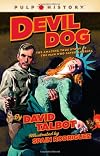
Totally compelling, if too breathless, tale of Marine General Smedley Butler, who enlisted at age 16 to fight in the Spanish-American War, led a company of Marines in the Chinese Boxer Rebellion of 1900, then served his country (or more accurately his country's business interests) in Panama, Nicaragua, Haiti, and other posts before getting himself shipped off to World War I France, where he turned a squalid disease-infested base into something livable, saving thousands of soldiers' lives in show more the process.
After the war, he was outspoken in his condemnation of those who had profited while the soldiers that Butler was so devoted to suffered and died. Long before Eisenhower, he recognized and made speeches about the soulless businessmen who made their fortunes from others misery and saw nothing wrong with using their country’s military might to protect their private wealth. During Franklin Roosevelt’s first administration, Butler was approached by a group of men, backed by the DuPonts, among others, who wanted him to lead a 500,000 man march on Washington that would cause FDR to effectively cede power to a cabal of businessmen, supported by others with delusions of grandeur, such as General Douglas MacArthur. Butler met with several of the group, gathered evidence, then testified before a Congressional committee about the plot. The Committee accepted the veracity of Butler’s testimony, but the affair was played down and its intended beneficiaries, such as MacArthur, spared the justice they deserved.
The parallels to the present day, when we have a similar cabal of businessmen leading a crusade against an imagined socialism, with Sarah Palin running interference for them, is chilling. But, no offense intended, instead of a Smedley Butler leading the charge to save America, we have the host of a satiric late night comedy program. Despite all our supposed strides since the days of the Great Depression, one wonders if those Americans weren’t a lot smarter than the stupid, apathetic masses that make up our country today.
Postscript: I was really angry when i wrote this for some reason. I admit that it isn't fair to call Sarah Palin Mussolini-in-a-skirt (what currently reads "running interference for them" in the paragraph above originally said "as their Mussolini-in-a-skirt"). All you have to do is look at a picture of Mussolini not to trust the guy. He has that smug, superior, know-it-all look on his face. At the same time, he comes across as some sort of comic opera buffoon, unlike Hitler, who looks too scary (it's the eyes) to dismiss lightly. Palin, on the other hand, is deceivingly run-of-the-mill until she opens her mouth and nonsense starts pouring out. Unlike Mussolini, I doubt that she'll even be able to make the trains run on time. show less
After the war, he was outspoken in his condemnation of those who had profited while the soldiers that Butler was so devoted to suffered and died. Long before Eisenhower, he recognized and made speeches about the soulless businessmen who made their fortunes from others misery and saw nothing wrong with using their country’s military might to protect their private wealth. During Franklin Roosevelt’s first administration, Butler was approached by a group of men, backed by the DuPonts, among others, who wanted him to lead a 500,000 man march on Washington that would cause FDR to effectively cede power to a cabal of businessmen, supported by others with delusions of grandeur, such as General Douglas MacArthur. Butler met with several of the group, gathered evidence, then testified before a Congressional committee about the plot. The Committee accepted the veracity of Butler’s testimony, but the affair was played down and its intended beneficiaries, such as MacArthur, spared the justice they deserved.
The parallels to the present day, when we have a similar cabal of businessmen leading a crusade against an imagined socialism, with Sarah Palin running interference for them, is chilling. But, no offense intended, instead of a Smedley Butler leading the charge to save America, we have the host of a satiric late night comedy program. Despite all our supposed strides since the days of the Great Depression, one wonders if those Americans weren’t a lot smarter than the stupid, apathetic masses that make up our country today.
Postscript: I was really angry when i wrote this for some reason. I admit that it isn't fair to call Sarah Palin Mussolini-in-a-skirt (what currently reads "running interference for them" in the paragraph above originally said "as their Mussolini-in-a-skirt"). All you have to do is look at a picture of Mussolini not to trust the guy. He has that smug, superior, know-it-all look on his face. At the same time, he comes across as some sort of comic opera buffoon, unlike Hitler, who looks too scary (it's the eyes) to dismiss lightly. Palin, on the other hand, is deceivingly run-of-the-mill until she opens her mouth and nonsense starts pouring out. Unlike Mussolini, I doubt that she'll even be able to make the trains run on time. show less
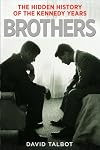
It is unsettling to think that a lone crackpot, armed with a mail-order rifle, can kill the most powerful man in the world, the President of the United States, in the middle of an American city. It is even more troubling to think that the assassination of the President may have been the product of a conspiracy involving powerful elements within the U,S. government, yet this is the thesis explored in David Talbot's engrossing account of the conflict between the Kennedy brothers, John and show more Robert, and the militaristic and fanatic leadership of the Pentagon and the intelligence establishment.
Talbot also argues that President Kennedy and Attorney General Kennedy made powerful enemies in organzied crime, both within the Mafia and the corrupt Teamsters regime under Jimmy Hoffa, and in the rabidly anti-Castro Cuban exile community in Florida. He notes that Bobby Kennedy made himself the most-hated nemesis of the Mob in the 1950s with his zealous pursuit of racketeers within union leadership while serving as chief investigator for the Kefauver committee in the U.S. Senate. Joseph Kennedy, the family patriarch, had enjoyed a cordial relationship with bootleggers decades earlier during Prohibition, so part of the rage felt by mob bosses toward Robert Kennedy was a sense of betrayal.
Talbot examines the Bay of Pigs episode and the Cuban Missile Crisis, in which President Kennedy and his most trusted advisor, his brother the Attorney General, resisted the demands of the hawks clamoring for war against the Communist world. By refusing to order an invasion of Cuba or any other overt acts of war, aside from the naval "quarantine" of Cuba, the President and RFK earned the bitter enmity of Curtis LeMay, chief of the Stategic Air Command, and other devoted Cold Warriors who wanted a war of annihilation against the Soviet Union.
JFK and Attorney General Kennedy also offended right-wing and racist elements in the FBI and elsewhere in the Justice Department by their expressed sympathy for civil rights activists in the South and by their ordering of federal intervention to protect James Meredith against a howling mob when he enrolled at Ole MIss in 1962. J. Edgar Hoover clearly regarded his superior, Bobby Kennedy, as an uppity liberal do-gooder soft on Communism.
While Talbot does not argue that there definitely were conspiracies at work in the murders of John and Robert Kennedy, he questions why the CIA and other agencies continue to conceal evidence in their classified files and why the establishment press has passively accepted the Warren Commission report as the final word on JFK"s death. He notes that Robert Kennedy intended to re-open the investigation of his brother's murder, after winning the Presidency in 1968, but that his own murder insured that the events of November 22, 1963 in Dallas would remain shrouded in darkness. show less
Talbot also argues that President Kennedy and Attorney General Kennedy made powerful enemies in organzied crime, both within the Mafia and the corrupt Teamsters regime under Jimmy Hoffa, and in the rabidly anti-Castro Cuban exile community in Florida. He notes that Bobby Kennedy made himself the most-hated nemesis of the Mob in the 1950s with his zealous pursuit of racketeers within union leadership while serving as chief investigator for the Kefauver committee in the U.S. Senate. Joseph Kennedy, the family patriarch, had enjoyed a cordial relationship with bootleggers decades earlier during Prohibition, so part of the rage felt by mob bosses toward Robert Kennedy was a sense of betrayal.
Talbot examines the Bay of Pigs episode and the Cuban Missile Crisis, in which President Kennedy and his most trusted advisor, his brother the Attorney General, resisted the demands of the hawks clamoring for war against the Communist world. By refusing to order an invasion of Cuba or any other overt acts of war, aside from the naval "quarantine" of Cuba, the President and RFK earned the bitter enmity of Curtis LeMay, chief of the Stategic Air Command, and other devoted Cold Warriors who wanted a war of annihilation against the Soviet Union.
JFK and Attorney General Kennedy also offended right-wing and racist elements in the FBI and elsewhere in the Justice Department by their expressed sympathy for civil rights activists in the South and by their ordering of federal intervention to protect James Meredith against a howling mob when he enrolled at Ole MIss in 1962. J. Edgar Hoover clearly regarded his superior, Bobby Kennedy, as an uppity liberal do-gooder soft on Communism.
While Talbot does not argue that there definitely were conspiracies at work in the murders of John and Robert Kennedy, he questions why the CIA and other agencies continue to conceal evidence in their classified files and why the establishment press has passively accepted the Warren Commission report as the final word on JFK"s death. He notes that Robert Kennedy intended to re-open the investigation of his brother's murder, after winning the Presidency in 1968, but that his own murder insured that the events of November 22, 1963 in Dallas would remain shrouded in darkness. show less
Lists
Awards


You May Also Like


Associated Authors
Statistics
- Works
- 8
- Also by
- 2
- Members
- 1,799
- Popularity
- #14,302
- Rating
- 4.2
- Reviews
- 35
- ISBNs
- 76
- Languages
- 5