
Sheldon Richman
Author of Separating School & State: How to Liberate America's Families
About the Author
Image credit: The Future of Freedom Foundation
Works by Sheldon Richman
Let's Abolish the Income Tax 1 copy
Tagged
Common Knowledge
- Gender
- male
Members
Reviews
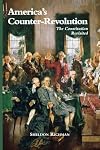
In order to accept this short book's thesis, especially uncritically, you probably need to be an anarcho-libertarian as author Sheldon Richman claims to be. But to merely entertain the thesis, the reader need only be open-minded.
Richman holds that some of the Framers of the Constitution, far from desiring the Constitution to safeguard and promote individual liberty, intended for the Constitution to help make their new nation a nation of "power, consequence and grandeur." It's not merely that show more the Constitution has not proven entirely effective; it's that a certain faction of the Framers actually wanted the document to accomplish the exact opposite of what Americans are now taught. That's the entire argument. The rest of the book is devoted to quoting various primary and secondary sources as evidence.
I don't disagree with the idea, especially since Richman does not go too far and suggest all the Framers pursued the Constitution in bad faith. Not exactly. I'm taking him with a grain of salt, though. Not the thesis--Richman. I have the same reaction I have to most libertarians.
In totality, the thesis and the commentary surrounding it come off as an anarcho-libertarian lament that America was never anarcho-libertarian after the Articles of Confederation (which he obviously likes). Once you figure that out, it's very difficult to take Richman completely seriously, any more than you'd take Karl Marx seriously if he had raged over America never being Communist. Richman obviously analyzes the Revolution, the Articles, the Constitution, and the two factions (Federalists and Anti-Federalists) from a libertarian viewpoint rather than from a Constitutionalist viewpoint. As his secondary sources (some going back to the 1950s) show, the revelation that certain Framers had little interest in safeguarding individual liberty is not new, not quite. That's not the problem here. The problem is that I question the propriety of applying libertarianism, a political philosophy that coalesced in the mid-20th century, to the worldview of the Framers. It's related to advice many of my professors gave repeatedly: Do not try to analyze history from your own contemporary viewpoint, but from theirs. Richman does exactly that, confidently projecting the libertarian worldview onto the Founders and Framers. He and other hardcore libertarians probably just don't get that classical liberalism, the politico-economic philosophy of the founders, is not entirely synonymous with libertarianism.
...This is not an academic, purportedly objective book. show less
Richman holds that some of the Framers of the Constitution, far from desiring the Constitution to safeguard and promote individual liberty, intended for the Constitution to help make their new nation a nation of "power, consequence and grandeur." It's not merely that show more the Constitution has not proven entirely effective; it's that a certain faction of the Framers actually wanted the document to accomplish the exact opposite of what Americans are now taught. That's the entire argument. The rest of the book is devoted to quoting various primary and secondary sources as evidence.
I don't disagree with the idea, especially since Richman does not go too far and suggest all the Framers pursued the Constitution in bad faith. Not exactly. I'm taking him with a grain of salt, though. Not the thesis--Richman. I have the same reaction I have to most libertarians.
In totality, the thesis and the commentary surrounding it come off as an anarcho-libertarian lament that America was never anarcho-libertarian after the Articles of Confederation (which he obviously likes). Once you figure that out, it's very difficult to take Richman completely seriously, any more than you'd take Karl Marx seriously if he had raged over America never being Communist. Richman obviously analyzes the Revolution, the Articles, the Constitution, and the two factions (Federalists and Anti-Federalists) from a libertarian viewpoint rather than from a Constitutionalist viewpoint. As his secondary sources (some going back to the 1950s) show, the revelation that certain Framers had little interest in safeguarding individual liberty is not new, not quite. That's not the problem here. The problem is that I question the propriety of applying libertarianism, a political philosophy that coalesced in the mid-20th century, to the worldview of the Framers. It's related to advice many of my professors gave repeatedly: Do not try to analyze history from your own contemporary viewpoint, but from theirs. Richman does exactly that, confidently projecting the libertarian worldview onto the Founders and Framers. He and other hardcore libertarians probably just don't get that classical liberalism, the politico-economic philosophy of the founders, is not entirely synonymous with libertarianism.
...This is not an academic, purportedly objective book. show less
Awards

Statistics
- Works
- 8
- Members
- 144
- Popularity
- #143,280
- Rating
- 3.5
- Reviews
- 1
- ISBNs
- 9