
Delphi Classics
Author of Gauguin (Delphi Masters of Art Book 32)
About the Author
Works by Delphi Classics
French Masters 4 copies
Monsters - A Delphi Anthology 3 copies
Complete Works of Titian 1 copy
Masters of the Short Story 1 copy
Mozart the Masterworks 1 copy
Collected works of Canaletto 1 copy
Works of Diego Velázquez 1 copy
Collected works of Raphael 1 copy
Collected works of Paul Klee 1 copy
Complete works of Giotto 1 copy
Complete works of El Greco 1 copy
Tagged
Common Knowledge
- Gender
- n/a
Members
Reviews
Delphi Complete Works of John Singer Sargent (Illustrated) (Masters of Art Book 18) by John Singer Sargent
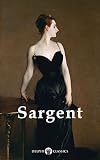
I knew John Singer Sargent as a portraitest, but this book shows us so much more about his art. One gets to watch as this incredible artist studies, travels, and grows in his art. I was fascinated at how he composed his portrait studies, nearly always creating some visual interest away from the subject - a scarf, fan, painting, couch, or another person to draw the eye. In his travels he painted anything and everything, often in watercolor, which is a difficult medium to control, but show more obviously Sargent was a master. For me, though, the best were paintings that seemed to be architectural studies or studies of a scene where I didn't notice at first that there were people or animals in the picture at all until I looked wider and was surprised to discover it was so much more than it first appeared. I'm sure I will be turning again and again to this book over the years to discover more each time I look. show less

This free download from Delphi Classics was rather a mixed bag. The slightly unexpected highlight for me was the longest story in the collection, The Life and Adventures of Santa Claus, by L Frank Baum, the writer of the Wizard of Oz, about how Father Christmas first came to make and distribute presents for children. There were a couple of other short gems, L M Montgomery's A Christmas Inspiration, about a group of friends who club together to buy presents for a lonely woman who shares their show more house; and Hans Christian Andersen's famous and tragic The Little Match Girl. The only other noteworthy ones for me were Conan Doyle's seasonal Sherlock Holmes story, the very amusing Adventure of the Blue Carbuncle, and an extract from Dickens's Christmas Carol, consisting of the scenes at Fezziwig's party and the one where the maturing Scrooge rejects Belle's love. There were also a couple of duller Dickens short pieces and a few other pieces that didn't hold my attention. 3.5/5 show less

I gave up on this after reading one slightly longer story and part of another: I fear this series is already rather scraping the bottom of the barrel and the Christmas connections are sometimes rather tenuous. No rating.
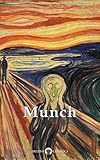
Delphi Collected Paintings of Edvard Munch (Illustrated) (Delphi Masters of Art Book 38) by Edvard Munch
No doubt, art starts with a drawing. Often science too starts with a drawing! A drawing is, in fact, a bridge between Art and Science. Learning to draw well puts students of science and Maths on a firm pursuit of learning (I speak from personal experience). I have not seen another teacher who can draw a perfect circle before a class on a black (white)-board, instantly, like my Math school-teacher did back in the day. He taught us fourteen theorems of trigonometry in final-year of our school, show more with elan. He always started the class by drawing a perfect circle on blackboard, effortlessly in one shot, without lifting the chalk piece. The level of his confidence in doing so inspired the students to learn not only the subject of trigonometry but also to draw!
Some Art teachers become an inspiration for young students to take up painting. Some have a penchant for making colored-pencil drawings of famous monuments of our metropolis - old Gothic buildings, driveways, and other inspiring architectures. He recently held a full-fledged exhibition of all his paintings in an art gallery. Dr. Homi J. Bhabha, the architect of Indian nuclear energy program, was an accomplished artist too, who drew pencil drawings (portraits) of several celebrities, among them two famous Nobel laureates - Sir C.V. Raman and Prof. P.M.S. Blackett. The layout of the beautiful gardens maintained at the Tata Institute of Fundamental Research and at Bhabha Atomic Research Centre, both in Mumbai were all planned by Bhabha after sketching them at his drawing board. The famous painting Starry Night (1889) by van Gogh drew inspiration from the depiction of a spiralling whirlpool galaxy by the astronomer, W. Parsons in 1845. Neuroscientists are giving profound meanings to what goes on in our minds when we look at drawings/paintings made by celebrated masters, such as the Woman in Gold, a portrait of Adele Bloch-Bauer I, by Klimt in 1907. Eric Kandel, the 2000 Nobel Laureate, proposed that as we walk and forth in front of this painting, the eyes of Adele seem to follow us because our visual systems convert a 2D image into a 3D portrait in our minds. Though the picture that forms in our visual and cerebral cortex, when we look at a sketch or a painting, is same for all individuals, the way it is processed, analyzed, resolved visually and emotionally, and reconstructed in our brains based on our past experiences and lifestyles, makes each person see a different view. In fact, the boost that each one of us gets in the number of synaptic contacts between our nerve cells is specific to the individual, and that alone decides the capacity of an individual to think and feel about what he/she makes out of the sketch/paintings. That also largely explains why different onlookers make out the extent of the hidden smile of 'Mona Lisa' to different levels when they are looking at it in The Louvre Museum in Paris. Similarly, it is up to the onlooker to decide whether it is a human figure shrieking or an inverted Edison's bulb in The Scream, the 1893 painting by Edvard Munch. show less
Some Art teachers become an inspiration for young students to take up painting. Some have a penchant for making colored-pencil drawings of famous monuments of our metropolis - old Gothic buildings, driveways, and other inspiring architectures. He recently held a full-fledged exhibition of all his paintings in an art gallery. Dr. Homi J. Bhabha, the architect of Indian nuclear energy program, was an accomplished artist too, who drew pencil drawings (portraits) of several celebrities, among them two famous Nobel laureates - Sir C.V. Raman and Prof. P.M.S. Blackett. The layout of the beautiful gardens maintained at the Tata Institute of Fundamental Research and at Bhabha Atomic Research Centre, both in Mumbai were all planned by Bhabha after sketching them at his drawing board. The famous painting Starry Night (1889) by van Gogh drew inspiration from the depiction of a spiralling whirlpool galaxy by the astronomer, W. Parsons in 1845. Neuroscientists are giving profound meanings to what goes on in our minds when we look at drawings/paintings made by celebrated masters, such as the Woman in Gold, a portrait of Adele Bloch-Bauer I, by Klimt in 1907. Eric Kandel, the 2000 Nobel Laureate, proposed that as we walk and forth in front of this painting, the eyes of Adele seem to follow us because our visual systems convert a 2D image into a 3D portrait in our minds. Though the picture that forms in our visual and cerebral cortex, when we look at a sketch or a painting, is same for all individuals, the way it is processed, analyzed, resolved visually and emotionally, and reconstructed in our brains based on our past experiences and lifestyles, makes each person see a different view. In fact, the boost that each one of us gets in the number of synaptic contacts between our nerve cells is specific to the individual, and that alone decides the capacity of an individual to think and feel about what he/she makes out of the sketch/paintings. That also largely explains why different onlookers make out the extent of the hidden smile of 'Mona Lisa' to different levels when they are looking at it in The Louvre Museum in Paris. Similarly, it is up to the onlooker to decide whether it is a human figure shrieking or an inverted Edison's bulb in The Scream, the 1893 painting by Edvard Munch. show less
You May Also Like


Associated Authors
Statistics
- Works
- 98
- Members
- 982
- Popularity
- #26,222
- Rating
- 4.1
- Reviews
- 4
- ISBNs
- 67
- Languages
- 4