
Yin
Author of Coolies
Works by Yin
Jump and Run 1 copy
Tagged
Common Knowledge
There is no Common Knowledge data for this author yet. You can help.
Members
Reviews
Coolies (Asian Pacific American Award for Literature. Children's and Young Adult. Honorable Mention (Awards)) by Yin
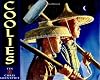
“This is the land of opportunity! Shek marvels as he and Little Wong step off the overcrowded ship that had brought them to America in 1865.”
In “Coolies”, Yin shares a historical fiction about the brothers of Shek and Little Wong, who left a village in Canton due to government corruption that led to starvation. They said goodbye to their family, promising to send money home, as they embark on a journey that will result in their becoming ‘coolies’ working on the transcontinental show more railroad, risking life and limbs, freezing temperatures, inhumanely long working hours, life-threatening explosives, and fed just barely enough food to work another long day ahead. The book begins and ends with a grandmother and a grandson paying respects to their elders; the grandmother explains why they have this ritual by sharing their family history.
As a kid’s book (maybe 10-ish years age), Yin did a very fine job telling a difficult tale with limited sugar coating. The illustrations by Soentpiet are on point also, notably with readable Chinese characters. Two things I want to address:
1. The term ‘coolies’ is very outdated and is a derogatory term. If this book was titled differently and the term used only as a historical reference within the book, I would be giving the book two big thumbs up. (Note the book was released in 2001, so the book name is somewhat understandable.)
2. The one key sugar coating in the book is that the brothers mailed money home to bring their family over to end their story. While such a storyline is an understandable deviation within a kid’s book, it’s important to note that was impossible, unless illegally done (look up paper son). The Page Act of 1875, the first restrictive federal immigration law in the US, effectively prohibited the entry of Chinese women, ended open borders for the first time. The 1882 Chinese Exclusion Act banned immigration by Chinese men also. Essentially, after building the railroads for them, the Chinese weren’t wanted anymore. It was infuriatingly insulting. (This ban wasn’t rescinded until the US wanted China’s collaboration against the Japanese during WWII in 1943!)
In any case, I still recommend this book due to its largely accurate story. Especially for Chinese Americans rising their children in the US, this is a part of their history that cannot be forgotten. show less
In “Coolies”, Yin shares a historical fiction about the brothers of Shek and Little Wong, who left a village in Canton due to government corruption that led to starvation. They said goodbye to their family, promising to send money home, as they embark on a journey that will result in their becoming ‘coolies’ working on the transcontinental show more railroad, risking life and limbs, freezing temperatures, inhumanely long working hours, life-threatening explosives, and fed just barely enough food to work another long day ahead. The book begins and ends with a grandmother and a grandson paying respects to their elders; the grandmother explains why they have this ritual by sharing their family history.
As a kid’s book (maybe 10-ish years age), Yin did a very fine job telling a difficult tale with limited sugar coating. The illustrations by Soentpiet are on point also, notably with readable Chinese characters. Two things I want to address:
1. The term ‘coolies’ is very outdated and is a derogatory term. If this book was titled differently and the term used only as a historical reference within the book, I would be giving the book two big thumbs up. (Note the book was released in 2001, so the book name is somewhat understandable.)
2. The one key sugar coating in the book is that the brothers mailed money home to bring their family over to end their story. While such a storyline is an understandable deviation within a kid’s book, it’s important to note that was impossible, unless illegally done (look up paper son). The Page Act of 1875, the first restrictive federal immigration law in the US, effectively prohibited the entry of Chinese women, ended open borders for the first time. The 1882 Chinese Exclusion Act banned immigration by Chinese men also. Essentially, after building the railroads for them, the Chinese weren’t wanted anymore. It was infuriatingly insulting. (This ban wasn’t rescinded until the US wanted China’s collaboration against the Japanese during WWII in 1943!)
In any case, I still recommend this book due to its largely accurate story. Especially for Chinese Americans rising their children in the US, this is a part of their history that cannot be forgotten. show less
Overall, I thought Brothers was a great story. My favorite part about it was the main message. This story’s message was that friendships can be made regardless of cultural differences. In this story, a young boy named Ming travels from China to San Francisco to live with his older brothers where he is told, “Chinese should not go outside Chinatown.” However, Ming disobeys this rule when he meets a young boy and his family outside of Chinatown and befriends them. This story does a great show more job comparing and contrasting different cultures, with the overall message that it is ok for people to be different, but it is important to learn about and respect the cultures of others and develop friendships with those people, just as Ming did in the story. Another part of the story I really enjoyed were the illustrations. The illustrations did a great job depicting the cultural differences between the people in Chinatown and outside of Chinatown, which I think is imperative for helping students understand this story. Finally, I loved how the children’s friendship throughout the story was used to teach the adults about friendship across cultures. I think this aspect of the story could show students that though they are children, they are able to teach adults too, which deepens the importance of why it’s great to learn about and befriend others from different cultures and backgrounds.
I would recommend this story for students in first through fourth grade read-alouds. I think this book could lead to great conversations about culture, friendships, and overall diversity and would be the perfect addition to a multi-cultural classroom. The book itself isn’t hard to comprehend and the pictures are beautiful, so with the right questioning, it could be a very successful diversity lesson intertwined with other literary skills such as compare and contrast, main idea, theme, etc. show less
I would recommend this story for students in first through fourth grade read-alouds. I think this book could lead to great conversations about culture, friendships, and overall diversity and would be the perfect addition to a multi-cultural classroom. The book itself isn’t hard to comprehend and the pictures are beautiful, so with the right questioning, it could be a very successful diversity lesson intertwined with other literary skills such as compare and contrast, main idea, theme, etc. show less
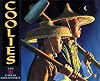
The title is an attempt to 'reclaim' the word, much as some people who are gay refer to themselves as Queer, or some Blacks use the "N" word. And in my opinion the book succeeds in discussing the word and the different attitudes behind it, in a story that it not only important but is also engaging and absolutely beautifully illustrated. Highly recommended for ages 7 up, especially families who homeschool.
I liked this book for two reasons. First, I loved the illustrations. Coolies is a picture book about two Chinese brothers, Shek and Wong, who sailed out to America to work. In America they were discriminated due to their looks, forced to work long hours for little pay and weren’t allowed to attend the parade once they finished. Once the railroads were done, Shek and Wong moved towns and started working and saving money in the hopes to bring their family in China to America. Chris Soentpiet show more used 80% of the pages to bring his illustrations to life. He used a lot of brown, orange, blue and some whites in his illustrations. Since Chris used most of the pages, you can feel the expressions. For example, there was an avalanche and Wong wanted to go look for his brother. In the illustration, you can feel how worried Wong was and how he wanted to run and go look for his brother. Right behind him, you can see the boss angrily grabbing Wong by the arm. The wind is blowing in the dark night. The other Chinese workers looked scared of the boss but worried for Wong at the same time. Second, I liked plot structure. The story starts with a grandmother teaching her grandson how to show respect to their ancestors during the Ching Ming Festival. Here she takes a moment to pay respect and remember Shek and Wong and all their hard work to bring their family to the land of opportunities. She says, “Let me tell you of two we do not forget. Of my bokgong-my great-grandfather- and his brother.” The main purpose of this story is to share the ethic works of the Chinese during some enduring harsh moments, yet some where able to overcome and succeed. show less
Lists
Awards


You May Also Like


Statistics
- Works
- 8
- Members
- 671
- Popularity
- #37,613
- Rating
- 4.1
- Reviews
- 40
- ISBNs
- 14