
Timothy Severin (1940–2020)
Author of The Brendan Voyage
About the Author
Acclaimed adventure writer and explorer Tim Severin was born in 1940 and educated at Tonbridge School and Oxford University. He has made a career of retracing the storied journeys of mythical and historical figures in replica vessels. These experiences have been turned into a body of captivating show more and illuminating books, including The Brendan Voyage, In Search of Genghis Khan, Crusader, The Jason Voyage, and In Search of Moby Dick. He has received numerous awards for exploration and geographic history, including the Founder's Medal of England's Royal Geographic Society and the Livingstone Medal of the Royal Scottish Geographical Scoiety. When not travelling, he lives in County Cork, Ireland show less
Series
Works by Timothy Severin
The African adventure;: Four hundred years of exploration in the dangerous continent (1973) 61 copies
Odin'in Oglu - Viking 1 copy
Viking Tek Cilt 1 copy
The Quest for Ulysses 1 copy
Jason's Voyage 1 copy
The Voyage of Brendan 1 copy
Associated Works
Tagged
Common Knowledge
- Other names
- Watkins, Giles Timothy (birth name)
- Birthdate
- 1940-09-25
- Date of death
- 2020-12-18
- Gender
- male
- Education
- Tonbridge School, Kent, England
Keble College, Oxford - Occupations
- explorer
historian
writer - Cause of death
- cancer
- Nationality
- UK
- Birthplace
- Assam, India
- Places of residence
- County Cork, Ireland
London, Middlesex, England, UK
Tonbridge, Kent, England, UK
Oxford, Oxfordshire, England, UK - Place of death
- West Cork, County Cork, Ireland
- Associated Place (for map)
- UK
Members
Reviews
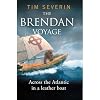
What a great read for a non-fiction book full of details. Severin, a natural storyteller, recounted their experiences as if he was writing a thriller. On their "Stepping Stone" journey they had some hair raising, life and death, experiences as Saint Brendan and his crew must have also had. The Saint's voyage lasted seven years and was recorded in the latin text titled "The Navigato." Because of some of their comparable encounters Severin realizes that the Saint's version was not so far show more fetched afterall, as many disbelievers claim.
An added bonus was the "Coles Note" or précis of "The Navigato", an account of Saint Brendan's seven year journey, in Appendix 1. show less
An added bonus was the "Coles Note" or précis of "The Navigato", an account of Saint Brendan's seven year journey, in Appendix 1. show less
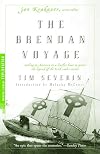
This fantastic book has been languishing on my shelves for far too long. After I read Haven by Emma Donoghue about three monks venturing off the west coast of Ireland (7th century) to establish a retreat on the outer islands, I was intrigued with the notion of ocean travel in skin boats. There is a theory that the Irish monks traveled in skin boats to North America in the 500's A.D. so Tim Severin figured out how these boats would have been made from tanned skins, flax thread and sheep fat show more as a sealant and ventured in the 1970s in a replica boat built to make the same trip. The trip was a nail biter going north along the coast to the Hebrides, the Faroe Islands, Iceland, past Greenland and finally to Newfoundland with 4 sailors and with success. It managed severe gale force storms, ruined food, harsh elements of driving rain and plunging temperatures and frightening battles with sea ice that punctured their boat. What a great book! The book has a number of amazing photographs and drawings. Many years ago I saw Severin's boat, the curragh, at at the Craggaunowen open-air museum in County Clare, Ireland. show less
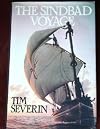
Another typically wonderful Tim Severin research/adventure real Dirk Pitt type book. In this one Severin retraces the medieval Arab trade route to China through the Seven Seas. (Uncharacteristically he identifies only five of the seven seas [the Persian Gulf, the Arabian Sea, the Bay of Bengal, the Malacca Strait, and the South China Sea]). The account of how the ship, commonly referred to by the generic term dhow, was designed and constructed, i. e., sewn with coconut fiber rather than show more nailed together, is equally fascinating. Severin also recounts three or four of Sindbad's adventures from "The Thousand and One Nights" and explains what may be the factual background for those stories.
The Arabic name for Ceylon is the origin of the word serendipity. show less
The Arabic name for Ceylon is the origin of the word serendipity. show less
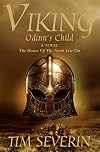
“...this might be what Odinn was intending -- that I should be an honest chronicler of the Old Ways and the truth about the far-flung world of the Norsemen.”
Authentic is the word that springs to mind. It’s stitched together from sagas, as he tells us in his author’s note, and from the story set-up, with Odinn the Wanderer, the acquirer of knowledge, as his chosen god and patron, you can see the above is the aim: a universal look at the Norse world. I appreciate how trustworthy he is show more on the history, and when he uses the genuine saga-stuff as he does, there’s going to be enough tale. It goes from episode to episode, as he travels, which I enjoy – always new things on the horizon.
Want to mention a couple of things:
There’s a large uncanny content. Of our main, Thorgils, Erik the Red's Saga tells, “... there seemed to be something uncanny about him his whole life.” He has to do with seidr (as a true Odinn’s child), and besides that, there’s a lot of fun with things that go bump in the night. In a group this year I read The Saga of Grettir the Strong – luckily, as Grettir features in #2, and I went Grettir-crazy in the saga – and that had as much fetch or ghost activity as Severin includes. So, genuine to the mind of the times, and like I said, fun.
Great women. I’m tempted to attribute these to his faithfulness to the sagas too, since Grettir’s Saga had great women. The majority of Severin’s seem to be large-framed, ‘formidable’ and not necessarily presented as attractive; perhaps he has reason to think Norse women were built on this model (I wouldn’t put it past him to have measured the skeletons); at any rate, they were fully involved in the story in a way that… they aren’t always.
And real. He may not go into great depths with the characters, but I thought them often unusual and not the stock cast; there were several I liked or who interested me.
I look forward to the next, and not only for Grettir. show less
Authentic is the word that springs to mind. It’s stitched together from sagas, as he tells us in his author’s note, and from the story set-up, with Odinn the Wanderer, the acquirer of knowledge, as his chosen god and patron, you can see the above is the aim: a universal look at the Norse world. I appreciate how trustworthy he is show more on the history, and when he uses the genuine saga-stuff as he does, there’s going to be enough tale. It goes from episode to episode, as he travels, which I enjoy – always new things on the horizon.
Want to mention a couple of things:
There’s a large uncanny content. Of our main, Thorgils, Erik the Red's Saga tells, “... there seemed to be something uncanny about him his whole life.” He has to do with seidr (as a true Odinn’s child), and besides that, there’s a lot of fun with things that go bump in the night. In a group this year I read The Saga of Grettir the Strong – luckily, as Grettir features in #2, and I went Grettir-crazy in the saga – and that had as much fetch or ghost activity as Severin includes. So, genuine to the mind of the times, and like I said, fun.
Great women. I’m tempted to attribute these to his faithfulness to the sagas too, since Grettir’s Saga had great women. The majority of Severin’s seem to be large-framed, ‘formidable’ and not necessarily presented as attractive; perhaps he has reason to think Norse women were built on this model (I wouldn’t put it past him to have measured the skeletons); at any rate, they were fully involved in the story in a way that… they aren’t always.
And real. He may not go into great depths with the characters, but I thought them often unusual and not the stock cast; there were several I liked or who interested me.
I look forward to the next, and not only for Grettir. show less
Lists
Awards


You May Also Like


Associated Authors
Statistics
- Works
- 43
- Also by
- 5
- Members
- 4,494
- Popularity
- #5,574
- Rating
- 3.7
- Reviews
- 73
- ISBNs
- 229
- Languages
- 17
- Favorited
- 11